
Best International Feature Film: Ranking Every Nominee of the 98th Academy Awards
Written by Andreas Babiolakis
Welcome to another year of the Academy Awards Project here on Films Fatale! We rank all of the nominees in each category every day.

There are a few reasons why I leave the Best International Feature Film category towards the end of my Academy Awards Project every year. Firstly, I have Best Picture last every time, and I consider Best International Feature Film to be a Best Picture category of sorts (often times, I find the selection in this category better than the overall Best Picture candidates). Secondly, this is actually my favourite category of them all. Best Picture can be swayed by awards season politics, promotional pushes, and all kinds of other synthetic extremities. I know that the Best International Feature Film category can suffer from the same blemishes, but not nearly to the same degree; furthermore, I find the voters in this category to be quite in tune with what is out there (then again, when you have to search for films all around the world, there tends to be the possibility to yield better results). I do hate the condition that only one film per country can be selected for shortlisting, as this can lead to many great films not even being considered (justice for Portrait of a Lady on Fire). Furthermore, the stipulation that the country wins the Oscar and not the filmmakers behind the films has never sat too well with me; the athlete competing for their country at the Olympics still earns the medal, do they not? Complaints aside, I always look forward to this category. I mean this sincerely when I say that this category is insanely stacked. The weakest film here is a 4.5 out of 5. Four of these films made my top ten of 2025 (and one just narrowly missed the cut). These truly are five of the best films of last year, and I cannot wait to get to them individually. Here are your nominees for Best International Feature Film, ranked from worst to best.

5. Sirāt-Spain
Placing such a unique film like Sirāt last feels wrong, but one of the five films had to make it here. Óliver Laxe’s arthouse epic is such a daring film that places us in the middle of a Moroccan desert with very little to go by outside of the pulsating bass of heatwave rave parties, and a father whose daughter has gone missing. I was a big fan of Laxe’s Fire Will Come back in 2019, and this eventual followup surpassed my expectations (you will find that I much preferred Sirāt to Films Fatale’s Dilan Fernando, whose review you can read below). Much of Sirāt is centred around intrigue, the unknown, and the throbbing sensation of panic-induced nausea; when Sirāt throws its curve balls and startle you, the film is knowing fucking with its audience (and that is a major part of the experience). I have admittedly only seen the film once and I would love to revisit it again (although not being able to do so in a theatre again is a major dilemma for me; seeing Sirāt in a dark room with a crazy sound system and with strangers is quite the experience). I wonder if I will like Sirāt even more when I do revisit it because it is such an enigmatic, unusual, refreshing slice of cinema that makes you feel like you do not have the world or life figured out.

4. The Voice of Hind Rajab-Tunisia
If I am itching to rewatch Sirāt, I can state that I am content never seeing The Voice of Hind Rajab ever again: one watch was enough, and the film is unforgettable and will never leave me. Kaouther Ben Hania’s third nominated film (after The Man Who Sold His Skin and Four Daughters) might be her best yet (which is saying a lot, considering how highly I think of her work). Blurring the lines between documentary and narrative (as Hania does so effortlessly well time and time again), The Voice of Hind Rajab places us in the middle of a call centre when a distressing call by a small child is made: the titular girl is stuck on the Gaza Strip and is fearing for her life. The film is already harrowing enough, but when you recall that every phone call in the film is a recording of the real conversation, the reality sets in: we are listening to an innocent girl struggling to survive because of the choices of all of the adults who have failed her and all like her. The Voice of Hind Rajab is one of the tensest films of 2025, an extreme eye-opener of a statement, and a crucial sociopolitical film that conveys the extremities of war; this is the atrocity surrounding one innocent child’s well-being, and now the weight of the countless similar situations begins to come into focus.
3. The Secret Agent-Brazil
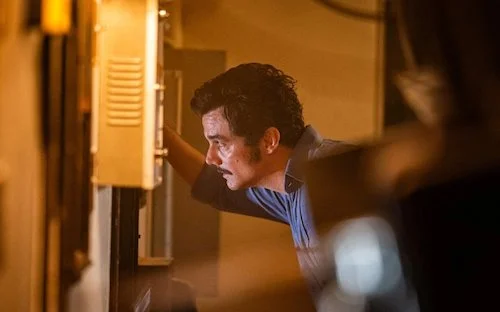
Brazilian cinema has been on a tear lately (then again, when has the nation ever lacked in quality filmmaking). The Secret Agent follows last year’s I’m Still Here as a major contender in this category, and I believe that Kleber Mendonça Filho’s film will continue to stun audiences. A major reason why in this genre-bending opus is because of how effortlessly Filho pulls the wool over our eyes with this one. We believe we are watching an espionage thriller at first, and that Armando is this badass spy who is five moves ahead of his opposition. As the film unfurls, we learn that Armando is just an everyday citizen who has been wronged by his corrupt, overbearing government, and that he was flying by the seat of his pants in order to survive. The Secret Agent magnificently blends its different tones, timelines, and identities together for a booming statement on misinformation, multiple perspectives, and the importance of research all in the day and age of controlling forces and censorship. People love The Secret Agent already, but I feel like this is a film that will only continue to grow in stature the more it drills itself into your heart and mind (like Drive My Car).

2. It Was Just an Accident-France
Jafar Panahi’s film won the Palme d’Or at last year’s Cannes Film Festival (while my review of the film is below — since I cover every Palme d’Or winner ever, writer Dilan Fernando actually covered It Was Just an Accident at Cannes, and his review can be found here). While it is disappointing that the film wasn’t nominated for Best Picture like a number of the past Palme d’Or winners have been, I am glad that Panahi’s film has gotten a couple of nominations this year (including one for its screenplay). I think that Panahi’s intellectual allegory of governmental intrusion is poignant, direct, thought-provoking, and effective. Panahi was already an established name in Iranian cinema (one of the great nations when it comes to motion pictures), and a film like It Was Just an Accident may be his crowning achievement. The film was already an engrossing, anxious effort throughout its runtime, but the final two major sequences — a lengthy, single-shot confrontation that is heavy on a back-and-forth conversation, and the last shot that has zero dialogue at all and relies on a punishing visual symbol — are evidence of Panahi’s command on the filmmaking medium.
1. Sentimental Value-Norway
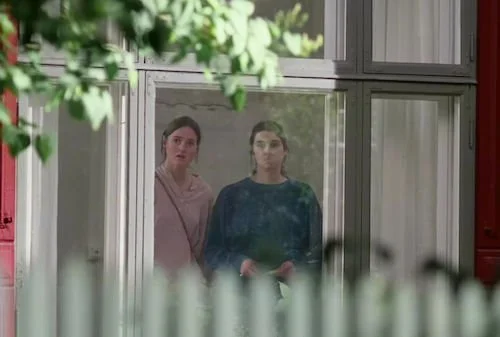
Despite the tough competition this year, I still feel like Joachim Trier’s Sentimental Value is the best film of the group; the film wound up being my third favourite of 2025 as well. The film is a highly Bergman affair, and Ingmar Bergman is my favourite filmmaker of all time (so this may be bias speaking, but I adore Sentimental Value). I found Trier’s latest — and possibly best — feature film to be impeccably emotional, so layered with its provenances and mythical mysticism, and powerful with its simplicity. These ordinary lives become metaphysical tales for us to gravitate towards: their domestic agony becomes our catharsis, especially when they work towards healing. Despite not being related to world-class filmmakers and actors, I felt like I was a part of the Borg family when watching Sentimental Value. I felt like I was prying into the hidden lives that were not meant to be out on display via the media of these celebrities, and that what is kept a secret from the public can be far more than the promoted pretenses used in interviews and via the inaccurate gaze of the paparazzi. Sentimental Value doesn’t settle for wallowing in depression: it makes something out of its emotional complexities and that end result is exquisite and breathtaking.
Who I Want To Win: I literally cannot complain if any of these films win. Seriously. I love them all. I’m not trying to be some coward, but I will not feel better or worse about any of these films winning over the others. To me, this feels like watching a basketball game where I love both teams or do not prefer one over the other: the end result will bowl me over either way. In this instance, such excellence is proof that art will always outweigh competition (a hypocrisy given how I rank Oscar nominees every year, I know, but I also view these articles as opportunities to discuss films in a myriad of ways, which I will never say no to). To at least have an answer, I have Sentimental Value placed first. That is my pick.
Who I Think Will Win: To me, this is a tight race between Sentimental Value and The Secret Agent. Both are Best Picture contenders, and, to me, the Oscars like to award one trophy to each Best Picture nominee. The odds right now are in Sentimental Value’s favour, but I am currently leaning towards THe Secret Agent and I will tell you why. Sentimental Value may win Best Supporting Actor for Stellan Skarsgård, leaving this trophy in the hands of The Secret Agent. Last year, I’m Still Here pulled the surprise win of this category over Emilia Perez (something I predicted would happen), and I know that the Academy loves Brazilian cinema. One could argue that Wagner Moura could win Best Actor and leave this award for Sentimental Value to claim, but I don’t see Moura beating Timothée Chalamet for Marty Supreme right now (again, that could be Marty Supreme’s sole win). If you think that Sentimental Value has the edge because Joachim Trier is nominated for Best Director, need I remind you of Emilia Perez last year and how it lost to I’m Still Here. Wound the same country win twice in a row? Sure. It has happened before, and if any nation can pull that off nowadays, it’s Brazil. I’m sticking with The Secret Agent.


Andreas Babiolakis has a Masters degree in Film and Photography Preservation and Collections Management from Toronto Metropolitan University, as well as a Bachelors degree in Cinema Studies from York University. His favourite times of year are the Criterion Collection flash sales and the annual Toronto International Film Festival.