
It Was Just an Accident
Written by Andreas Babiolakis
This review is a part of the Palme d’Or Project: a review of every single Palme d’Or winner at Cannes Film Festival. It Was Just an Accident won the sixty ninth Palme d’Or at the 2025 festival.
The film was selected by the following jury.
Jury President: Juliette Binoche
Jury: Halle Berry, Dieudo Hamadi, Hong Sang-soo, Payal Kapadia, Carlos Reygadas, Alba Rohrwacher, Leïla Slimani, Jeremy Strong.
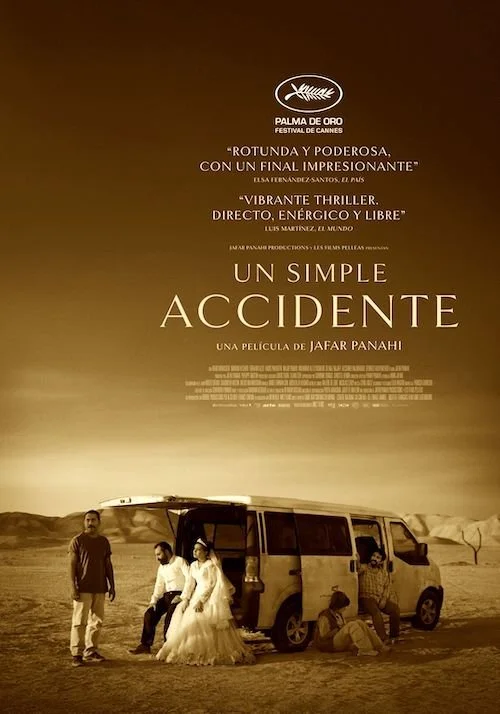



Iranian titan Jafar Panahi became the first director to win the four big awards of the European film festival circuit; The Mirror won the Golden Leopard at Locarno; Taxi won the Golden Bear at Berlin; The Circle won the Golden Lion at Venice. Decades after Panahi won his first Cannes Film Festival award — the Caméra d'Or for The White Balloon — he finally won the coveted Palme d’Or for It Was Just an Accident (also known as Un simple accident). While he has been placed in a league of his own with this quadfecta, he may not be feeling the same embrace that some similar peers have. Panahi has been marked by the Iranian government due to his political films; he never backed down, and, as a result, he was arrested in 2010 and banned from making more films; he was arrested yet again in 2022 (this time, he was detained for seven months, and was only released because Panahi went on a hunger strike out of protest). Of course, Panahi didn’t waver here either, and has illegally made numerous projects since; this includes It Was Just an Accident. The film is considered an Iranian, French and Luxembourgian-produced picture; naturally, Iran refused to represent the film for the Best International Feature Film submission for the Academy Awards (France stepped in, and It Was Just an Accident became their official submission).
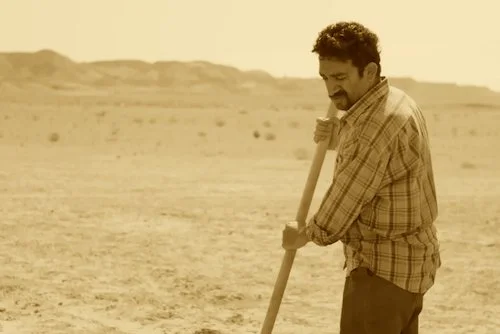
It Was Just an Accident is another scathing portrait of a nation Panahi adores but cannot bear to see be gutted anymore; the film is beautifully shot with a huge emphasis on Iranian nature, landscapes, and skylines, but much of what happens within it is quite ugly. Panahi crafts a fable-like scenario to depict the lasting trauma of Nezam’s impact (or the Iranian regime), as we come across multiple walks of life who have been tortured for their beliefs. Here is the scenario: a man’s car breaks down. He is with his daughter and his pregnant wife. While they are getting their car checked, mechanic Vahid (Vahid Mobasseri) hears something he never wished to hear again: the squeaking of the man’s prosthetic leg. Vahid believes that this is the official from prison who tortured him and many other fellow Iranians. Vahid has never been the same again; he is haunted by nightmares; his spine is permanently wounded. Vahid swears vengeance and kidnaps the man, fully prepared to bury the latter alive in the middle of nowhere. Once the man swears that he has no idea of what Vahid is talking about, Vahid develops doubt; what if this isn’t the abusive tyrant from prison? Vahid needs a second opinion, so he knocks out the man, hides him in his van, and gets trekking to a fellow prisoner for clarification. You see, Vahid and the other prisoners were blindfolded by the regime when they were tortured, so they don’t fully know what their abusers look like; they only have slight hints to work with.
It Was Just an Accident is a riveting ride that will leave you feeling speechless.
It Was Just an Accident mainly takes place over twenty-four hours, as Vahid comes across multiple people affected by the same man; this creates a bit of a mess, with conflicting motives and means for catharsis (including what to do with the man, understanding if this is even the right guy, and how to prove that this is who everyone is after). All of this started with the opening scene where the man and his family are taking a late night drive. The man is slightly distracted and accidentally hits and kills a dog; his daughter is distraught, and both of her parents try to insist that this death was “just an accident”: no one intended for the dog to be hurt. This sets off a chain reaction (the dog being hit damages the car; the family takes the car to be looked at when it starts operating strangely; the rest is history). I also see this opening scene as a shifting of guilt and blame, akin to what the man may have been doing in the Iranian prison (perhaps he would lie to himself: that this torture and these deaths are nothing to be ashamed of since they were in the name of his nation’s government). There’s also something telling about how this one seemingly unavoidable accident kicks off a kinetic wave of comeuppance for this man (I also feel like such a freak coincidence proves that evil people usually do not get what they deserve; this man could only be found by, ironically, accident).
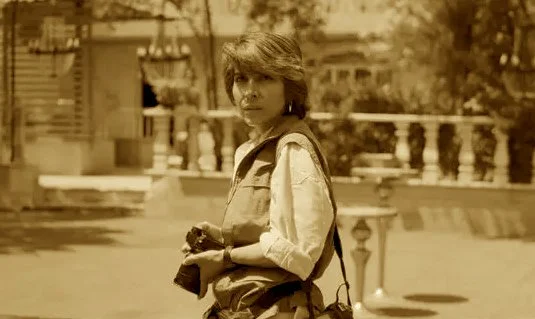
Tensions flare when our multiple protagonists (including a bride-to-be and her groom, and a photographer and her explosive ex-partner) continue to butt heads. Clearly, everyone’s vendettas read differently. Grief and trauma affect everyone in various ways, so being granted this impromptu opportunity to exact revenge sends everyone in their own tailspin. They don’t believe what they are told; they become eager to kill the man right away; they become impatient with learning whether or not this man is their tormentor. It Was Just an Accident is often represented in remote areas with empty space, long and unbroken shots, and the use of both wide and close-up frames. To me, this feels like an opportunity for broken people to wrestle with their personal demons; no amount of orchestral music can drown out the screeching agony of pin-drop silence. This rising anxiety was previously held off by the occasional comedic moment used to help audiences stay afloat, but everything leads to the penultimate sequence of anguish: the ultimate confrontation told yet again in a lengthy shot, with very little to look at (but an extreme close-up), and the feeling that we have all the time in the world to finally get down to brass tacks. Your heart being caught in your throat provides an unsolicited soundtrack to this sequence.
It Was Just an Accident takes the concept of vengeance and creates a complicated portrait of culpability.
Before we conclude the film, we get a spectrum of ideas as to how one should punish evil people; how can there be a right answer if this makes us as immoral as those we are punishing? We are left to grapple with the sins of the past and the theorized, potential sins of the future. Does it make us bad people if we are exacting the torture we once received onto those who first abused us? Can we live with ourselves if we have become those we sought to destroy (do we eventually destroy ourselves)?The ending of It Was Just an Accident — without using major spoilers — is a haunting image of false security. We see things are finally normal until we get a frozen still shot of infinite trauma. As if these years of abuse happened to me, my hair was standing on the back of my neck. Panahi brilliantly uses the back of his subject’s head to capture this final thought. Firstly, we cannot see their expression and can only imagine what they look like. Secondly, we are able to implant our own faces onto this focal point as we enact our own provenance of pain (as if our own trauma has come back to us for this split second); it is a highly uncomfortable decision but a necessary one to understand how there will never be a level of safety or comfort for people whose lives and identities have been stripped away from them. For this final image, Panahi lets us know what it feels like to be him: forever looking over his shoulder for authority figures who do not believe that he is deserving of a free life.
Panahi is no stranger to making celebrated and effective films, but It Was Just an Accident may be his strongest effort regarding how he connects with his audience. Here, we are transported into Iran, into this predicament, and within the shoes of the hurting souls that drive this motion picture. Iranian cinema has always been excellent at depicting cause-and-effect portraits of shattered people; Abbas Kiarostami’s Close-Up merges recreated scenes and documentary footage to find a through-line via admissions of guilt and riveting testimony; Asghar Farhadi’s A Separation shows the many acts of desparation that stem from an initial divorce in response to the divide caused by the 2009 voting crisis; Ana Lily Amirpour’s A Girl Walks Home Alone at Night creates a spaghetti-western horror film out of the discomfort women feel when preyed upon at their most vulnerable states (and what one girl can do in this film to defend herself). It Was Just an Accident is just as captivating as these aforementioned titles. It is a constant force of propulsion that is indicative of what one of the greatest international cinematic nations can achieve. Panahi is a fellow member of this club and is clearly a supporter and lover of both Iran and its art. However, as proven time and time again, he cannot sit idly and let his loved ones suffer any more, even if it means that he endangers himself once more. Jafar Panahi doesn’t want to attack his oppressors as they hound him, so making a film like It Was Just an Accident is as close as he can get to snapping back while making his point very clear. Given how calculated, passionate, clever, thought-provoking, and stirring his latest film is — and how livid it is about the Iranian government once again — it’s safe to say that this was no accident.


Andreas Babiolakis has a Masters degree in Film and Photography Preservation and Collections Management from Ryerson University, as well as a Bachelors degree in Cinema Studies from York University. His favourite times of year are the Criterion Collection flash sales and the annual Toronto International Film Festival.