
Filmography Worship: Ranking Every François Truffaut Film
Written by Andreas Babiolakis
Filmography Worship is a series where we review every single feature of filmmakers that have made our Wall of Directors

The French New Wave movement is both influential and complicated. Like a super team of creative minds — assembled by equally brilliant minds like The Beatles — the French New Wave movement kicked off as a means of pushing what cinema could be. Of course, different visionaries had their own directives that may have differed from their peers. These diverged tangents would prove to be as impactful as that once cohesive starting point; each French New Wave titan offered something unique to film. Typically, the movement is known for its challenging and thought provoking methods to both change the cinematic medium and inspire audiences to think outside of the box. However, today we are going to take things a little bit easy regarding the French New Wave movement by covering a director who was maybe the most romantic, poetic, and applicable of the lot: François Truffaut (if we are going back to that Beatles analogy, Truffaut would be Paul McCartney, at least stylistically).
Truffaut connected with the renown French critic, André Bazin. Bazin saw Truffaut as a promising voice in film criticism, but he also recognized a lot of issues with his protégé, including financial instability and numerous run-ins with the law. When Truffaut tried to prematurely leave the French Army and was incarcerated for two years, Bazin swooped in to save the day again, ensuring the Army that he would take Truffaut under his wing and find him a job to keep him out of trouble. Bazin brought Truffaut to write for the now-iconic magazine, Cahiers du Cinéma (which, at that time, was just starting out). Truffaut vented out his frustrations with scathing and heavy-hitting reviews; he was particularly vicious towards French films, and his viewpoints continuously got him into hot water (including being ignored by film festivals like Cannes). His disdain for conventional French cinema led to him being invited to write for Arts-Lettres-Spectacles: something he did for a number of years. All of this may be surprising for those of you who are familiar with Truffaut as a filmmaker, given how tender, moving, and exquisite his vision was; his theory was far more intense than his output.
Alongside his hatred for typical cinema came an obsession with directors who stood out, took charge, and developed their own style, like Jean Renoir, Alfred Hitchcock, and Robert Bresson. Hitchcock was particularly known for his rebellion against producers and studios: something that was reflected in his art. This appreciation led to Truffaut’s writing of the policy of the authors, leading to the concept of auteur theory and, ultimately, the label “auteur” for any director who had a distinct vision that separated them from the pedestrian blueprints of commonplace cinema. This kind of philosophy has greatly affected the film industry, opening the door and accepting artists who dared to stray away from the beaten path. One of the clear auteurs of the Golden Age of Hollywood, Orson Welles, became the final push for Truffaut to transition from film critic to filmmaker; Welles’ Touch of Evil inspired Truffaut to take the leap once and for all. Truffaut’s debut film, The 400 Blows, encapsulates the mischievous and problematic ways of his youth with a sense of fancy, allowing us to understand his lack of cooperation through his eyes; this may have been a revelatory experience back in the fifties, but the film today reads as a gorgeous and breathtaking look at a complicated child (I wasn’t the best behaved kid or teenager, so I instantly gravitate towards Truffaut’s films that tackle such a subject because I see myself in them). Nonetheless, The 400 Blows was deemed one of the first official films of the French New Wave movement, furthering Truffaut’s quest to celebrate auteurism.
Truffaut didn’t just direct films. He contributed in other ways, including writing the story for Breathless. He would become great friends with Breathless’ director, Jean-Luc Godard, who also wrote for Cahiers du Cinéma. They seemed like the two separate faces of the same coin; if Truffaut found harmony within chaos or sadness, then Godard brought out filmic anarchy via any means necessary. Their close friendship ultimately ended after Truffaut released Day for Night: one of the greatest films about the filmmaking experience. Godard saw this picture as a deceptive lie and not indicative of the thoughts of the once-hostile critic who saw much to despise about the filmmaking experience. Truffaut was now on the other side of the industry; perhaps he was a different person than the young Truffaut who was once deemed the “Gravedigger of French Cinema.” Truffaut did decry that films should show one of two things: either the magic or pain of creating motion pictures (I’d argue that Day for Night accurately depicts both. Despite this tragic schism from Godard, Truffaut remained prolific and instilled connections with other directors, including starring in Steven Spielberg’s magnificent Close Encounters of the Third Kind; history became cyclical, where those who were once deemed antithetical to mainstream cinema were now instrumental to it.
Truffaut passed away at the young age of fifty two due to a brain tumour, well before he could see the true appreciation that millions of cinephiles would have for his work. I am happy to report that all but one of Truffaut’s films are worth watching, especially if you are a fan of French New Wave cinema. I believe the radicalism of his films is now understated, given how mimicked his vision was since his heyday (to the point that many films are indebted to Truffaut; I’d argue that the aforementioned Spielberg’s whimsy and drama [at least early in his career] are heavily indebted to directors like Truffaut, hence why the American giant cast Truffaut, perhaps as a thank-you). If you try to compare a Truffaut film like, say, The Soft Skin, with another romantic film of the sixties, you can see how the director feels different and perhaps even more authentic. Seeing as Truffaut was as hard-working as his French New Wave peers and how he unfortunately died way too early, Truffaut’s filmography is far shorter — yet plentiful — than, say, Godard or Chabrol’s. I feel like any film lover will discover something about themselves going through Truffaut’s entire body of work — especially if you have lived long enough to understand the trickiness of the human experience. I’m covering all but one short film, Une Visite (Truffaut’s debut film, which is considered lost in enough of a capacity that I don’t believe I will ever be able to come across it). I hope you feel as seen with these films as I do. Here are the films of François Truffaut ranked from worst to best.
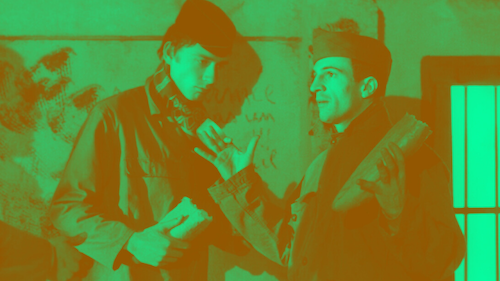
25. The Army Game
I don’t want to go too into The Army Game: easily the worst film here. Firstly, this was a rare moment where Truffaut co-directed a project with someone else (Claude de Givray); it almost feels like Truffaut’s involvement here was done as a favour. This goofy military comedy comes off as annoying, unfunny, and rather pointless. It also bothers me that The Army Game was unquestionably the most difficult Truffaut film to come across (I won’t even go into the hoops I went through to come across even an awful copy of this title), and I felt like my efforts were met with a film that was barely worth seeing; it doesn’t even shape much in the context of Truffaut’s career. The only joy I got out of this film was knowing that I finished watching every feature film that Truffaut worked on. Otherwise, this is the only time I’d call a Truffaut picture irritating.
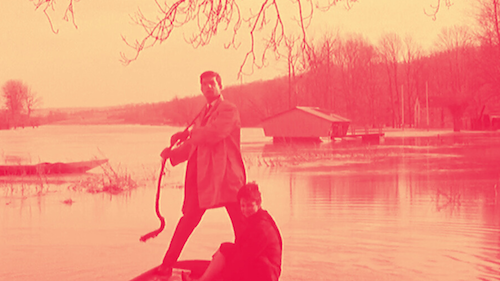
24. A Story of Water
Here’s a film that Truffaut directed fully by himself, so maybe we can consider this the true start of this list (since The Army Game has next to none of Truffaut’s DNA, outside of maybe his critical thoughts on the military). A Story of Water is a short film that acts almost like a fable, as a woman and man try to navigate a flooded area. I feel like there is something magical here, but the film is also far too short to get to where it needs to; it renders itself a little forgettable as a result. Otherwise, A Story of Water is at least pensive and pretty enough that you may feel something during the film; it’s too bad that it feels like an unfinished idea instead.
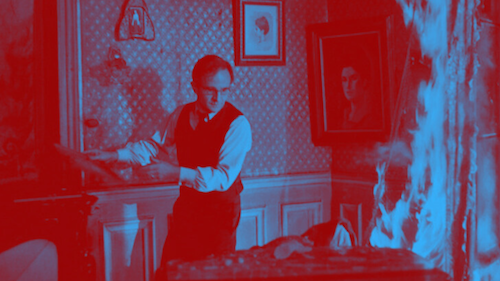
23. The Green Room
Oh, how I wish I liked The Green Room more. I still think that it is somewhat beautiful, given its focus on taking traumatic memories and grief and trying to make meaning out of it all (it also has a more mature look at military combat than, say, The Army Game; okay, I’ll stop bringing this film up). Having said that, this is clearly a film where the director grappled with what he had to work with; Truffaut injects much of his personal life into The Green Room, as if the film was to be his memento to uphold his legacy for generations to come. I instead see a well-intentioned film that kind of just exists in limbo; I believe a majority of Truffaut’s films pull off what he wanted The Green Room to do for his identity and legacy.
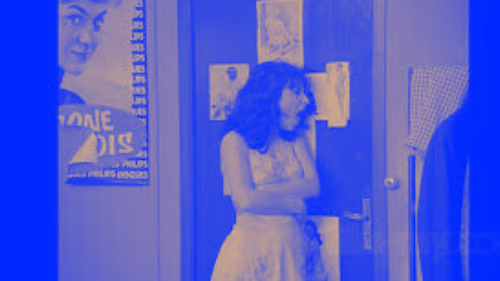
22. A Gorgeous Girl Like Me
Truffaut’s films don’t usually feel outwardly rebellious, but something like A Gorgeous Girl Like Me comes close, I suppose. What is meant to be an electrifying comedic caper about love and murder (maybe a middle finger to the British sex romp comedies of the sixties) comes off as a little bit tedious and obnoxious today. I think A Gorgeous Girl Like Me at least has a bit of fun to it, as well as clear style and self awareness, but that doesn’t mean that the film is suddenly a misunderstood classic; I still find it obsessive enough that one watch was enough for me.
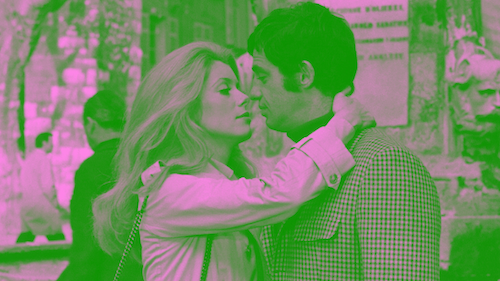
21. Mississippi Mermaid
Oh, what love does to a person; you can wind up with someone you thought you knew but don’t actually. I believe that is the point of Mississippi Mermaid: a kooky look at marriage where our participants (played by French juggernauts Catherine Deneuve and Jean-Paul Belmondo) learn more about each other when it is considerably too late to turn back. I think there is something interesting about the unveiling of dark pasts here, and there is some poignancy to how unconditional love can be in the faces of change, discomfort, and adversity, but I do think that Mississippi Mermaid comes off as a little unserious much to its own detriment. I still think it is a decent film overall, but Truffaut certainly has stronger efforts.
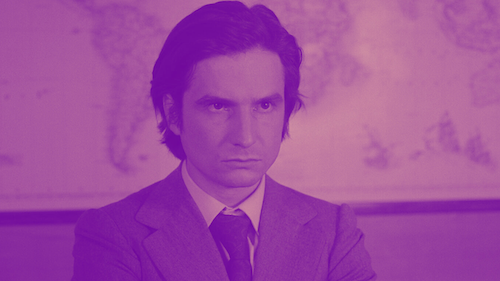
20. Love on the Run
The last film to involve the character Antoine Doinel (first featured as a child in The 400 Blows), Love on the Run doesn’t exactly end this series with a whimper, but I do think that this last entry acts merely as a closer of some sort rather than a narrative enhancement to any degree. We see Antoine get divorced, fall in love again, and try to maintain a reasonable life as an adult. I feel like this kind of simplicity has worked better with other Truffaut films (including other Antoine Doinel titles), but here, Love on the Run just performs like a slice-of-life film that won’t really affect you. At least it is nice to see Antoine’s story end on a bit of a high note regarding his plot thread.

19. Les Mistons
I consider the remainder of Truffaut’s films a leap in quality. His first official short film, Les Mistons (Une Visite remains nearly impossible to see, and Truffaut also wrote off this first attempt at making a film), is highly indicative of what we would eventually find in The 400 Blows: juvenile boys being juvenile boys. A gang of kids hound a gorgeous woman and her boyfriend; they do not understand how to channel their fancy outside of being bullies and pests. I appreciate how succinctly Truffaut captures what it is like to be a child with indescribable feelings and not knowing how what to make of them; he does so in the form of shit disturbers who one day may look back at this debauchery and scoff (the film certainly reflects as if we have grown up and no longer condone how we once were).

18. Two English Girls
Truffaut didn’t tackle the concept of a love triangle just once, but Two English Girls suffered when it was first released. It was deemed empty and maybe nonsensical; how could we condone the promiscuity of our protagonist Claude and even care about what would transpire for him? Many years later, Truffaut restored twenty minutes of Two English Girls that were once cut; he did so just before he died. He left us with a fuller depiction of Two English Girls: one of poor choices and haunting memories that swirl around us in the empty present. This is an interesting example of a filmmaker — particularly a former critic — who found fault with his own film and actually rectified it.

17. The Bride Wore Black
Truffaut championed Hitchcock for being a preliminary auteur, but the French New Wave director rarely resembled the British visionary outside of this exception: The Bride Wore Black. This suspenseful thriller is dark, stylish, and full of twists and turns; everything feels indicative of Hitchcock’s strongest classics. While I wouldn’t argue that this film can compete with Hitchcock’s best titles, The Bride Wore Black is still a hypnotic melodrama by a director who typically worked with nuance as opposed to aesthetics. I wish Truffaut made more psychological thrillers like this, seeing as The Bride Wore Black feels like a starting point or an experiment more than anything; even in such a state, this film is quite compelling, stirring, and exciting.
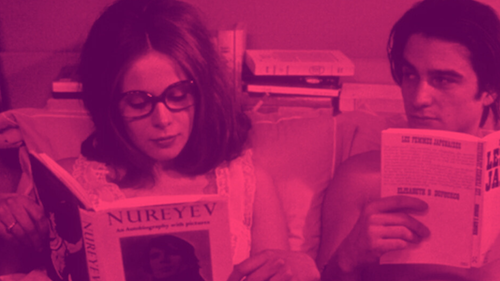
16. Bed and Board
The penultimate film in the Antoine Doinel series, Bed and Board is strong where the final film, Love on the Run, falters. Bed and Board places us within Antoine’s relationship with Christine and allows us to feel the mundane repetition of a comfortable life; of course, the stir-crazy Antoine has to try and find excitement again. This sublime allegory allows us to understand — and perhaps even sympathize with — a character like Antoine who cannot stop getting in his own way; the grass will always appear greener, and sometimes it is that dullness in everyday life that allows us to know that we have it made and don’t need to change a thing. I think Bed and Board embraces this existential concern quite well; how can we stick out if we are nestled in our right place?
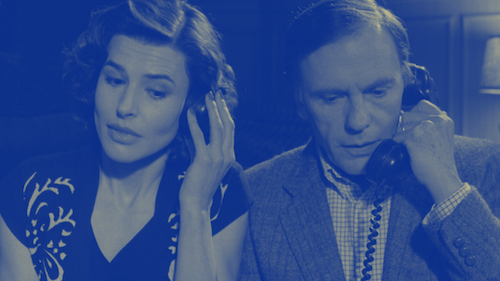
15. Confidentially Yours
Truffaut’s swansong, Confidentially Yours, feels like a revisit to a film like A Gorgeous Girl Like Me: a mixture of comedy, crime, and romance. The difference is that Confidentially Yours was made with far more maturity and wisdom, resulting in a motion picture that is authentically entertaining and enthralling. What guts me is that Confidentially Yours doesn’t feel like a final film in any way: as if Truffaut had a statement with this picture to end on. This is a sign that he had so much more to give: a film that was trying different things and getting fresh end results. Then again, maybe the best final point is to not have one at all: to let time speak on behalf of what a great like Truffaut has released and on that alone. Of course, this doesn’t mean too much in hindsight, but I wonder how unique a film like this felt back in 1983 (and how crushing it was when the world learned that there wouldn’t be any new Truffaut works afterward).

14. The Woman Next Door
Truffaut’s penultimate film, The Woman Next Door, almost feels more fitting as his final statement. It is far more privy to the kinds of themes and storytelling that Truffaut was highly known for, including complicated romances, moral dilemmas, and flirts with danger. If you are a fan of forbidden love in films like Wong Kar-wai’s In the Mood for Love, a film like The Woman Next Door should be on your radar as we follow two former partners who wind up living next to each other and become torn by how to act upon both their predicament and their passion. Truffaut takes the pent-up emotion of this circumstance and creates an unholy, stirring paradox.

13. Antoine and Colette
The 400 Blows put Truffaut on the map as a rising filmmaker. Shortly after, he would press his luck with returning to the source that made him a household name. It’s somewhat funny to see through hindsight how Antoine and Colette was Truffaut’s way of dipping his toe in the water — to see if creating more films about The 400 Blows’ Antoine Doinel could work (Antoine and Colette is a simplistic short film). The answer is yes (when handled correctly). Antoine is a teenager here and quite lost in life (given, you know, how he ran away from it all as a child in The 400 Blows); him meeting Colette is meant to promise certainty and purpose but Truffaut sneakily gives Antoine more to ponder about instead. This short film is a wonderful observation of how some relationships in our lives don’t define us but they certainly bookmark moments within our existence.

12. Fahrenheit 451
Truffaut’s adaptation of Ray Bradbury’s Fahrenheit 451 is more than just a noble attempt, considering how massive this undertaking is: Truffaut does an excellent job at enacting the dystopian dread of Bradbury’s polarizing novel. While I cannot completely ignore how dated some of the creative choices are here (this film is one of the only times that Truffaut worked with complicated and technical effects, and some have not aged well whatsoever), I can get on board with the matters that are far more important: the political commentary and the narrative drive. Fahrenheit 451 zeroes in on societal paranoia and the fears of blind agreements (which can lead to things like censorship): talking points that were clearly important to Truffaut, given his hatred for uninspired people and lazy art.
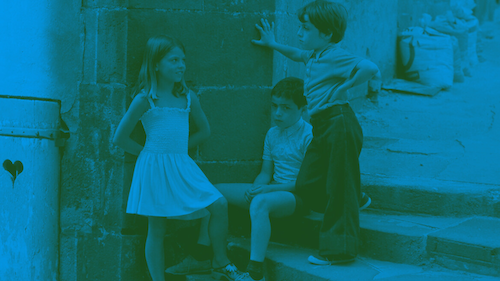
11. Small Change
Nearly twenty years after The 400 Blows, Truffaut returned to working with children in his highly-popular film, Small Change. While The 400 Blows feels like a motion picture meant for adults who are looking back on their childhoods, Small Change almost seems like an effort that is meant to make us feel like children again: that moment when we realized that the real world can be a brutal place, and yet we have our lives ahead of us and are pressured into figuring out how to make the most of our existence (I can see why this was an important title as a result). We feel the weight of the world on the tiny shoulders of a young boy and girl who try to make sense of their hardships; Truffaut breaks our heats with the unapologetic Small Change.

10. Stolen Kisses
The best film to revisit the character of Antoine Doinel, Stolen Kisses appears to be the best elements of the other three films (excluding The 400 Blows, I mean) combined in one terrific motion picture. Antoine falls in love here just like he does in Antoine and Colette (this time, it’s with Christine, who shows up in Bed and Board and Love on the Run as well). Stolen Kisses also mirrors Truffaut’s life closely enough: from not fitting in in the army, to feeling aimless in life and in search of having meaning. Somehow, Stolen Kisses takes the uncertainty of Antoine’s life in The 400 Blows and makes it funny; this is because he comes off as unorthodoxically charming here, to the point that you kind of want to see where he will awkwardly lead you to next.

9. The Man Who Loved Women
Nearly twenty years into his career, Truffaut was already considering what happens to us when we die; not where we go as spirits but, rather, what life on Earth will be like in response to our passing. he released The Man Who Loved Women with the notion that we live again though the experiences we pass on through others; in the case of protagonist Bertrand, this could be fully-realized romances or unfortunate relationships. Bertrand’s existence is pieced together via memories; his actions will wind up defining him now that he is no longer with us. Considering how the act of prolific loving is a constant theme in Truffaut’s works, The Man Who Loved Women clearly tackles this concept from a different angle: the effect that comes after cause.
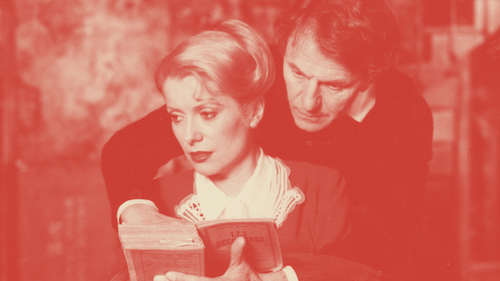
8. The Last Metro
The last film Truffaut made that I’d consider essential viewing is The Last Metro: a compelling drama that uses Nazi-occupied France as a backdrop and the concept of stage plays as a clever nod to the keeping of appearances when under extreme scrutiny. The Last Metro devotes itself to a certain narrative complexity that Truffaut usually forwent, resulting in a film that makes you think as much as it commands you to feel. With all of the narrative revelations that unfurl here, The Last Metro also stands alone as an uncharacteristic Truffaut film that comes off as occasionally intense. I wonder if Truffaut would have made other historical dramas like The Last Metro if he didn’t pass at such a young age; he was clearly really good at them.
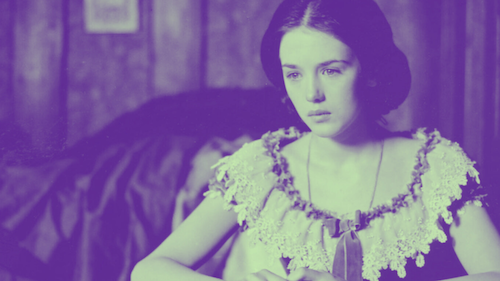
7. The Story of Adèle H.
After Truffaut made Oscars history with Day for Night (the film won the International prize and was nominated in ways that most international films usually never were at that point), he directed a historical biopic, as if he was bending towards the kinds of films that Academy voters would love. The Story of Adèle H. couldn’t be further from the truth. Spearheaded by one of the greatest performances in a Truffaut film (by the always sensational Isabelle Adjani), we connect with writer Victor Hugo’s daughter, Adèle, and her struggles with romance and schizophrenia. Truffaut paints history with watercolours that bleed together, rendering The Story of Adèle H. a blend of perspective, reality, and nostalgia. Needless to say, it’s quite the spell to watch Truffaut tackle factual events with his token sense of lush storytelling.

6. The Wild Child
On the topic of Truffaut telling true stories via his films, there’s The Wild Child about the lesser known subject of Victor of Aveyron: the most well known feral child in Europe (perhaps anywhere). With what almost feels like a continuation of ideas from The 400 Blows (what could have happened to Antoine once he ran off on his own), The Wild Child takes a real example of an independent youth and creates a dichotomy between a truly organic upbringing and society’s expectations for growth. Instead of making his film a sterile study of human behaviour, it encourages us to partake and understand via a grounded union between a filmmaker and his subject. The end result is oddly glorious and warm when The Wild Child could have easily been a reason for a director to get hysterical and showy.
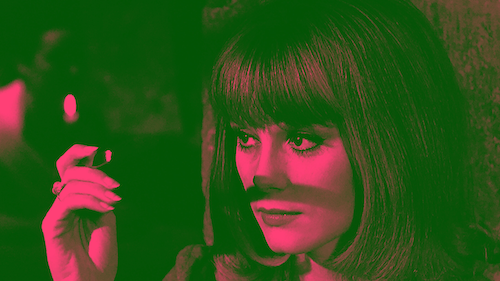
5. The Soft Skin
Is it possible for such a studied director with a modestly-sized filmography to even have an underrated film? I’d argue The Soft Skin is such an example. This film is just as emotionally rich and moving as most of Truffaut’s greatest works, and yet it is not nearly as discussed as the films you will find placed higher on this list (or even some of the titles I’ve placed lower). The Soft Skin takes a fleeting romance between a writer and a stewardess and crafts a fanciful-yet-anxious look at people at different stages of life with the same desires. The Soft Skin is willing to get dark as well, resulting in a payoff that I feel like Truffaut has been hinting at for most of his career and yet seldom resorted to (it works incredibly well in The Soft Skin).
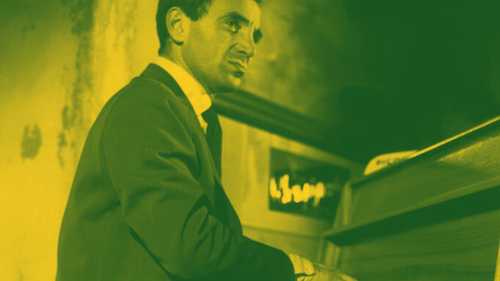
4. Shoot the Piano Player
Despite being an integral player within the movement, I’d argue that many of Truffaut’s films do not feel like the bulk of the French New Wave. Then, there is his sophomore effort, Shoot the Piano Player, which is indicative of the French New Wave movement through and through. A crime film with pure style, inventive ideas, and a focus on minimalism (let’s not forget the constant danger that is present that feels more Godard or Chabrol in nature), Shoot the Piano Player feels like a film made by a director who was bursting with creativity and who felt like the sky was the limit. While this usually invites bad habits by directors with zero self control, Truffaut exhibits a strong handle of the filmmaking craft with his second film Shoot the Piano Player: one of his finest films.

3. Jules and Jim
The top three films here are almost of equal importance and brilliance to me, so I wouldn’t take their placement as any form of an insult. I cannot stress enough how every separate part of Jules and Jim converge together, creating a seamless and jaw-dropping final result; Jeanne Moreau has never been better than she is here as a lover torn between two male friends (the titular Jules and Jim); Georges Delerue’s score — one of the all time greatest — is the perfect whimsical soundtrack that never feels kitschy, lazy, or misguided (instead, it turns Jules and Jim into both a carnival and a somber-yet-pretty portrait). This is maybe the ultimate love triangle in all of cinema, and Truffaut’s execution here is almost impossible to describe; as if we are watching three lives simultaneously zip by us and collide into one another along the way.
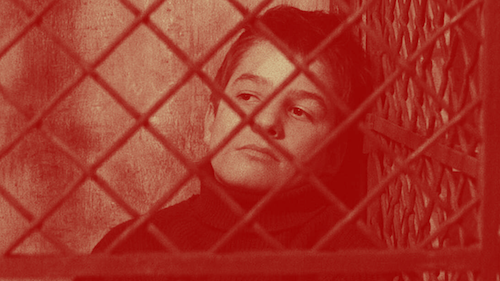
2. The 400 Blows
Perhaps the film that kicked off the French New Wave once and for all, Truffaut’s first film, The 400 Blows, is easily one of the great directorial debuts in all of cinema. He gets away with a tonal blend that combines the curiosity of a child with the frustration of society that doesn’t condone mischief. Antoine (played by the acting legend Jean-Pierre Léaud, who worked with Truffaut time and time again, including returning as Antoine) becomes a placeholder for anyone who has ever felt like they have not met their potential within their youth, and — while I would never condone awful behaviour — it almost feels cathartic (yet reprehensible) to see Antoine act out; my heart does break whenever he is punished. Antoine becomes a fighting spirit who wants to live yet not confide by the rules of others: the ultimate manifesto of the French New Wave movement’s quest to make art free and unrestrained again. One of the great coming-of-age tales, The 400 Blows was more than just a promised bright future for a then-newcomer: it became a cinematic precedent of powerful-yet-poetic filmmaking.
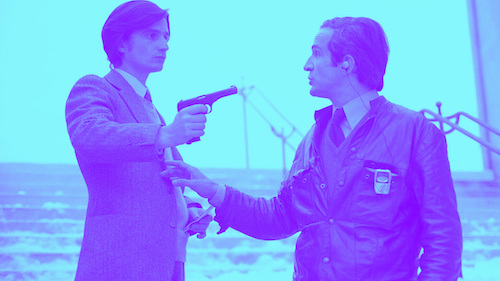
1. Day for Night
While I hold Godard in a high regard, I respectfully disagree with his stern opinion of Day for Night: the film I consider Truffaut’s magnum opus (not that I have ever directed a major feature film, mind you). As we follow a film being made within a film, we get a meta statement on the filmmaking process; this line between reality and fiction is blurred even more by the inclusion of Truffaut himself as a director within his own motion picture. Much of the production is hindered by the private (made public) lives of the cast and crew here; in the same way that Truffaut made art out of the delinquency of all walks of life, he finds prose within the inner workings of the film industry and its politics. To me, art imitates life which imitates art in Day for Night: an exemplary affair that has astounded me since the first time I watched it.
What makes this film feel special to me is how much authentic “movie magic” it gushes. When I think about the illusion of the filmmaking experience, Day for Night feels completely fueled by it. After a particularly shocking climax, the film is punctuated by the art of making fake snow to cover the area; a sequence that brought tears to my eyes. This level of magic is why cinephiles like myself fall in love with the medium; it comes at a bittersweet moment as a distraction but, then again, films can help heal us when we are broken or depressed. Even if Godard happens to be right — that this isn’t an accurate representation of what filmmaking is like — this is what films are to the romantics like me who are always chasing the captivation that cinema can possess; in Day for Night, it is present in every single watch. Despite the stiff competition of the top three films here, I have to select Day for Night as François Truffaut’s crowning achievement because of how singular it is, how it always touches and enthralls me, and how — even with all of the darkness and complexity that we can no longer hide from within the film industry — it forever reminds me of how strong a bong a director can have with their film and their audience; we are all equals in Day for Night, and we are simultaneously spellbound by the magic of motion pictures.


Andreas Babiolakis has a Masters degree in Film and Photography Preservation and Collections Management from Ryerson University, as well as a Bachelors degree in Cinema Studies from York University. His favourite times of year are the Criterion Collection flash sales and the annual Toronto International Film Festival.