
Filmography Worship: Ranking Every Charlie Kaufman Film
Written by Andreas Babiolakis
Filmography Worship is a series where we review every single feature of filmmakers who have made our Wall of Directors (and other greats)
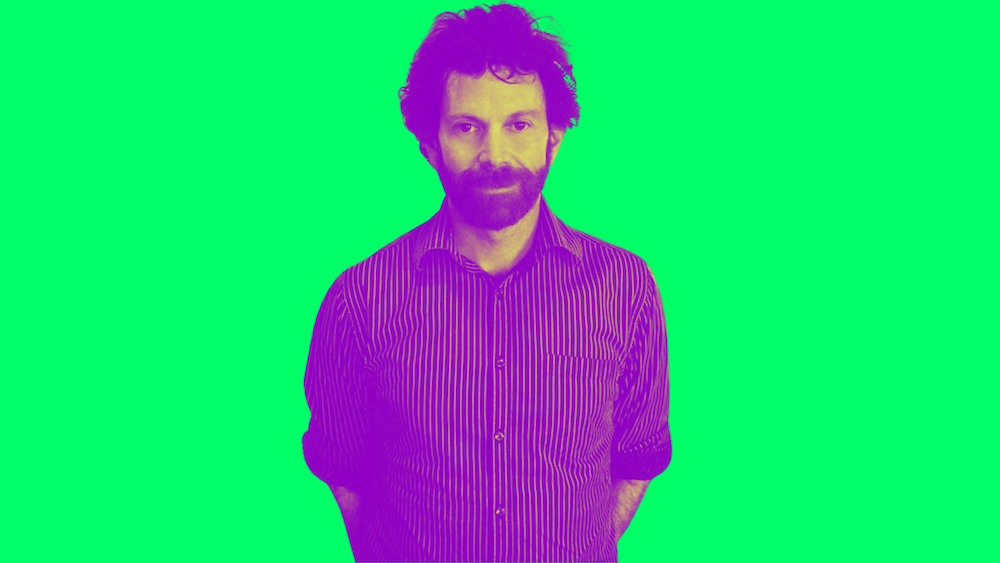
One of the greatest opportunities I’ve ever had as a cinephile was being able to tell Charlie Kaufman that he is the greatest screenwriter of all time, and that I feel seen thanks to his magnificent depictions of existential dread in his works; he nervously laughed and was unsure of how to take both the praise and the mutual anxiety (sorry about that, Mr. Kaufman). I wasn’t blowing smoke. It’s true: I do think that Kaufman is the greatest screenwriter in the history of film. He may not have as many works as a Billy Wilder or a Paddy Chayefsky, but I feel like Kaufman has a consistent quality present throughout his writing. I can always anticipate that my mind will be rewired, that my conscience will be analyzed, and that those frequent murmurs in my head will be tended to. Kaufman is a master of meta storytelling: a theme that is present in every single project he has ever tackled (even in a family film like Orion and the Dark, as well as his magnificent novel, Antkind — no surprise, Antkind is one of my favourite novels of the twenties thus far).
What makes Kaufman’s take on meta writing so effective is how the writer breaks down the complexities of the human mind and heart without ever dumbing down how intricate we are as beings; nonetheless, he takes on the ordeal with complete uncertainty, rendering his attempts vulnerable and open (thus allowing us to share this risk with Kaufman). Kaufman’s stories never profess to hold all of the answers, but his beautiful renditions of emotional and intellectual ambiguities is something I will never tire of; we may not understand why we are the way that we are, but, thanks to Kaufman, we can at least navigate these impossible concepts with some sort of unorthodox normalcy (a paradox, I know). Furthermore, Kaufman allows his films to expose their insecurities as well, to the point that some of his motion pictures — written or directed — break themselves in ways that allow us to identify with them. You see, many films try to come off as complete, polished, or perfect: an illusion of glitz and glamour that act as nice forms of escapism but also may keep us distanced from them as a result. Kaufman’s films invite you into his mind with concepts that may seem warped on paper; in reality, Kaufman is exposing how we really are all alike, and our fears and concerns are mutual. His films share the same notions; not only do we see ourselves in his films, they become a part of us and how we think, feel, or love. Furthermore, Kaufman does so not just with cynicism but with comedy as well, allowing us to laugh at abstract peculiarities that we usually cannot even describe; now that takes talent.
After a few years working with similarly imaginative directors Spike Jonze and Michel Gondry (both known for their fantastic music videos before they started working with Kaufman), as well as George Clooney’s directorial debut (Confessions of a Dangerous Mind), Kaufman went from being solely a screenwriter to becoming a director as well. While the leap can sometimes be a wobbly one (some screenwriters do not translate well as directors), Kaufman has shown that he is extraordinary behind the camera as well; again, he may not have many projects, but his near-perfect consistency continues. There won’t be many films to get through, so ranking them won’t be much of a challenge; as a result, I will be ranking Kaufman’s screenplays in a separate mini-list at the end of this article; I do want to emphasize that that list will be in order of what I think his best screenplays are, not films that he has written for (though, to be fair, the rankings would be quite similar either way). I can’t solve any of life’s biggest questions, but all I can do is champion someone who has tried their best to. Here are the best films by Charlie Kaufman ranked from worst (or, in this case, least-best, because he doesn’t have a single bad film to his name) to best.
5. Jackals & Fireflies
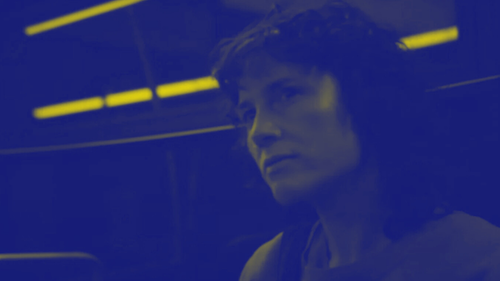
One of two short films that Kaufman has directed in tandem with poet Eva H.D., Jackals & Fireflies feels more like a favour done from a friend than a stand-alone project. Shot entirely on a Samsung Galaxy phone, Jackals & Fireflies feels more like a montage of late night brainstorm sessions than anything overtly concrete; this isn’t a bad thing, but some short films feel like experiments as opposed to something more, and Jackals & Fireflies is an example of this. Kaufman takes a step back so H.D.’s writing can take precedent here (H.D. also stars as the lead narrator and star here). Jackals & Fireflies makes sense as a union, because H.D. shares the same kind of philosophical and psychological musings that Kaufman has always displayed, and so it existing makes sense (beside, if Kaufman was to allow anyone else to write a film for him, it would have to be someone as fantastic as H.D.). I’ve ranked this short film the lowest because it does feel like a test run more than anything, and I feel like it impacted me the least of all of the higher-ranked works; I still recommend Jackals & Fireflies for those of you who love to let your mind wander in the heat of the night (and see what that may look like in visual and audible form).

4. How to Shoot a Ghost
Kaufman and H.D. would work again on another short film, How to Shoot a Ghost. Now this feels like a complete film (and a damn good one at that). After studying in Athens, Greece, H.D. had much to say about the dual nature of what she saw; tourists and refugees getting treated differently despite having a lot of commonalities; graffiti tags plastered all over a city rooted in the exposure of an ancient civilization; the remnants of a country that has gone through wars, economic crises, and political turmoil (all while having such glorious and happy people nonetheless). Kaufman matches H.D.’s haunting writing that likens all of the above to a fantastical relationship that transcends time and space and connects the living with the dead; here, Kaufman still allows H.D.’s writing to shine, but he doesn’t remove himself. This partnership is glorious, with a highly dense film that will leave you questioning the ephemeral nature of permanence.

3. I’m Thinking of Ending Things
I’m Thinking of Ending Things remains Kaufman’s most underrated feature film. Released during the pandemic (which is always a promising fate), this is the film that Kaufman perhaps breaks the most (I don’t believe that the film being condemned to a streaming service for its entire life has done it any favours as a result). As we are locked inside of a mind that is hellbent on change (mainly in the form of ending a long term relationship during an important dinner with his parents), we follow Kaufman’s daydreams into obscure avenues in ways that shatter the linearity of life and reality. The end result is a revelation: nothing ever truly ends. In the face of films that try to bring richness out of ordinary beings (like, say, The Life of Chuck), I’m Thinking of Ending Things does an unparalleled job of rendering our mundainity exquisite (and, occasionally, nightmarish); we have considered our milestones and lives minuscule and trivial, but we truly are magnificently complicated beings (for better or — in the case of I’m Thinking of Ending Things’ limbo-esque paranoia — for worse).

2. Anomalisa
I am happy to see that Anomalisa has had a bit of a resurgence with cinephiles. Sure, it had a bit of a run when it first came out, but I still believe that it may be one of the greatest animated films of the twenty-first century (and I never wavered on that sentiment). The idea of casting Tom Noonan as literally everyone else on Earth except for protagonist Michael (David Thewlis) and Lisa (Jennifer Jason Leigh) is incredible in capturing the droning miasma of being alive in a world that doesn’t care that you exist. Having the film be a stop-motion affair conjures up many additional concepts to chew on, including the facade of having a soul, and the fragility of Michael’s mind when his mental health worsens (Kaufman teamed up with animator Duke Johnson, who acted as a co-director here). The end result is an existential nightmare that left me feeling changed ever since I saw the film; how could life be so brilliant and yet so painfully ordinary; how did Kaufman know that others feel this way; how did Kaufman figure out how to best represent this depression?
1. Synecdoche, New York
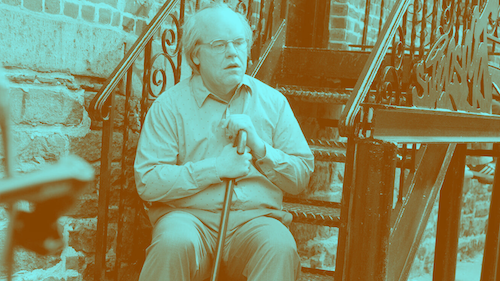
I think it goes without saying that Synecdoche, New York is Kaufman’s best directed film. What was once an ignored project upon its release has now become a revered, existential epic of endless ambition and the ticking clock of mortality. It’s appropriate that this is Kaufman’s first feature length film as a director because Kaufman reveals his self-doubt and ability to capture all of his soaring ambitions into one project; it is unquestionably an impossible feat. Whereas other first-time directors will fly too close to the sun, Kaufman recognizes the dilemma at hand and decides to depict that struggle instead of the unobtainable end result. What we get is a glorious film about our individual quests for legacy: will we matter when we die? Synecdoche, New York gives us two answers. Firstly, nothing matters when we die. Secondly, even if we do not feel like it, we all matter while we are alive. We all feel like we do not, but our dependency on one another proves that other people matter to us (and, subsequently, we must matter to them). Kaufman understands the ridiculousness of encapsulating everything into one film; yet, by avoiding doing so and acknowledging the futility of even trying, Kaufman oddly succeeds in making Synecdoche, New York a picture that does represent everything. It is a postmodern masterpiece of the twenty-first century and Kaufman’s greatest film as a director.
Quick Recap On Charlie Kaufman’s Screenplays
I will ignore films that Kaufman has allegedly had a hand in helping ghost write or rewrite, like Kung Fu Panda 2, since I do not know the capacity of which he wrote for these films (nor do I feel like they are heavily indicative of his style). I will briefly go into the films Kaufman has directed since I have already said my piece for each above (so, clearly, I will be avoiding the short films Eva H.D. wrote for this list) and will explain the film directed by other filmmakers a little more so you can hopefully understand my opinions on each entry.
9. Human Nature
•I once hated Human Nature as a teenager, but I think I understand the film a little better now (I’ve been around adult people for long enough, I suppose). Having said that, I’m still ranking it last. I don’t think it is horribly written, but I think that Kaufman’s depiction of humanistic urges and compulsions only goes a portion of the distance it should easily clear. It is a rare moment where Kaufman feels too uncertain with what he is trying to say here, to the point that the film dives into absurdity to save face. I still think that the screenplay has some neat ideas about the oddities of human beings, but these are also concepts that Kaufman has covered better in other films. Not that this matters for ranking Kaufman’s screenplays, but I also feel like Michel Gondry’s well-intentioned direction doesn’t do Kaufman’s writing many favours; his cheekiness and silliness render Kaufman’s words a little impossible to take seriously at times.
8. Orion and the Dark
•I enjoy this family film more than I thought I would mainly because of Kaufman’s self-aware screenplay; here is a motion picture for kids that also addresses adult viewers with deep cinema references (Werner Herzog’s cameo appearance helps), metafictional trickery, and strong comedic lines (oh, let’s not forget the somewhat mature depiction of anxiety and dread). Oddly enough, I will also point out the middle section of the film as an unusual misstep by Kaufman: the second act meanders quite a bit to the point that you wonder if Kaufman wasn’t sure of were this story should go (something I usually never feel with his writing). The film sticks its landing with Kaufman’s signature heart as he recognizes how monumental the little things can be. I appreciate Kaufman trying to make a film for children, and I would argue that Orion and the Dark mainly works.
7. Confessions of a Dangerous Mind
•Another Kaufman-penned film I didn’t appreciate as much when I was younger, George Clooney’s surreal take on television icon Chuck Barris’ fabricated memoir makes more sense to be as an adult cinephile who has watched far too many films; this take on Barris’ life (and what he made up about it) stands out as a commentary on the trustfulness of biographical pictures in the first place. Kaufman focuses on what is going on in Barris’ mind as he tells this questionable story about a possible CIA connection (and the murdering of many targets); Kaufman’s version allows us to not scorn Barris for lying — rather, we try to understand how someone could come up with such a tall tale in the first place. I recognize Confessions of a Dangerous Mind’s purpose now, especially in the day and age of information being more susceptible to fabrication than ever before.
6. I'm Thinking of Ending Things
•Kaufman’s adaptation of Iain Reid’s novel is beyond an earnest attempt: it reads like a grand slam. As Kaufman worked on writing a novel that would be impossible to adapt into a film (Antkind), he pulls off the miraculous feat of turning Reid’s seemingly-difficult source material into a motion picture that nails the assignment (while maintaining the postmodern openness of Reid’s writing).
5. Anomalisa
•While I may place Anomalisa higher if I was simply ranking all of the films that Kaufman had a hand in, I am ranking his screenplays here; thus, I think that Anomalisa is amongst his greatest films, but I do have to tip my hat to the scripts that are just stronger. Nonetheless, Anomalisa is still wonderfully written, with a clever premise to perfectly depict dooming depression and societal pressure to the point of numbness.
4. Adaptation.
•How do you adapt a novel? You can be literal, or you can turn the process of adaptation into an artform. That’s what Kaufman did with the appropriately-titled Adaptation., directed by Spike Jonze. Kaufman writes about himself whilst also turning his intellectual surrender to commercialism into a fictional twin brother (amazingly, Nicolas Cage plays both Kaufmans). Instead of directly adapting Susan Orlean’s The Orchid Thief into a motion picture, Kaufman captures the hell of having writer’s block, and all of the introspective nervousness that the writer may have been experiencing while dealing with such a task. I cannot emphasize how unique this premise is; it may be one of the greatest ideas for a screenplay in film history. I’m placing it just fourth because I believe that Kaufman was able to make even stronger characters and ideas come to fruition with the top three films, but Adaptation. is unlike anything else you may ever see.
3. Being John Malkovich
•Kaufman’s first screenplay — and Spike Jonze’s directorial debut — shakes up the concept of what personalities can be. There’s the literal version in Being John Malkovich where a failed puppeteer discovers a way to get into the mind of the titular actor (playing himself, of course) and control his body and actions; does that make the puppeteer actually John Malkovich? Then, there is how we are perceived; Malkovich is recognized by his peers and fans in one way, while the puppeteer controlling him will never be acknowledged or appreciated (especially when he devotes his time to being someone else). I certainly felt different after watching Being John Malkovich: as if my mind is one component that is separate from my body, and that I should embrace the auto-pilot sensation that leads me past my imposter syndrome and my crippling anxiety; I give this film some extra points for easily being Kaufman’s funniest writing to date (“What makes you think I won’t be seeing what you’re seeing… in court?” will always kill me).
2. Synecdoche, New York
•If Kaufman’s direction of Synecdoche, New York posed the impossibility of creating a production that encapsulates everything, his writing pulls off a similar miracle. The inventive characters and world building (from growing sets to shrinking paintings) create a seamless perspective of the daunting experience of being alive and wanting to matter. I cannot stress enough how gorgeous and devastating this film is, particularly in its writing.
1. Eternal Sunshine of the Spotless Mind
•One of the greatest screenplays of all time is Kaufman’s work for Eternal Sunshine of the Spotless Mind: a twenty-first-century rewrite of what a romantic drama can be. We explore a failed relationship in reverse as our protagonist’s mind is being slowly erased; he begins to cling on to the mementos that will soon cease to exist. In going backwards, we learn why this relationship faltered while also discovering how these two lost souls fell in love in the first place. In this instance, director Michel Gandry keeps up with Kaufman’s writing in exquisite fashion, creating a science-fiction romance for the ages. Eternal Sunshine is extraordinarily creative with how it represents love, yearning, loneliness, memory, and the vicious passage of time (especially when we are never clear on the road ahead). Not many screenplays appear to reinvent the wheel, but Kaufman’s Eternal Sunshine is a rarity that is unequaled. I consider it his best screenplay to date (not an easy feat, considering how strong a majority of Kaufman’s scripts are).


Andreas Babiolakis has a Masters degree in Film and Photography Preservation and Collections Management from Ryerson University, as well as a Bachelors degree in Cinema Studies from York University. His favourite times of year are the Criterion Collection flash sales and the annual Toronto International Film Festival.