
Filmography Worship: Ranking Every Robert Bresson Film
Written by Andreas Babiolakis
Filmography Worship is a series where we review every single feature by filmmakers who have made our Wall of Directors
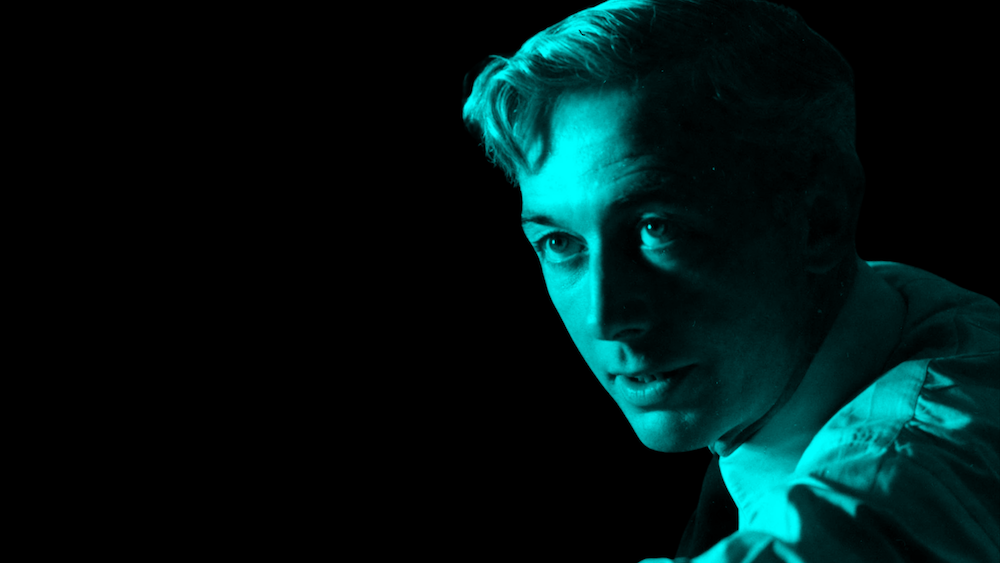
It feels almost sacrilegious to write an entire deep dive on a director who couldn’t have been more precise and minimalist with his filmmaking. Robert Bresson was born September 25th, 1901, and lived to the ripe age of ninety eight, passing just weeks before the turn of the twenty-first century (December 18th, 1999). He lived and breathed the major eras of cinematic history; the shift from silent films to talkies; the rise of colour stock film; the birth of physical media to enjoy films within the confines of one’s home; the spark of digital filmmaking. Regardless of the times he existed within, Bresson never strayed away from his visions. Watch a typical Bresson classic, and you will see a film unlike any other: a character study with noticeable cross-cutting, a boiled narrative with any sense of pretension evaporated, and his implementation of filmic ellipses (omitted segments of sequences, encouraging audiences to fill in the missing pieces themselves). Not once did Bresson waver from his style once he established it, and he never conformed to convention (even his earliest, more “traditional” works feel unique).
Born at the Bromont-Lamothe commune in central France, Bresson was interested in fine art from a young age, aspiring to paint when he first reached adulthood. This would lead to photography, and then another visual medium: cinema. He made a short film, Les affaires publiques, in 1934. A film that is normal by the standards of most but unorthodox for Bresson, this screwy comedy maintains a fixation on the concept of spectacle, as we see ambitious sequences like a spiraling airplane in the sky. Bresson would also serve as a screenwriter for other projects, including Claude Heymann’s The Brighton Twins. Bresson was wide-eyed and dedicated to exploring how film would differ from other visual devices. Shortly after, World War II broke out, and Bresson enlisted to fight for France. During his service, he was captured by the Germans and was a prisoner of war for over a year and a half, confined to a labour camp during this time. He survived, but he left a changed man: one who searched for questions and aimed to find solace within agony within his art.
His debut feature film was starkly different from the carnival-esque wonder of Les affaires publiques. It was Les Anges du péché (or Angels of Sin) in 1943: a serious, dramatic, Catholic introspection. Although still mainstream in tone, Bresson clearly did not possess the same gaze he did before World War II. He strived to say something with his films, not cater to how they could be vessels of escapism: no longer was Bresson using his craft to allow others to be blind to the horrors of the world. Still, Les Anges du péché was a somewhat hopeful film, and so was the follow up, Les Dames du Bois de Boulogne. It was around the release of Diary of a Country Priest where Bresson’s soul searching progressed in ambition, and he was suddenly turning film into art: moving paintings where shots lingered, sentiments weren’t spoken but were felt, and splices dug into your soul (editing is meant to be a seamless illusion that you aren’t meant to notice; Bresson’s films made cutting a notable part of the art form). He was exploring the concept of religion (specifically Catholicism) with much more scrutiny now. Once he did, a deeply personal film was next in store for Bresson. A Man Escaped depicts a prisoner of war scheming to flee from a German camp; while an adaptation of André Devigny’s memoir, it was a topic that was blatantly important to Bresson.
However, Bresson’s analyses of human devastation didn’t stop there, and he only got more fascinated with how bleak civilization can be. As he portrayed aspects of humanity that felt worse and worse with each subsequent film at times (and how ugly people can be to one another; to ourselves), he also was mesmerized by the relationships that separate shots can have with one another. Adjacent images can tell a story (a worried stare cutting to a close-up of a hand with a concealed item, then cutting back to the same concerned scowl as it slowly shifts to look at the holder of said item). Bresson seemed to be transfixed by montages and finding harmony between unrelated film takes; this grew into more daring experiments, like cutting out the crux of scenes to leave us guessing, momentary segues into drastically unfamiliar images before we are jettisoned back to the film (and are left wondering why we were taken away), and many other crafty ideas that challenged what film could be.
As experimental and harrowing as Bresson got, he never made a bloated feature film: not once did he ever crack even two hours with any of his motion pictures. Even though his films encouraged discussions and mental tugs-of-war, his stories were as direct as can be. Bresson made artistic films, but not in a fleeting, spiraling way but rather via uncomfortable confrontations; if the subjects of his features were full of desparation, the harmony was found via the waltz between the cinematography and editing of each project. Humans can be vile, but art can be exquisite. We often saw both elements in his films. In that same breath, Bresson found light within many of his protagonists, hoping to restore faith in humanity via those who struggle against the world (as we root for them), whether these characters are a little girl, a donkey, or Joan of Arc. Bresson also found beauty within the world even if there were a plethora of monstrosities that took place upon its crust via stunning images of nature and architecture. For as much hostility and hate that can be found in Bresson’s films, there are also valiant efforts to remind us that there is inherent kindness in all of us that many have chosen to silence in favour of lust, greed, deception, and power; perhaps this is why Bresson’s films hurt to watch, seeing as we witness these flames get put out by oppressors.
Bresson was reportedly a very quiet man who didn’t reveal much of his life, even to those who worked directly with him on set. He also has a rather reclusive filmography, having released only thirteen feature films between 1945 and 1983; despite living to 1999, he didn’t release a film after L’Argent over fifteen years earlier. An exerciser of the quality-versus-quantity model, I don’t think there are many directors who have a filmography as pristine as Bresson’s. At his very worst, Bresson’s filmmaking is sublime. The strongest Bresson films are otherworldly depictions of Earthly tragedies, as if they are told from a benevolent force that begs us to answer why humans are capable of such atrocities (all while spotlighting the beacons of perseverance amidst us). It’s easy and cheap to proclaim Bresson’s filmography the most depressing in all of film history (to be fair, that may very well be the case) because such a blanket statement neglects to champion how introspective, stirring, and effecting his works are. In the end, Bresson was one of the great cinematic artists: a pained soul who put all of his fears and inquiries out in the open to console us, letting us know that our existential paralysis is shared; we feel alone, but we are not alone in feeling so. Here is a near-perfect filmography that focuses on both the brilliance and hideousness of imperfect people. Here are all of the films of Robert Bresson ranked from worst (if any film can be labeled as such here) to best.
Trigger Warning: a number of these films deal with the concept of suicide. Reader discretion is advised.
14. Les affaires publiques
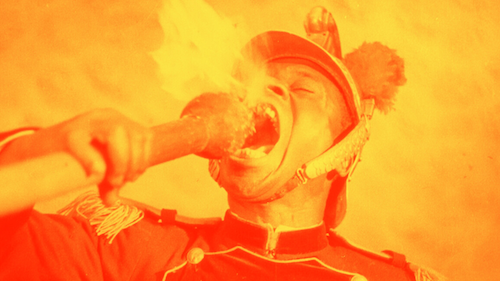
Like an artifact from an alternate dimension, to see a film like Les affaires publiques bear Bresson’s name is quite shocking. This screwball comedy about two republics — Congrandia and Miremia — is all kinds of silly, down to a montage with the most contagious yawn in the world (one that creates a domino effect, rippling through the crowd, and leading up to a midair pilot whose plane takes a nose dive as a result of this sudden exhaustion). As goofy as Les affaires publiques gets, there’s something kind of marvelous about the film, perhaps the serious way the film was shot and assembled, despite the jovial tone. Believed to have been burned in a fire during World War II, Les affaires publiques resurfaced once found in 1986, after Bresson released his final film (L’Argent). It’s strange to look backward and see what Bresson could have been had he not fought in World War II; a film like Les affaire publiques points to a different future, one where Bresson could have been the next Charlie Chaplin or Buster Keaton (technically and narratively proficient directors within the early days of comedy). Despite clearly being Bresson’s worst film of any kind, I cannot hate a film like Les affaires publiques that wind up being smarter than they lead on.
13. Les Anges du péché
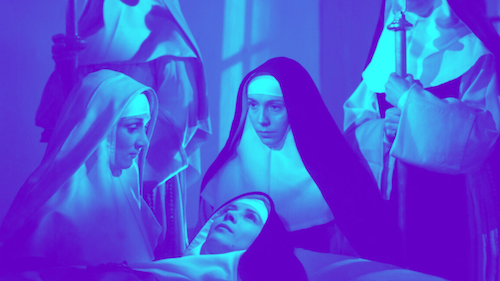
Les anges du péché — or Angels of Sin — is Bresson’s debut feature film. Released nine years after his short, Les affaires publique, there is a stark contrast between the slapstick comedy and this expressionist quest for clemency and salvation. I know this film is ranked second last, but I’d honestly recommend any film from this point on with the rest of the ranking, including this gorgeously shot tale of prisoners-turned-nuns in a Dominican convent. While not bloated by any means, Les anges du péché does feel like it is actively trying to tell more story than your average Bresson feature; he would eventually learn to make his craft feel effortless. You can already see the signs of Bresson trying to make sense of the complex consciousnesses of human beings in Les anges du péché, noting that good people are capable of awful actions (and vice versa). If you have put off Les anges du péché because it isn’t as acclaimed or challenging as the biggest Bresson films, I implore you to reconsider: it’s quite something.
12. Les Dames du Bois de Boulogne
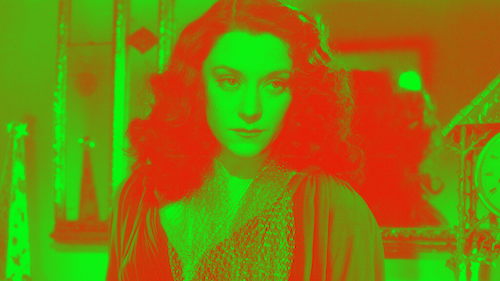
The last “conventional” film Bresson ever directed (down to having a straightforward plot, professional actors, and melodramatic tendencies) is Les Dames du Bois de Boulogne: an adaptation of Denis Diderot’s Jacques le fataliste. Despite the Hollywood-esque tendencies, Les Dames du Bois de Boulogne feels as though Bresson wasn’t fully comfortable with the idea of colouring inside of the lines. A young dancer’s (Agnès) struggles are shown via the turn to prostitution in order to survive. A broken-hearted woman (Hélène) aims to exact revenge on the love of her life, Jean, by promising Agnès she will pay her enough to rid her of poverty. The catch is: Agnès must get Jean to fall for her and then break his heart. Bresson takes this notion quite literally during the hyperbolic climax which involves the concept of one’s heart slowing down and failing (I do mean their heart as in the organ this time around). Les Dames du Bois de Boulogne plays by the rules of safer cinema but, even then, Bresson is itching to tell something greater: a commentary on class suffering via the self-awareness and understanding that tired cliches can only go so far (it is this acceptance that allows the film to flourish far more than motion pictures that lie to themselves — and to us, the audience).

11. Four Nights of a Dreamer
Setting has always been important in Bresson’s films, but in Four Nights of a Dreamer, the city of Paris feels like an actual character. As we follow Jacques (a starving artist) and his journeys through Paris and its outskirts, we see a location that is as all-consuming as it is an expansive home. As if Bresson was tired of making the most depressing films imaginable, Four Nights of a Dreamer is quite light in tone (while not being fully blissful). While Bresson was never a part of the French New Wave movement, his works did influence many of the partakers of said style, and a film like Four Nights of a Dreamer is the one time where both mindsets aligned, even if accidentally. Reminiscent of something François Truffaut would have made, this film’s take on an artist and his new friend, a woman he convinces to not jump off of the Pont Neuf bridge to die, is a lush daydream; this sentiment is solidified by the tasteful use of flashbacks to tell the backstories of two lost souls over the course of four nights. Students of the French New Wave have also made works similar to Four Nights of a Dreamer since; Richard Linklater’s Before trilogy; Woody Allen’s Midnight in Paris; Wes Anderson’s Hotel Chevalier. Considering how difficult it is to see Four Nights of a Dreamer due to distribution conflicts, maybe all of these filmic “descendants” were unintentional as well, but see this as a recommendation to watch this overlooked, atypical Bresson film if you like the aforementioned titles.

10. The Devil Probably
If Four Nights of a Dreamer was a means of dissuading one from suicide, Bresson’s penultimate film, The Devil Probably, is the understanding that some may be beyond saving from their internal demons. Perhaps a means for Bresson to hypothesize the many impossible, existential questions he needed to expel from within himself, The Devil Probably is less of a story and more of an analysis of a young, jaded student who already feels like he is at the end of his life; maybe an older Bresson is using the camera lens as a vessel to try and look back at the disillusioned youth of contemporary society while understanding two truths (that life can get harder than this, but it can also get better and we can get better at coping with it). In the same way that this student concludes that the devil is responsible for these suicidal tendencies, Bresson titling the film as such is a curious statement: tossing in “probably” is a reminder that the devil is the root of evil to those who are religious, and a human-created concept to non-believers (in the end, humans are capable of their own errors, sins, and disasters, regardless of what you believe).
9. A Gentle Woman
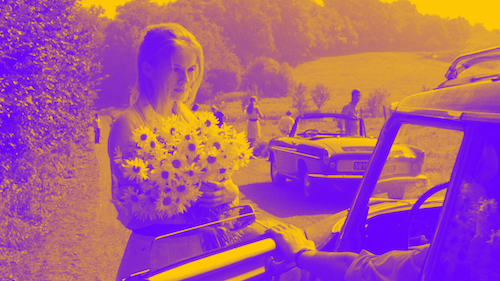
A Gentle Woman begins with the unimaginable: a woman jumping from her balcony, with her white scarf floating in the air (like her departed spirit). We know nothing about her. We hardly even know what she looks like. Yet, we ache for her and wonder what happened. A Gentle Woman rewinds back to the beginning to explain it all; it feels intentional that a film about memory is Bresson’s first film to be shot in colour. However, there’s a conflict between nostalgia (the will to live) and terror (a depressing relationship) that is ever so present throughout this film as we watch a protagonist’s clear dilemma: she loves life, but she hates her life. One of Bresson’s adaptations of the works of Fyodor Dostoevsky (A Gentle Creature, here; Dostoevsky’s White Nights became Four Nights of a Dreamer), it is clear that both philosophically-driven minds were plagued by sociopolitical realizations: those with the biggest hearts suffer more than cold, manipulative exploiters. With A Gentle Woman, Bresson encourages us to not fall in the same trap: there will always be more to life than what appears to engulf us, even if we don’t realize it.
8. Lancelot du Lac
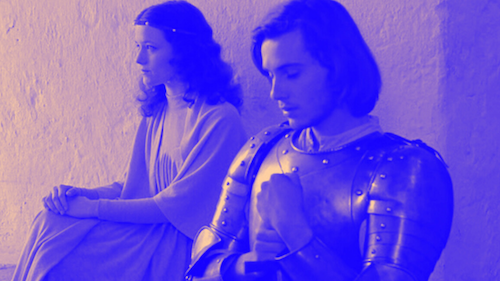
If Bresson seemingly adhered to the Hollywood codes of conduct with his earliest films, then Lancelot du Lac is possibly his most anti-Hollywood feature (at least in structure). Other directors would take the story of Lancelot, King Arthur, Camelot, and Guinevere (the whole nine yards) as a means of telling an ambitious, epic, highly-produced affair. Lancelot du Lac almost feels like a comment on this line of thinking. Instead of elaborate action sequences, Bresson gives us flashes of hyper-gory nightmares that blip out of existence, leaving us to question if we even saw what just transpired (a taste of bloodlust for those who crave it). Instead of massive jousting sequences, Bresson creates a repetitive, hypnotic montage of closeups and noise: a cycle of triumph and loss. Lancelot du Lac plays like a fever dream more than a traditional medieval epic; this makes for a highly visceral, singular take on an overwrought, exhausted genre. There’s no film about the lore of the Middle Ages that feels like Lancelot du Lac: a glorious exercise in artistic minimalism.

7. The Trial of Joan of Arc
While the ultimate depiction of Jeanne d’Arc (or Joan of Arc) will always be Carl Theodor Dreyer’s The Passion of Joan of Arc (mainly due to Renée Jeanne Falconetti’s unparalleled performance), Bresson followed this huge undertaking with a film that is also deserving of acclaim. The Trial of Joan of Arc is similar to Dreyer’s film (outside of being a sound film versus one that is silent) in that we accompany Joan in her final hours — before her execution due to her involvement in the Hundred Years’ War. Bresson has always shown his religious dilemmas on the big screen, but none are as apparent as the one here, where Bresson finds solace in Joan’s perseverance and strength but hypocrisy and hatred within those who condemn her to death. Seeing as Bresson is not one to shy away from humanity’s worst capabilities, The Trial of Joan of Arc goes into the many nightmares Joan endured before she was burned at the stake; Bresson likens her death to Jesus Christ’s crucifixion as acts of martyrdom. Despite being just an hour long, The Trial of Joan of Arc feels like an eternity: one where we see the universe die in the eyes of a tortured angel, but the glow from her spirit will never dim.
6. Diary of a Country Priest
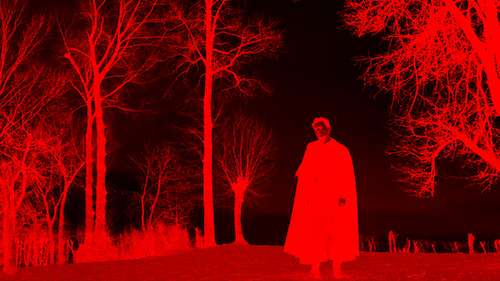
Bresson’s turning point was Diary of a Country Priest: a complete departure from the trivialities of mainstream cinema in favour of the candidness of arthouse films. An early commentary on the discrepancies within organized religion and the inner turmoils of the faithful, Diary of a Country Priest feels like Bresson repurposed his diary (in reality, this is simply an adaptation of Georges Bernanos’ novel of the same name). We follow an unnamed priest, played by Claude Laydu with a performance that will change your life (as well as your understanding of what cinematic acting can accomplish). Laydu’s Priest of Ambricourt faces a village that is bereft of hope and faith; he appears to have been plucked from paradise and placed within a godless purgatory. This priest is put through countless tribulations, encouraging religious viewers to wonder where God is if one of His greatest disciples is tormented as such (Bresson concludes that God is, indeed, there the entire time, even if this isn’t clearly apparent). Swedish auteur Ingmar Bergman was a fan of Bresson overall; with a film like Diary of a Country Priest, it’s clear that Bresson could release one of the best Bergman films the former never made.
5. A Man Escaped
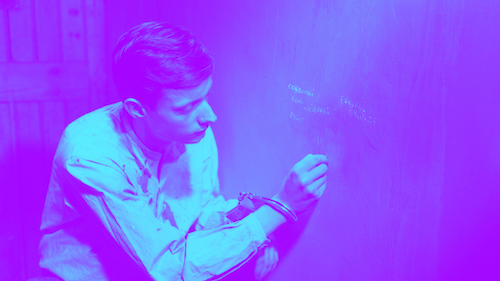
Bresson often depicted imprisoned souls; children trapped in villages; religious followers being torn apart; depressed spirits bottled by the throes of society. Then, there is A Man Escaped: a film that is literally about imprisonment. Bresson himself was a prisoner of war, and his rendition of an inmate’s efforts to flee a German camp read like the images conjured up by an artist who yearned to escape (how could they not when they mirror Bresson’s greatest hardship). While as punishing as anything else Bresson ever made, A Man Escaped at least has optimism within it: a drive that propels this tortured French resistance fighter forward. Bresson comforts us, letting us know that there is always a light on the other side; before getting too sentimental, Bresson throws a moral conflict right in the middle of a Hollywood ending (will this protagonist ever truly escape, particularly within the labyrinths of trauma within his mind). If Diary of a Country Priest established Bresson’s signature style, A Man Escaped propelled him to the echelons of cinematic mastery.

4. Mouchette
I was a late teenager when I saw my first Bresson film: Mouchette. Expecting a film inspired by Italian neorealism, I wasn’t prepared for how uncompromised this take on inherent evil is. We follow the young titular girl and instantly acknowledge that she has a rough life (with her mother — the only woman in her life — on the verge of death). Mouchette is conditioned into a life of housework and confinement: something she vows to break away from when she heads to the carnival one day (she just wants to be a kid, naturally). What develops is a series of vignettes, each as shocking as the last. By the time Mouchette witnesses a rabbit being hunted, it is clear that Bresson is informing us that millions of beings are doomed the moment they are born. This isn’t a criticism of being alive, but, rather, of the horrors of a not-so-civil concept of civilization. Bresson commented that the central girl in Mouchette is meant to represent the fact that misery is found everywhere throughout history; there is nothing more devastating than seeing how frequently we fail the innocent and the hopeful with our repetitions of iniquity.
3. L’Argent
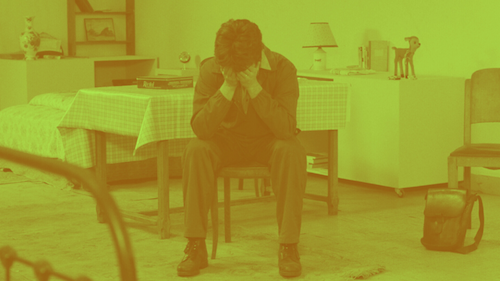
It isn’t often that an object or a concept feels like a main character. In Bresson’s final film, the exemplary L’Argent, a forged 500-franc note feels like a harbinger of greed and despair. It’s no secret that we presently need money in order to survive, but Bresson points out the sins that ensue with such a system in a fable that shows how silent money is with its destruction; despite being an eighty-minute film with zero major effects and a slim budget, you can sense all of the devastation surrounding the actions that take place, as if the economic slaughter is a ghostly presence looming around you. Even as the films of the eighties vowed to go bigger, brighter, and balmier, Bresson sticks to his no-nonsense, poetic nature with L’Argent: the strongest statement against anti-capitalism, I’d say. Bresson acknowledged how difficult it was to keep making art when none of his films earned him substantial profits, but he proceeded to make films that would withstand the test of time (as opposed to quick financial turns). Like most other Bresson films, there’s no ending credits in L’Argent, but I cannot shake off the eeriness of the film suddenly concluding once it fades to black, as if Bresson never expected anything from his art; all that transpires before this ending remains unforgettable.
2. Pickpocket
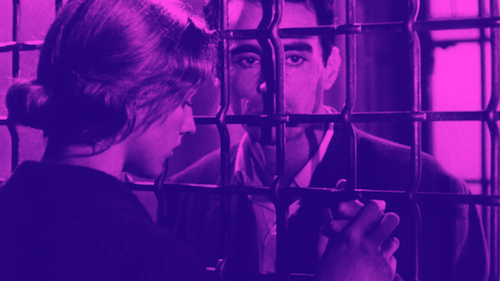
While most Bresson films deal with complicated people full of sin, Pickpocket is one instance where Bresson is explicitly wondering how someone can get this way. As we follow Michel and his thieving escapades, we see someone who cannot have a more fortunate life (Michel does get in his own way, mind you) and who is jaded by the world around him. What began as a means to get by and a form of self-amusement becomes an addiction for Michel, and Pickpocket never truly solves why someone can be like this: it presents the immoral behaviour as an inherent characteristic. This film is such a peculiar take on sin given its lack of a holier-than-thou approach; oftentimes, it isn’t some monster who is capable of being evil but, rather, someone just as ordinary as yourself. The act of theft is turned into a magic trick via the art of sleight of hand maneuvering, and Bresson’s filmmaking techniques feel similarly illusionary here (particularly the exquisite crosscutting between shots in a way that feels eons ahead of the fifties). In return, Pickpocket is a dazzling portrait of immorality, allowing audiences to understand the fixation on what most people can control via a non-judgmental gaze.
1. Au Hasard Balthazar
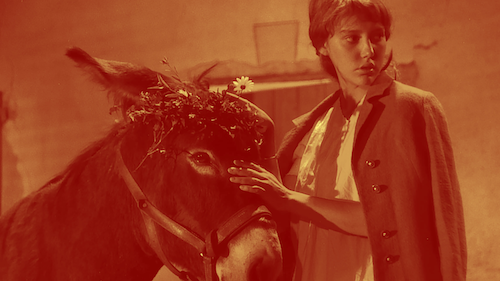
While it felt next to impossible to rank the bulk of Bresson’s filmography, I couldn’t be more certain as to what his masterpiece is: Au Hasard Balthazar (what I crown the most depressing film ever made, and I may forever stand by this claim as I have for over a third of my life as a rampant cinephile). If conveying innocence through the symbols of a child or a historical figure won’t encourage audiences to strive to be better people, perhaps a film starring a donkey might. The titular Balthazar wanders from village to village in search of a purpose and a home. Along his journey, he comes across a young girl who is quite Mouchette in nature; in Au Hasard Balthazar, we see the teenage Marie suffer a lot of the same tortures as her Mouchette counterpart. At times, the film is a constant downward spiral between a young girl and a donkey, as both characters are burdened by the weight of societal agony; once again, Bresson doesn’t hold back this time around.
That same pairing of allegories presents us with two fatal realities: the death of a being biologically, and the death of someone from the inside (as they remain a soulless husk in an unforgiving world). Even then, Bresson paints this punishing portrait beautifully, with a final shot involving sheep in an angelic formation that feels like a glimpse of heaven within hell. Even so, Au Hasard Balthazar cannot solve why the world is capable of such hate, but this bond between the protagonists and Bresson’s audience is the insisting of love: how can we be so awful to one another when our hearts bleed for Marie and Balthazar? As is the case with most of Bresson’s films, we find the love and light within ourselves as we watch the darkest hours of damaged spirits; maybe this was the intention Bresson had all along.
Even if Au Hasard Balthazar wasn’t Bresson’s most accomplished film in this regard, I maintain that it is his magnum opus. Its fable-like structure allows its visual and expressionist commentary to ring within our bones. The lack of holding back allows this film to be as effective as is necessary (I stand by my earlier claim: this truly is the most depressing film I’ve ever seen, so do take this warning seriously). The ninety-minute runtime proves that Bresson is merciful of his audience, and that his depictions of entrapment and devastation are meant to be digested and understood, not methods of inflicting pain upon viewers; while this was always true for Bresson, Au Hasard Balthazar is especially considerate for utilizing its brief runtime as strongly as possible. The end result is a story that is as graceful as it is relentless; a picture as stunning as it is distressing; a call-to-action as impactful as it is unforgettable. Even though Bresson saw much darkness in society, he could only have made a film like Au Hasard Balthazar if he had some semblance of faith in humanity. This tug-of-war between hope and reality is unlike any film I’ve ever seen, and, as such, I feel that it is the greatest film Robert Bresson ever directed.


Andreas Babiolakis has a Masters degree in Film and Photography Preservation and Collections Management from Toronto Metropolitan University, as well as a Bachelors degree in Cinema Studies from York University. His favourite times of year are the Criterion Collection flash sales and the annual Toronto International Film Festival.