
Filmography Worship: Ranking Every Coen Brothers Film
Written by Andreas Babiolakis
Filmography Worship is a series where we review every single feature by filmmakers who have made our Wall of Directors

When one considers a filmmaker unique, it’s usually fairly simple to define what makes this director special. When it comes to the Coen brothers, there are quite a few traits to consider. Their films are usually darkly comedic, sure, but there is a lot more going on than just this quirkiness, including unforgettable characters (ranging from neglected misfits and tall-tale beings, to everyday folk struggling to get through life), punishing existentialism, domino-effect plot lines, and an intense focus on the American landscape. In a sense, the Coen brothers’ films feel like an unstoppable flame, with a spark of a moment kicking things off and the inability to slow down what transpires. The spark can be a crime and the fire acts as comeuppance, or this chain reaction could be an entirely miraculous series of coincidences. If storytellers are not abiding by the rules of plot progression, they usually try to abandon the steps used by most writers entirely. The Coens, on the other hand, still work within the three-act structure, with plot being an integral part of their projects, but they seemingly love to experiment with what plot can even mean.
The brothers are made up of older sibling Joel, and Ethan (who is three years younger). Growing up on a wide variety of influences, from international arthouse (like the films of Frederico Fellini and Akira Kurosawa), films noir (Howard Hawks’ The Big Sleep), and serious westerns (The Outlaw Josey Wales by Clint Eastwood), to a range of comedies, like screwballs (cult classic Boeing Boeing), and satires (Stanley Kubrick’s Dr. Strangelove). Joel saved up for a Super 8 camera when he was a teenager, and both siblings would make their own films at a very young age. After meeting and working with director Sam Raimi (Joel was an assistant for The Evil Dead’s editor, Edna Ruth Paul), it didn’t take long for these prolific brothers to make their debut film, Blood Simple, in 1984. Thus started the long tradition of the brothers separating their credits, with both brothers being labeled screenwriters for Blood Simple, Joel being listed as the director, and Ethan as the producer. It was twenty years later when the Coens accepted credits across the board, with both Joel and Ethan being honoured as directors, writers, and producers; in a peculiar move, this decision was made for their adaptation of The Ladykillers (and not something far stronger).
The Coens — like their influences — dabbled in everything, from crime and gangster dramas to comedic thrillers, with classic westerns, screwball flicks, films noir, and even a musical tossed in the mix. After many years of accolades and influence on the American film industry, the Coen brothers would eventually mutually drift apart to work on separate projects. This move is one that truly threw a wrench in our understanding of both siblings. At first, it was agreed upon that both brothers saw eye-to-eye and rarely disagreed on any decisions (one rare, classic example is the expression on the Dude’s face in a dream sequence in The Big Lebowski: if the Dude should wince or smile when he is about to crash into bowling pins; this disagreement didn’t escalate at all, and it took a few seconds of discussion until both brothers were in agreement again with the final result). However, having seen what has transpired since this schism, it is difficult to not see Joel as the artistic side of this union, and Ethan as the half fixated on the peculiarities that render us human (even in the most absurd sense).
What I do know is that both brothers work brilliantly well together, and rarely did they release films that were not worthwhile. It was always a treat to be able to watch a new Coen brothers event, and it has felt this way my entire life. What makes them special is that they truly feel like a bridge between your traditional American films and more challenging avenues, with hints of arthouse cinema present even in their silliest affairs. At their least-successful, the Coens still try to reinvent the wheel. However, when they succeed (which is almost always), we get some of the most idiosyncratic releases in American cinema: portraits of lost souls, empty settings, and the impossible task of solving what the American dream truly means. Here are the films of the Coen brothers ranked from worst to best.
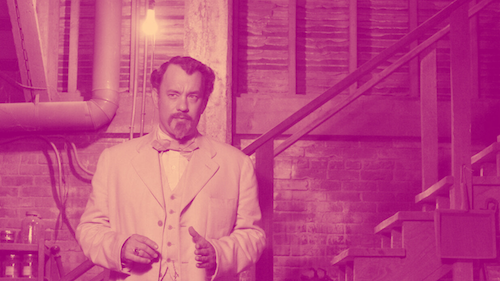
22. The Ladykillers
Joel & Ethan Coen
No surprise here. The Coen’s adaptation of The Ladykillers (previously a 1955 film by Alexander Mackendrick) is easily the worst film they have made. While it isn’t truly a disastrous film (I think the heart that character Marva Munson boasts propels the whole film), The Ladykillers is a rare time where the Coen brothers’ focus on calamity feels sloppy and directionless: as if stuff was happening just for the sake of it. I don’t even hate the disasters that take place, but I do have an issue with how forced all of The Ladykillers feels: as if every shot is meant to mean something or make you laugh. The issue isn’t that The Ladykillers doesn’t try: it’s that it tries too damn hard. It’s quite obnoxious as a result.

21. Drive-Away Dolls
Ethan Coen
When the Coen brothers went their separate ways, the first narrative solo effort by Ethan from this point on (so, excluding his Jerry Lee Lewis documentary; more on that later) was Drive-Away Dolls: it’s safe to say that the film did not meet expectations. What is meant to be a kooky, screwy caper winds up feeling messy, aimless, and even a little uncomfortable (I don’t feel like Ethan handles the lesbian relationship here well at all: enough of the film feels like objectification and misguidedness on this front). What hurts the most is that most other Coen brothers films have something to offer — even the weakest efforts: Drive-Away Dolls doesn’t feel fresh, inventive, or purposeful outside of aiming to stand-out via its antics (in the end, it doesn’t).

20. Honey Don’t!
Ethan Coen
I don’t know what to say about Honey Don’t! that I haven’t already said about Drive-Away Dolls, seeing as this film suffers from the same inadequacies (down to its awkward representation of the LGBTQ+ community that should have been handled better). The worst news is that this is a planned “B-movie lesbian” trilogy, meaning that we are due one more film of this calibre. If anything, I hardly consider this film “better” than Drive-Away Dolls, but that they are both equally as rough and unenjoyable (I’m giving Honey Don’t! the slight edge because I think that Margaret Qualley (who stars in both films) pairs up really well with Aubrey Plaza here; that’s as positive as I can be about this consecutive misfire.

19. Intolerable Cruelty
Joel & Ethan Coen
From this point on, I wouldn’t consider any of these films bad. Intolerable Cruelty is such a strange film because I find it actually decent but — easily — the least Coen brothers-esque film the duo ever made together or separately. That isn’t why the film is ranked so low because I welcome great motion pictures even if they go against the style of whoever made them (like David Lynch’s The Straight Story, which is a remarkable feature). Intolerable Cruelty just feels a little too conventional at times, even with the screwball tropes tossed into the mix. Still, I think it’s almost remarkable that such established auteurs gave the traditional rom-com a try, and I’d actually recommend this film to anyone who is curious enough to know what this looks like; I’d argue it’s charming and entertaining, but, sadly, a little forgettable (something the Coens almost never are).

18. Hail, Caesar!
Joel & Ethan Coen
I appreciate what Hail, Caesar! does on a larger scale (the ambitious storyline, the slew of characters, the world building), but I also found this comedic mystery film tedious and unfocused. Plopped in the middle of the hustle and bustle of the Golden Age of Hollywood, Hail, Caesar! is a throwback to the classic era of movie magic and the works of writers like Raymond Chandler and Thomas Pynchon (who focus on the ways that characters change more than where the destination at the end of this journey is). I liked every oddball we come across in this film, but I was also left wondering what all of this story was for. Having seen the Coens tackle the woes of filmmaking before in a far better way (and how other directors like Robert Altman and Richard Rush have done the same), I can’t conclude what makes Hail, Caesar! stand out outside of its cast: it sadly says less than it intends to.
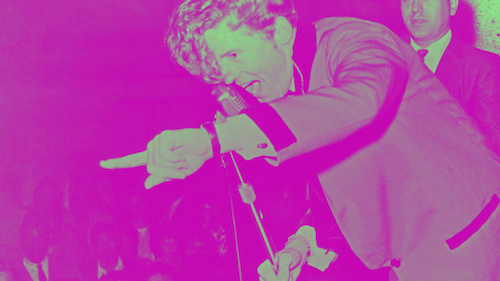
17. Jerry Lee Lewis: Trouble in Mind
Ethan Coen
The first project Ethan Coen worked on after he and Joel split apart is this Jerry Lee Lewis documentary, Trouble in Mind. It’s noble that Ethan wanted to tell a fuller story about this controversial rock’n’roll icon — and was able to compile archival footage from home and work on this project remotely during the pandemic — but Trouble in Mind just feels a little simplistic: there’s not much here that we couldn’t have learned from other source materials. It’s harmless to watch should you really want to get around to this documentary, but I don’t see how it’ll change you, either. It’s a standard, decent documentary. That’s all.

16. Burn After Reading
Joel & Ethan Coen
When it first came out, Burn After Reading felt as calculated and unstoppable as any other classic Coen brothers feature film. In the years since, I now instead see a film that feels a little too convoluted. The butterfly effect chaos feels orchestrated, which is not how anarchy ever operates (it just happens). I know that the insanity that ensues is at the hands of sin (bad people making even worse choices), but that doesn’t make what we see interesting (there are other Coen brothers films that accomplish making us fascinated by desruction far more than this). What does save the day here is a colourful cast of weirdos, from those who have worked with the Coens frequently (George Clooney, Frances McDormand), to those whom I wish worked with the Coens more (John Malkovich, Tilda Swinton, Brad Pitt); it is their infectious energy that makes Burn After Reading come alive.
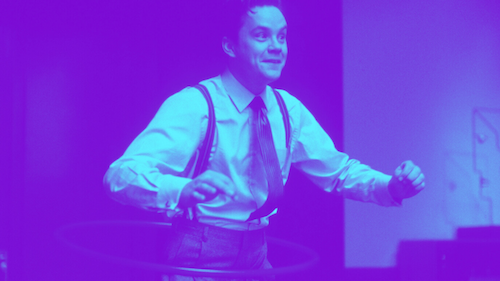
15. The Hudsucker Proxy
Joel & Ethan Coen
If time hurt Burn After Reading (its initial flame has sizzled and not rekindled), then it has oddly been kind to The Hudsucker Proxy. Perhaps too goofy for its time, this bonkers comedy about capitalistic greed and corruption could be seen as cynical; I feel like we may be on the same page as this film’s viewpoints now. The film is also uncharacteristically surreal and hyperbolic by the Coen’s standards, feeling almost more like a Tim Burton vision at times (albeit not as gothic, I suppose); this is an avenue I wish the Coens explored even more because it oddly works. As we follow the naive Norville Barnes into a trap within Hudsucker Industries, we see how deceptive the business world can be; when he succeeds, we are alerted to how bullshit the industry is in that same breath. I won’t pretend that The Hudsucker Proxy is perfect (it can be a little too whimsical for its own good), but I am glad that this film has found its audience in the years since its release.

14. The Ballad of Buster Scruggs
Joel & Ethan Coen
I am usually not a fan of anthology films because I find that a collection of short stories usually doesn’t help strengthen the amalgamation as a whole, and that we are left with the continuous stopping-and-starting of momentum every time a story ends and a new tale begins. I also think that the possibility that one story being better or worse than the rest doesn’t help, either. I do think that The Ballad of Buster Scruggs benefits from having some consistency across the board, and that I found something to like from each story; it also feels telling that the last project both Coens worked on before the hiatus of their partnership is, effectively, a collection of miniature Coen brothers goodness. At the same time, I don’t feel like I took too much away from this anthology, outside of brief spurts of joy and amusement from two directors whose works I have grown to adore for the most part. I wasn’t blown away, but I was attentive the entire time; from short to short.

13. O Brother, Where Art Thou?
Joel & Ethan Coen
I think that there is much to commend here, especially the audacity of modernizing Homer’s mythological Greek epic, The Odyssey (to a degree, anyway; now this opus takes place in Mississippi during the thirties). Of course America is worthy of having its own myths, and, in this instance, one comes in the form of chain gang fugitives who become bluegrass legends in the form of the Soggy Bottom Boys (of course, much more happens than this, but I do want to highlight how the soundtrack of O Brother, Where Art Thou? became a sensation to the level of even winning a Grammy for Album of the Year; life truly connected with art, here). The Coens liken the developing madness of screwball cinema to the endless tribulations of classic literature and, somehow, their comparison works; now that is audacious.

12. Raising Arizona
Joel & Ethan Coen
The first comedic film the Coens made is Raising Arizona: one hell of an allegory for what becoming parents can feel like. As we follow a convict and the police officer he frequently has to deal with, we find them both falling in love and wanting to start a family. What transpires is a series of brilliant nonsense, including the kidnapping of one child of a set of quintuplets (because, I suppose, it doesn’t matter if only one of these many babies goes missing). Maybe Raising Arizona was a peculiar film to make after the hyper-serious neo noir, Blood Simple, but it makes sense in hindsight now: absurdity can be just as fascinating as a gripping crime drama when handled properly. Raising Arizona is proof that the Coens can make goofiness appealing, and they thankfully proved it again numerous times afterward.

11. The Man Who Wasn’t There
Joel & Ethan Coen
When filmmakers want to pay tribute to the noir movement, they usually make a neo noir statement: an homage that is inventive or different in some sort of way. The Man Who Wasn’t There is as traditional as contemporary noir films can get, down to the gorgeous black-and-white cinematography (some of Roger Deakins’ finest work to date). What transpires is a downward spiral of discovery and discomfort within forties California, to the point of no return (a surprising science-fiction angle that never feels like it comes from out of left field, thanks to the careful and gradual storytelling). I wish the Coen brothers would explore the classic noir movement like this again because they clearly handle it so well, but, then again, The Man Who Wasn’t There is meant to stand alone as a film that is both a time capsule and a stand-alone statement.

10. True Grit
Joel & Ethan Coen
There was already a cinematic adaptation of Charles Portis’ True Grit in the form of John Wayne’s Oscar-winning western drama. I find most remakes or re-adaptations futile unless they do a better job (what sense is there to make and/or watch an inferior project). Well, in this rare instance, the Coen’s True Grit is easily the superior film: it trades the former film’s Hollywood pretense for self-aware darkness and, naturally, the occasional comedic moment to break the tension (gently, of course). The Coen’s True Grit delivers on the name of the film with a gripping story of a coming-of-age revenge and a search for purpose (then-newcomer Hailee Steinfeld is so brilliant that she keeps up — and even outdoes — the likes of veterans like Jeff Bridges and Matt Damon). Like The Man Who Wasn’t There, True Grit doesn’t look to reinvent its parent genre (the classic western) but, instead, just make a solid entry within it. Mission accomplished with this anxious, hysterical, cataclysmic journey into the unknown.

9. The Big Lebowski
Joel & Ethan Coen
I am not trying to be difficult. I know this will be the turning point for many readers who will now only see me as a contrarian who aims to be different. I promise you that this is not the case. I do love The Big Lebowski just like most of you do. I find it one of the funniest films of all time, and certainly amongst the most quotable (“Nice marmot” will forever be a mainstay for me, for instance). I love the characters and all that make them tick. However, I also feel like the story — while hilarious — really doesn’t offer as much as it could have. I get that the point is that we are just meant to be pulled along for this insane ride, and I think The Big Lebowski succeeds on that front; I also wish we got a bit more than just this sensation of being strung along and thrown out the other side. I don’t expect every film to grant us a lesson to chew on or to change us as people, but I also think the Coens have done something similar and even better with a particular film; The Big Lebowski could have afforded even an extra pinch of purpose and heart in order for its concept of the aimless citizen being exploited to resonate even more. Again, I do love The Big Lebowski and think it is a staple of the American comedy genre; I maybe just don’t like it quite as much as you do (and I hope that is okay).
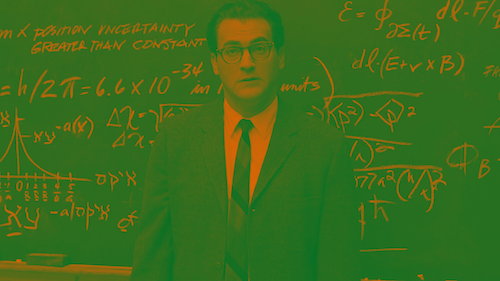
8. A Serious Man
Joel & Ethan Coen
It is astounding how ambitious A Serious Man is. When the Coens had made enough films about misdirected characters getting caught up in chain reactions, they set out to make the most artistic version of such a concept with A Serious Man. If anything, there’s no real reason why Larry Gopnik cannot stop experiencing hardship; the opening short film tries to instill that there is some sort of ancestral curse that he has no control over, maybe. That’s the ticket, though: some people just lead sad lives and it’s of no fault of their own (this only makes everything more depressing). This is kind of my point with The Big Lebowski: Larry in A Serious Man has even less reason to be in the mess that he’s in, and yet the film fleshes out how he responds to these miseries and strives to surpass the inevitable (even with much futility). I may rewatch The Big Lebowski far more, but I feel changed by A Serious Man: even as an atheist who has no ties to historical or cultural Judaism (for this film speaks to all viewers). Perhaps one of the most effective, stunning ways that a film can tell us that “shit happens”.
7. Barton Fink
Joel & Ethan Coen
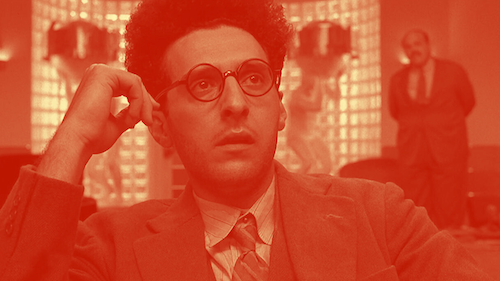
Absurdity can be art, and such is the case with Barton Fink: an extreme depiction of what writer’s block can look and feel like via a meta lens. The Coens are not-so-secretly major fans of the works of Roman Polanski (you can see this in the dark comedy and the blatant cynicism of their films, occasionally), and they use the concept of being trapped within the confines of an apartment (as can be seen in Rosemary’s Baby, The Tenant, and Repulsion) to tell a story of the heartache and anguish of a struggling writer who cannot get past himself. As Barton Fink proceeds, it gets crazier and crazier to unspeakable levels; it also concludes with one of the Coen’s most unusual sequences that prove that the absence of logic can be even more breathtaking than complying to the steps of formulaic filmmaking. If the Coens ever truly ripped the rug from underneath viewers, it was likely during Barton Fink: the ultimate answer as how one can circumnavigate the woes of forgetting how to write a standard story.
6. The Tragedy of Macbeth
Joel Coen
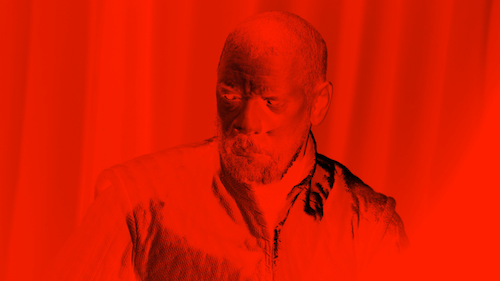
When the Coen brothers started working separately, Ethan became instantly prolific with three films from out of the gate. However, Joel has been far more slow with his approach, but when you get a feature as spectacular as The Tragedy of Macbeth, I am okay with being patient. Despite being a Shakespeare work that has been done to death, this adaptation is one of the finest I have ever seen because of its visceral, exquisitely-aesthetic approach that renders a tragedy surrounding guilt and karma a nightmarish confession. The stage becomes a limbo within your mind and subconscious, as you feel every second of what you witness. I cannot stress enough that The Tragedy of Macbeth is one of the better Shakespeare films of the twenty-first century, and perhaps of all time; this is far more than just a bare-bones adaptation (this is a full-on experience). Neither of the Coens have been this artistic before, and seeing Joel go the distance with such fantastic results is quite something.
5. Inside Llewyn Davis
Joel & Ethan Coen
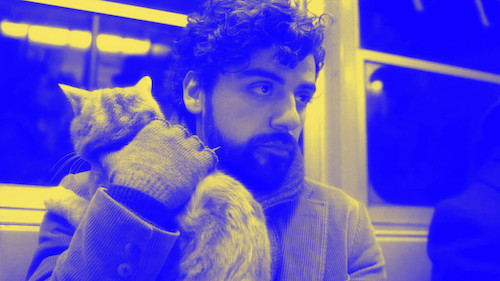
When Inside Llewyn Davis first dropped, it felt like a bittersweet letter to a folk singer who just could not get the dues he was deserved of. It didn’t take long for society to implode and place billions of us in positions of existential dread, permanent exhaustion, and constant pondering (what is it all for). Suddenly, Inside Llewyn Davis became a tale for all of us: the dreamers who could never get out of the ruts of existence. There’s something magnificently grounded about this film; many directors have tried to capture this feeling while missing the point because of their privilege and/for fortune. The Coens tap into the internal conflicts of being alive in a tumultuous time where there is no way to get back on our feet; they do so with great musical sequences, career-best performances (including Oscar Isaac, who was robbed of at least an Academy Award nomination here), and a poetic narrative that you feel in your bones for the rest of your life; Llewyn Davis is inside all of us.

4. Miller’s Crossing
Joel & Ethan Coen
It didn’t take long for the Coens to revisit the crime drama after Raising Arizona, and they released Miller’s Crossing: a film that feels accidentally profound. What feels like two directors wanting to expand how danger and tension can be displayed on film turns into gloriously gorgeous imagery of ethical quandaries; most noir films feel like the trudging through dirty and shadows, whereas Miller’s Crossing almost feels heavenly in its destruction and sin (as if it was indebted to The Conformist or McCabe & Mrs. Miller: two other artistic films that make images of violence feel like lingering memories of regret). If a crime film could feel graceful, tasteful, and fleeting, it would be Miller’s Crossing: a noir film that is more in tune with the tortured soul of a protagonist rather than their spiraling mind.

3. Blood Simple
Joel & Ethan Coen
It feels a little lazy to rely on the debut of a director (or, in this case, directors) and insist that it is at the top of their filmography (especially when there are over twenty films to get through). In the case of the Coens, Blood Simple just is one of their finest efforts. It seems impossible amongst the likes of The Big Lebowski, Miller’s Crossing, and other iconic staples, but there is so much confidence here from early visionaries (and all of it works). The characters are few and far between, but they are all rich and fully realized. The cause-and-effect relationship between people and their choices are carefully thought out. There’s even an attention to how this film looks and sounds (but not to the point of carelessness, as can be the case with many wide-eyed aspiring auteurs), rendering Blood Simple a gut-wrenching experience. When it all boils down to the explosive, haunting climax, it’s clear that Blood Simple was made by filmmakers who were destined to be in this industry; it remains amongst their very best works.

2. Fargo
Joel & Ethan Coen
As if to create their own mythology, Joel and Ethan Coen pretended that Fargo was based on a true story with a fictional title card to boot. This was to imply that reality can be stranger than fiction. Even without the statement at the start of Fargo, these oddball characters and the miasma that ensues — at the hands of their awful choices — somehow, by some miracle, feel as though they could have been real. Thanks to the Coen’s ability to humanize their kooky characters no matter how strange they can be, Fargo has as much heart as it does laughs, gore, and unfathomable sequences of events (this is the ultimate cinematic form of the act of digging holes deeper and deeper). There’s an extra dose of confidence in not having a film’s character show up until a third of the way in, via Marge Gunderson (played by Joel’s wife, Frances McDormand, with her best performance to date): a police chief who is brought to the scene of a crime after the audience is shown what has already transpired. Seeing a film give a head start and the authentic way that a protagonist can still catch up to the unraveling events transpire is quite the treat. In Fargo, we can get caught up in the insanity of it all, or we can lead simpler lives and admire the beautiful day (yes, even with all of the snow); Fargo is what a contemporary American fable can be, through and through.
1. No Country for Old Men
Joel & Ethan Coen
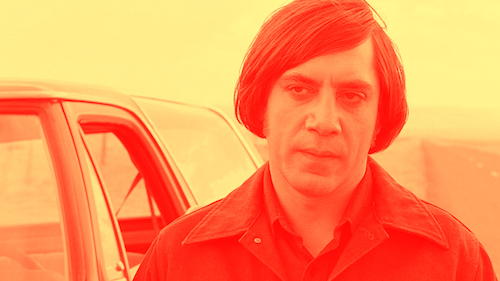
Cormac McCarthy was a far darker storyteller than the Coen brothers, but he was also as transfixed by America and the pitfalls of evil within this beautiful nation. Many have tried to adapt the author’s novels, but the only time his writing was ever enhanced was when the Coens tackled No Country for Old Men: it goes without saying that this would wind up being the bleakest Coen brothers film as a result. What begins as a cat-and-mouse chase between a loner and one of the great depictions of death in cinema (Anton Chigurh, played spectacularly by Javier Bardem) turns into a surrender to the notion that death will always win. We can only cheat death occasionally, but it will always come for us. In this nihilistically barren land in No Country for Old Men, we see that there is no where to run when it comes for us. Of course, making dangerous choices may make it come sooner for us, but we also see how innocent people get caught in the crossfire (even at the hands of the poor choices made by loved ones). It doesn’t get grimmer than that.
Despite not being an outwardly funny film (outside of occasional moments of relief), No Country for Old Men still utilizes the Coen’s token absurdity to the point of making a tall tale into an unforgettable display of consequence. It is a film that transcends the western genre, American filmmaking, and nihilistic cinema to the point of being universal and applicable with all viewers; it remains one of the bolder Best Picture winners as a result. When No Country for Old Men concludes with an afterthought and not a proper ending, it forces us out into the darkness to fend for ourselves; we must keep going and never look back, especially if death is forever behind us. In a very weird way, it’s almost uplifting: the world is this empty and worrisome for us all, and we can only keep going in order to find some hope or purpose. No Country for Old Men is maybe a hyper-cynical take on existentialism, but it is an extraordinary take on the emptiness we feel, the guilt and comeuppance that prevents us from being bad, and the dilemmas that plague us when we question if we are good (or will ever be capable of being good). It is one of the great American films of the twenty-first century (even of all time), and it is the greatest feature film by the Coen brothers.


Andreas Babiolakis has a Masters degree in Film and Photography Preservation and Collections Management from Toronto Metropolitan University, as well as a Bachelors degree in Cinema Studies from York University. His favourite times of year are the Criterion Collection flash sales and the annual Toronto International Film Festival.