
The Voice of Hind Rajab
Written by Andreas Babiolakis
Warning: This review is for The Voice of Hind Rajab, which is a film presented at the 2025 Toronto International Film Festival. There may be slight spoilers present. Reader discretion is advised.
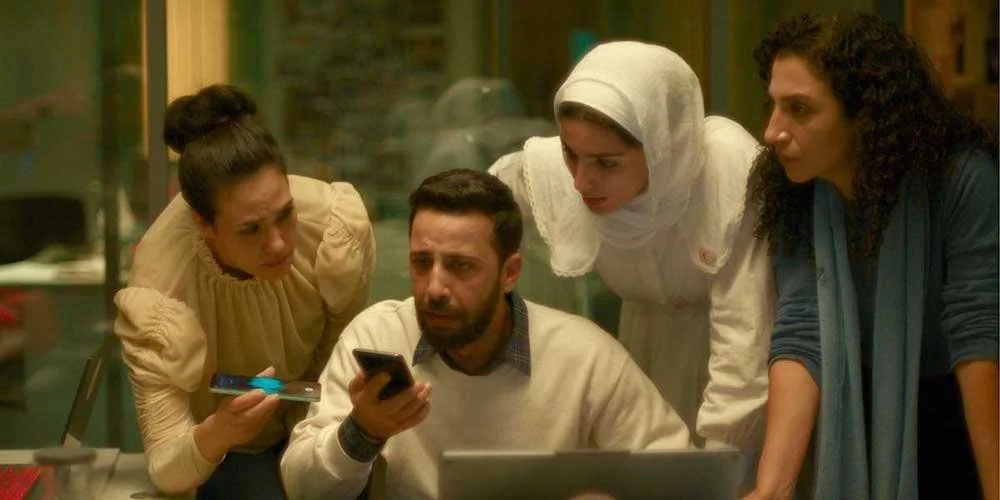
Image courtesy of the Toronto International film Festival.



Warning: This review deals with the topic of the conflict in Gaza. Reader discretion is strongly advised.
Kaouther Ben Hania has become one of the strongest filmmakers to blend documentary realism and feature film narratives since Iran’s Abbas Kiarostami. Her breakthrough feature film, The Man Who Sold His Skin, acts as its own version of performance art that leaves audiences squirming in their seats. Her accoladed documentary, Four Daughters, places actors to fill in the spaces of family members to see if she could complete this fragmented picture. Ben Hania was finally getting around to working on a project that has been ten years on the back burner when she came across an awful sound on social media: the frantic calls of a young girl trapped in a car on the Gaza strip, and Israeli tanks spraying bullets all around her. This girl was Hind Rami Iyad Rajab, and she was calling the non-profit helpline, Red Crescent, for assistance in getting out of harm’s way and to survive. These audio clips went viral online and were impossible to ignore; such was the case for Ben Hania as well. That long-gestating project could afford to wait just a little bit longer.
Instead, Ben Hania got working on The Voice of Hind Rajab: a docudrama that plants us in the Red Crescent offices during the entire Hind Rajab crisis. We never leave these quarters, outside of one meditative reprieve in the form of finding the soothing shorelines of one’s mind. Otherwise, we remain planted inside of Red Crescent’s cubicles, seeing these volunteers going about their days. We see a few test run calls before hopping onto a horrifying call: a mother asking for help, and her call cut short by tank fire. It doesn’t take long for another call to come through, and, this time, it is a child who proclaims that everyone — including the previous caller — is “asleep” in the car with her, and they are drenched in blood. She wants to be helped. She needs an ambulance to help escort her out of this line of fire.
The catch here is that The Voice of Hind Rajab is a recreation of these events using sets and actors in every single way except for one: every voice recording is real. Every time you hear Hind Rajab, you are listening to the real girl’s cries for help (hence the title of the film). This always heightens what you see; even though you know that you are watching performers relive what was happening, hearing the actual recordings will remind you of how real this situation was. We follow two call center representatives, Omar (Motaz Malhees) and Rana (Saja Kilani). They take turns talking to Hind Rajab in hopes of getting an ambulance sent to her; she is only eight minutes away by vehicle. The issue is that it’s not so easy sending help there. This is detailed by the Red Crescent’s manager, Mahdi (Amer Hlehel), who explains that sending a vehicle into Gaza without precaution will likely result in casualties; if the Israeli military has taken over a region, they may fire at anyone they deem a threat. Mahdi wants to connect to the military, let them know that the ambulance won’t be a subterfuge and is to protect an innocent person, and wait for the green light to go ahead. This eight minute drive becomes a standoff that lasts many hours. Hind Rajab remains trapped.
Mahdi and Omar butt heads frequently. Mahdi doesn’t want to take shortcuts, because Red Crescent has lost many volunteers who have jumped into the crossfire. Omar hears how the situation gets worse and worse for Hind Rajab and cannot fathom why it is taking so long to get someone to her coordinates. The tension rises within the Red Crescent office because a young life is on the line. When I watched September 5, I felt like the gimmick of being locked in one area to witness real events from a single perspective was neat but also a component that held the film back from being its most effective. Such is not the case with The Voice of Hind Rajab, and the major difference is that Ben Hania is so effective at making the most of her film’s limitations. She keeps her film short and crisp; it is less than an hour and a half. She has four key characters (including Clara Khoury as Nisreen) who are properly utilized and are defined as beings. She blends the audio recordings into the film with such care that she throws in reminders of how real this situation is, including occasionally leaving in the voices of the real Rana when she talks to Hind Rajab.
A major highlight is a sequence where a phone is recording our four protagonists hours into this ordeal; in reality, the “recording” is the actual video of the real volunteers, and you can see the actors blurred in the background painstakingly recreating what is on the phone. I’ll never forget the moment that I pieced together what I was seeing in that scene because it served as a major reminder that the events in this film are very real, and no amount of sets, makeup, and lighting can take away the urgency of this true story. This is complimented with the lengthy documentary footage at the end of the film that confirm all of our worst fears and the severity of what transpired. These closing images are the only parts that take place outside of the Red Crescent offices. Usually, when information is hidden from the viewer (like if a monster is never shown), we are left to come up with our worst thoughts because no images could beat our deepest terrors. Such is not the case with The Voice of Hind Rajab, where nothing will prepare you for how shocking the final footage is.
The Voice of Hind Rajab is a test of patience and tension that makes its short runtime feel like an eternity. When there is finally movement, you will feel an indescribable rush: the faith in humanity you’ve been craving this whole time. That’s when the rug gets pulled from underneath you Das Boot style (although within a fifth of the time), and you may not feel more disappointed in the human race with any other film this year. The Voice of Hind Rajab is a testament of how hostile this world is, the poor hands we have left the next generation in, and how much adults have failed the youth of today again and again. The film does not have any real opening credits (even the usual producer dead cards aren’t included), because trying to label this film with any such titles just feels exploitational. In this instance, the adults move aside for the film’s central child to have the lectern. When even companies have agreed to not sully the start of the film, you know everyone on board with The Voice of Hind Rajab is serious; these include some high-level producers, like Joaquin Phoenix, Rooney Mara, Jonathan Glazer, and Alfonso Cuarón. Everyone on board knew that making this film was important; the end result is truly galvanizing and will hopefully result in even further support.
I do not aim to use a film review to pick sides in a political war, but I do report what I see objectively in a film. What I see in The Voice of Hind Rajab is a depiction of hell through the wails of a child. I see how difficult it was to get to her because the Israeli military around Hind Rajab considered an idle car with a child in it a threat (as well as the ambulances that wished to rescue her). I witnessed all of the efforts undertaken to save one five year old child, and it dawns on me how many Palestinian youths have wound up in this same circumstance. I cannot even fathom the extent of this slaughter, but The Voice of Hind Rajab forces us to face it. It feels disgusting to try and critique the film artistically, but the narrative portions are magnificently shot, paced, written and acted, allowing me to find the beauty within the craft. What’s left is the barest of facts: no child should ever have to live a life like this. When you see the sound waves of the voice recordings on the big screen, you’ll find that you can only grasp Hind Rajab so much; her physical being is reduced to shifting lines. You are always out of arm’s reach from her; this helplessness drives the film’s point. All we can do is watch this situation unfold (or, sadly, remain at square one), and know that this is something we cannot condone. I see why Ben Hania dropped everything to make The Voice of Hind Rajab, and why so many big names came on board to produce this title: who can remain silent when Hind Rajab’s voice needs to ring out? What will it take for people to finally recognize that this is a genocide of the Palestinian people?


Andreas Babiolakis has a Masters degree in Film and Photography Preservation and Collections Management from Toronto Metropolitan University, as well as a Bachelors degree in Cinema Studies from York University. His favourite times of year are the Criterion Collection flash sales and the annual Toronto International Film Festival.