
Best Live Action Short Film: Ranking Every Nominee of the 98th Academy Awards
Written by Andreas Babiolakis
Welcome to another year of the Academy Awards Project here on Films Fatale! We rank all of the nominees in each category every day.

The last of the short film categories is the Best Live Action Short Film group. I always view this as a mini Best Picture win of sorts: not only because of the brief duration of these films (as per Academy rules, anything fewer than forty minutes in length counts as a short film) but because Best Picture wins are usually earned by established filmmakers and producers in their field, whereas the Best Live Action Short Film winner is usually a rising team (well, unless you’re Wes Anderson). These short stories can be a handful of things — from projects meant to help aspiring filmmakers reach greater heights, to experiments in short-form storytelling. It can be challenging to establish characters, a setting, narrative substance, and resolution in very little time: these are the barest of basics of storytelling, so, technically, great shorts should go even further with their themes and innovations. This is a lot of expectation from short films, I suppose, but a majority of this year’s nominees showed up. When I ranked all of the shortlisted short films, I found that there were some below-standard candidates and a few stellar nods; the final five nominees kind of covers the complete spectrum of what the shortlisted selections showcased. We now have these final five hopefuls. Here are your nominees for Best Live Action Short Film, from worst to best.
5. Butcher’s Stain
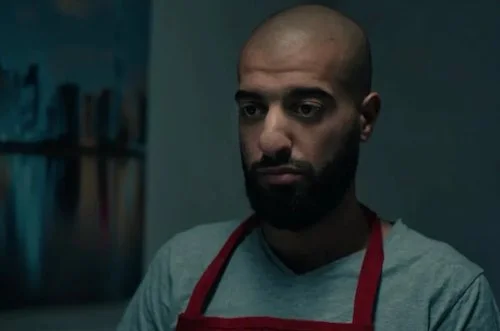
Short films with political messages can either hit their marks or fall under the pressure of constrained best efforts. Butcher’s Stain has a strong concept: an Arab Israeli butcher is accused of removing the hostage posters at his supermarket’s break room and, thus, instilling hate and bias in the workplace. Butcher’s Stain vows to walk the line between a definitive statement and allowing audiences to try and come up with their own resolutions to this debacle. However, the film surrenders to its twenty-five-minute runtime, relies solely on its one major plot point (short films can tend to do this: if a film is about X, it has to always be about X), and — as a result — we only get this contrived depiction of sociopolitical conflict. What could have been a bit of an allegory or fable about a divided world and the swift speed of accusation instead becomes your typical live action short film with great intentions and stunted results.
4. A Friend of Dorothy
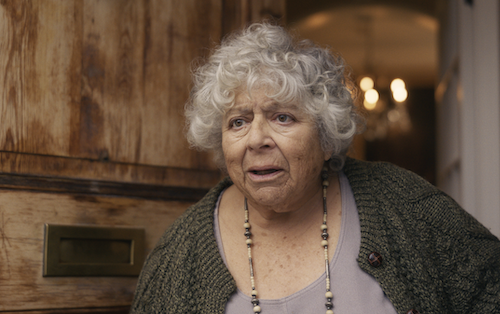
Roughly once a year, the Academy will spotlight two kinds of short films. You have the soft, crowd-pleasing heart warmer that promises to move you in as little time as possible. You also have the short film with a big name or two that the Academy cannot deny. A Friend of Dorothy is both in one, but it is at least quite a good yarn. British icons Miriam Margolyes and Stephen Fry star in this film about a geriatric widow (the titular Dorothy, played by Margolyes) and the teenage footballer (well, soccer player for us silly North Americans) she befriends. This is a sweet — albeit a little sugary — short film about unexpected kinship and the impact kindness can have on others. I suppose the film does everything that it is meant to achieve, including complete characters, themes, and concepts. It still feels a little typical, but I don’t see how anyone would be rattled by this harmless little dose of joy and love.
3. Jane Austen’s Period Drama
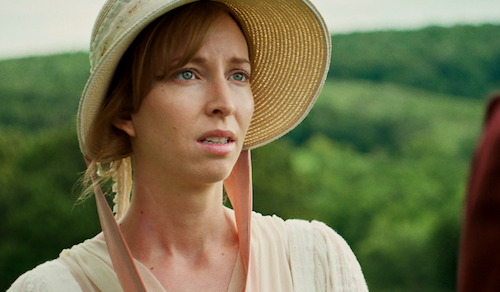
The Academy can also fall prey to the kinds of short films that are essentially one-long joke for an entire runtime. These comedic shorts can often be frustrating, stale-upon-delivery, or too samey in tone (I get that this is a short film, but you still have to try and make something textured). The comedic short this year is Jane Austen’s Period Drama, and I am thrilled that this short is actually very funny. A spoof of the title author’s Pride and Prejudice, our lead character — Miss Estrogenia (hilarious) — is having her period, and her clueless archetype of a male romantic lead, Mr. James Dickley (not quite as clever, but good enough), thinks that she is injured or even dying. While the entire film essentially is one joke repeated (the naivety of men regarding menstrual cycles, as well as the unrealistic expectations of men in female romance novels), I think that Jane Austen’s Period Drama does hit a few different sides of the same equation, ensuring that it is worth its entire thirteen-minute duration. This also should not be a feature length film because it simply wouldn’t work for that long; this works perfectly as a short film of this calibre.
2. The Singers
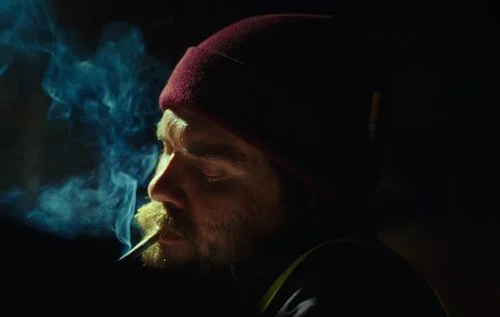
The Singers is highly indicative of the kinds of tropes I have already discussed: heartwarming shorts that try to bring you to tears as quickly as possible, and shorts that are based on one kind of message or concept and never stray away from that idea. However, The Singers excels at doing all of these things. Based on a story written by Russian author Ivan Turgenev back in the nineteenth-century, The Singers modernizes its concept of musical catharsis. A pub full of broken and struggling men of all walks of life get to know one another either through remarks or visual cues (like a man with a breathing tube). We know that life has not been kind to these guys. However, a small bet where a few of the drinkers chime in with some humming and the occasional singing becomes a full display of emotional release, with some of the men belting out into complete song (I am a sucker for “Unchained Melody” whenever it is done well, and by God it is immaculately sung here; this is just one example). The Singers also boasts the concept of stunt casting, with the majority of the actors being played by those who have gone viral for their voices online. This is sentimentality done right.
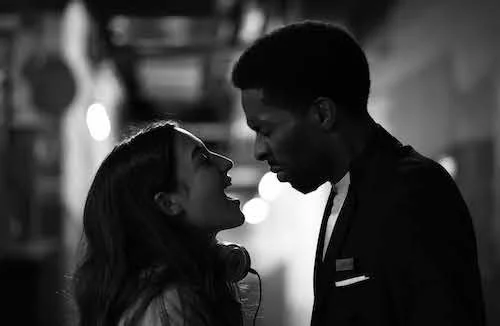
1. Two People Exchanging Saliva
A type of short film that I haven’t brought up yet are depictions of a befuddling and concerning future. The Academy tends to eat those up a lot, including two winners — Two Distant Strangers, and I’m Not a Robot. These are meant to discuss contemporary times via a stylized, intensified portrait of real concerns. This year’s selection of that nature is Two People Exchanging Saliva, and I feel like this short film crushed what it set out to portray. In an awful future, the act of kissing is deemed worthy of the death penalty. This seems ridiculous, right? How could a man not be able to simply kiss a woman if they are both in love and are consenting adults? Right away, the film spotlights the absurdity of the millions of bigots who do not wish for all kinds of people who wish to love the same way (interracial relationships, queer marriage, poly connections, and more). At nearly forty minutes in length, Two People Exchanging Saliva builds upon this harrowing concept in great detail (the aesthetics and conceptual designs of this dystopia are magnificent to boot). This is the kind of short film that leaves you thinking about what you have just seen. While I can actually see a feature-length version of this (done by someone like a Yorgos Lanthimos), Two People Exchanging Saliva is as great as it can be right now. It is the correct length. It is made with high quality filmmaking. It doesn’t seem to be missing any narrative or thematic information. This is the best live action short of 2025, and the Academy nailed it with this selection.
Who I Want To Win: I like most of the shorts here, but I am obviously rooting for Two People Exchanging Saliva which floored me when I saw it (and continues to stun me).
Who I Think Will Win: I always say that the short film categories are hard to predict, and that remains true here. The current front runner is A Friend of Dorothy which has everything that Oscar voters usually tend to lean towards (especially the recognizable faces and warm sentimentality). However, I can see a slight takeover from two films. Two People Exchanging Saliva ticks off the boxes that some past winners have (sociopolitical topics conveyed via a clever, futuristic vessel). Meanwhile, The Singers now has Netflix backing it and its popularity seems to be on the rise. I may change my mind closer to my final predictions right before the Oscars ceremony, but for now I feel like A Friend of Dorothy is the film to beat (although it now appears that it can be beat).


Andreas Babiolakis has a Masters degree in Film and Photography Preservation and Collections Management from Toronto Metropolitan University, as well as a Bachelors degree in Cinema Studies from York University. His favourite times of year are the Criterion Collection flash sales and the annual Toronto International Film Festival.