
Best Cinematography: Ranking Every Nominee of the 98th Academy Awards
Written by Andreas Babiolakis
Welcome to another year of the Academy Awards Project here on Films Fatale! We rank all of the nominees in each category every day.

Oh, I am such a sucker for great cinematography in a film. I know that how a film looks is half of its aesthetic makeup so visuals are important, but when a film looks good, I feel like it is easier to move past plot hiccups, dull performances, or other questionable choices; that isn’t to say that a film is worth watching just because of how it looks, but cinematography done right goes a long way. What about in competent films? Cinematography is the art of how a film is shot, which involves a mastery of lighting. Focal points are important (what is in focus versus what is blurred), as well as the overall compositions of a shot (subjects and the details around them). What perspectives and depths of field are being utilized (including close-ups and distant shots)? The movement of the camera is important as well, especially if used effectively. Natural lighting goes a long way, as do proper methods of colour balance. Did the Academy pick the five best looking films of 2025? Let’s find out. Here are your nominees for Best Cinematography, ranked from worst to best.
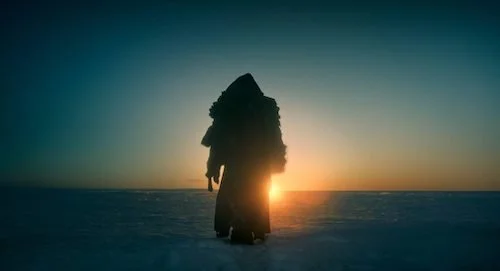
5. Frankenstein-Dan Laustein
Does Frankenstein look nice? Absolutely. Well, at times. There are moments where the film has so many intricate things going on at any given time and they are all in focus; your eye will wander all over the frame. The few instances of natural light are worth pointing out as well because they make for stunning images. However, there is one key reason why I have placed Frankenstein last here: the movement feels like it is there just for the hell of it. Enough of the film kind of just eases forward and back just to have some sort of movement; like someone who won’t stop talking simply because they do not believe in complete silence. I’m not sure how Frankenstein benefits from this inability to sit still (maybe to try and help move the film along during its slower first half?), and so I don’t feel like it does. Even though there are standout moments where Frankenstein and its cinematography shine, its awkward panning and zooming issues are an easy reason to place it last.
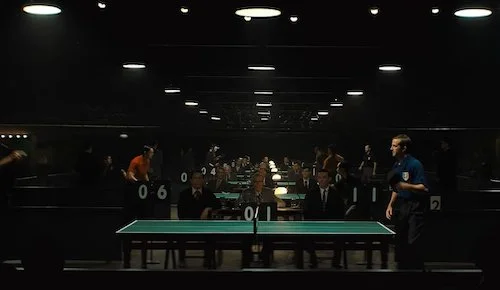
4. Marty Supreme-Darius Khondji
While I think that Marty Supreme might be the least interesting film of the nominees with how it handles colour and lighting, the film excels in a few other ways. The matte look of the film’s grain throughout the motion picture helps make complicated images feel unified and aesthetically pleasing. There is often heaps of chaos happening on screen and yet Darius Khondji manages to capture it all. However, the real star here is the movement of the camera which makes us feel like we are biting off more than we can chew (like Marty himself). Furthermore, how the camera follows each ping pong match is such a spectacle; I don’t think the difficulty of this achievement has been celebrated enough (well, outside of garnering Marty Supreme an Oscar nomination, I suppose). This is the kind of nomination that feels underrated: films that are more difficultly shot than you realize. I don’t know how many people are championing Marty Supreme because of how it looks, but upon some reflection this nod is warranted.
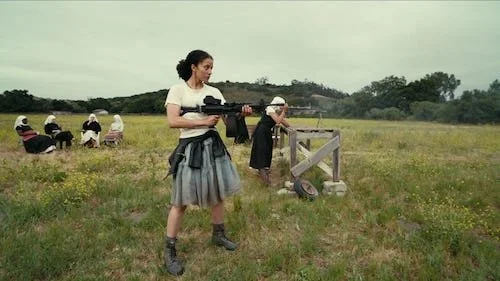
3. One Battle After Another-Michael Bauman
One Battle After Another feels a little bit like Marty Supreme with why it has been nominated but with an even stronger eye. Outside of the fantastic movement (need I bring up the impact of the hilly climax?) and ability to capture chaos without missing a beat, One Battle After Another still has a keen aesthetic style to it full of army olives, browns, and tans. Unlike Frankenstein, the constant movement here makes us feel like we are constantly running and unable to sit and the intention here works well. The awkward angles and close-ups on characters like Colonel Lockjaw are also effective, and Michael Bauman’s camera always knows how far or close we should be to a subject (are they invading our personal space; do we feel comforted or intimidated?). One Battle After Another is a well shot film that may not overly prioritize its aesthetics, but it doesn’t forgo them either.
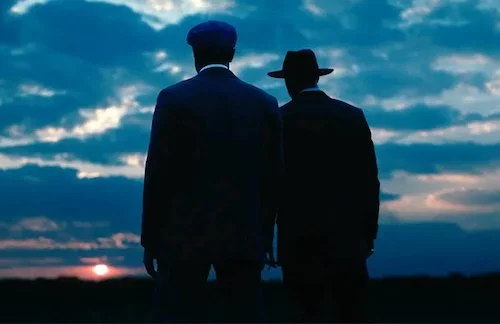
2. Sinners-Autumn Duraid Akrapaw
We have now reached the two films that have prioritized their cinematography (and effectively, too). Duriad Akrapaw’s sublime work in Sinners could not have been ignored by the Academy; of the staggering sixteen nominations that this film got, one of the most deserving was this nod. The fuzzy, hazy visuals make the film feel a bit like a fever dream; the heavy emphasis on sunlight is both important and breathtaking. The movement of the film swept me away; Sinners’ cinematography doesn’t always feel the need to move either, rendering any sequence with movement even more effective. The biggest treat here is how well everything pops even when colours bleed together and the lighting gets dimmed down; this is a film with horror tropes and it being well lit would have never worked, but seeing how well the lack of lighting adds to any given shot (and how much we can still see) is a testament to a director of photography who knows what she is doing. Even if Sinners was heavily snubbed by the Academy elsewhere, there is no way it would have missed out on a cinematography nomination unless the Academy is on drugs.
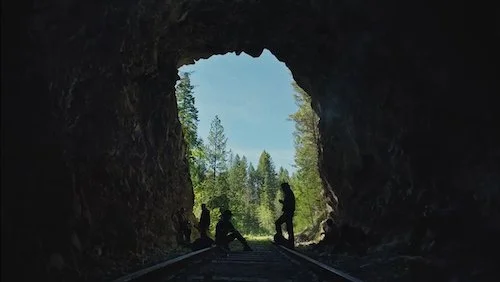
1. Train Dreams-Adolpho Veloso
It goes without saying that Train Dreams is the best looking film of 2025. One second into this film and I knew that I was going to love how it looked. With a peculiar 3:2 aspect ratio and grainy, saturated, shadowy images, Train Dreams feels more like a slide show where every image moves and is full of life. Much of the film is shot statically, with the camera remaining fixed in place and looking on like a passerby caught up in the moment. The rare time that the camera moves or zooms is when a sequence absolutely calls for this response, and these sparingly used moments truly shine. The film is shot to mirror its literary nature, and Adolpho Veloso’s cinematography is phenomenal at making Train Dreams feel like the images that appear in one’s mind while they read a novel. Nearly every single shot is a cinematic highlight of the year; try pausing at any given moment and tell me that Train Dreams appears anything less than spectacular. Many pundits were not certain of how well Train Dreams would do at the Academy Awards, but one thing was certain: it had to be nominated for Best Cinematography. Alas, it is here, and it should win.
Who I Want To Win: Let’s go Train Dreams! It’s the best shot film of 2025. Enough said.
Who I Think Will Win: I think this could go one of two ways. If the Academy keeps doing what it likes to do — where each Best Picture nominee winds up with at least one Academy Award if it can pan out as such — then I think that Train Dreams may garner its solitary win here. Having said that, the Academy could be a bloodbath between One Battle After Another and Sinners with each film picking up as many awards as they can, and so this could be in favour of Sinners for this category (I don’t see One Battle After Another having a real shot here at this point in time; maybe the odds will shift during this awards season race). For now, I feel like the Academy is not all about tossing Oscars every which way this year, and so I’m handing this one to Sinners at this present moment.


Andreas Babiolakis has a Masters degree in Film and Photography Preservation and Collections Management from Ryerson University, as well as a Bachelors degree in Cinema Studies from York University. His favourite times of year are the Criterion Collection flash sales and the annual Toronto International Film Festival.