
Best Original Song: Ranking Every Nominee of the 98th Academy Awards
Written by Andreas Babiolakis
Welcome to another year of the Academy Awards Project here on Films Fatale! We rank all of the nominees in each category every day.
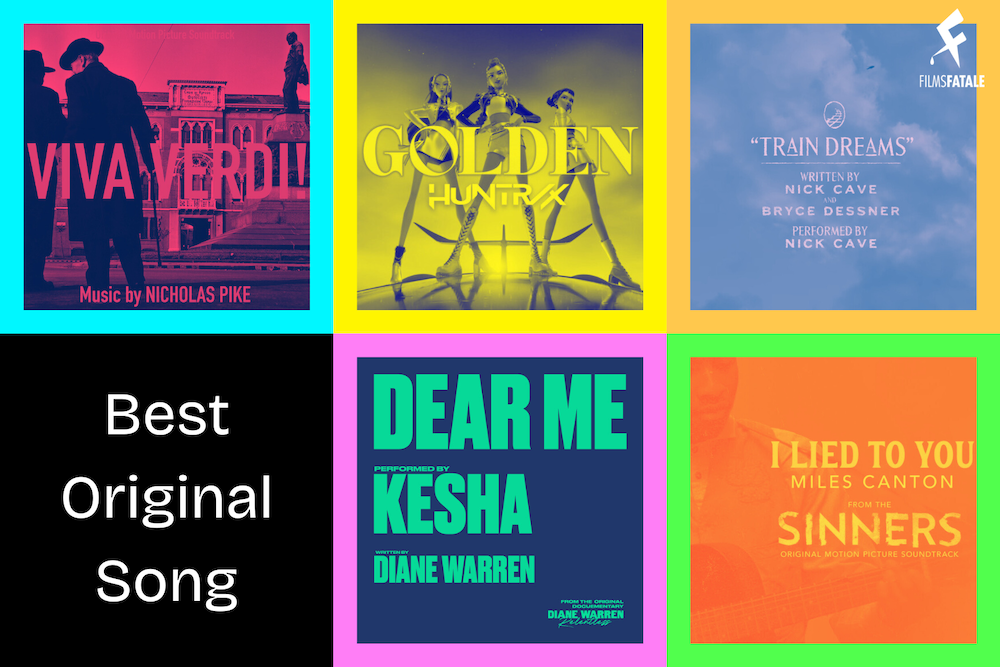
I have said for years that the Best Original Song category is my least favourite, and I stand by that even still. I feel like this category is frequently bastardized for promoting films that usually do not deserve to be Oscar nominated, with big-named pop stars selling hit singles just to wind up here. I feel like many of these past nominees are songs simply tossed in during the credits of a film and they, otherwise, don’t contribute much to the entire motion picture. However, as salty as I am about the Best Original Song category, I feel like it has gotten a bit better over the years where I don’t dread the entire group of nominees. This year’s selection is actually quite decent, with a few songs that I actually love making the final cut. Most of the songs are actually utilized in the film in some way (even if towards the end of the feature) which is also a major bonus since the usage of each track feels far more sincere than just tossing in a half-assed effort and calling it a day just to secure a nomination (I hope that we are well past those days). I will be critiquing each song in a few ways; how well do these songs work on their own (are they well written, and is the instrumentation interesting); how well do these songs work in their respective films? Here are your nominees for Best Original Song, ranked from worst to best.
5. Diane Warren: Relentless-”Dear Me”, Music and Lyric by Diane Warren
I’m not placing Diane Warren’s song last to pick on her; I feel like my review, featured below, does enough of that. I think this song is actually not bad. You have Warren’s signature ballad tone, pacing, chord progressions, and wails. Kesha does a pretty good job bringing Warren’s song to life; although I think the use of autotune kind of defeats the song’s point about being true to one’s self. The point of the song is for Warren to talk to and console her younger self, assuring her that everything will be okay. This comes towards the end of the documentary film Diane Warren: Relentless, and you even see Kesha recording the song with Warren present in the studio; this is kind of a beautiful way to show what this song means in the grander scheme of things. Now, for the criticisms. The lyrics are quite rudimentary with how they convey pain (“Everything you’re feeling now won’t always keep you down; There’ll be better days”, “All of the pain is all gonna fade”, et cetera); I feel like a deeper search into one’s soul would have felt more like an actual conversation between an adult and their younger self. Instead, this song feels indicative of the major problems with Diane Warren:Relentless. What is meant to be proof that someone has healed and is taking care of themselves is instead evidence that someone is continuing to try to earn that Oscar again and again and again. “Dear Me” is written so simplistically that it appears to be a reflection of self when it is, really, a song written to go viral. This could have been a great opportunity to get to know the real Warren, and I don’t think we get that.
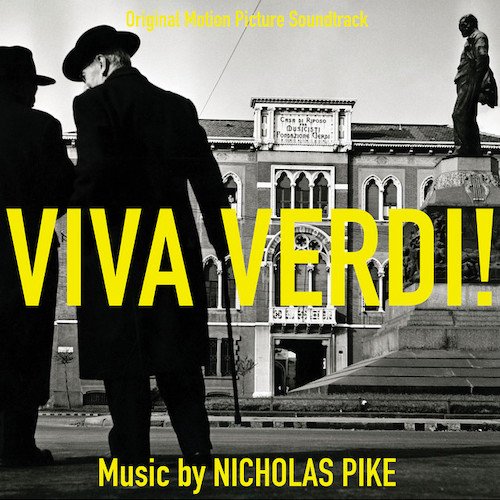
4. Viva Verdi!-”Sweet Dreams of Joy”, Music and Lyric by Nicholas Pike
The hardest film to watch from this year’s nominees is the documentary Viva Verdi! about retired musicians at the Casa Verdi. I know that it is presently nearly impossible to watch in any way, but I assure you that the documentary is quite sweet and touching when you do get around to it. This song, “Sweet Dreams of Joy” by Nicholas Pike, is used before the end credits to eulogize the residents who Casa Verdi lost during the production of this documentary. The operatic vocals and classical piano melodies evoke the kinds of compositions found within Casa Verdi, so they feel appropriate. I do think that the lyricism is simplified a little bit, at least so — I feel — that modern audiences can understand the song’s purpose and themes without having to do any deeper digging (I feel like the song was written with non-opera experts in mind). The lyrics are mainly descriptive, maybe to detail what music means to these elderly friends (“Round, round, and around; suddenly soaring higher; higher pleasing sound; sweet air be mine”). The song is a delicate love letter to the residents of past and present at Casa Verdi, and I feel like it represents that Viva Verdi! aims to accomplish: a modern perspective of classical traditions.
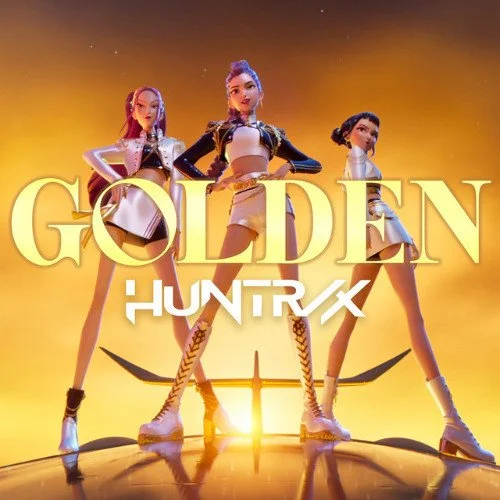
3. KPop Demon Hunters-”Golden”, Music and Lyric by Ejae, Mark Sonnenblick, Joong Gyu Kwak, Yu Han Lee, Hee Dong Nam, Jeong Hoon Seon, and Teddy Park
You know a song is a hit when it is written for a feature film (an animated one at that) and it winds up being one of the biggest musical successes of an entire year. I don’t even know where to start with “Golden” since everyone and their pet dog has heard this song ten thousand times already. We all know it is catchy, uplifting, and infectious. The team who worked on this song were effective with creating a song that not only resembles the best qualities of the highly popular KPop movement but also is able to sound universal as well (it feels like it could fit in with both British and American pop music quite effortlessly). Lyrically, Ejae, Audrey Nuna, and Rei Ami (excuse me: Rumi, Zoey, and Mira from HUNTR/X) are detailing star Rumi’s inner conflicts and her acknowledgement that she has grown (and shall continue to grow) as a human being. The song is a reoccuring motif in KPop Demon Hunters, with Rumi struggling to hit that high note (“Like I’m born to be”); when the song is finally done correctly, you know that she has had even more growth to reach this point. I think the song is effective in context and I do not even need to comment how successful it is as a stand-alone song. It is a standard pop song but a strong one at that.
2. Train Dreams-”Train Dreams”, Music by Nick Cave and Bryce Dessner, Lyric by Nick Cave
I will admit that I am a massive fan of Nick Cave and the Bad Seeds (and also, well, just Nick Cave), so seeing him get nominated here for Train Dreams makes me smile. However, is the song even worthy of being nominated, or am I acting out of bias? Of course this song deserves its kudos. Lyrically, “Train Dreams” is the strongest song of the five and it isn’t even a competition Cave and Bryce Dessner detail a breathtaking version of the American experience, be it the traversing of its land or the acknowledgement of its massive history. I don’t even know where to start with the best lyrics, but I will go with the ending verse; “The space that connects me where I am now to the place where I’ll one day be. It’s measured in the words that we speak and the strange and wondrous things I’ve seen. It’s measured in truth, it’s measured in love, measured in a tendency to pain. It’s measured by a girl in a field of flowers screaming ‘Dream of a midnight train.’” I do consider Cave one of the greatest songwriters of all time, after all. Cave’s song encapsulates the ethereal, passive, and introspective tone that Train Dreams possesses, and the song is just an incredible listen when separated from its film. In most other years, I’d easily crown this the best nominee in such a category, but I do think that I should consider each song’s usage in their respective films, so on that note…
I don’t think any song was better incorporated into a film than Miles Canton’s “I Lied to You” from Sinners. The song begins as a gut wrenching blues ballad about a rough upbringing; “Something I been wanting to tell you for a long time, it might hurt you, hope you don’t lose your mind. Well, I was just a boy, ‘bout eight years old. You threw me a bible on that Mississippi road. See, I love yo, papa, you did all you could do. They say the truth hurts so I lie to you; yes, I lied to you; I love the blues.” This song begins to shift like a conjured spirit and it evolves through various genres and sounds affiliated with Black culture, including soul, funk, and hip-hop. This is now a seance of the music of old, all converged together as one prophecy of where Black music will go in the years to follow Sinners; additionally, it shows the longevity of the music our narrator is devoted to and how their influence on other musicians shall live on despite the urgency of their father to get them to stop playing the blues. The song on its own is quite great; I’ll give the best song award to “Train Dreams”, but this is a close second. Now, I have “I Lied to You” first because it is unquestionably the best song used within a film. When this journey takes place, we see the trip through time and space take place; this one-shot exploration is the precise moment where I went from liking Sinners quite a bit to thinking it was an excellent feature film. I’m not sure if director Ryan Coogler pushed Canton to make this song or if Canton’s song made Coogler pull out all the stops with this sequence. Regardless, this is how an original song can be used in a film, and I do want to place emphasis on the word “original” in this context (this is musical creativity at its finest in 2025).
Who I Want To Win: Simply, I’d love if my man Nick Cave got some flowers for Train Dreams, but I do think that Miles Caton’s song for Sinners is what this category is all about, so I’ll pick that track.
Who I Think Will Win: If I said anything but KPop Demon Hunters, I’d implore you to visit another site for your Oscar predictions from now on. Next.


Andreas Babiolakis has a Masters degree in Film and Photography Preservation and Collections Management from Ryerson University, as well as a Bachelors degree in Cinema Studies from York University. His favourite times of year are the Criterion Collection flash sales and the annual Toronto International Film Festival.