
Best Original Score: Ranking Every Nominee of the 98th Academy Awards
Written by Andreas Babiolakis
Welcome to another year of the Academy Awards Project here on Films Fatale! We rank all of the nominees in each category every day.
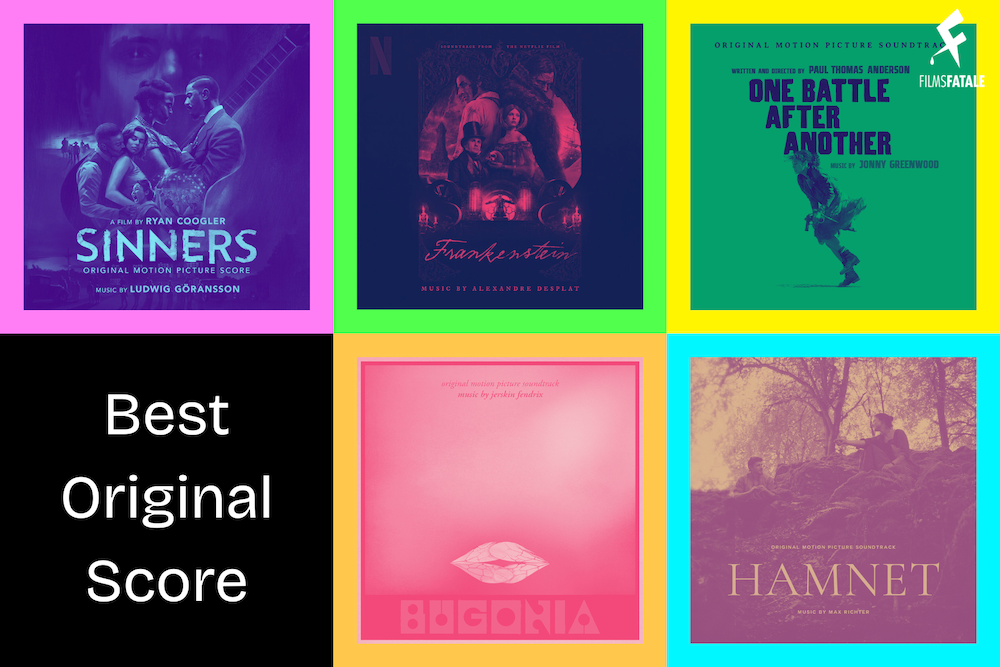
I don’t always know what to expect with the Best Original Score categories at any given Academy Awards because the Academy can tend to worship their favourite films of a year even if their respective scores are fine or satisfactory at best. I also don’t always see eye-to-eye with what the Academy gets obsessed over (mainly your typical sounding scores); I gravitate towards either tradition at its very best, or forward-thinking scores that break the mold as to what music in a film can sound like. With all of this in mind, I cannot stress enough that the Academy Awards almost completely nailed a perfect lineup of selections here: four of the five nominated scores are of the very best that 2025 had to offer. I had an incredibly difficult time ranking these scores and even found myself swapping nominees at the last second (I am forcing myself to cement my picks as I write this article, but I may change my mind tomorrow, and the next day, and the next day, and…). I am overall pleased with the selections this year and hope that you are hearing what I am hearing. I will be judging these based on their originality, how effective they are in their respective films, and how well they play separately as their own albums. Here are your nominees for Best Original Score, ranked from worst to best.
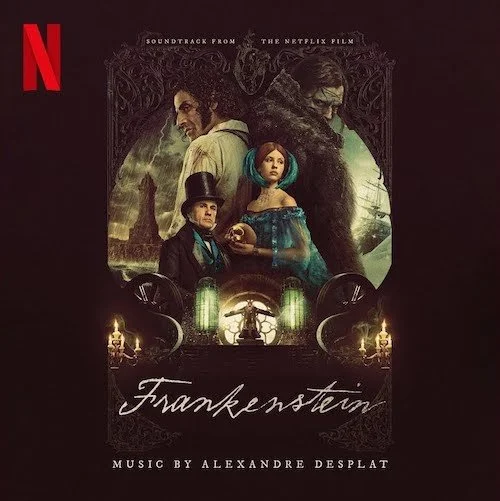
5. Frankenstein-Alexandre Desplat
For me, Alexandre Desplat is a bit hit-or-miss. When he is at his most inventive and curious, we get compositions that sound like their own characters (see The Grand Budapest Hotel). This side of Desplat, I love. However, I feel like Desplat’s comfort zone is often this whimsical palette that rarely expresses any other emotion outside of “discovery”. I like his score for Frankenstein but feel like this is another one of Desplat’s more obvious scores (to me, Daniel Lopatin’s score for Marty Supreme would have made this category a stupidly stacked group of nominees; I foolishly forgot to include it in my list of snubs for the year because I suppose I didn’t even fully realize that it was omitted since it was already a certified nominee deep in my heart). I suppose Desplat’s score helps Frankenstein’s ebbs and flows between intellectualism and emotional damage, but I don’t feel like it stands out as unique or original enough in general or even by his standards. This is a nice nomination, but not one that blows me away or makes me feel something I haven’t before.
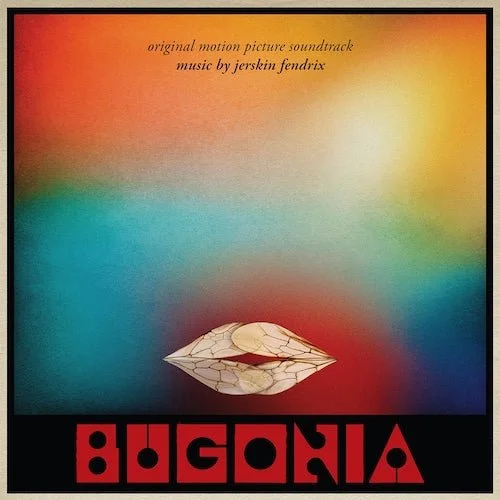
4. Bugonia-Jerskin Fendrix
Part of me is kicking myself for placing Jerskin Fendrix’s score for Bugonia at fourth; again, I juggled the top four picks around for quite some time before settling here. Much of Fendrix’s manic, punishing score reminds me of the best qualities of some of my favourite contemporary film composers like Mica Levi (those frantic strings). I’m placing it fourth because some of the compositions work best with Bugonia and not as well on their own, but some (like “Bees”, or “Basement” featured below) are simply magnificent to listen to on their own accord. On another day, I may even place this score first because of how gifted Fendrix is at composing, but today I am feeling like some songs stand out amongst the others (but, again, the score is great as a whole), while I feel like some of the other nominees just feel even more complete. I could be furious with myself by the end of the week, but it is a tough year for this category after all. I do tink that Fendrix will be no stranger to being nominated here as the years come and go (this is his second nomination after all; his first was for Poor Things, which has — believe it or not — an even better score).
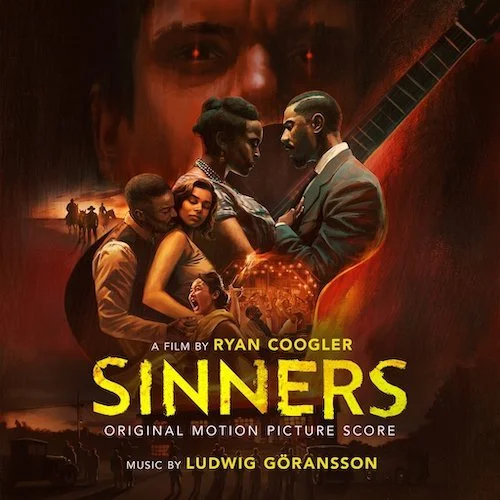
3. Sinners-Ludwig Göransson
By now, we are all familiar with Ludwig Göransson and his Hans Zimmer-esque booming compositions that can shake both movie and home theatres. I do love when musicians stray from their usual course of path, and he does just that with Sinners. Much of the film is evoking the music of the film (folk, blues, jazz) with swirling melodies; it’s one thing for Göransson to simply adopt these genre tropes and call it a day, but it’s another to be efficient with said sounds. At times, this score is Göransson’s by name alone; he has awakened a whole different side to himself here that is incredibly fitting for the film and its spiritual journey through the relationships of harmonies, the skipping nature of arpeggios, and the catharsis of singer-songwriter call-and-response melodies. If much of Sinners is dependent on music being a healing medium, Göransson delivers this notion in spades with one of the more creative scores of the year.
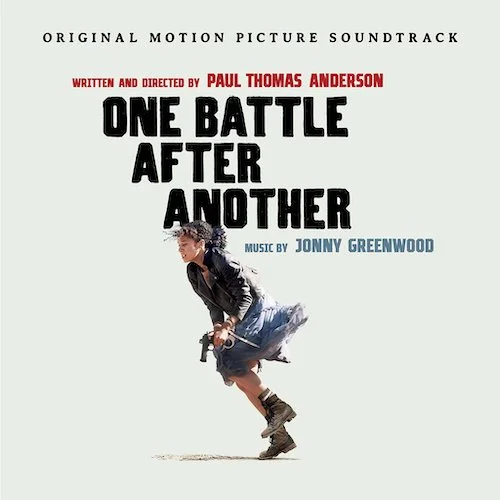
2. One Battle After Another-Jonny Greenwood
Radiohead’s Jonny Greenwood is extremely dependable with his scores at this point, and his work in frequent collaborator Paul Thomas Anderson’s One Battle After Another certainly does not disappoint. I feel like Greenwood was pushed with this score — from evoking the pummeling marching rhythms of Ennio Morricone’s score for The Battle of Algiers, to testing the limits of Greenwood’s signature warping strings to the point of delirium. Greenwood even uses the back-and-forth chimes of paired up trust devices to create another memorable track that is heavily contingent with the themes of the film (and yet it still sounds great when separated from One Battle After Another). As mind-shattering as this score sounds on its own, I must also point out how much One Battle After Another relies on Greenwood’s incredible score to help us figure out the through line in the ongoing insanity; that isn’t to say that Greenwood is commanding us how to feel (on the contrary, especially when he is pummeling piano keys in a way that may confuse you even more), but, rather, that Greenwood’s score is excellent at unifying all of the disparate pieces of any given scene and creating an overall atmosphere (be it coherent or intentionally disjointed). This is an excellent score.
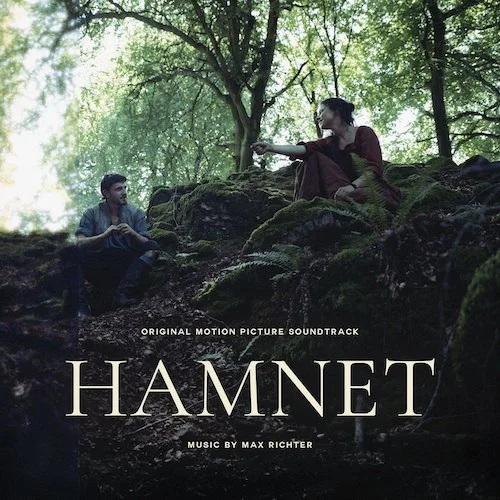
1. Hamnet-Max Richter
Part of me feels conflicted placing Max Richter’s score first. On one hand, three of the other nominees are outstanding selections (as I have already mentioned). There’s also the fact that Hamnet does use the frequently-used composition “On the Nature of Daylight” (which has been used in works like The Last of Us, Arrival, Shutter Island, et cetera, et cetera); I adore this track with every fibre of my being, but how original is using a pre-existing song (case in point: fellow nominee Jonny Greenwood’s iconic work for There Will Be Blood was barred from being nominated because he used a song he recorded for an album the previous year). It seems that Richter and company have bypassed this formality (that a score must be fully original) by re-recording “On the Nature of Daylight” for Hamnet (I believe, anyway). There’s also the final point that I stated that I prefer originality to tradition, and Hamnet’s score is certainly more traditional than three of the other nominees. On the other hand, I cannot deny what my ears like. Much of Hamnet’s beauty is connected to Richter’s gorgeous music that is haunting, angelic, moving, and breathtaking; we forever feel like we are frozen in a limbo between heaven and hell because of his music. Sure, this score is traditional but it is masterful at what it does, and I find myself feeling each and every note and vocal in the depths of my bones. I cannot shake off how much I find myself in this score, be it the sensation of feeling lost amidst hardship and grief, or the discovery of light within turmoil to ensure that I keep going. Also, yes, I am a sap for “On the Nature of Daylight” when it is used well, and I think Hamnet uses this track in the best way possible (if it was going to be used again, I’m glad it was for this shattering moment).
Who I Want To Win: I’m game for four of the nominees to win. However, I would say that I would like Jonny Greenwood and Jerskin Fendrix to win because they simply haven’t before and are two of the best musicians working in film today. Then, of course, I have to highlight Max Richter because he did compose my favourite motion picture compositions of 2025. I cannot neglect Ludwig Göransson for an inspired score, either.
Who I Think Will Win: Right now, I think Ludwig Göransson for Sinners is the one to beat. However, I know the Academy doesn’t like to reward the same people again and again too lightly. Göransson has won twice (for Oppenheimer and Black Panther), and the Academy may see this as an opportunity to honour two legends attached to a pair of Best Picture hopefuls in the form of Jonny Greenwood and One Battle After Another or Max Richter for Hamnet; I want to point out that this is shockingly the first time Richter has ever been nominated for an Oscar (go figure). For now, I still think this is Göransson’s prize simply because of how much Sinners is based on music (and that it will likely divide its awards possibly evenly with One Battle After Another; where Anderson’s film might get its win for direction, Sinners may win for something like this).


Andreas Babiolakis has a Masters degree in Film and Photography Preservation and Collections Management from Ryerson University, as well as a Bachelors degree in Cinema Studies from York University. His favourite times of year are the Criterion Collection flash sales and the annual Toronto International Film Festival.