
Frankenstein
Written by Nicole Cabrera
Warning: This review is for Frankenstein, which is a film presented at the 2025 Toronto International Film Festival. There may be slight spoilers present. Reader discretion is advised.
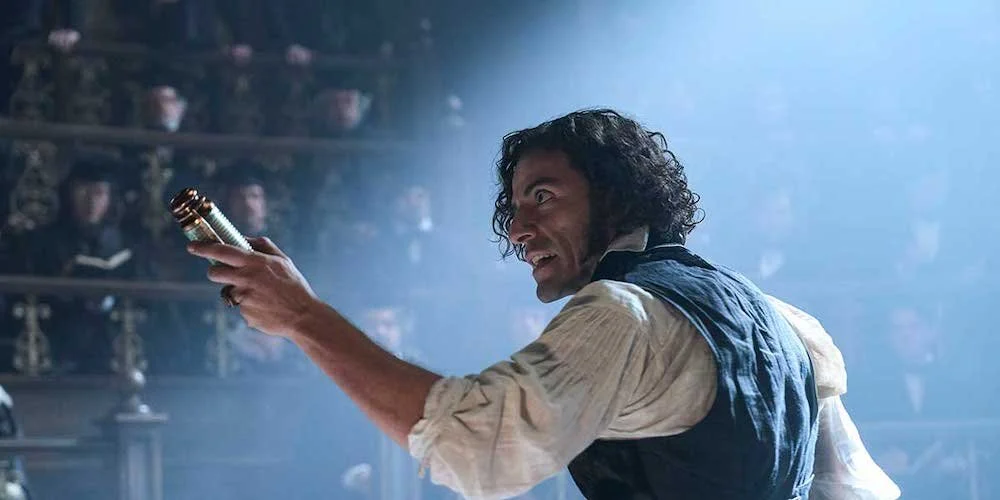
Image courtesy of the Toronto International film Festival.


The mysterious and the monstrous are not for the faint of heart, the ability to bring humanity to monsters and beasts and making an audience care for creatures that look nothing like them takes skill passion and heart — something that director Guillermo Del Toro who has been chasing the passion project of bringing the film Frankenstein on the big screen, and it is well and truly “alive!”.
Guillermo Del Toro has made no bones about his utter love and passion for Frankenstein, a true dream project that the filmmaker has been pursuing on — and — off for almost two decades; until at last the moment has arrived and Del Toro must breathe fresh life into a subject most people at least in passing. It’s safe to say he succeeds, as one of Del Toro’s greatest strengths is his ability to make a story his own and he does so through his eye for detail. Whether the stark emptiness of the tundra, Victor’s hill top laboratory, the lush forests,or the sweeping mansions and structures of the cities Del Toro's worlds are eye catching, breathtaking and cliche in the aspect that “every still frame could be a computer background”. Moreover the costumes are equally as vibrant, whether Elizabeth in her sweeping bird of paradise like dresses,Victor in his trim suits and billowing white shirts and red gloves that starkly stand out as the metaphorical and physical “ blood on his hands” even the Creature himself, is visualized less in stitches and scars and less bloody then one would expect. The Creature is eye-catching because of his look draped in rags and long cloaks and and finer details like an animalistic sheen to his eyes combined with Jacob Elordi’s looming height difference with the rest of the cast makes him stand out. Due to this, it is easy to get steeped into the world and its characters.
Del Toro’s take on the world is shaped differently than its film predecessors, rather it is more like its classic novel counterpart as it speaks from two perspectives, Victor Frankenstein and the Creature’s. Always the master of setting a scene, Del Toro’s vision starts in the Arctic where a trapped ship has discovered an injured man on the ice who it is revealed to be none other than Victor Frankenstein (Oscar Isaac) who in his delirium makes the ship aware they are in grave danger as he being pursued by a monster who shows off his fearsome strength as he rips through the sailors demanding he be given Victor. Frankenstein, thus begins to recount how he got to this point; his harrowing tale begins showing him as a man dedicated to science and proving that he is determined to play God, as we find him in the midst of his experimentation resolute that he can create life at his own whim there is an outcry from the medical world all except one person — Henrich Harlander (Christoph Waltz) a charismatic and wealthy arms manufacturer who seems to share Victor’s passion and interest in his work, and quickly decides to help fund his experiments with one stipulation he will reveal later.
Victor, elated that he has everything he needs to follow his wildest dreams; wrangles his brother William (Felix Kammerer) to help with his ideas who begrudgingly agrees, the brothers while completely different in personality are bonded by blood and tragedy as Del Toro reflects on young Victor’s obsession with life and death is due to his mother’s premature passing. After reconnecting with William he also meets his new fiance Elizabeth Lavanza (Mia Goth) who at first, aggressively butts heads with Victor, despite this, they quickly find they both share a mischievous steak and form a bond — and Victor is infatuated, drawn by her beauty and her intelligence and kindness; but it is in vain as Elizabeth rebuffs him.Not to be deterred,Victor throws himself into his project using parts from corpses to make the ideal form. On a stormy night,he does just that but it is not without its trials and tribulations — Harlander’s exception has been all along that he would be placed into the new body Victor creates as his is sick and dying;Victor refuses, a tussle ensues leading to Harlander's death but not before him trying to pull the machine apart.
Frankenstein assumes he has failed, despite getting his machine to work, but the following morning he awakes to find his creation still wrapped up lost and confused. From here, starts the tumultuous relationship between master and creation. At first, Victor is elated that his plan worked — but it quickly becomes “what now?” as the Creature while alive, is but in his infant days; the Creature seeks to be close to Victor, his name being one of the only things he can actually express much to Victor’s disappointment and soon the creature is locked up in the lab basement when he doesn't live up to Frankstein’s expectation — the shine has quickly worn off.
When Felix and Elizabeth come for a visit, due to no response from Harlander, it isn't long before Elizabeth finds the Creature chained up in the basement, and instead of being scared, she is more so drawn to him; fascinated by him and his innate curiosity and gentleness with her, in turn Elizabeth earnestly wants to teach him about the world. Here, Elordi truly comes into his own as he displays the multifaceted spectrum that it takes to play the creature he is not simply a beast but, a creature looking for human guidance and tenderness that his creator refuses to show him; he is a newborn in the world and Elordi shines as he brings depth to playing innocent and curious being shown affection for the first time; he carries a gentleness, out of step with characters he has played previously, but welcome nonetheless.
Despite the creature’s warmth,Frankenstein is the opposite, his frustration that the Creature won’t speak his name and later Elizabeth’s — he lashes out cruelly against his creation and when the reality of playing God seems to sink in and despite his attempt to rid himself of the beast, he proceeds to set the castle ablaze hoping it will take the creature with it much to Elizabeth’s distress. The Creature, barely escapes and washes ashore, lost, abandoned and well and truly alone for the first time in his brief existence.
From here, the film takes the opportunity to show us the duality of both leads — shifting to illuminate Creature’s perspective.The story continues where it last left off, lost and alone,the Creature finds refuge in the back of a barn after being hunted — witnessing human cruelty up front. Here, the world shifts for Frankstein’s Creation; despite the homeowners not being aware of his presence, he starts to feel kinship with humans for the first time albeit,from a distance.The Creature sees how humans can have kindness and warmth as he sees the family dynamic play out and he yearns to be part of their world. Frankenstein excels at being able to walk that double edged blade of joy and grief as the film pivots from the Creature as they learn and grow and seemingly finds his place in society and into a family, when he spends a winter with the older blind patriarch of the farmhouse. The peace is fleeting when tragedy strikes, and the blame falls on the Creature despite how he mourns the older man, he’s blamed instantly and almost hunted to death — the Creature learns the hard way not only was he forced into life; but he also can't even die on his own volition.
Meanwhile, Victor's life has moved on, as he does his best to stand by his brother in his marriage to Elizabeth, it’s clear Elizabeth still misses the creature,but the peace of marital bliss is broken as the monster appears looking for his maker. He seeks him out asking VIctor to make him a companion as compensation for how he's been treated, but Victor refuses, turning his hate on the Creature who quickly gets violent — in true gothic fashion, several tragedies happen at once setting up the final act; Elizabeth and Felix are called by the commotion and in an attempt to protect the Creature Elizabeth is shot and killed, and in the Creatures fury of losing another person who cared for him — attacks and kills many soldiers including Felix leaving him to die in Victor’s arms.
The back and forth cat and mouse chase flips again as Victor becomes the pursuer, leading back to the films beginning with both sides of the tale told. Man and “monster” are able to see each other truly for the first time,they have switched roles as Victor is now the one who is vulnerable and weak. In this moment of clarity,Frankenstein marvels a t the intelligent creature before him and the incredible being he has become; Victor knowing he is too injured beyond help asks for forgiveness, and the Creature has their most humanizing moment — how to forgive in the face of someone who has gravely injured and hurt them their whole life? And yet, he does and is able to embrace his father in a way he never got from others. The creature is left alone in the world, but there is some hope that he is in control of his own destiny and can live and define himself in his own way.
Frankenstein at its core, is a film that is brought to life by its visuals as previously mentioned but more importantly; its cast breathes life into the characters; Oscar Isaac brings a flair for the dramatic, over the top, exuberant and electric, while simultaneously sneaky,devious and cold hearted, a man who is used to getting his way by any means necessary and not afraid to lie, steal and use violence to stay on top — everyone else be damned fitting deliciously into the gothic genre. Meanwhile, Jacob Elordi is his polar opposite — someone judged first and foremost by his appearance,that while monstrous — hides a wanting and tender heart; he’s constantly looking for those to provide that shelter and foster his humanity — but its something he must come to on his own.Victor by comparison snap reaction’s is always with malice, and un ugly cunning — the Creature’s is always with kindness before the world gives him a reason to react in anger. As someone who was initially very skeptical of Elordi’s performance, he easily held his own with Isaac while demonstrating a new depth to his acting where he previously has played more villainous smarmy characters this tender hearted “monster” is moving, and some of the best work he has done.
The film is not without its flaws however, its run time is felt at moments making its divided style give the film a slow burn feel. Secondary characters suffer the most in this film: while arguably the film is about creator and creation, having such a star studded cast leaves great talent with not much to do; in particular Mia Goth, while wonderful, felt flatter than one would have liked and used only to drive the story forward.
The story of man and monster has been told since the beginning of time, seeking one’s place, discovering what makes us human are questions we struggle with till this day.Frankenstein however, is the example we look to for humanity in the unlikeliest places — kindness, warmth come naturally if we allow it, yet— humans have a tendency to show violence and cruelty, out of fear of the different and the unknown. Through visions of Mary Shelley’s work and now Del Toro’s interpretation the morale of kindness at its core despite all; is something that may be difficult to find in today’s world but something crucially important for now; being creations of kindness and not cruelty.


Nicole Cabrera is a Toronto-based film enjoyer with a passion for the eighties, horror, and deep diving their favourite actors’ obscure filmography. When they’re not watching movies, they're writing, crafting, cosplaying, going to concerts, working on their podcast (Hollywood Deepdive. )and dreaming of traveling.