
Laundry
Written by Cameron Geiser
Warning: This review is for Laundry, which is a film presented at the 2025 Toronto International Film Festival. There may be slight spoilers present. Reader discretion is advised.
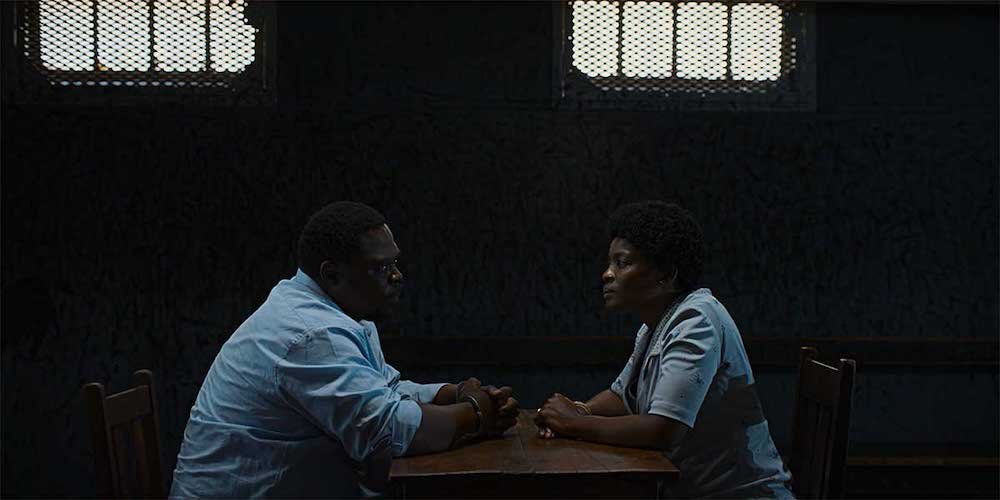
Image courtesy of the Toronto International film Festival.


This was the first film I saw while at TIFF, and it was a powerfully defiant first film from director Zamo Mkhwanazi. Laundry follows a family living in South Africa during the 1960s Apartheid while operating a popular laundry service in a whites-only zone. They are exempt from the usual rules due to the father, Enoch’s (Siyabonga Shibe), past during the war when he saved a white man's life who would go on to become a powerful entity in the political sphere. While the whole family is at the heart of the story, we mainly follow the oldest of the two children, Khuthala (Ntobeko Sishi). Khuthala is nearly done with his schooling and while he has dreams of chasing the artistry of making music and performing in a band, his father has his own dreams of Khuthala taking over the family business despite his son having no interest in this possibility whatsoever. Khuthala’s younger sister (Zekhethelo Zondi) however is almost always showcasing an interest and natural skill in the nuts and bolts of machinery. When the family installs a new dryer in the beginning of the film she marvels at the technical prowess of this newly minted addition to their lives and is seen obsessively reading the manual from that point on.
In the beginning of the film Enoch's old flame, the singer known simply as Lillian (Tracy September), comes to their Laundry service to let him know that she would be leaving for America in the next year after she received an offer to sing in Harry Belafonte's band. This propels the young Khuthala to try and convince Lillian to bring him with her to America. As Khuthala is the son of Enoch she dismisses him outright- it would be too awkward to bring him on and it would be disrespectful to his mother (Bukamina Cebekhulu) on top of it. After many, many, attempts with Lillian turning the young man away, she eventually relents and allows Khuthala to try to play with her band. After switching from trumpet to guitar they find a connecting rhythm and make something that feels powerful despite the initial harsh words from the other bandmates.
The main storyline running through the film however is the brutal racism being inflicted on any and all native South Africans, but especially anyone living in areas targeted for race specific gentrification. Shortly after Lillian informs Enoch about her eventual move to America several white men with tape measures and clipboards barge into the Laundry lobby and begin taking measurements. They try to offer Enoch a paltry sum without acknowledging him until he unfurls his exemption medal given to him from the man he saved years ago stating that he is allowed to do business in this district. They scowl and tell Enoch to go down to the City Hall to address this issue before storming off, briefly taking solace in fending off the vultures. Unfortunately once in City Hall he's bullied and humiliated by the scoundrels in power and when he tells them how weak and foul they are for these indignities- they throw him in jail.
The remainder of the film is caught up in the mother of the family trying to navigate the extremely racist, misogynistic, and corrupt court system while trying to get Enoch back home. Yes Laundry is a film full of many waves of emotion, but more than anything else the chief reaction should be horror and incredulity at the reality of Apartheid’s effects on South African communities. This effect is achieved in Laundry largely through the succinct and dynamic performances of the core cast but primarily through Ntobeko Sishi as Khuthala, Tracy September as Lillian (who is actually a real life singer in her first role), and Siyabonga Shibe as Enoch. Zamo Mkhwanazi has crafted a strong first film with an ending that could not, and has not, left my mind since seeing it. She should be a name you should keep an eye on after this; I know I will.


Cameron Geiser is an avid consumer of films and books about filmmakers. He'll watch any film at least once, and can usually be spotted at the annual Traverse City Film Festival in Northern Michigan. He also writes about film over at www.spacecortezwrites.com.