
Best Visual Effects: Ranking Every Nominee of the 98th Academy Awards
Written by Andreas Babiolakis
Welcome to another year of the Academy Awards Project here on Films Fatale! We rank all of the nominees in each category every day.

Oh boy! Blockbusters! Yes, we have reached the Best Visual Effects category, and I do like what I see with these five nominees here. Rating visual effects can be tricky because different films have different motivations. There are motion pictures that want to look as realistic as possible with their CGI magic. Then there are films that don’t aim for realism but want to use their CGI to dazzle and achieve the impossible. You will find both kinds of films below. I want to focus on which films looked the most believable regardless of their intentions; this includes films that overly rely on motion blurring to hide details. Fortunately, none of the five films below have lazy or obvious visual effects (then again, the Academy is quite good at picking strong candidates in this category each year. Which films had the best CGI team at the helm? Here are your nominees for Best Visual Effects, ranked from worst to best.
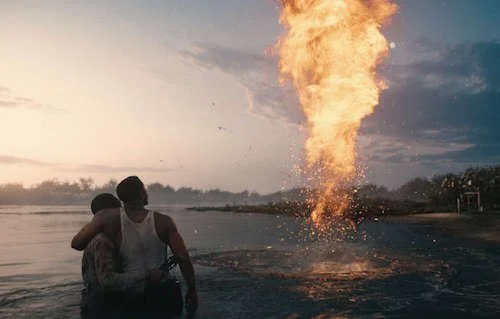
5. Sinners-Michael Ralla, Espen Nordahi, Guido Wolter and Donnie Dean
I am happy that Sinners got in here and not some of the usual suspects you’d find (the fact that we don’t have a single Marvel film this year is quite a surprise). However, I am placing this film last just because the other four nominees boasted more instances of visual effects and for longer periods of time. Another factor with this film’s ranking is that I feel like much of the visual effects are used to enhance the makeup work (it can also be really tough to tell what is practical and what is computer generated). I don’t think that films like Sinners wind up in this category enough, and — even though I have ranked it last — it is nice to see Sinners amongst the other nominees (in the past, the Academy would opt for some awful film just to fill up the slot, overlooking films that use visual effects more tastefully and artistically like Sinners).
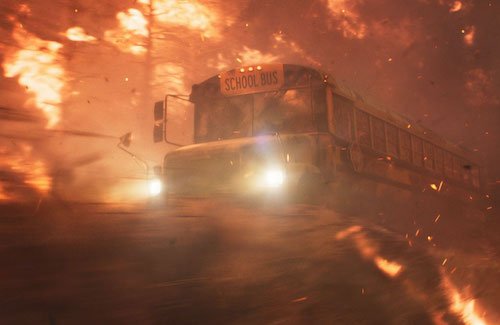
4. The Lost Bus-Charlie Noble, David Zaretti, Russell Bowen and Brandon K. McLaughlin
Like the remaining nominees, The Lost Bus is extremely heavy on its visual effects. I have placed it fourth because it can be a little apparent when CGI is being used to create fires, show destruction, or paint other parts of this disaster film’s bigger picture. The work we do get helps make the film feel thrilling, but I do feel like that The Lost Bus was intended on being a visual effects portfolio more than anything; the hints of motion blurring to “clean” up the visuals also hurts this nomination, in my opinion. There are times where the visual effects feel their strongest: the wreckage that the fires create in their wake. I prefer this film’s effects when they are not showy but, rather, naturalistic.
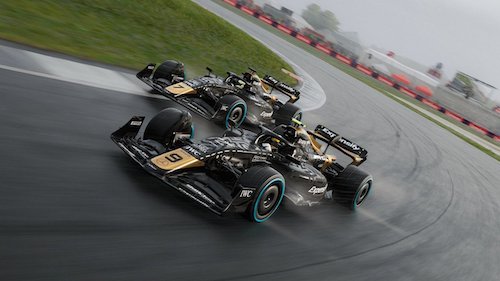
3. F1-Ryan Tudhope, Nicolas Chevallier, Robert Harrington and Keith Dawson
There is always at least one hyper realistic film each year that gets nominated for Best Visual Effects. This year’s entry is F1. While there may not be dinosaurs, atomic explosions, or monsters, F1 certainly holds its own amongst its peers because of how difficult it is to tell where visual effects are even used in this film. You can try and estimate that the skyline of a POV shot, racecars as they zip around corners, or other factors of this film are CGI, but are you ever really sure out of most instances? I sure as hell am not. I don’t care about F1 all that much regarding its story, but the film did well last year because it is a technical showcase, and part of these thrills come from the illusions of the visual effects department: never knowing what is real or what has been created by CGI artists.
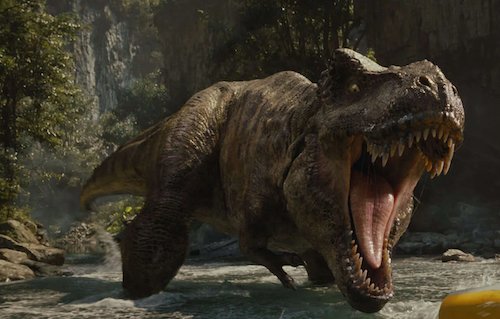
2. Jurassic World Rebirth-David Vickery, Stephen Aplin, Charmaine Chan and Neil Corbould
I will refrain from ragging on the worst film to be nominated for an Academy Award this year (my review does that enough). Instead, I have to give credit where it is due. Like any other Gareth Edwards film, Jurassic World Rebirth is not my cup of tea, but, boy, do those visual effect creations look incredible! The Jurassic Park franchise was always an exhibition of strong effects, but, even then, Edwards’ dinosaurs and other prehistoric creatures look way better than the rest of the Jurassic World films. These feel like living beings. Sure, we know that they are made from CGI magic because there is no way that these beasts presently exist, but that doesn’t stop Jurassic World Rebirth from occasionally feeling real. When the rest of the film frustrates me because of its derivative story and lack of originality, it is the mind blowing CGI work that kept me trucking on and believing what was on screen (well, slightly; the visual effects department could only do so much saving).
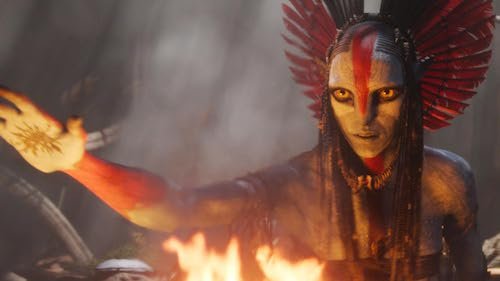
1. Avatar: Fire and Ash-Joe Letteri, Richard Baneham, Eric Saindon and Daniel Barrett
Avatar: Fire and Ash continues the excellence of James Cameron’s science fiction franchise. What more can I say here that doesn’t sound like rehashing at this point? The Na’vi look as good as they ever have. Pandora looks even better. Fire and Ash continues the heavy use of underwater magnificence (ironically, given the film’s name) while also incorporating a few sequences that show marvelous flames (ah, there it is). While Avatar: Fire and Ash is easily the weakest film in the trilogy thus far, it as continued — and furthered — the CGI wizardry that the series is synonymous with. At this point, this feels as pointless as saying Michael Phelps is good at swimming.
Who I Want To Win: Avatar:
Who I Think Will Win: Fire and Ash.


Andreas Babiolakis has a Masters degree in Film and Photography Preservation and Collections Management from Ryerson University, as well as a Bachelors degree in Cinema Studies from York University. His favourite times of year are the Criterion Collection flash sales and the annual Toronto International Film Festival.