
Best Director: Ranking Every Nominee of the 98th Academy Awards
Written by Andreas Babiolakis
Welcome to another year of the Academy Awards Project here on Films Fatale! We rank all of the nominees in each category every day.

We are down to one of the biggest categories here, and the last before we tackle all ten Best Picture nominees. This category goes hand-in-hand with those, and so it only feels fitting to finally cover the candidates for Best Director. The nominees are five of the best filmmakers working today who each delivered career staples in 2025; the Best Director category can reek of favouritism some years, where adored filmmakers are chosen despite not operating at their best level that year. I am quite chuffed with the selection this time around and do not have much in way of negativity to report here. Now, I usually see fit to rank the directors in terms of how much I loved their films, but this year is going to be a little different. So, if I loved a film more than another, that doesn't necessarily mean that I think the former has stronger or more complicated direction than the latter. I will be keeping difficulty, ambition, and precision in mind here. Either way, all of the nominees — first timers and veterans — are deserving of their flowers this year. Here are your nominees for Best Director, ranked from worst to best.
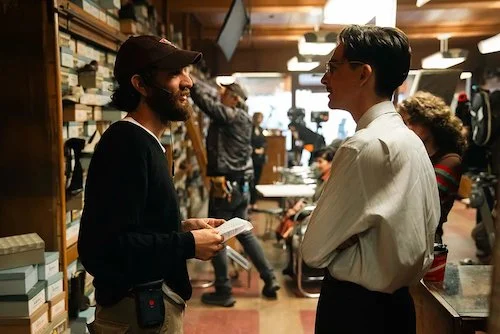
5. Marty Supreme-Josh Safdie
I think that Josh Safdie does a great job behind the camera on Marty Supreme, which was one of my favourite films of last year. However, when I am focusing simply on direction rather than anything else, I do have to place him last just because the other four films pull off even more impressive feats (either in certain sequences, or overall). Still, Safdie takes a chaotic film and makes it tonally sound throughout its entire runtime. The comedy and the anarchy all hit the same way, and that is not easy to do without a film being impossible to take seriously. Marty Supreme is a constant ride of a film that never eases up or loses your attention. I will deduct a couple of points just because I feel like a few of the storylines do not conclude succinctly (which, you can argue, is Marty Mauser's fault for causing disarray everywhere he goes), and these points did not bother me enough to view Marty Supreme any less than I do (I adore this film), but if I am discussing direction and the overseeing of a motion picture, I do have to consider everything in this discussion.
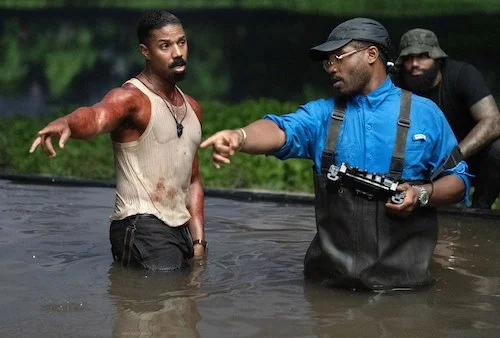
4. Sinners-Ryan Coogler
I do love seeing Ryan Coogler flex his artistic muscles with an original film like Sinners. In fact, it is almost infuriating seeing what he pulls off here (as opposed to the many different ways he has invigorated the franchises and existing properties of others). With Sinners, Coogler blends a drama about rising musicians, a historical epic about Black citizens and culture in Mississippi during the thirties, and a vampire horror film that has bloodshed spilled everywhere. Sinners effortlessly combines all of the above into one through line of exciting cinema. Occasionally, Coogler will show that the best has yet to come, particularly the juke joint sequence that travels through decades of music and culture into one breathtaking shot (blues and folk evolves into hip hop, funk, rock, and R&B). Sinners has much going on for it, but at times (like the aforementioned scene), this is clearly Coogler showing what he's made of. I wish he would do so more often.
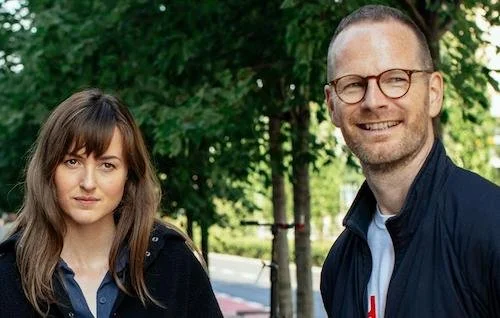
3. Sentimental Value-Joachim Trier
While Joachim Trier has been a consistent filmmaker for quite some time, he pulls off something truly special with Sentimental Value. What could have just been your regular domestic drama that tries to pull emotions out of you is instead an authentically emotional portrait of a complicated family where there is no clear answer as to how to fix things. Trier converges the concept of filmmaking (the central family is affiliated with the entertainment industry) with the difficulty of figuring out how to repair relationships; both the art of direction and the need to rekindle a family are dependent on focus, clarity, and meaning. Trier's direction might be the most subdued of all of the five nominees here, but that shouldn't mean that he is the least worthy of praise. If anything, it can be harder to direct a film without constantly reminding the audience of your capabilities; Trier allows Sentimental Value to speak for itself.
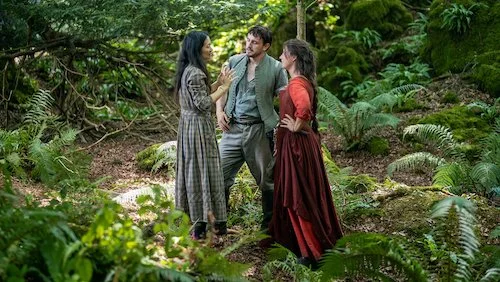
2. Hamnet-Chloé Zhao
I never had any doubt that Chloé Zhao could pull off a great film with Hamnet; this wound up being my favourite film of 2025. I adore the end result. I never thought Zhao would cave in and utilize typical biopic cliches, but Hamnet is so antithetical to these tropes that the film never explicitly confirms that we are following William Shakespeare and his family until the last third. Instead, Zhao opted for a tragic tale that could apply to any household. All of the emotional cues are earned. The overall beautiful sheen never wavers. Zhao's obsession with historical details and anthropological add-ons make Hamnet an even stronger affair for me. We aren't driven by the legacy of Shakespeare and what his fame would suggest. We are instead brought to the kitchen table, bedrooms, and yard of people who have lived and died; they just happen to be affiliated with the most iconic writer of all time. I also love Zhao's focus on how art can be a blessing and a curse: the catharsis of agony while having to face that terror or devastation head on. I have bawled my eyes out every time I have seen Hamnet, and I think it is a pitch-perfect film.
1. One Battle After Another-Paul Thomas Anderson
Why I haven't placed Hamnet first is this: I think it is the best film of 2025, but I am ranking directors and not films at this point in time. What Paul Thomas Anderson accomplishes with One Battle After Another is insanely complicated and impressive to the point that I have to admit that it is a highlight of last year. The ability to combine the weird Pynchon-esque comedy and satire with some of Anderson's most thrilling cinema to date is already impressive when you think about it; this is the kind of film where one or two false moves could spoil the whole thing and render it over-the-top, nonsensical, unbelievable, or preachy. Anderson never faulters with this difficult tightrope act. Now, you toss in the insanely nuanced sequences Anderson pulls off (especially for someone who has never really worked with action cinema before), especially that climactic sequence which may go down as one of the great car chases in film history. Anderson's ability to create nauseating tension within the same film that might make you laugh and feel entertained while you are at the edge of your seat is unmatched this year. One Battle After Another is a major milestone for one of the great American auteurs, and it is the most he has ever stepped outside of his comfort zone (with excellent results).
Who I Want To Win: Isn't it about time Paul Thomas Anderson wins?
Who I Think Will Win: It's time for Paul Thomas Anderson to win.


Andreas Babiolakis has a Masters degree in Film and Photography Preservation and Collections Management from Toronto Metropolitan University, as well as a Bachelors degree in Cinema Studies from York University. His favourite times of year are the Criterion Collection flash sales and the annual Toronto International Film Festival.