
Best Documentary Feature Film: Ranking Every Nominee of the 98th Academy Awards
Written by Andreas Babiolakis
Welcome to another year of the Academy Awards Project here on Films Fatale! We rank all of the nominees in each category every day.

It’s time to go through the nominated documentary feature films this year! Some years, you will find some crossover between categories, like documentary nominees that wind up in the Best International Feature Film group, Best Animated Feature Film category, or even the rare appearance in groups like Best Film Editing. However, in 2026, all five of these documentaries have their sole nominations in the Best Documentary Feature Film group. This year’s selection is fairly strong; I felt like 2025 was solid but not exemplary with its overall catalogue of documentary films, but at least my second favourite doc of last year made the final five (justice for My Undesirable Friends; I suppose the Academy didn’t want to watch a five-and-a-half hour documentary, but that film is sensational journalism). You’ll find all different kinds of documentaries this year, as well as a wide range of current topics. Like I always do when I rank documentary films, I want to specify that my placement of these films is not indicative of their politics or whether or not I agree with them; these are critiques based on how the films are made, not how important I feel that they are. Here are your nominees for Best Documentary Feature Film, ranked from worst to best.

5. Mr Nobody Against Putin
What can be described as the crowd-pleasing documentary of the bunch is Mr Nobody Against Putin. I do think that there were stronger documentaries regarding the conflict between Russia and Ukraine last year (My Undesirable Friends, 2000 Meters to Andriivka), but this one felt the least cynical and most approachable, given how it follows a teacher (educators tend to have the most digestible ways of exploring difficult concepts — or at least the good ones do). Exploring the brainwashing tactics used to instill hatred into children is an important topic, and I do think that Mr Nobody Against Putin does go further than I expected with its revelations of these deceptions. I just think that a film of this nature should have hit harder than it does (then again, many films about the Russian-Ukraine conflict are highly depressing, and maybe the team here felt there should be another method to get this information across for those who are too emotionally exhausted to listen). Mr Nobody Against Putin is a solid documentary (and far from the worst of 2025), but I feel like I can easily rank it last, here because the other four nominees resonated with me far more because of their approaches.
4. Cutting Through Rocks
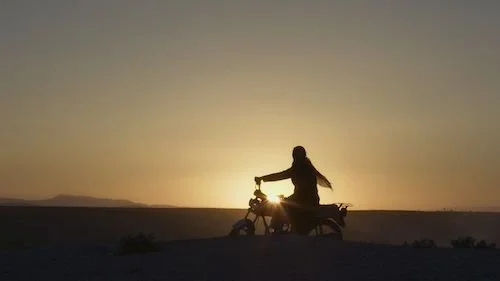
Some documentary films take a concept and run with it for the entire time — with little transformation or additional discovery. Cutting Through Rocks prioritizes its subject (depicting the first female councilor in an Iranian village teaching women how to ride motorcycles and stand up to various forms of oppression) and runs with it. For an hour and a half, we see girls look freer than they’ve ever felt as they ride their bikes into the horizon. The artistic angle here is liberating, yet Cutting Through Rocks doesn’t forgo its passion and allows us to get familiar with enough of these villagers to understand why such an objective is necessary. Cutting Through Rocks is more simplified conceptually than the three nominees that I have ranked higher, but this is still a worthwhile documentary that I am glad to see nominated here.
3. The Perfect Neighbor
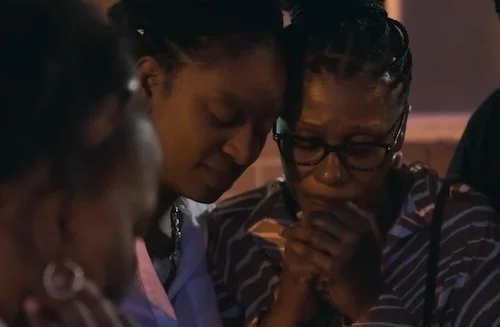
The most popular film here (and I don’t think there is even a contest regarding this), The Perfect Neighbor is the rare documentary that took the world by storm; this Netflix title has come across everyone’s devices at some point these past few months. The challenge of compiling all of the film shown here based on existing footage (police bodycam captures, audio recordings, news clips, the like) helps The Perfect Neighbor feel unhindered by bias or faulty memories. This depiction of a neighbourhood quarrel that results in an unspeakable slaughter is sure to infuriate any viewer, proving that this film is highly effective. While I think this documentary is great and a highlight of 2025, I do believe that there are a couple of films that I prefer (including the two higher-placed nominees here); nonetheless, I expected The Perfect Neighbor to wind up here and would have been stunned if the most-discussed documentary of the year missed a spot in the final five (then again, the Best Documentary Feature Film voters do tend to have some egregious snubs over the years, like The Act of Killing losing, or Won’t You Be My Neighbor? not even being nominated).
2. The Alabama Solution
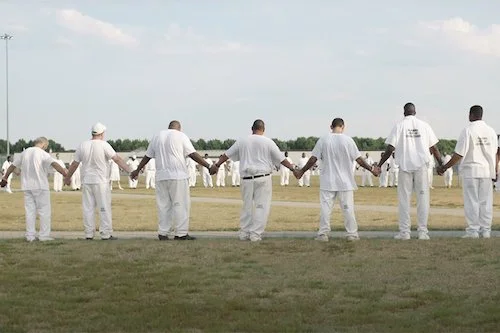
One of the most striking documentaries of 2025 is The Alabama Solution. What started off as an exploration of organized religion in the prison system became a massive exposition of systemic abuse. What’s most impressive is not what The Alabama Solution proves (it’s not exactly a secret that inmates are assaulted and abused on a frequent basis) but the lengths taken in order to get this information — and the extent of the violence — out in the open; this is also upsetting because it is clear how much of this information is buried and prevented from reaching the masses. Some documentaries feel dangerous just by the very fact that they exist, and The Alabama Solution is an example of this: a necessary essay that will surely make its rounds now that it has an Oscar nomination.
1. Come See Me in the Good Light
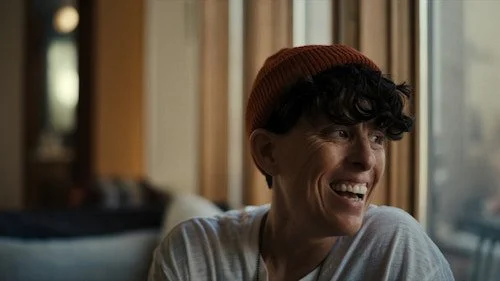
To me, the best film of the pack is Come See Me in the Good Light, even though it easily has the most basic subject matter of the five films. Essentially, we are following poet Andrea Gibson in their last days alive as they struggle with their umpteenth battle with cancer (this time, sadly, it is confirmed fatal with zero cure). Instead of wallowing in the sadness of such news, Gibson — as per the film’s title — wants to celebrate the time they have left; this is where the crux of the documentary’s spark is derived from. The entire film is bittersweet: from learning more about Gibson and their impact as a LGBTQ+ voice to learning about them as an everyday human being, we feel like we are becoming friends with this warm-yet-booming spirit — all of this just to slowly see fate take them away from the world. This is clearly an emotional watch yet a gorgeous film, and it would have been a crying shame if the Academy overlooked Come See Me in the Good Light.
Who I Want To Win: I like-to-love all five nominees, but for me the film that hit me the most was Come See Me in the Good Light. It takes a lot for me to want to see a documentary more than once, given how many of them are disheartening, distressing, or disturbing. However, Come See Me in the Good Light is a documentary I can see myself revisiting from time to time throughout my life, reminding me to be thankful while I am here and never forget the loved ones in my life who have had their own battles with cancer.
Who I Think Will Win: I cannot say this with certainty but I think that The Perfect Neighbor has this award clinched. I don’t speak with complete confidence only because the Best Documentary Feature Film voters can be highly unexpected with their peculiar choices, but I do think that this is a year that already feels set in stone, and I do not see how any other film can presently overtake The Perfect Neighbor, given that film’s immense popularity and sociopolitical importance in an increasingly divided America.


Andreas Babiolakis has a Masters degree in Film and Photography Preservation and Collections Management from Toronto Metropolitan University, as well as a Bachelors degree in Cinema Studies from York University. His favourite times of year are the Criterion Collection flash sales and the annual Toronto International Film Festival.