
Cutting Through Rocks
Written by Andreas Babiolakis
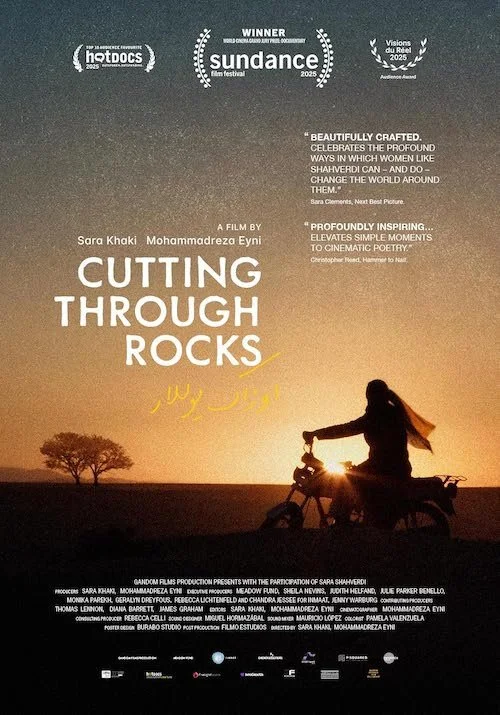


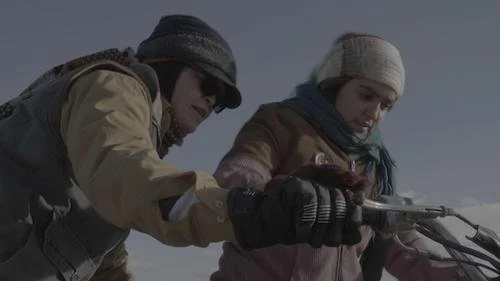
How do you go against centuries of tradition and expectation? Mohammadreza Eyni and Sara Khaki's triumphant documentary film, Cutting Through Rocks, plants us in Iran with councilwoman Sara Shahverdi. Her mission is to liberate the women of Iran and help introduce freeing mindsets there. As Cutting Through Rocks acknowledges many of the conflicts and oppressions women face in Iran, it also captures its subjects as celebrities (at least for this hour-and-a-half), with Shahverdi coming off as a necessary force there. She helps teach her fellow women villagers a number of different things; mainly, she instructs them on how to operate motorcycles. It might not seem like much, but we have all heard cyclists discussing the freeing feeling of racing on the open road with nothing but them, their hog, and the wind that brushes past them. To many who have lived with far less oppression, riding a motorcycle may just be a preference. To these villagers, this act becomes a wakeup call.
Naturally, Shahverdi's teachings (which are far more than just the art of motorcycle riding, and include the fight against many pulverizing laws that hurt women, mainly the act of child marriage) doesn't go unnoticed, and her place in this small village gets put into question. This does feel like yet another setback that is meant to put a woman in an unfavourable place, and Shahverdi doesn't give in during the appropriately-titled Cutting Through Rocks. She has lived a tough life and still fights with resilience — she aims to encourage other women to do the same. With a film like Cutting Through Rocks, directors Eyni and Khaki, too, are leading by example. While I do wish that the film went deeper into the crisis on a national level, to hone in on someone as fascinating and riveting as Shahverdi is a major draw to watch this film. There's drawing attention to a cause and/or concern, and then there's doing so with style.
Cutting Through Rocks is informative, enraging, and cathartic; it is the full cycle of acknowledging and addressing trauma.
With the way that Cutting Through Rocks is shot, the film feels as freeing as its central themes do; when our subjects ride their motorcycles, we feel like we are zipping alongside them to the point that we can almost sense the warm temperature or the refreshing breeze circulating. The film is gorgeously shot, allowing us to embrace the exhilaration of this empowerment, the beauty of these women who are continuously held back or abused, and the appreciation for how a country once was (and could be again). You might not learn more about the misogyny in Iran after watching Cutting Through Rocks than you already know, but to see this frequent talking point presented in such a unique way is a major benefit to watching this documentary.


Andreas Babiolakis has a Masters degree in Film and Photography Preservation and Collections Management from Toronto Metropolitan University, as well as a Bachelors degree in Cinema Studies from York University. His favourite times of year are the Criterion Collection flash sales and the annual Toronto International Film Festival.