
Filmography Worship: Ranking Every Maya Deren Film
Written by Andreas Babiolakis
Filmography Worship is a series where we review every single feature of filmmakers that have made our Wall of Directors

The discussion of cinematic surrealism can not be had without bringing up the legendary Maya Deren. A fascinating mind who was highly academic and an expert in many fields (world anthropology, literature, political sciences, and, of course, the arts in many forms — including, and especially, dance), Deren was someone who was always thinking ahead. Her films prove this. Unfortunately, she lived a mighty yet brief life, passing away at the age of forty-four from a brain hemorrhage. In her short time with us, we have a dozen films of varying lengths and natures with one contingent factor: Deren's mission to put her visions on celluloid at any cost. She would direct, produce, write, edit, and even star in a number of her works: whatever it took. This was quite unusual back in the forties but it paved the way for many artists afterward: Deren proved that avant-garde enthusiasts could piece together what studios wouldn't allow or fund. Deren would frequently disparage the budgets, control, and duplicity of Hollywood pictures, insisting that independent films allowed for far more artistic integrity. When you watch one of her films, you can see how right she is.
Due to the difficulty attached to getting her projects off the ground, of the eleven films I will be sifting through, a few of them remained unfinished after Deren passed away; even in their larval stages, these works are significant. The one film I will not be reviewing is Season of Strangers, which is deemed lost. This leaves us with eleven titles that act as a snapshot of a career which promised so much more brilliance than we ever got; this isn't to hint at some non-existent ineptitude on Deren's part (far from it), but, rather, the sadness that Deren did not have more opportunities or free reign to do what she wanted and needed to do. Like Maya Moore in the WNBA, or the short life and career of painter Frida Kahlo, Deren was a woman who was born to do her claim to fame and expressed her genius within the industry with very little time. I can only imagine what more we could have gotten; even so, Deren remains insanely influential from other filmmakers (like David Lynch) to musicians (including Janelle Monae). Even with the little that we have, I can easily call Deren one of the most invigorating, mind-altering, eye-opening directors of all time. Here are the works of Maya Deren ranked from worst to best.

11. Medusa
Medusa is ranked last because there is barely anything to even discuss about this film and it feels unfair to even attempt to do so. Unfinished to the point that it exists only in dregs, Medusa is one of Deren's works that showcase the art of dance. Working with choreographer Jean Erdman, the two would not align on this project (thus its unfinished status). What remains are glimpses of a free dancer who is conveying something magnificent, I'm sure (it's hard to tell what the mood or intended message or narrative is when we are watching fragments of what once was). I'm still bringing it to your attention because Deren's visions in any capacity are sublime; I could only wonder what more there could have been from this.

10. Meditation on Violence
In Meditation on Violence, Deren shoots dancer Chao-Li Chi in the middle of a martial-arts exhibition, finding harmony within aggression and rhythm in action. Evoking the power of culture in dance — as if the two combined possess enough dynamism to send a message in the form of a short film — Deren connects us with the visceral spirituality exuded from a body who is silently reliving centuries of history via movement. To many, this short might not mean much: who cares about watching someone dance for twelve minutes? This film — like all of Deren's others — speaks to me. Sure, Deren has handled dance better in other films, but Meditation on Violence is still an effective look at art and meaning transcending mediums and boiling purpose down to its roots. Some may watch this film and see nothing; others will watch Meditation on Violence and feel tomes of meaning.

9. A Study in Choreography for Camera
Another dance film by Deren, A Study in Choreography for Camera is quite a step above Meditation on Violence. Here, dance is far more than the art of choreography. As our lone performer seemingly teleports from setting to setting, we see a fluid routine done in a way that would be impossible to see in person. Deren likens a dance number to the passage of time, the post-production illusions of filmmaking, and the wanderlust of a soaring mind that cannot be contained. The title of this short film feels didactic, but A Study in Choreography for Camera feels far more illuminating to watch.
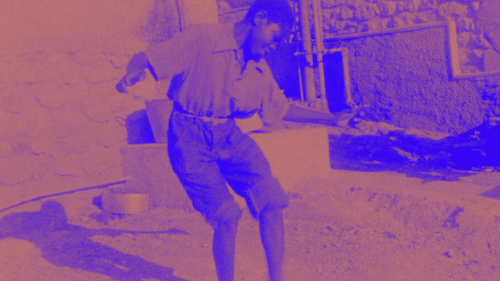
8. Divine Horsemen: The Living Gods of Haiti
The sole film to be released posthumously (as opposed to finished or partial works that would be rediscovered after Deren passed), Divine Horsemen: The Living Gods of Haiti is Deren's most direct reference to her affinity for Haitian culture and art. The film was completed by her third husband, composer Teiji Ito, and his wife Cherel Winett, so it's tough to say how exactly Deren wanted this documentary to take shape. However, the end result is remarkable: a transmission from Haitians practicing vodou to the stratosphere above. There is art that is choreographed, and then there is art that stems from the inner spirit; the latter is on full display here.

7. Ensemble for Somnambulists
What acts as the early stages of The Very Eye of Night, this unfinished short -- Ensemble for Somnambulists -- is still striking. The art of dance becomes a vehicle of transportation from the depths below to the skies above; from another reality into our own. What was meant to be a demonstration and exercise while Deren was leading a workshop at the Toronto Film Society, Ensemble for Somnambulists is essentially just Deren trying her hand at something; even then, her lack of full commitment displays more capability and prose than most would with all the means in the world.
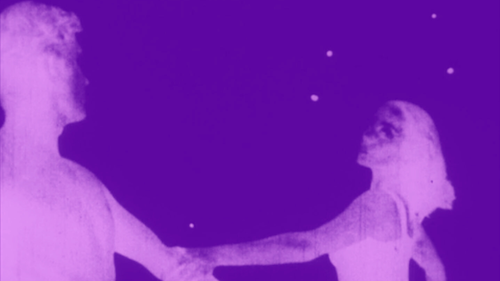
6. The Very Eye of Night
What came from Ensemble for Somnambulists was The Very Eye of Night: a fuller, complete short film that takes the same concepts of displaying dancers via photo negatives and allowing the empty space surrounding our performers to be a part of the spectacle. Of the films that survived (so, excluding Season of Strangers), this was Deren's last completed film, and there's something touching about this: as if the souls of the Earth will meet again on a new astral plane. Seeing Deren reunite humans with celestial bodies (we are stardust, after all) is a humbling and breathtaking experience.

5. The Witch's Cradle
Deren's first film as a solo director is The Witch's Cradle: an experimental short that takes art, film, and the occult, and turns it into a nightmarish fever dream. Starring the Dadaist master himself, Marcel Duchamp, The Witch's Cradle infuses the notion that art is a provocative and transcendental medium with the kind of imagery that would freak out many purists. This unfinished short uses the act of the children's activity (one I grew up knowing as "cat's cradle") to symbolize the interconnections between humans and spirits, the assembly required in filmmaking, and the conjuring of a response within an audience that the artist strives for. No matter how you react to a film like The Witch's Cradle, Deren is successful in the sense that you will feel something.

4. The Private Life of a Cat
The majority of Deren's films feel challenging to digest (or, at least, provocative). Then, there is The Private Life of a Cat, which might sound naively half-baked on paper. I assure you that it isn't. This documentary short — co-directed by Deren and her collaborator, Alexander Hammid — about a mother cat who gives birth is actually gorgeous; mainly because Deren and Hammid are unafraid to place us in the perspective of a cat and make us feel like we are a part of this event. What could have been the documentation of a cat and its litter is now a ceremony: a ritual of birth and being welcomed into a difficult world with the utmost love. For a filmmaker who was usually helping us see what we were not privy to, The Private Life of a Cat is Deren uniting us with the familiar in a whole new and gratifying way.

3. At Land
Deren was never a celebrity in the truest sense of the word (she would be a cinematic icon of the underground years later), but she was feeling torn by who she was meant to be when making At Land. As she runs into multiple versions of herself after waking up on a beach (much plays in reverse; did she die on the beach?), we are witnessing someone recounting moments of her life and wondering each and every checkpoint: how did she get to this place? How did they — all versions of herself — get to where they did? Is she the same person now that she was years ago? In Deren's film, time is a circular yet relative concept; the film reel circulates as it runs, just like we humans are very capable of doing with our own trajectories. Deren's successes blend her reality and her subconscious in At Land: one of the most stunning existential crises ever put to film.
2. Ritual in Transfigured Time
Many of Deren's previous experiments — the cat's cradle found in The Witch's Cradle, the use of dance to explore post-production juxtaposition in A Study in Choreography for Camera, the surreal hallucinations of Meshes of the Afternoon -- feel like they come together for her stirring experimental gem, Ritual in Transfigured Time. If her entire career was her thinking out loud and committing her concepts to celluloid, then Ritual in Transfigured Time is seeing all of these loose ideas blend together in such an exemplary way. Another Deren dance film (but easily the greatest one), Ritual in Transfigured Time uses choreography and cinema to detail female oppression (and, at the same time, their elevation to the point of feeling like mythical beings). There are a series of relationships being examined here; humans with each other; beings and their atmosphere; contemporary persons and the history and culture laid before them; women and men; those recorded back in the forties and the millions of onlookers for centuries afterward; all transfixed in time.

1. Meshes of the Afternoon
I don't think this comes as a surprise. When people think of Deren, they are most likely reflecting on Meshes of the Afternoon: a film I have crowned the greatest short film of all time (that I am still confident is so). Co-directed by her then-husband, Alexandr Hackenschmied, Meshes of the Afternoon is a masterpiece of silent, avant-garde, and independent cinema. We follow a woman, played by Deren, in an infinite loop that gets deeper and deeper into experimentalism the further we go. From kicking off with a shot of a descending flower (the blossoming of one's birth, femininity, and independence), the film marches closer and closer towards death in the form of a cloaked figure with a mirrored face: we are forever looking ahead, but our demise is staring right back at us. Suddenly, the woman wakes up and goes through this whole event again (each time is more disturbed than the last). Like revisiting a film, we will view it with new eyes every time, as if it is our first time; Deren likens this experience to the infinite loop of being alive, awake, and asleep, and the dreams that tie our realities together.
This film didn't have sound whatsoever — not even an official score. Yet, many (including Deren's collaborator, composer Teiji Ito) have come up with their own audible rendition of how Meshes of the Afternoon should sound: a testament to how effective the film is with each person who watched it (and in such starkly different ways). Do you read Meshes of the Afternoon as a beacon call to women and the dangers they face; as a reflection on life and the inevitability of mortality; as an indication of how days will collapse into each other as we fall into routine; as a study of one's dreams and what they could mean; as a vehicle to show the artistic boundary of cinema and crush even that; as a lens on film and its finite nature; all of the above? The film remains an unorthodox feat that stands out, no matter how far films are willing to go in general; a testament to Deren being correct about the self-imposed limitations of cinema within a studio system (and how free she was outside of it). In that same breath, Meshes of the Afternoon almost feels prophetic: someone answering their passion and working themselves to death. Some of the greatest minds can read the future not out of some bogus psychic capabilities but via logic and wisdom; Maya Deren foretold a future of cinema that could be but never will be (outside of those who she has influenced) while also acknowledging what may come of her. She saw something bleak; with one of the greatest films ever made, we see a master and her demons.


Andreas Babiolakis has a Masters degree in Film and Photography Preservation and Collections Management from Toronto Metropolitan University, as well as a Bachelors degree in Cinema Studies from York University. His favourite times of year are the Criterion Collection flash sales and the annual Toronto International Film Festival.