
The Alabama Solution
Written by Andreas Babiolakis
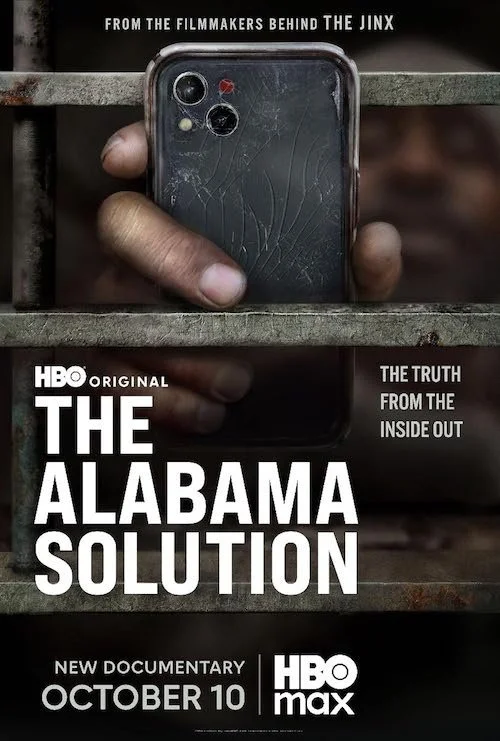


One of the best kinds of documentaries are the ones you didn’t expect to be made. You know, the results that stem from when our filmmakers had one idea in mind and were surprised by something else that popped up during their research. Take for instance Terry Zwigoff’s Crumb about the cartoonist Robert Crumb which was meant to simply profile the unconventional figure and, instead, opened up a can of worms including his highly complicated family. Such is the case with The Alabama Solution. What was meant to be a recording of a religious meeting at the Easterling Correctional Facility in Clio, Alabama, turned into something more. Inmates there approached our directors — Andrew Jarecki (Capturing the Friedmans, The Jinx) and Charlotte Kaufman (Kabukiman's Cocktail Corner) — and confided in them their terrible truths: that they were being abused, and no one would listen to their cries for help. These kinds of situations are where we get the best insights or most unique topics, mainly because they are untapped: how could a subject be touched upon if we didn’t know it even existed? Of course, it’s not a new concept that the American prison system is rife with abuse, but the extent of how bad it gets is important to know; furthermore, it isn’t so much the abuse that isn’t well known, but the film sheds light on extent that the prison and other factors (the government, for instance) are willing to go to hide these terrors. That can be news worthy.
The Alabama Solution became a six-year-long experiment, and not by choice. Once Jarecki and Kaufman were alerted to the extent of the living conditions at the Easterling Correctional Facility, the topic of their documentary shifted and, as a result, the methods of which information would be retrieved. Cellphones were snuck in so various inmates could keep tabs on the ongoing situations with our two filmmakers; I also have to bring up how I am a sucker for revelations like this because I think it needs to be mentioned how impossible some films are to make (and seeing our team get away with something to this magnitude for the greater good feels like a film in and of itself). This discussion circled around a new focal point altogether, and an example to base everything else off of: the murder of inmate Steven Davis who was fatally bludgeoned by prison guards. By examining one such example, The Alabama Solution is able to stitch its findings piece by piece and make a cohesive study that benefits the larger problem: the way prisons are run is unruly, and many figures with authority go too far. Troubled people are not being helped or encouraged to become better. They are tortured.
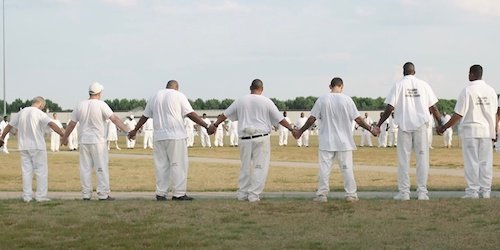
The Alabama Solution takes us further into a difficult subject than we are used to; it’s the realization we need in order to properly discuss the prison system in America.
Just getting this information out feels like a masterminded plan, and that’s horrifying. The Alabama Solution needs to exist because this is information that we are not being made aware of (or, at least, the finer details that really certify the state of things). There is a depressing factor when it comes to the quality of life in regards to various governmental systems: if you aren’t living well, you likely won’t ever again. The impoverished who are banished to the streets or corners of a city and left to die. Those with bad credit who are shut out of many essentials to try and better their livelihoods and get themselves back on their feet. The incarcerated who may have a change of heart and strive to be better people being punished into submission and oblivion. The Alabama Solution doesn’t have an answer as to how to get this abuse to stop, but I think whistle-blowing like this will certainly do quite a lot of good. It truly is up to the federal level to try and ensure that this doesn’t stop anymore, but the government is complicit; so says The Alabama Solution. Will this film encourage the government to step in and do something? Probably not, but I hope it gets viewers talking and engaged enough to get those in power to take notice; it took those speaking up to two directors for The Alabama Solution to even take place, and the conversation must keep going until those who need to hear it are reached.


Andreas Babiolakis has a Masters degree in Film and Photography Preservation and Collections Management from Toronto Metropolitan University, as well as a Bachelors degree in Cinema Studies from York University. His favourite times of year are the Criterion Collection flash sales and the annual Toronto International Film Festival.