
The Perfect Neighbor
Written by Andreas Babiolakis
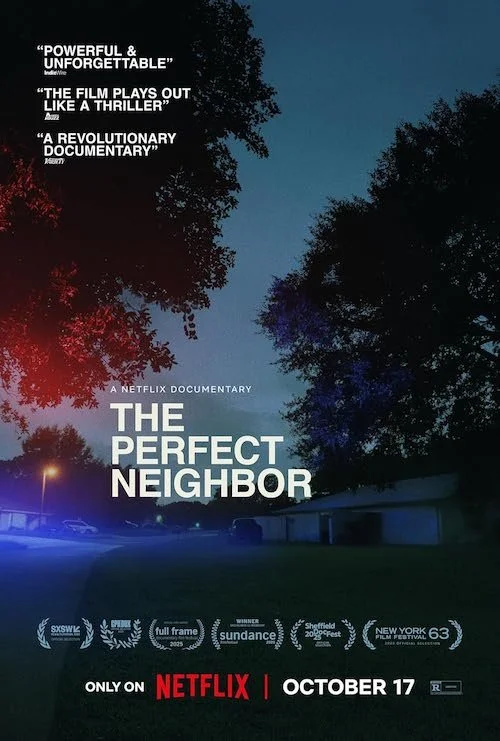

As we become more connected through technology, the rise in obsession surrounding true crime accelerates. The concept of using bodycam footage to piece together a documentary of a true event is not new, considering how popular these clips are on YouTube and various forms of social media — not to mention the success of the phenomenal documentary short, Incident, from 2024 (I am still bothered that that didn't win the Best Documentary Short Film Academy Award, but I digress). So when the highly popular documentary feature film, The Perfect Neighbor, took Netflix by storm, I was privy to the fact that, while this concept isn't new, it is still highly reliable and — when nurtured ethically and without bias — a means of showing the utmost honesty of a horrible situation. Greeta Gandbhir's latest film aims to do just that. While it's clear that bodycam footage can cover an abundance of information, the extent of how full the story is here is kind of remarkable. Everything you see is from recorded footage from the moment these situations happened, but not once does the film feel assembled; it simply exists.
What feels like a random collage of clips soon amalgamates into a cohesive story. We see the bodycam footage and hear the audio recordings of two sets of neighbours in the middle of a dispute; the Owens household, and Susan Lorincz. The Perfect Neighbor's escalation towards tragedy is quite something. Frequently, true crime stories have some talking head feeling the need to sell the gravity of the story when, I'd argue, the crimes that take place usually speak volumes on their own. The Perfect Neighbor simply shows us what was captured, and this is enough. We feel the gears churning in our heads after complaints are filed and interrogations are held. Once the central incident happens — where Lorincz murders AJ Owens in cold blood — all hell breaks loose; everything from before this point has led to such a senseless act on top of a pyramid of senseless acts. After years of back-and-forth feuding, Owens went to Lorincz's front door to ask her what happened between Lorincz and Owens' children; Lorincz saw this as an attack, so to speak, and fired a shot through her door and killed Owens. This feels so preventable, and yet, by the intricacy of what The Perfect Neighbor projects, it also seemingly wasn't. When a system is this broken, people are so driven by prejudice and hate. Officers and other people of authority are taught to turn blind eyes to minor red flags if they don't seem urgent enough. Whether it's the parade of disruption that led us to this unfortunate act or the centuries of divide that came before it, everything led to Owens' awful fate that night. I cannot put into words the exhaustion I feel when recounting how horrific humanity can be and has been, as well as the ongoing "state" of things (or is this just how things are, period?).
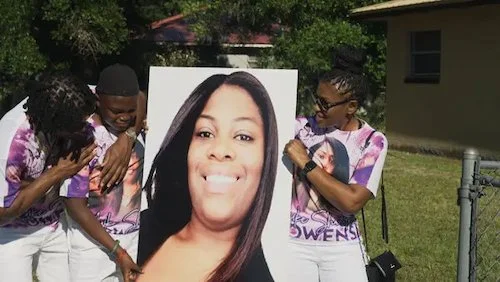
The Perfect Neighbor is an example of the power of recorded evidence in the day and age of news traveling at rampant speeds.
The fact is that this should have been preventable, and yet the very little The Perfect Neighbor tells us proves that it sadly wasn't and will continue to not be. When the film pivots to the aftermath of Owens' slaying, it feels a little less full; as if it is trying to tie up the loose ends of something that can never be repaired. If the film is trying to show things from all angles (even Lorincz's perspective), I feel like it already does that with its earlier footage; anything afterward is an epilogue, as far as I am concerned (especially since Lorincz was found guilty of manslaughter, as if to say her decision was made out of self-defence and warrants a reassessment, but, once again, I digress). I don't feel like the film is skewed in favour of one side over the other, but it does simply lay before you what has been captured, and that honestly tells enough of a story as far as I'm concerned.
The online discourse surrounding this film is enough evidence that this is a highly infuriating circumstance: a massacre that never had to be, and yet here we are. The Perfect Neighbor supplies enough evidence to make us feel like we are a part of the conversation (and it's one that will continue for a while, seeing how popular this documentary proves to be as well as how personal this killing is). The film doesn't try to supply answers for that of which it cannot explain. It instead caters to that dark curiosity humans possess with upfront detail. True crime sensationalizes an itch many people carry: the urge to know why humans are capable of such evil towards one another. A film as bare bones and upfront as The Perfect Neighbor admits that we will never know why, and that unsolvable fact is devastating.


Andreas Babiolakis has a Masters degree in Film and Photography Preservation and Collections Management from Toronto Metropolitan University, as well as a Bachelors degree in Cinema Studies from York University. His favourite times of year are the Criterion Collection flash sales and the annual Toronto International Film Festival.