
Best Animated Short Film: Ranking Every Nominee of the 98th Academy Awards
Written by Andreas Babiolakis
Welcome to another year of the Academy Awards Project here on Films Fatale! We rank all of the nominees in each category every day.
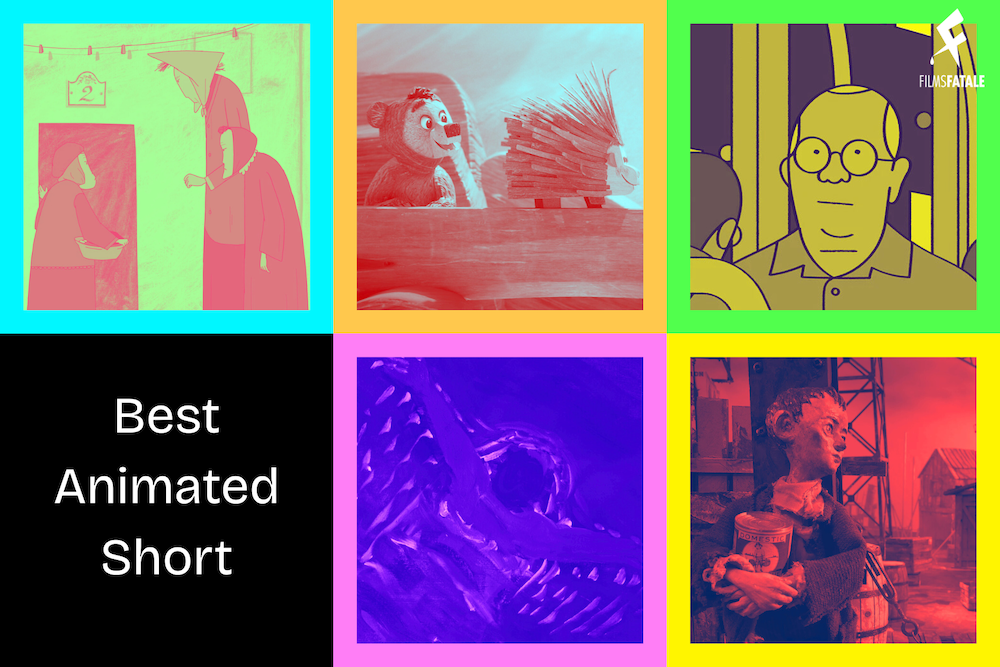
Today is going to be animation-centred here on Films Fatale, as I cover both of the Academy Awards categories that deal with animated films. First off: the animated short films. I covered all of the fifteen short listed candidates earlier this year and found that there was a decent mixture between substandard and excellent short films. The final five selected nominees are a decent group, with four of the picks ranking seventh-to-fourth on my list; the remaining film was thirteenth, if you are interested. However, one of the worst snubs of the year is the omission of Snow Bear: a beautiful and emotionally driven short that I was nearly certain would have been a part of the final group of nominations here; alas, it is missing, and I cannot figure out why. Either way, we have these five films to look forward to. For the uninformed, animated short films aren’t necessarily family-oriented or friendly. If anything, short films are often the avenues for extremely experimental cinema; you won’t find anything too out there this year, but at least all five of these shorts feel unique from one another thematically, tonally, and with how they are animated. Here are your nominees for Best Animated Short Film, ranked from worst to best.
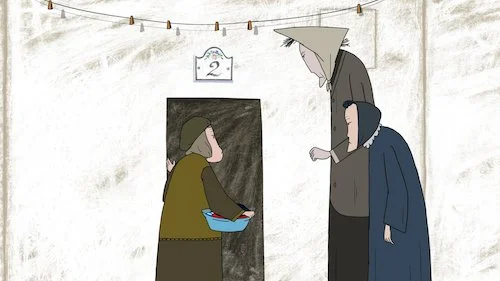
5. The Three Sisters
While not a terrible film, The Three Sisters feels indicative of what happens every year with the Academy voters in this category. Annually, I go through all fifteen shortlisted nominees, I see a handful of great hopefuls and a couple of forgettable, decent-to-mediocre-to-awful cuts that somehow make the final five over the fantastic snubs that didn’t. The Three Sisters is a quirky short told with simplistic, geometric animation. It features, well, three sisters who are all trying to rent out their houses. Each effort brings out some unique circumstance that I’m sure is meant to make you feel itching with anticipation as to what will happen next. At fifteen minutes of this kind of storytelling, we don’t learn enough about any of the sisters, the comedy is fine but not enrapturing, and I feel like there is enough heart here to carry the short. I still find The Three Sisters forgettable. It was harmless to watch, but when a film is considered one of the top five of its field for the year, harmless is not what I am looking for. I want something that moves me, affects me, or changes me.
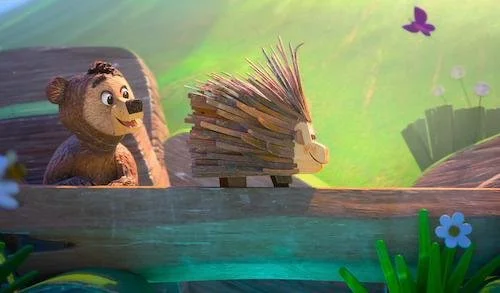
4. Forevergreen
We jump quite a bit in quality here with Forevergreen: a CGI, stop-motion-implied film about a bear living in the forest who bonds with an anthropomorphic tree. This film has a similar ecological message that the aforementioned Snow Bear had, but I feel like Snow Bear said more with less and really nailed the feeling of loneliness and belonging that humans crave (but within a bestial vessel, as to allow us to fully connect with the central polar bear and other featured animals). With Forevergreen, the message feels a bit more forced: like certain key points had to be made and any method of conveying them would do. Even so, Forevergreen is still very sweet and clever enough to make you feel something. The animation goes above expectation with a lovely, carved look. The story is straight forward and easy to follow. This is clearly meant to be a universal message told lovingly and coherently, and Forevergreen will not disappoint in this respect (even though it does feel a little pushy).
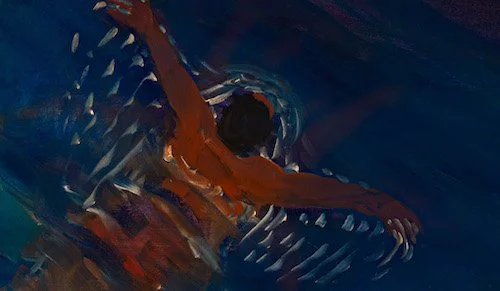
3. Butterfly
Butterfly — or Papillon — sees us following a swimmer and his life of struggle against bigotry (and the perseverance he displays throughout). The entire short is hand painted and it looks fantastic. History blends with psychological perception via these acrylic psychedelic transitions and images. I think Butterfly is the most impressive of these five nominees from an animation standpoint alone. However, I feel like the story — while powerful and effective — is a little stunted because of how short the film is (maybe as a result of the difficult animation style). We still go through an entire lifetime in the form of a butterfly routine in water. The film is majestic and historically striking at the same time; I do feel like it feels almost like a complete concept, but even that is enough.
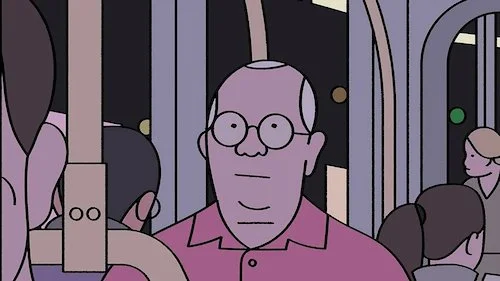
2. Retirement Plan
For seven minutes, Retirement Plan has actor Domhnall Gleeson narrating as Ray: a man looking ahead towards the end of his life and what he will do once he can finally retire. Parts of it are very funny, involving the silly and nonsensical ways that Ray will spend his twilight years. However, Retirement Plan also gets touching and thought provoking, encouraging you to consider the lunacy of what human beings have done with ourselves: why have we limited how much free time and self-fulfillment we will experience? Retirement Plan gets oddly moving and thoughtful (even with its goofiness) as if it was inspired by the works of a Charlie Kaufman or a Don Hertzfeldt. Life is so strange and yet we cannot get enough of it. In no time at all (and with very basic animation), Retirement Plan will entertain you, win you over, and leave you contemplating; it may even make tears well up in your eyes.
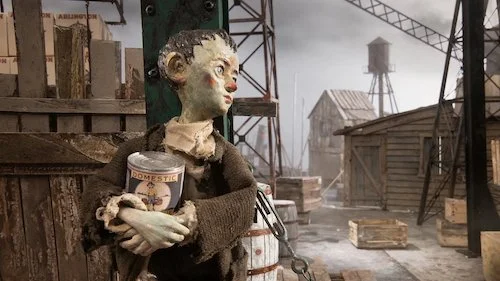
1. The Girl who Cried Pearls
Canadian cinephiles may know the connection the National Film Board of Canada (or the NFB) has with animated short films, especially if they try to watch every Oscar nominated film. Every year (or so), the NFB has some submitted short that winds up being shortlisted (or even nominated by the Academy), and many of them are questionable and do not show the calibre of Canadian filmmaking that I know exists. 2026 is not that year. The Canadian submission — The Girl who Cried Pearls — is one of the best shorts affiliated with the NFB in recent memory. Told via stop-motion animation and porcelain figures, The Girl who Cried Pearls is a fully fledged story about unconditional love, capitalistic conflict, and regret. The Girl who Cried Pearls made my top five of the fifteen shortlisted candidates, and I think it is the strongest of the five final nominees.
Who I Want To Win: Since I think it is the best of the nominees — and, well, I wouldn’t mind seeing a Canadian film doing well — I will root for The Girl who Cried Pearls.
Who I Think Will Win: Given the difficult and sublime animation — as well as the powerful story and affecting subject matter — I feel like this award will go to Butterfly. However, it can be difficult to predict how the Academy voters will sway whenever it comes to short films (which can feel super difficult to predict some years). I will say that The Girl who Cried Pearls does have a number of accolades to its name already which can help its chances, but I still think this is likely Butterfly’s Oscar.


Andreas Babiolakis has a Masters degree in Film and Photography Preservation and Collections Management from Toronto Metropolitan University, as well as a Bachelors degree in Cinema Studies from York University. His favourite times of year are the Criterion Collection flash sales and the annual Toronto International Film Festival.