
Come See Me in the Good Light
Written by Andreas Babiolakis
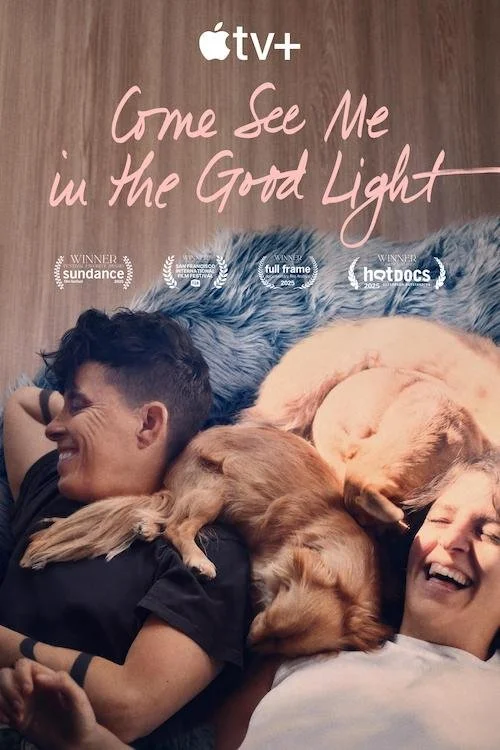


Life is extremely short. Even if you live to be a century old, there will always be that feeling that you didn't accomplish as much as you would have liked. Then there are those who stare at death in its face and — while still not ready to go — have accepted their fate and will embrace what they do have while they have it (even if it's for a moment). Poet and activist Andrea Gibson had numerous episodes with cancer before they were hit with the point of no return: a fatal form of ovarian cancer that had metastasized in her bones. After many brushes with hope, this was it: the big one. The documentary Come See Me in the Good Light shows their elation when they felt like they had overcome cancer for the last time, but this glee would sadly not last very long and, by watching the documentary, we unfortunately know that it wouldn't; this joy hits like a ton of bricks with preconceived context. Ryan White's documentary about Gibson's last days has expectedly stunned audiences not just because of the poet's brave face when facing the end of their life, but because of White's tenderness that allows Gibson's story to finish with closure and appreciation, not agony.
Gibson is genderqueer and spent much of their life trying to figure out their sexuality and identity; remember, time is very short, and — while the discover of oneself is a phenomenal journey if successful — it does put into perspective how much of Gibson's life was spent facing uphill battles with societal expectations and the rejection of their truth. To me, that sounds like the waste of a gifted life like Gibson's, whose impeccable knack for words and truths has helped heal millions of listeners. When life is so brief, knowing that enough of that life was spent just trying to live as one's true self feels even sadder; then again, if it wasn't for trailblazers like Gibson, many others would have to endure similar fights (sadly, that still is the case in many parts of the world). However, true to the name of the film, Come See Me in the Good Light is also a fairly optimistic affair, like seeing Gibson fall in love, particularly with wife Megan Falley; hearing the recounts of their first moments together is enough to melt your heart and understand that no matter who you are, this is what real adoration feels like.
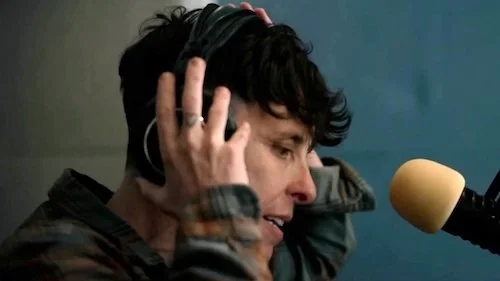
Come See Me in the Good Light is both a love letter and cautionary tale to and by Andrea Gibson that encourages those battling or aiding those in battle to embrace the fight and never forget to love one another while doing so.
Much of Come See Me in the Good Light is meant to go against expected norms (isn't that what Gibson was all about), like Gibson singing the "and many more" coda to the "happy birthday" song ironically when blowing out their candle (a crushingly solitary candle on their cake at that), or how much of Gibson's final days are spent with support and comfort (and not just reveling in the worst of it all); there aren't many things worse than losing a loved one to a lengthy battle with cancer, but the film's notion that "should one day, at least it was with those who make them happiest" is a beautiful one; you cannot prevent tragedy, but you can at least make it as good as possible for those in need.
When I lost my mother in a similar way, an important part of this awful experience was being able to tell her everything I needed her to know: how I was sorry for any grief I gave her when I would rebel, how I would always miss her, how I was grateful that I had her as my parent (et cetera). Come See Me in the Good Light is interesting in that way. If Gibson is a master with words, how does one best convey these final sentiments to them? They do say a picture is worth a thousand words, and so a film will possess countless words. Not only do we see these parting expressions to Gibson in their life, the film acts as its own tribute to a brave figure who marched into every storm without missing a bit — be it an act of activism, or their final battle against a knowingly incurable cancer (and yet they fought on). The strongest people I know are those who have had to fight cancer like — and especially — my late mom.
I never forgot her courage, but in watching a film like Come See Me in the Good Light, I can see my mother in someone like Gibson who did whatever it took to stick around for those who love them; when your body is betraying you in a plethora of ways, I cannot emphasize how bold this is. It can be difficult to remember anything but the cancer when a loved one passes from it, but a film like Come See Me in the Good Light begs us to know why we hurt: because we loved. No. We still love. Seeing signs of my mom in myself and how I act or respond to things means that she lives. Being reminded of funny or wonderful memories with her means she has this second life carried by how deeply she left impressions in us all. For a film like Come See Me in the Good Light to nail this light amidst despair is not just impressive: it is crucial. These people are much more than their illnesses, and that is why we are livid that they became sick. Come See Me in the Good Light is a major reminder of this, and a beautiful look at one of the worst ongoing experiences. It is a call-to-action that there is still time until there isn't; never take that for granted.


Andreas Babiolakis has a Masters degree in Film and Photography Preservation and Collections Management from Toronto Metropolitan University, as well as a Bachelors degree in Cinema Studies from York University. His favourite times of year are the Criterion Collection flash sales and the annual Toronto International Film Festival.