
Filmography Worship: Ranking Every Miloš Forman Film
Written by Andreas Babiolakis
Filmography Worship is a series where we review every single feature of filmmakers that have made our Wall of Directors

Czech cinema is often attributed to the eccentricities of experimental, arthouse rebels like Věra Chytilová, Jan Švanmajer, and Jiří Menzel. Of the Czech New Wave scene, one filmmaker broke out with the most global appeal and popularity: Miloš Forman. Forman was one of the most popular and acclaimed directors of all time, not just within the Czech New Wave scene — with two sets of Best Picture and Best Director Academy Award wins to his name, it's clear that he was a dominant force in the film industry. However, Forman was not quite as ruthless and unorthodox during his time in the Czech New Wave movement (perhaps why he was the one figure to become a worldwide sensation; his works were far more digestible in comparison). His brand of cinema fit in quite nicely when the New Hollywood movement was at its peak, and so Forman migrated to the American film industry quite effortlessly with 1971's Taking Off (One Flew Over the Cuckoo's Nest was only a few years later, and the rest is history). Even during his tenure in Hollywood, Forman wasn't one to try and settle for pedestrian normalcy; he sought to find new, authentic ways to connect with audiences, usually with atypical protagonists (be they creations, or based on real people).
Forman was efficient with getting raw, complicated performances out of his actors, with some of his thespian's strongest work appearing in Forman's films. While in America, Forman was painting a picture of a complicated nation: one that had its bright spots and a slew of contradictions, setbacks, and broken people. He would extend this notion to other moments in history and parts of the world — including the lives and times of Wolfgang Amadeus Mozart and Francisco Goya. I would argue that a few of Forman's works would nestle quite nicely in the dramedy category (and his ability to blend both lightness and darkness is extraordinary; you cannot even split these elements apart in his works), but he would also dip into other genres — like satires and tragedies — without missing a beat. Despite his prominent career, he only released a dozen narrative feature films in his lifetime; he also didn't make another film twelve years before his passing in 2018, at the age of eighty-six. Even his weaker efforts have elements going for them that I wish to highlight. In fact, I would argue that almost all of his films are worthwhile (even some of the works that have been worse received by society). His highly consistent career is punctuated by a handful of excellent films that only age better with time. Here are the narrative films of Miloš Forman ranked from worst to best.

12. Valmont
For me, the film with the dishonour of being the weakest Forman effort could only have one option. Valmont has a lot going against it that isn't necessarily its fault. It greatly pales in comparison to Stephen Frears' Dangerous Liaisons — both based on Pierre Choderlos de Laclos's novel Les Liaisons dangereuses — and it suffers next to Forman's previous film, Amadeus. Even ignoring these other films (because one should always judge a title based on its own merits), this is a period piece film that feels artificial, hokey, and contrived. At least Forman seems to try to take the costume drama to a different level of visceral passion and electricity, so Valmot isn't a completely cooked turkey; I do wish it was still a little refined and fine-tuned.

11. Goya’s Ghosts
Often considered amongst Forman's worst pictures, I agree that Goya's Ghosts does not quite offer the calibre of excellence that we are acquainted with in his career; however, I also think it is a bit of an underrated title that I am willing to play the devil’s advocate for. Some might feel that the film suffers from the lack of focus on the actual artist Francisco Goya, instead prioritizing one of the people Goya painted — Lorenzo Casamares; you can argue that the film is slightly narratively confused alongside its misdirection. I think this is a fairly unique deception that succeeds well enough; these diversions kept my interest, anyway (we are chasing ghosts, after all). Nevertheless, I think there is much to champion as well, from the psychologically visceral tone of the film to the interesting, modernized flourishes that make Goya's Ghosts feel more like a modern melodrama than a traditional biographical picture. Sure, the film doesn't succeed as an exhibit or exposition of its subject, but it is something else: a fairly engaging, highly aesthetic drama that runs on a subconscious level.
10. Ragtime
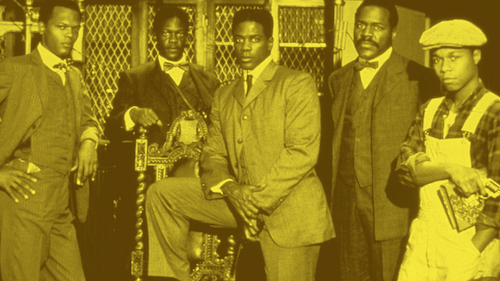
From this point on, I think that the remaining Forman films are great (yes, he rarely missed). I think a film like Ragtime will have its fans. It is a massive, lengthy, intrinsic historical epic based on E. L. Doctorow's novel of the same name (one that has been adapted a couple of times since, particularly as a musical). Some of this picture's slight blemishes are fascinating concepts and ideas that get lost in the midst of everything that is going on for two-and-a-half hours, but I also cannot fault Forman for going the distance with this layered story about a Black pianist and the racial conflicts he endures in New York City at the turn of the twentieth century. I find similarities between this and Michael Cimino's Heaven's Gate: two overly ambitious films towards the end of the New Hollywood movement that can be better appreciated with a modern lens and sense of amazement and splendour.

9. Taking Off
Taking Off is Forman's first American film, yet it is the sole work from this time period that feels even remotely similar to his projects during the Czech New Wave movement. This blend of traumatic tragedy and nostalgia is a peculiar one: two parents trying to find their daughter (who has left home), who wind up finding a new lease on life during their quest. Staged like a quirky fable (again, akin to the Czech New Wave, albeit on a very small level), Taking Off is a major statement on what it means to feel alive (and escape the imprisonment of normalcy). In this tale of disconnected generations and a disjointed family all trying to find purpose and harmony in life, Forman provides a hint as to what he would provide Hollywood with: a different perspective.

8. Hair
Off the back of the massive hit One Flew Over the Cuckoo's Nest, Forman set his sights high in a different kind of way: with an epic musical. Hair is a fairly faithful adaptation of the iconic stage musical brought to the big screen. While such a story begs to be more of a counterculture statement (given that it is about the Vietnam War and all of the death surrounding it), seeing this story of rebellion by Forman's hand is still quite something. Forman — someone who was always great at showing both sides of a situation — allows Hair to be far more than just a rally. It becomes a time capsule politically, thematically, musically, and culturally: a snapshot of the harmony found within a nation at odds with itself.

7. Black Peter
We will now start periodically running into the major award winners in Forman's life, starting off with his debut feature film, Black Peter. This film indulges in the existential crises of a Czech teenager, and we are plopped in a day-in-the-life of someone who is essentially staring at what the rest of his existence is going to look like (how tragic). Winner of the Golden Leopard at the Locarno International Film Festival, Black Peter is a film that makes you rethink reality by shoving it as much as possible in your face: how could we miss the ways in which Black Peter rings true in our own experiences? With his first feature film, Forman was already thinking about the bigger picture and the many ways he could make the most with what he had; even before he was exploring larger sets and more elaborate stories, he knew how to make Black Peter feel like a revelation.

6. Man on the Moon
Maybe I appreciate this film far more than some might because I am a huge fan of the late performer Andy Kaufman (he never wanted to be considered a comedian, so I will refrain from using that term). Man on the Moon graciously covers the behind-the-scenes person behind some of the more bizarre acts of performance art of the twentieth century. I will say that there is something slightly paradoxical about Man on the Moon being a fairly traditional biographical picture, but it feels like Forman's attempt to alert audiences of the man behind the persona and antics. What sweetens the deal even more is Jim Carrey during his peak (between this, Eternal Sunshine of the Spotless Mind, and The Truman Show, Carrey was a glorious actor who couldn't be stopped); the typically unhinged funnyman treats his work as Kaufman with such sincerity and severity that it matches Forman's approach to humanize someone who felt like he came from another planet. The end result is a sublime tribute.

5. The Firemen's Ball
The last film of Forman's Czech period (and, by that, I'd like to remind you that all three of these films are terrific and are worth your time) is The Firemen's Ball: a fairly scathing satire. Mirroring the chaos of society, the titular event goes about as well as you'd expect it to (in fact, it may even surpass your lowest expectations). For just seventy minutes, Forman introduces you to a kinetic world of calamity, upsets, and hysteria. Even at his most furious, Forman has a bit of a playful side to him so that his picture never fully devolves into a pessimistic hate session. The Firemen's Ball represents a system (one strictly confined to Communist ideologies) that cannot stand up on its own via a party that completely falls apart; Forman's film, however, is like flying by the seat of your pants — when you watch it from the outside looking in, it is far more fun than being a part of the miasma.

4. The People vs. Larry Flynt
A sensational courtroom drama of the late nineties is The People vs. Larry Flynt, mainly because the film — like its central figure — is so unorthodox within the particularities of the genre. This bizarre yet effective premise (a biographical picture about Hustler magazine founder Larry Flynt and his fight against censorship) could have gone in the direction of a complete Oliver Stone or Quentin Tarantino rant: an edgy, fiery response to misguidedness in the United States. However, Forman makes sure not to lose his cool and finds tenderness within the oddities: a heart underneath at all, so the many revelations (manic, hilarious, devastating) all hit exactly as they should. There is always a maturity and seriousness underneath the absurdity of this situation, so when Flynt occasionally hits the nail on the head, you take his word for it. Forman balances the tones and subjects of this film with grace.

3. Loves of a Blonde
Even though it is kind of vanilla compared to some of the more out-there, imaginative, and experimental films of the Czech New Wave, Forman's Loves of a Blonde has to be considered one of the high points of the movement. Centred around a factory girl's clashing of reality and her dream scenarios, Loves of a Blonde feels like the romanticization of unfulfillment and greater desires. Just like our protagonist, we all aspire for greater things and hope that our time has come; we are all due that good fortune that we have craved for the majority of our lives. Forman sweeps us and his lead away in a whirlwind of possibility and serendipity, only to remind us of what it feels like to land back down, touch earth, and see what has changed for the worse (and, sadly, what hasn't changed at all). Loves of a Blonde is equally majestic and weighty: Forman was able to capture the ebbs and flows of life in only his second feature film.
2. One Flew Over the Cuckoo's Nest
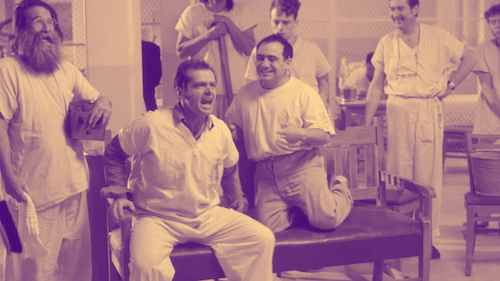
The first of Forman's Best Picture winners at the Academy Awards remains a textbook example of how to adapt a novel for the big screen. One Flew Over the Cuckoo's Nest is so far removed from his Czech New Wave titles, and yet it feels a little indebted to each of them. This American classic about the inhabitants of an asylum and the protagonist — criminal McMurphy — who feigns being insane in order to escape a damning verdict is a dazzling allegory of society. Forman turns the institution into both a prison and a functioning civilization, both equipped with the glaring eye of the law (in the form of the infamous Nurse Ratched). In the way that The Firemen's Ball turns messiness into purpose, Black Peter finds prophecy in the mundane, and Loves of a Blonde shows us what it feels like to feel free again (and the crushing weight of reality afterward), One Flew Over the Cuckoo's Nest brings a bit of that Czech cinema energy over to the United States while still fitting in perfectly, creating a new extension of what the New Hollywood movement could look like: an excursion away from our understandings of everyday life that we still manage to see ourselves in.
1. Amadeus
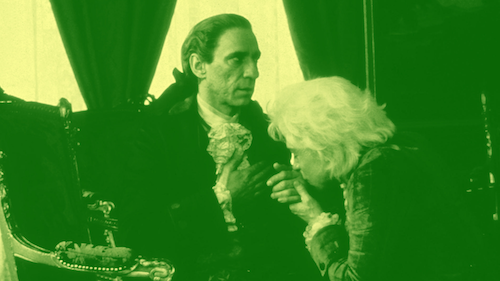
The second of Forman's Best Picture behemoths also happens to be, in my opinion, his magnum opus. While a majority of his other films feel a little more interpretational (he presents us with a sandbox of characters and situations, and allows us to take away our own assessments), his masterpiece, Amadeus, is a little more direct with what it says about the artistic experience (and the concept of legacy). A highly inventive take on what a biographical picture can be, this revisionist classic — about the life and death of composer Wolfgang Amadeus Mozart — takes the iconography of a legendary musician and renders it human, depressing, and even juvenile. Mozart himself is painted out to be this impish manchild who also happens to be a musical savant who is able to effortlessly win the world over. However, he is not our lead: that would be rival composer Antonio Salieri, whose only time in the spotlight is this very film (and, I suppose, the asylum that he winds up in and tells his story within). Of course, any history or classical music nut could tell you that there wasn't actually a rift between Saliari and Mozart, but this is a fictional take on an artist whose judgment and mind get obfuscated by jealousy and bitterness; Salieri is an unreliable narrator, and you have to take any of what he says in this film with a grain of salt.
As Salieri flounders and Mozart dominates, Amadeus dives into the psyche of a man torn by passion and resentment: how could one give up their entire life for their craft and not feel acknowledged, when another person seems to be born into greatness without having to try at all? Forman's adaptation of the 1979 play invites us to look into what it means to be a titan of a craft, and the importance of influence. Seeing an aged, suicidal Salieri continue to devote all of his energy and life to his perception (of being in Mozart's shadow) while in a mental institution is genuinely heartbreaking: one is their own worst enemy when it comes to feeling forever damned by another artist. Then, there is Mozart, who is turned from a creative mind who could spit out masterworks on a whim into a human-machine hybrid forced to churn out new compositions at Salieri's hand; somehow, you picture a myriad of ways that Salieri could kill Mozart (since he admitted to doing so), and yet Amadeus surpasses the devastation of such a reality. Seeing an artist have all of their passion and joy sucked from out of them is a crying shame. Essentially, Miloš Forman comments on the mortality and fickleness of humans, and the impossible stature of the works they leave behind that wind up becoming larger, greater, and more inspirational than their creators. Amadeus is more than one of the best films of the eighties: it is an essential piece of art about art.


Andreas Babiolakis has a Masters degree in Film and Photography Preservation and Collections Management from Toronto Metropolitan University, as well as a Bachelors degree in Cinema Studies from York University. His favourite times of year are the Criterion Collection flash sales and the annual Toronto International Film Festival.