
Filmography Worship: Ranking Every Věra Chytilová Film
Written by Andreas Babiolakis
Filmography Worship is a series where we review every single feature of filmmakers who have made our Wall of Directors (and other greats)

One of the most exciting movements in film history is the Czech New Wave: known for their extreme style, rebellious narratives, and/or absurdist choices, all in the name of rebuking communist censorship. One of the prototypical names in this movement is Věra Chytilová: a titan of avant-garde cinema who used film to criticize the Czech government and detail the female experience, all while heavily exploring surreal, inexplicable, and experimental hypotheses. While many cinephiles now know her for her iconic avant-garde film, Daisies (which, spoiler alert, has topped this list to the surprise of no one), she has a number of excellent offerings that must be explored if you want to explore the filmography of one of cinema's most daring voices. In that same breath, some of her films will not hit nearly as well as her triumphs, but it is her boldness that remains reputable; I commend Chytilová for even attempting the majority of her films when most other directors wouldn't ever dare to. I won't be including a couple of her films that seem next to impossible to find (as far as I am concerned, these are lost); these include Inexorable Time, My Citizens of Prague Understand Me, and Flights and Falls. I hope to one day come across these titles. For now, we have more than enough to explore, so let’s get to celebrating an avant-garde auteur who deserves her flowers (Daisies and all). Here are the films of Věra Chytilová ranked from worst to best.
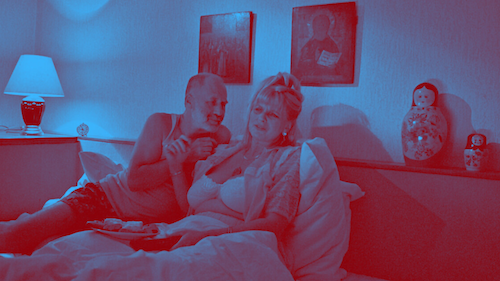
20. Pleasant Moments
Chytilová’s final film, Pleasant Moments, is meant to be a melting pot of all of the recounts of a sole psychologist’s life — an assemblage of the burdens of all and of one’s self. However, Chytilová’s exploration of digital filmmaking near the start of a new millennium doesn’t evoke the same senses of chaotic wonder that her prime exhibited, and Pleasant Moments feels more like a meandering exercise than a cerebral or visceral journey. It feels as though Chytilová is trying to make something both daring and digestible at the same time, and the end result is something that just doesn’t quite sit right. The end result is forgettable, which is a crying shame for a Chytilová film. It does make me wonder what Chytilová would have been like had she been with us longer and able of making more films in the digital age, but that will unfortunately remain a mystery.

19. Exile from Paradise
Exile from Paradise — or Expulsion from Paradise — is often considered Chytilová’s worst film; while I don’t have it quite as low as that proclamation, I can easily see why and agree enough with this overall sentiment. This film-about-a-film (a fictional one, anyway) is all kinds of messy, with Chytilová trying to create a new age take on Adam and Eve via a production of hundreds of members from a nudist colony. Everything happens from film set nightmares to personal drama, but this entire film just feels like a heap of choices — every single one made with the prioritization to antagonize the audience. I have placed this one higher than Pleasant Moments because it is better to at least be bad in a unique, unforgettable way than a dull way, but make no mistake: Exile from Paradise is a disaster.
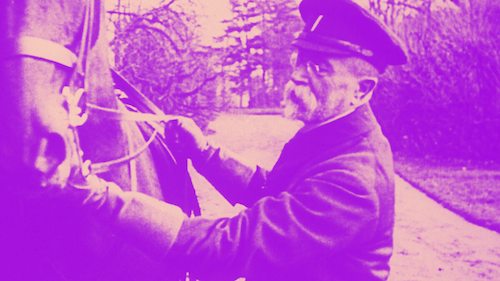
18. TGM The Liberator
A docudrama about the life of philosopher and founding father of Czechoslovakia — Tomáš Garrigue Masaryk — this tribute is part history lesson and part Czech New Wave homage. The film feels more like a vibe in response to Masaryk’s existence and influence than anything else, and I will admit that this felt more like a memento for those who are already fluent in the history of Czechoslovakia, but I hold some admiration for Chytilová and her somewhat fresh take on biographical cinema via a film that hopes to embody the modern inspiration of a monumental figure of yesteryear. TGM The Liberator is decent with its approach and execution.

17. The Very Late Afternoon of a Faun
A majority of Chytilová’s films deal with sexuality and erotic complexes, but The Very Late Afternoon of a Faun might be the work that zeroes in on the intricacies of such fixations. This film looks at a man who is staring at the end of his life while also wanting to capitalize on his obsession with women — to me, this reads as Chytilová’s take on what it means to have a lust for life (in more ways than one). While not one of Chytilová’s best films, The Very Late Afternoon of a Faun is a standard sex comedy that predates quite a few of the genre’s biggest titles (like Denys Arcand’s The Decline of the American Empire), and Chytilová’s take will satisfy fans of these kinds of motion pictures; I do find other films by her to be far more successful with their intellectualism, mind you.

16. Searching for Ester
Chytilová had a couple of expositions on her Czech New Wave cohorts, including Searching for Ester about Ester Krumbachová (who worked with Chytilová in the past, including on Daisies and Fruit of Paradise). While I think Chytilová has one particular documentary of a similar subject that is even stronger in quality, a film like Searching for Ester is important because it spotlights a far less figure than, say, Miloš Foreman (more on that later). I would recommend this one for fans of Czech New Wave because seeing Krumbachová’s contributions to the medium will paint a large picture of this underrated, unsung hero of the movement. As a film, Searching for Ester doesn’t quite get into the crux of its subject as much as I would have liked, but even this solid effort is more noble than nothing at all.

15. Ceiling
Chytilová had quite a few great works, and one such effort is her student featurette, Ceiling: an early observation of the kinds of groundbreaking pictures the then-budding filmmaker would create. Our protagonist is an intelligent and driven person, but we barely ever hear from her (an indication of a patriarchal society that silences women on a regular basis); Ceiling also sees our star transition from medicine to fashion, and Chytilová sees the industry as one of silent mannequins, purgatorial sets, and lifelessness. Or, at least, that’s how she sees expression under the guise of a censored state; Ceiling, like most other Chytilová works, refuses to be held back; the preliminary signs of what Chytilová could accomplish are remarkable in Ceiling.

14. Prague: The Restless Heart of Europe
A polarizing film — to say the least — Prague: The Restless Heart of Europe is the antithesis of a city symphony picture (who needs harmony in the Czech New Wave, anyway?). The footage is disjointed and slightly puzzling. The score throughout Prague takes the city symphony concept and renders it a bit of a cacophony, but why is Chytilová doing this? To me, she holds love and resentment to her stomping grounds: this is the place that raised her as a person while aimed to stifle and censor her as an artist. This challenged throughline makes perfect sense in a film like Prague as Chytilová vows to circumnavigate the history of this city through a postmodern gaze and paradoxical insight; this might not be the clearest depiction of Prague, but it is through the eyes of Chytilová.
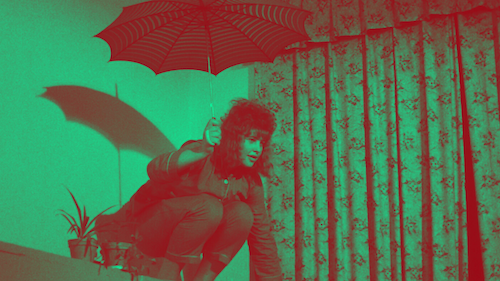
13. A Bagful of Fleas
Before Daisies could sprint, Chytilová’s featurette — A Bagful of Fleas — walked. We get placed in an all-girl trade school dormitory: a strong allegory representing the pressures women face in the real world. Chytilová channels the voices of the proletariat by smashing down the walls of patriarchy — as well as the cinematic fourth wall. Thus, this experimental film defies the expectations of a soulless society via a perspective enriched with feeling and purpose. Of course, Chytilová would become the queen of cinematic anarchy shortly afterward, but a film like A Bagful of Fleas felt like the inevitable uprising: a sign from a then-new director who was going to speak her mind. A film like this one boasts more creative and sociopolitical risk than many entire careers in the film industry.
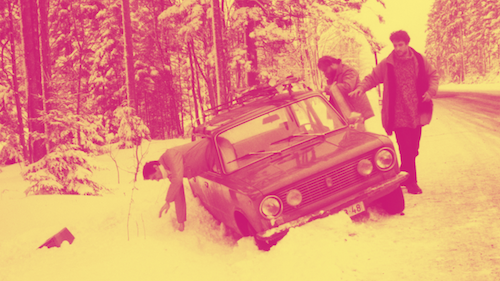
12. A Hoof Here, a Hoof There
Is there an end to frivolousness? Chytilová’s A Hoof Here, a Hoof There begs a question that many free spirits refuse to acknowledge in a film that crushes the dreams of the uninhibited: a group of young adults who go on sexual escapades and other escapades until the heart of one of these participants gives in (quite literally). Is Chytilová challenging how far rebels can go before they reach a state of maturity that renders them disinterested with going against the grain? Do we all grow sterile and jaded? Does Chytilová see this future ahead of her, or, by making a film like A Hoof Here, a Hoof There, is she trying to negate this possibility? The film tonally rejects this possibility for itself (at least) by remaining one of Chytilová’s most intense and out-there pictures: you cannot succumb to numbness when you rally against it in every artistic way possible.

11. Traps
While most of Chytilová’s films are avant-garde expressions, a film like Traps can only be described as her darkest endeavour to the point that this artistic chaos reads as hostile and uncompromising. A bleak rape-revenge tale that holds nothing back, Traps might be Chytilová at her angriest; so much so that the film kicks off with upfront shots of swine getting castrated (both an allegory and a piece of plot prediction, mind you, but that still might be one of the more upsetting shots you will ever find in a motion picture). Traps is just as relentless and vicious as you would expect and hope that it would be, but what makes this film stand out even more is that it is shockingly one of Chytilová’s funnier films (in her own twisted and dark way, of course). This one is not for the faint of heart, but if you are a fan of Chytilová’s works, Traps is kind of a must; just don’t say I didn’t warn you.

10. Wolf’s Hole
Considering Chytilová’s stature as an experimental filmmaker who has one or two films that circulate university curricula, I feel like she has quite a few underseen works that fans of avant-garde cinema must not overlook. Wolf’s Hole is one of a couple of examples. Chytilová’s psychological horror film (of sorts) takes us to a ski hill with eleven teenagers when only ten can be accounted for. Chytilová takes this peculiar premise and churns out a frigid fable on the damnation of authoritarianism; the auteur is unafraid of getting stranger and stranger as Wolf’s Hole marches forth. While not nearly as rooted in slasher film concepts like John Carpenter’s The Thing, Wolf’s Hole would make a great double feature with it in the sense that this is another film that implements freezing landscapes as a mental limbo — with conundrums driving us and the participants of both films mental. Chytilová had a tendency to intentionally go the extra mile with the experimentation of her films, but Wolf’s Hole sees the Czech great operating with control.
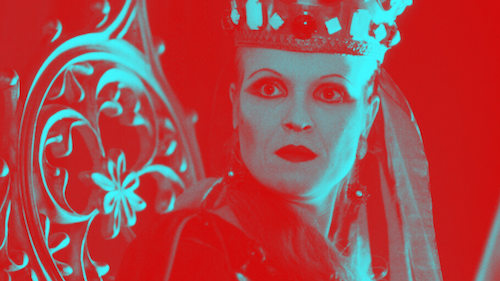
9. The Jester and the Queen
Surprisingly released the same year as Wolf’s Hole in 1987 is The Jester and the Queen. The symbolism is as direct as they have ever been in a Chytilová film: here, the allegory is that of medieval, theatrical imagery used to represent foreign occupation. In a weird way, Chytilová almost feels playful with her symbols — like a child playing with her toys in order to get them to do things at her will. The Jester and the Queen becomes equal parts surreal and cerebral throughout its two-hour runtime, and Chytilová’s imagination feels unmatched here; much of this film reminds me of the incredible Lewis Carrol adaptation, Alice (by another Czech giant: Jan Švankmajer) in the sense that both films drill into both our childhoods and inner nightmares as adults via hallucinations that fit into both halves of our psyche.

8. The Inheritance or Fuckoffguysgoodday
Chytilová’s penultimate feature film, The Inheritance or Fuckoffguysgoodday, is so much fun while retaining the Czech filmmaker’s affinity for biting commentary. The premise is quite simple: a hillbilly stands to inherit a great deal of wealth. He instantly hopes to live a greater life where the possibilities seem endless. What transpires is one of Chytilová’s more conventional works but one that is still serious business (well, kind of) for her. From a parade of dialogue gags to the hilarity that ensues, The Inheritance feels like Chytilová’s sandbox film while also clearly not being that: she restrains herself enough to have a film that doesn’t feel like the epitome of avant-garde cinema while also giving us much to work with (amidst the hysteria, of course). While most cinephiles will know Chytilová for Daisies, there are many Czech film lovers who will point to this title instead; take from that what you will.

7. Chytilová Versus Forman − Consciousness of Continuity
Sure, Chytilová is who this article is about, but it goes without saying that the most renown Czech filmmaker of all time is Miloš Forman (of Amadeus and One Flew Over the Cuckoo’s Nest fame). Chytilová’s documentary, Chytilová Versus Forman — Consciousness of Continuity, is a fascinating film because of who is featured in this conversation of sorts. You have Chytilová, known for her powerfully unorthodox experiments. Then you have Forman who may have had a few expressionistic films but is more associated with features that are far more mainstream in appeal. This documentary brings out the hidden desires of both Czech legends; you become acquainted with Chytilová as a person and what she enjoys on a regular basis, while Forman exhibits such interesting insight that feels paradoxical with his effortless masterpieces. The common ground is beyond their motherland: both Chytilová and Forman are lovers of cinema. Watching them bond is a sublime experience; this is a must for any cinephile.

6. The Apple Game
We have spent too much time being warm and fuzzy on a Chytilová film list with that previous entry. Let us get back to the absurdist bonanza, and what could be better than leaping to The Apple Game? Here is a frustrating love triangle with a misogynistic jerk as the one point — a gynecologist who wants to have his cake and eat it too. His two fancies are a nurse at his practice, and another, married woman. Oh, I suppose Chytilová tosses herself into the equation as well as the cinematic overseer who pulls the strings of The Apple Game (like many of her best works): you may argue that Chytilová doesn’t go far enough with the comeuppance in this film, but maybe she has some sympathy here after all. The Apple Game is akin to one of my favourite uses of satire: enacting the inner-thoughts of the disgruntled. Oh, and by the way: be prepared to see actual live deliveries of babies in The Apple Game — Chytilová didn’t hold back in this way, at least.
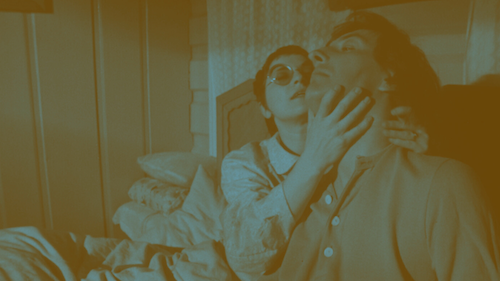
5. Calamity
There’s something about Czech New Wave cinema and trains — see Jiří Menzel’s magnificent Closely Watched Trains. Perhaps these filmmakers saw trains as a fitting metaphor for the speed and flow of life. I suppose Chytilová’s entry of this unofficial catalogue would be Calamity: a tapestry of, well, many different talking points with a new railway worker trying to figure out the ropes (and also life as a whole). Chytilová’s film is two streams of thought: it is aesthetically abrasive and indicative of the bulk of her films (especially that confrontational cinematography), but it is also kind of endearing in a comedic, unconventional sort of way. It might not be a popular stance, but I love Calamity. I find this film to scratch the itch that many cannot cure when it comes to the oddities of being alive and the strange ideas that secretly unite us; this, and Chytilová’s almost Godly presence over the film is as fun as ever.
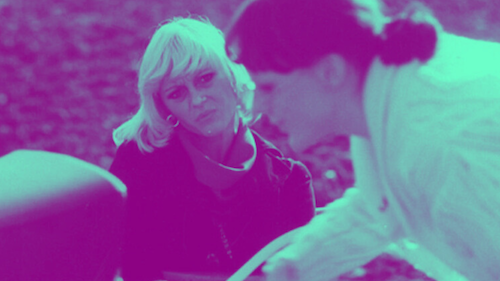
4. Panelstory or Birth of a Community
You can revel in the desperation of everyday life and sociopolitical turmoil. Or, you can accept things for what they are and find the humour within it all. Chytilová opts for the latter in Panelstory or Birth of a Community: a brutally under-discussed film in Chytilová’s oeuvre. An interesting take on the sprawl of Prague, Panelstory is a chain of vignettes that paint a bigger picture of how Chytilová sees her motherland and the hysteria and dilemmas within it. At the forefront are Chytilová’s usual takes on prevalent misogyny in society and the many ways that bureaucracy fails everyday people, but underneath it all is some serious inner-maintenance that Chytilová displays to keep everything operational and entertaining. This film is almost Fellini-esque with how Chytilová portrays an environment with all the necessary ingredients: love, bitterness, hope, realism, absurdity, and psychedelia.
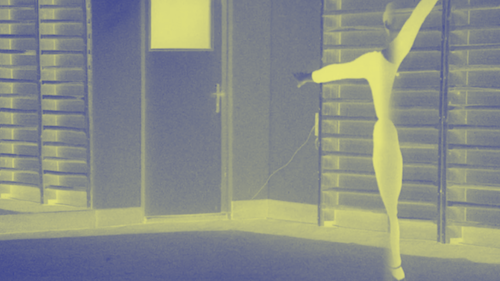
3. Something Different
Chytilová’s debut feature film is actually extraordinary and a clear sign that the Czech director had much to say when it came to feminist viewpoints. Something Different has a duality of purposes. There is the documentary take on Olympic medalist and gymnast Eva Bosáková as she stares at the future of her career (or, in actuality, the looming inevitability of retirement). Then there is the story of Věra: a housewife who finds much hardship in her life — from her husband to her child. These halves have nothing to do with one another outside of the common ground of both of these women reaching existentially overwhelming points of their lives (and the sacrifices they have made). They are juxtaposed brilliantly, with Eva’s career and predicament seeing a professional who has given her routines her all for a majority of her life, and Věra’s mundane regiment leaving her wondering if she could have achieved more. Something Different is one of the great first films of the Czech New Wave movement, and one hell of a start to Chytilová’s feature filmography

2. Fruit of Paradise
Part of my frustration with Exile from Paradise — one of Chytilová’s worst films — is that she is essentially trying to reflect and revisit her process of making one of her strongest efforts. That is Fruit of Paradise: an inventive and bonkers retelling of the biblical tale of Adam and Eve. Through Chytilová’s modernist lens, this story of the origins of humanity gets turned into a blistering fable of societal imbalance, the obfuscation of the female gaze in a censored society, and so many other inexplicable concepts; Fruit of Paradise is a film that is impeccably cryptic in a way that is similar enough to the works of Sergei Parajanov. I feel like Daisies is more blatant with what you can take away from it, but Fruit of Paradise is Chytilová operating at her highest level of expressionism: so much so that I can only describe this film as equal parts dense and free. This is what it looks like when a visionary breathes life into a well known story in a way that defies description, expectation, and correlation. If Chytilová was hoping to make a then-modern myth, she succeeded with a staple of avant-garde cinema.
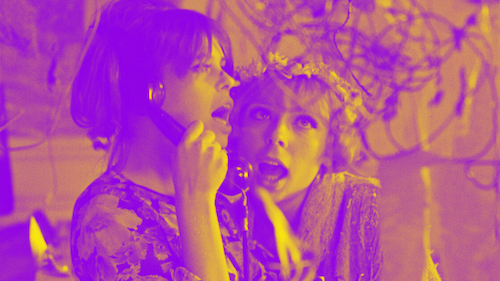
1. Daisies
As previously stated, Daisies has topped this list. It’s not a big shock when this film has become a quintessential title in film courses worldwide, as well as feminist cinema, Czech New Wave, and, well, all of film history at this point. When people discuss avant-garde filmmaking, I think of artists who are working with complete freedom and without reservation. That is Chytilová with Daisies: a gigantic middle finger to governments who censor art — and the restrictions within conventional and marketable filmmaking. Our two protagonists are named Marie: an early defiance of storytelling. They vow to go against the grain in every way, and their many excursions disrupt the delicacies and celebrations of the bourgeoisie. The majority of Daisies is seeing Chytilová and her two Maries refuse to answer to societal expectations, as they dismantle a massive feast, the male gaze, and the cinematic language as a whole.
The brilliance of this film is its ability to recognize exactly how it would provoke audiences, including those who would be up in arms about the film’s contents as opposed to what Daisies is commenting on — including war, greed, staunch communism, and misogyny. Even within Chytilová’s filmography, I have never seen a film that uses the big screen as an experimentation chamber quite like this. The world is a painted canvas with Chytilová painting, scribbling, and slashing through it. The realm of feigned politeness, false pretenses, and loaded compliments now becomes a masterpiece of abstract art. What was once deemed sacrilegious and offensive enough to be banned in the Czechoslovak Socialist Republic (and from being shown worldwide) is now a part of the cinematic manifesto; if anything, trying to hide Daisies from the world only proves Chytilová and the film right. True expression and art cannot be censored, governed, or barred. Věra Chytilová redefines her homeland, her love of film, and societal expectations with Daisies: what was once the intended, radical antithesis became the new way. Whether Daisies wound up being a magnum opus or a film that was just too much for you, no one who watches this picture ever forgets it. In this critic’s eyes, Daisies is the former: one of the most idiosyncratic motion pictures ever made.


Andreas Babiolakis has a Masters degree in Film and Photography Preservation and Collections Management from Toronto Metropolitan University, as well as a Bachelors degree in Cinema Studies from York University. His favourite times of year are the Criterion Collection flash sales and the annual Toronto International Film Festival.