
Filmography Worship: Ranking Every Dorothy Arzner Film
Written by Andreas Babiolakis
Filmography Worship is a series where we review every single feature of filmmakers that have made our Wall of Directors

One of the early unsung forces in Hollywood was one Dorothy Emma Arzner, who was — suffice to say — eons before her time. She worked her way up in a male-dominant industry during its most formative years: the transition from silent cinema to talkies. Working her way up from department to department (from screenwriter, to editor, then to director), Arzner figured out this then-blossoming industry inside and out, and was so gifted at this craft that she could negotiate picture deals and tell the kinds of stories she wanted to (as best as she could during a particularly controlling era in Hollywood, mind you). At the time of their releases, Arzner's films didn't make quite the splash they deserved to, but it was clear that she was a prognosticator of where the industry would go, as well as a strong eye for talent. She not only helped silent stars like Clara Bow make the leap into talking pictures, but her films were also preliminary works for icons like Lucille Ball, Katherine Hepburn, Joan Crawford, Cary Grant, Fredric March, and Rosalind Russell (to name a few).
Her career was rather short lived, spanning from the 1910s to her final film, the 1943 war title First Comes Courage. What she accomplished within it, however, is nothing short of remarkable. As a queer, female filmmaker, Arzner helped subvert the male gaze during a time where a masculine industry was molding what kinds of stories would make it to the silver screen. Her feminist angle was crucial when studios had other agendas to push; Arzner would not back down. There Arzner was in uncompromising fashion — whether it was the silent years, the pre-code era, or the Golden Age of Hollywood, Arzner was persistent and consistent with her female-dominant films — be they her signature style of comedies, or her occasional dips into other "macho" genres with a new spin. Part of Arzner's overlooked legacy comes from the fact that she occasionally went uncredited for her filmmaking efforts, often being overshadowed by her male cohorts; I will be including any film that Arzner co-directed regardless of what the initial credits state. However, there will be a few titles that are apparently lost (like Charming Sinners and Behind the Make-Up); after trying to do my own digging, I have to accept that they are, indeed, missing for now and will not be included. What we have in hindsight is a glorious, early-Hollywood career whose importance and influence only grow over time. Here are the films of Dorothy Arzner ranked from worst to best.
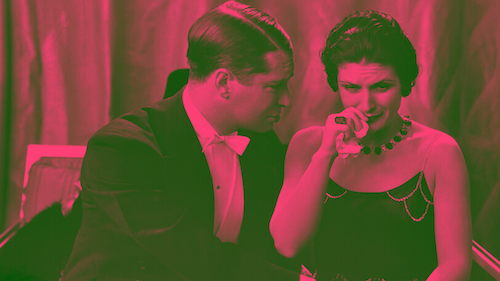
15. Paramount on Parade
There isn't much to say about Paramount on Parade other than it is exactly what it sounds like: it is a revue to promote Paramount Pictures' talent after the significant shift to talking pictures. Arzner joins a number of other filmmakers, including Ernst Lubitsch, Lothar Mendes, and Edmund Goulding, to showcase the many Paramount actors via a series of segments. Unless you are keen on "getting to know" stars like Gary Cooper, Fay Wray, William Powell, and Clara Bow not by their greatest works but via this catalogue presentation (of sorts), Paramount on Parade is hardly worth watching. It makes for a neat time capsule and nothing more.
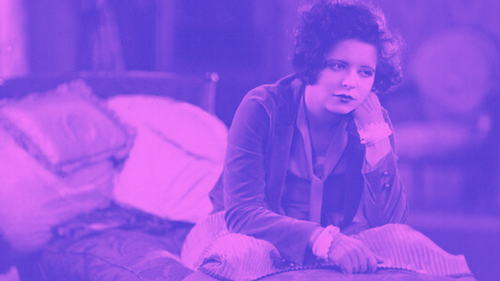
14. Get Your Man
What was once considered mostly lost, Get Your Man now fortunately exists in an hour-long duration (with two reels missing). There is much to be happy about here, especially if you are a fan of Clara Bow and want to see her in a decent film that she elevates. I am placing this film towards the bottom of the list because it is missing enough of its runtime compared to the other films here; even without that lost content, Get Your Man is a fairly standard film that mainly works as a sublime partnership between two of early Hollywood's strongest female minds in Arzner and Bow.

13. Sarah and Son
Sarah and Son features a house divided: a woman separated from her child by her controlling and abusive husband who conducts a search for her son years later. Sarah becomes an opera singer and uses her fame and finances to begin this quest. While a bit of a misshapen film that loses steam, Sarah and Son is pivotal for at least a couple of reasons. Star Ruth Chatterton's Best Actress nomination at the Academy Awards is the first time a film directed by a woman was ever nominated. Secondly, this is the preliminary collaboration between Arzner and screenwriter Zoe Akins which would turn into a special partnership shortly afterward. On its own accord, Sarah and Son is kind of dull.
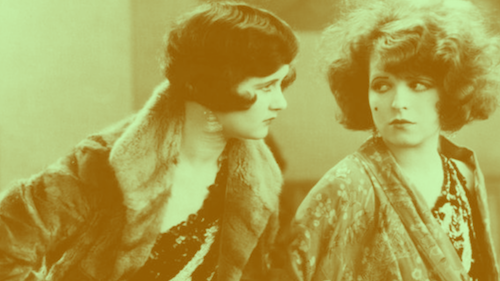
12. The Wild Party
The earliest surviving film that Arzner directed is The Wild Party: the testament of whether or not Clara Bow could make the transition from silent cinema to talkies. I feel like Bow does well in this quirky film about a partier in an all-girl college and her connection with a new, attractive professor there. Arzner does do quite a bit with what she has to work with narratively with a few indications of how men view women in society, which makes The Wild Party slightly more than just a standard pre-Code picture. However, I still feel like she accomplished more with the bulk of her other films.

11. Nana
One of Arzner's co-directed efforts (this time with George Fitzmaurice), Nana is so-so. On one hand, Arzner and Fitzmaurice's adaptation of Emile Zola's novel of the same name does try to incorporate a newer star — Anna Sten — and give her something substantial to work with; she does a decent job of filling in these big shoes of Samuel Goldwyn Production's expectations. On the other, this pre-Code rendition of a streetwalker's discoveries and introspections feels held back by the shifting tides of the American film industry; you can just sense what is missing in a story that begs to be told in full. I give Nana a bit of extra kudos for feeling like a more daring and interesting project than some of the films I have ranked lower than it; I feel like Nana could have been special if it was handled properly.
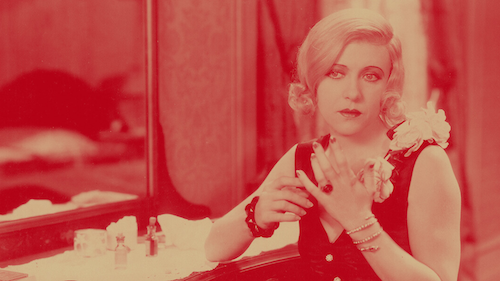
10. Anybody’s Woman
Arzner paints an interesting take on the female experience in America with Anybody's Woman: a film about a chorine who hastily marries a drunk businessman (who is trying to expel his sorrows after his wife leaves him). This chorus girl winds up living a life of false appearances and difficult expectations when she tries to keep up with her new husband; things get complicated when oner of her husband's clients takes a liking to her. I feel like Arzner is able to get a bit more out of this film and its examination of societal double standards and imbalances than the lower ranked pictures on this list, and Anybody's Woman is also a better vehicle for star Ruth Chatterton to prove what she is capable of as our dilemma-stricken protagonist.

9. Christopher Strong
Christopher Strong is star Katherine Hepburn's second film overall, and she works rather nicely with Arzner in this film that should be called Cynthia Darrington (then again, during the early thirties, Hollywood did have a bad habit of pretending that male characters were the focal point when it was clear that it was the women who should have shined the most; see the abysmal Cimarron). Hepburn's Cynthia is an aviator who falls in love with an older member of parliament; to me, this is a take on the innovations and triumphs of women being conflicted by the patriarchal ways of old (although, to be fair, Christopher Strong is mainly a romantic drama that isn't completely driven by this notion, I cannot help but see it in the way Arzner directs this film). This film won't stand out too greatly in the grand scheme of things, but any super fans of thirties cinema might appreciate Christopher Strong even a little bit.
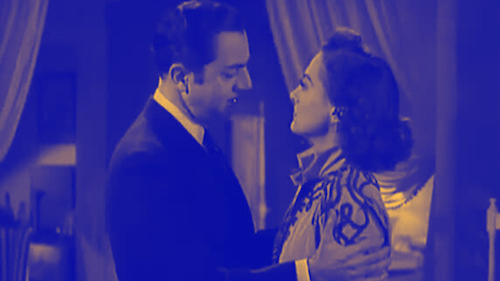
8. The Last of Mrs. Cheyney
The directorial credit for The Last of Mrs. Cheyney is a little complicated. The primary director, Richard Boleslawski, died of cardiac arrest during its production. George Fitzmaurice (who Arzner has worked with) took over and subsequently got sick; ultimately, Arzner was the last to fill in. The final project doesn't feel as though multiple directors worked on it (perhaps Arzner was great at helping tie up Boleslawski's original vision). What we have is a typical comedy-drama love triangle featuring a thief who gets caught up in her latest objective (the film boasts an early performance by one Joan Crawford). This tale of clean (or dirty) consciences and slates is quite a treat for any who should seek it, even if it isn't the most blatantly "Arzner" film on this list.
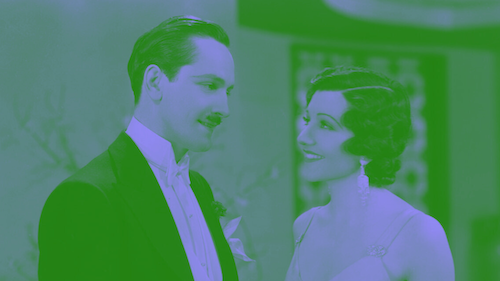
7. Honor Among Lovers
The romance genre is one that is rife with withheld confessions awaiting their time to unfurl. A film like Arzner's Honor Among Lovers shows us what it looks like when love takes us to unusual places or mindsets. With the lovely Claudette Colbert at the forefront (a couple of years before her Oscar-winning turn in It Happened One Night), this entanglement of desires and morality is quite the character study of what drives us when we are experiencing desperation. Here, I feel like Arzner and company find their footing and deliver a fairly compelling look at its main characters and both their vices and dreams. Honor Among Lovers might let adoration take the wheel a little bit (but, then again, when doesn't it?).

6. First Comes Courage
Arzner's final film, First Comes Courage, is a major question mark on what could have been the case in her career. Whether she was forced out of Hollywood by the rise of sexism and homophobia, or by an industry that tried to set her up to fail, Arzner retired and kept away from the public eye after this 1943 title. When you consider the scale of this anti-war drama and what Arzner was accomplishing via her own intuition and drive, this was not meant to be the end: it should have been the sign of things to come. With First Comes Courage, Arzner keeps up with the Hollywood big wigs of her time via a fairly impressive look at a world torn by intolerance and hate — with stunningly choreographed war sequences to boot. This might not be the greatest epic of all time, but that's the tragedy of it all: this was Arzner testing the waters. Who knows what she could have pulled off if she was given the rightful opportunity. Even this experiment pays off well enough for me to know that we were robbed of an entire era of Arzner's greatness.
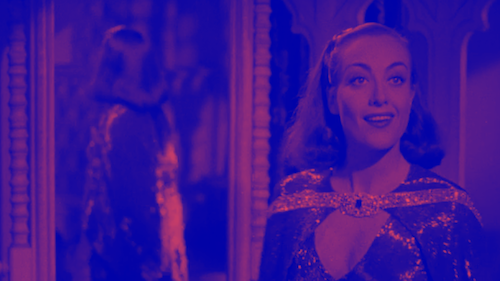
5. The Bride Wore Red
Joan Crawford is sensational in Arzner's The Bride Wore Red: a cinematic study of class systems via an experiment that will remind many contemporary audiences of, say, My Fair Lady (or Pygmalion, for some). Crawford's Anni — a lounge singer — is offered the opportunity to live a life of luxury as long as she pretends to be the daughter of a naval officer (oh, and wear a red dress). Arzner's hypothesis takes us to different places all thanks to a keen understanding of how people are all alike (until finances separate us), as well as Crawford delivering some of her most captivating work of the thirties.

4. Working Girls
We have now reached the five films that I consider essential Arzner cuts. The first is Working Girls: a magnetic tale of two young sisters struggling to make their way through New York City during the Great Depression; nearly a century later, there is far too much for us to identify with, here. As we see their daily attempts at having a better life for themselves, Arzner is both sympathetic and slightly humourous with her look at an unfortunate state of the world. Then again, through Arzner's purposefully unrealistic lens, Working Girls sees our two leads getting swept up in what life can offer (perhaps she wanted to instil some faith in her audience during tumultuous times). Regardless of whether or not you find Working Girls too optimistic, this is a terrific depiction of the hustle-and-bustle nature of keeping up in the Big Apple told with gusto and big dreams.
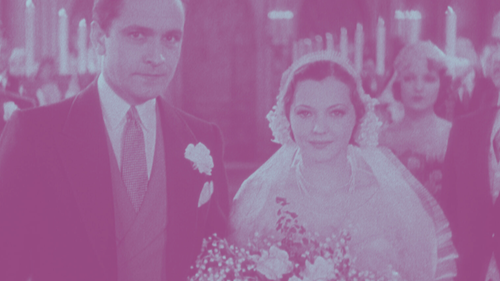
3. Merrily We Go to Hell
If you ever want a stark example of how different Hollywood was with its comedies before and after the Hays Code was implemented, enter Arzner's blistering Merrily We Go to Hell. What could have been a cheeky romantic caper about trysts and struggling marriages turns into a pit of despair featuring alcoholism and self hatred (I mean, who wouldn't feel self conscious when your wife's new beau is played by a young Cary Grant). I don't believe that Arzner was trying to destroy the very being of romantic comedies with Merrily We Go to Hell: she was simply exploring a more honest look at complicated relationships with this rather cynical flick. However, she still subverts what classic rom-coms could be with a film this brazen for its time: Merrily We Go to Hell is the acknowledgement that we are all flawed and will go down with this ship together at all costs (so, here's a toast).
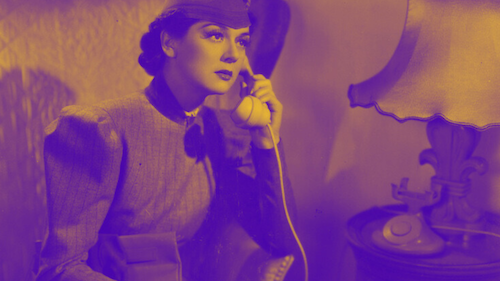
2. Craig’s Wife
As if Arzner was exploring the reversal of roles, we have Craig's Wife: a faithful adaptation of George Kelly's play of the same name. Said wife is Harriet Craig, played tremendously by Rosalind Russell in a no-nonsense authoritative way. The film graces her with many opportunities to ease up on the pedal (since she is ruthless and, to a degree, self-absorbed), but Harriet simply cannot stop living by her own code. Craig's Wife becomes a downward spiral that Arzner beautifully crafts into a cautionary tale about alienation and the price to pay when one craves power. What a harrowing melodrama this film is: to see someone lose everything because they care too much to the point of becoming ego-maniacal is quite the curse. Predating the works of directors like Douglas Sirk and Nicholas Ray, Arzner's intense look at self-interest is far ahead of its time — and overdue of its flowers at this point.
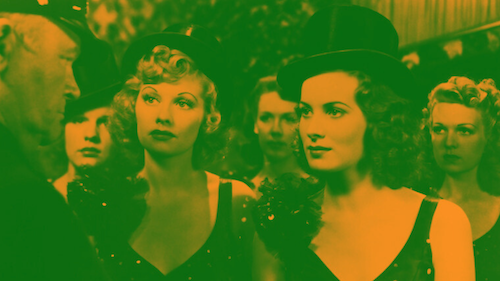
1. Dance, Girl, Dance
Arzner's penultimate film and her first release of the forties wound up being her magnum opus: the liberating, sensational, lovely film Dance, Girl, Dance. Well after that dreaded Hay's Code got implemented and gutted Hollywood of much of its courage and substance, Arzner remained true to herself with a dramedy about struggling dancers who are competing for a few things, including seniority in showbiz and the love of a gentleman. These two dancers are played by none other than Maureen O'Hara and Lucille Ball: a pair of starlets who were going to take the world by storm any minute now (but how prophetic of Arzner to have listened to her intuition and allowed both ladies to shine here). Arzner furthers her vision here by substituting ballet for burlesque in an acknowledgement that high art can be found in a multitude of places — not just the expected.
Dance, Girl, Dance is more than just entertaining and intriguing: it is downright electrifying. Arzner could have settled for making a comedy film that simply finds humour within its circumstances, but Arzner instead finds the excitement of such a whirlwind atmosphere, the oddities of being human, and the many conversations that Hollywood was becoming too timid to partake in. While most other directors succumbed to the ways of the Hollywood Code (and, as a result, censorship), Arzner almost doubles down on at least her inspiration and enthusiasm with Dance, Girl, Dance: a major highlight of American cinema in the forties. Knowing Dorothy Arzner retired shortly after she was hitting her stride is saddening; had she been given the opportunity to continue to grow, who knows how many other Dance, Girl, Dance-calibre works we could have gotten; at least we have something as great as this staple.


Andreas Babiolakis has a Masters degree in Film and Photography Preservation and Collections Management from Toronto Metropolitan University, as well as a Bachelors degree in Cinema Studies from York University. His favourite times of year are the Criterion Collection flash sales and the annual Toronto International Film Festival.