
Filmography Worship: Ranking Every Lucrecia Martel Film
Written by Andreas Babiolakis
Filmography Worship is a series where we review every single feature of filmmakers who have made our Wall of Directors (and other greats)

Argentinian auteur Lucrecia Martel has already made a name for herself within arthouse cinema with just a handful of films. Known for her raw and subliminally resonant films (as well as her iconic, cat-eyed glasses), Martel has a near-perfect career full of depictions of introspective human beings during paradoxical or conflicting times in their lives. It is incredible how much she has achieved in so few feature films, with the amount of genres and mindsets she has explored. However, one such area we will never see is the superhero action film: Martel has famously discussed the time Marvel Studios approached her to direct one of their projects for them. She would decline but also spill the beans on the Marvel process: she was instructed to direct any story-based moments, and all of the action would be handled by the studio. The audacity to ask someone of Martel's control and precision to not be fully involved — with a film that is greatly antithetical to what she is an expert of, no less — is unimaginable. Watch La ciénaga
and tell me that this is someone who has to be sold on directing The Marvels; she is far better than this. Instead, we have multiple art masterworks that push viewers past their comfort zones and get us into introspective spaces that make us realize things about ourselves that we maybe never knew. She is tapping into parts of us that most contemporary filmmakers usually do not even attempt to try.
It is clear that Martel has been decisive with her films since La ciénaga
back in 2001, and her minimal moves have all been the correct ones. Martel began her career with quite a few short films over the course of the eighties and nineties, which I may be covering another day. I will also not be including her 2025 documentary, Landmarks, simply because it is not accessible at this point in time; I hope to rectify that as soon as possible. For now, we have a small number that is mighty in stature: a collection of excursions through the minds, sexuality, and histories of multifaceted people. Martel's hints at slow and minimalist cinema create intellectual daydreams for us to get lost in, and lost we shall be. Martel wanders through Argentina, examines her queer identity, and contemplates about what is left for us to explore when we are empty on the inside through all of her major projects. I usually try to mark where the essential works by a director start on any of these lists, but I will preface this by clarifying that all of Martel's feature films are worthwhile — so much so that deciding the order of the top three was quite a challenge for me. This is the testament of a visionary: when her magnum opus is uncertain because of her continuous excellence. Here are the works of Lucrecia Martel ranked from worst (whatever that means, here) to best.
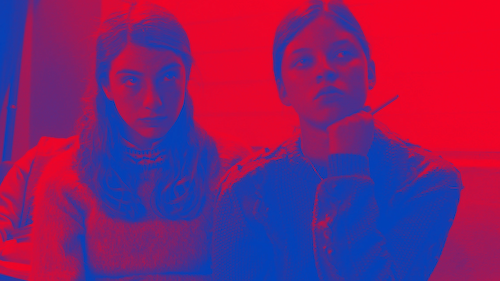
4. The Holy Girl
Martel's sophomore film might be her (barely) weakest feature film but it is still a great coming-of-age drama that I would highly recommend. Martel takes the trusted testimonies of the religious community and how they take precedent over the identities of those in the LGBTQ+ community in most parts of the world (including Argentina, here). The title character is both damned for her sexuality and forced to deal with the perversions of a doctor who exhibits dominance over her and any other younger girl. So, our central girl uses this opportunity to go on a religious awakening (for more than just herself) by try and save this doctor from his own obsessions and inner demons. This is subversion at its finest: a turning of tables to question just how inappropriate and one-sided "organized" institutions (from religion to professions of power) truly are. When your worst narrative feature film is as sterling as The Holy Girl (which would be a career highlight for most directors), you must be doing something right.
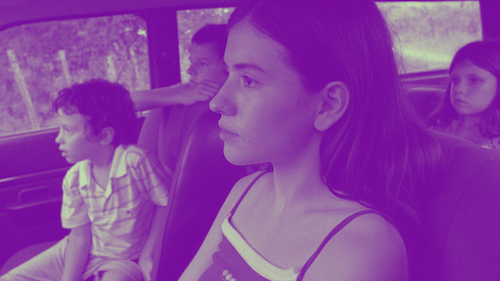
3. La ciénaga
A favourite for many, La ciénaga is a breathtaking film that strangely sits third on this list; this could change at any given time, especially when I consider all three of Martel's finest films perfect on any given day. Part of me feels guilty for placing this anything but first, but I have to remain true to myself and what resonated with me more; I also feel like this is more a sign that Martel is a brilliant filmmaker than it is me not appreciating this magnificent film. I will say that La ciénaga is may be Martel's best film about Argentina, and it does feel like her most personal project (especially since it explores her youth, sexuality, and discoveries quite thoroughly). Martel uses her old stomping grounds to tell a mosaic-esque tale of two families within the La Mandragora estate. Martel sews together a number of different scenarios that question the relationships that are present (familial, romantic, spatial). It feels like we are peering into the secret memories of those who long for the warm embrace of summer, the potential promise of homelands, and the roads ahead from our teenage years (and the realizations of where the roadblocks lie when we reach adulthood). Much of La ciénaga is driven by what isn't said as opposed to what is confessed, and what remains incomplete once the film ends; this is indicative of many chapters of our life (or, hell, life itself) when those doors close for good.
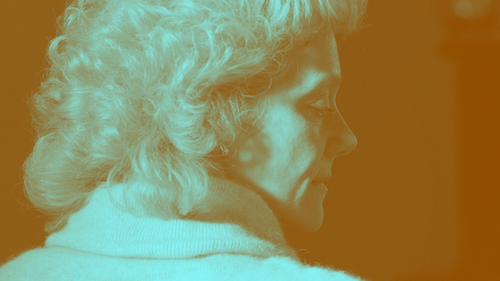
2. The Headless Woman
I cherish The Headless Woman quite heavily because of my affinity for psychological dramas, and Martel is a master of digging into the mindset of her protagonist, Veronica. Veronica is distracted while driving when she accidentally hits and runs over a dog, but she does not know that for sure. Her guilt turns into trauma which turns into speculation, and Veronica begins to lose her composure (while also feeling faint from the accident itself). The brilliance of The Headless Woman is Martel's ability to literally show us the truth and then leave us, the audience, feeling as helpless, confused, and delirious as her lead character is; what good is a psychological film if we always know where we stand? The Headless Woman becomes a near-meta motion picture as a result; while it is not everyone's cup of tea, I love the open-endedness of this cranial crisis that never grants any more answers than it needs to (and, yet, we crave more; Martel leaves us starving despite us enjoying an entire meal). Similar to how Chantal Akerman slightly manipulates the spacial surroundings of her star character in Jeanne Dielman, Martel disrupts the rhythm of her film in order to cause even an imperceptible uneasiness within us. If this winds up being Martel's only psychological drama, she has nailed what one should look and feel like.
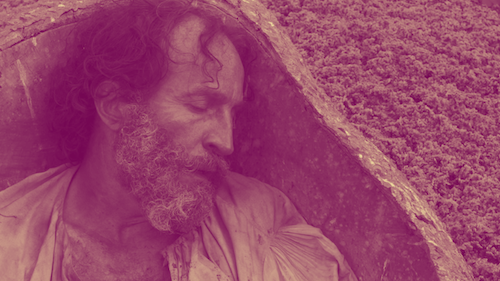
1. Zama
I adore period films that feel unlike any other, especially with how effortlessly they transport us to the geographical, historical, and intellectual locations necessary to feel real. Jane Campion's The Piano comes to mind, as does Robert Eggers' The Lighthouse. Such an example is Martel's Zama, and what a glorious feature film this is. Based on Antonio di Benedetto's novel of the same name, Martel introduces us to magistrate Don Diego de Zama with a lengthy, static shot of the character having arrived on the shores of Argentina; we feel as though we cannot leave this place or Zama's presence (both are precisely true). Zama's time in Argentina is meant to be his ticket to be located in Rosario de Lerma, but he has to be approved by the governor. To try and seek a better future for himself and his family, Zama tries to make all the right moves. When an area has been ripped to shreds by colonialism, what are the right moves?
Martel gets us to trek deeper and deeper into the anthropological provenance of Argentina with Zama; if La ciénaga was Martel's exploration of Argentina as a mindset, then Zama is her depiction of her nation as a living and breathing artifact. As Zama loses control and power the further into his quest he stumbles, Zama as a film becomes an existential nightmare that exists as languidly as it did when we imagined that all was peaceful at the start of the film. That's the beauty of Martel's Zama: it gets increasingly desperate despite never changing its tone or aesthetic. One of the great shots of the past decade — without spoiling too heavily — is the closeup of Zama in a boat, helplessly, while emerald-green moss surrounds him in the river; as if he is experiencing his own funeral pyre and journeying into both nature and death. Not many films are as spiritually confident as Zama: a gorgeously punishing look at the new world within an old setting. Contemporary "progress" collides with yesteryear in this singular take on the period drama by Lucrecia Martel.


Andreas Babiolakis has a Masters degree in Film and Photography Preservation and Collections Management from Toronto Metropolitan University, as well as a Bachelors degree in Cinema Studies from York University. His favourite times of year are the Criterion Collection flash sales and the annual Toronto International Film Festival.