
Filmography Worship: Ranking Every Peter Greenaway Film
Written by Andreas Babiolakis
Filmography Worship is a series where we review every single feature of filmmakers that have made our Wall of Directors

Cinematic absurdism hasn't been more popular and mainstream than it is now, with auteurs like Yorgos Lanthimos and Ruben Ostlund garnering Oscar nominations for Best Picture, and a film like Everything Everywhere All at Once (by the Daniels) flat-out winning that prize. However, if anyone was making such filmic unorthodoxy prestigious, it was Britain's fascinating Peter Greenaway from decades prior. A force of uncomfortable comedy and viperous commentary from back in the eighties, Greenaway's films were unlike anything made before (he only feels more familiar now because of the many directors he has inspired). He was making works of art akin to paintings from the Renaissance era — only these projects were stuffed with the bodily discomfort of David Cronenberg, the satirical sadism of Luis Bunuel, and the tragic depiction of the classes who could not enjoy the high life (like an antithesis to Federico Fellini). It feels easy to be rejected by Greenaway's films on their surface, considering their confrontational and uncanny exteriors, but I have found that this initial repulsion has only made his motion pictures all the more immersive; I cannot look away, and, thus, I wind up digging deeper and discovering more. Greenaway's world building is far more than establishing layers to his strange tales — they are indications of how the filmmaker views a disjointed United Kingdom (one "united" mainly by bizarre serendipity, primitive tragedy, and the act of surrendering to temptations and perversions).
Greenaway started off as a painter before being drawn to the limitless methods of European arthouse and experimental filmmaking. His initial dream lives on, though, in the immaculate mise-en-scene of his projects. There is always something happening on screen (and sometimes a multitude of occurrences, including in the background away from a shot's focal point) in Greenaway's scenes. It's as if the technical element of Greenaway's films envelop us with warmth like an embrace (alluring us to pay close attention and analyze all of what we see), only for his stories to knock the wind from out of us time and time again (with their atypical, sometimes rebellious, prose). Not many filmmakers can make such farcical pictures feel like high art, but Greenaway's idiosyncratic films do so time and time again. In making films that are so detached from reality, Greenaway is actually revealing more about society than your average director. While not every project won me over, I will forever commend this brilliant mind for continuously trying new and daring things. Here are the feature-length films of Peter Greenaway ranked from worst to best.

15. 8½ Women
At the end of the nineties, Greenaway was deliberately referencing the works of Federico Fellini with his take on the former's magnum opus, 8 ½. Enter 8 ½ Women: an intentional misinterpretation of Fellini's film in the form of a widower and his son. Instead of seeing the film as an existential cry for help, these characters identify with the rampant misogyny of 8 ½ and, thus, try to proliferate their lives with the inclusion of eight and a half women (that "half" is one you'd come to expect from the twisted mind of Greenaway). While this misconception is deliberate, I still think that Greenaway's 8 ½ Women is one of his more ill-conceived projects: a head-scratcher that occasionally cannot differentiate itself from the people it pokes fun at (sexist pigs). While not an awful film outright, this is a rare time where Greenaway gets lost in what he is commenting on.

14. Eisenstein in Guanajuato
One of Greenaway's more direct pictures, Eisenstein in Guanajuato is exactly what it sounds like. It follows Soviet savant Sergei Eisenstein after his highly influential silent era, all the way to Mexico where Eisenstein hoped to make a new motion picture (one such project would include Que viva Mexico which wasn't completed and was later reconstructed by multiple people over the years). You can expect Greenaway to not make a traditional biographical picture, but that also gets in the way of what Eisenstein in Guanajuato could have been; instead of a humanizing tribute, it feels more like a metaphysical statement that evokes the idea of what Eisenstein during his brief Mexico period could be — I feel like the true story (without anachronisms or interpretations) would have sufficed.

13. Nightwatching
Another biographical picture by Greenaway, Nightwatching is a film about Dutch Golden Age legend Rembrandt. Specifically about the conspiracy trapped within and surrounding Rembrandt's painting The Night Watch, Greenaway's film could have been a stirring observation of the link between art and reality (particularly the engrossing murder subplot here), but Greenaway loses himself within trying to dispel and dissect Rembrandt's life as a human being, animalistic instincts and all. This is very much a film where things happen just to happen (from the layers of characters who pop in-and-out, to sides of Rembrandt that I don't think we had to see in this film), and I think that this meandering doesn't hook us in like typical Greenaway pictures: it loses us along the way with all of these detours and pitstops.
12. The Tulse Luper Suitcases
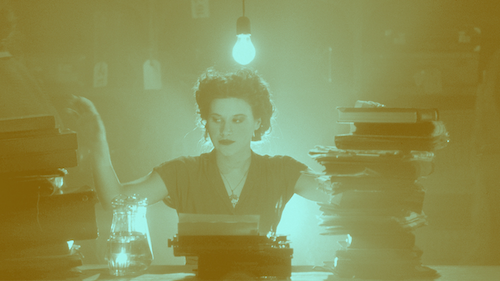
Greenaway is also a master of multimedia exhibitions, which I have not included here either. The closest I'll get is Greenaway's foray into the style through a cinematic lens: the lengthy, ambitious project known as The Tulse Luper Suitcases. Greenaway is a big fan of the French New Wave, and this is an experiment that has Jean-Luc Godard's name written all over it. A three-part project, The Tulse Luper Suitcases was meant to expand over many different mediums (from television and the internet, to one-off DVDs); it didn't quite transpire as Greenaway once intended, but it is a sprawling endeavour even in its present state. Based on the fictional life of Tulse Luper, this project was meant to decompartmentalize the individual via his ninety-two suitcases, analyzing the contents of these vessels (and Luper's life) via a collage of information, images, and sounds. While not quite a completed assignment (even to the degree that what can be found in the random corners of the internet being disputable), The Tulse Luper Suitcases is enthralling just in its very idea: it is impossible to pinpoint the purpose of art and life into one, boiled-down sentiment. I consider this a worthwhile project; it’s just not fully realized.

11. Goltzius and the Pelican Company
The rest of the films on this list are must watches. After Nightwatching, Greenaway was to make two more films about the lives of Dutch painters; he is reportedly working on a film about Hieronymus Bosch. Before that came Goltzius and the Pelican Company: a clear homage to artist Hendrik Goltzius. This feels like a match made in heaven, given both Greenaway and Goltzius' fixation on eroticism as a vehicle of fascination and perversion. Following Greenaway's anachronistic take on Goltzius' artistic and questionable methods, Goltzius and the Pelican Company is classic Greenaway on paper; it doesn't quite pull you in like his greatest works do, but it's one of his more successful works of the twenty-first century because of how seamlessly he feels connected to both his central figure and their artwork (they do speak the same language).
10. Prospero’s Books
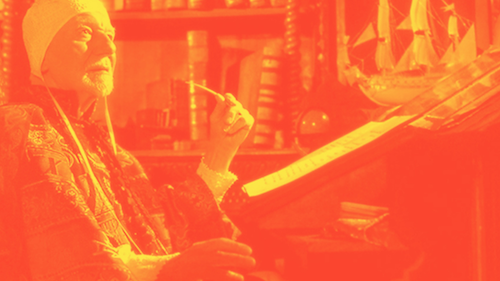
It's interesting how William Shakespeare's The Tempest winds up being one of his more interpretational works: this tragicomedy lends itself to being skewed and reconfigured to the adaptor's vision and message (see the versions by Derek Jarman, Julie Taymor, and William A. Wellman's Yellow Sky, amongst many others). Greenaway's Prospero's Books is far more a Greenaway picture than a Shakesperean one, but that doesn't make it any less interesting. Greenaway turns character Prospero (played sublimely by Sir John Gielgud) into Shakespeare himself; both the author and his creation are forever trapped within the confines of their mind, feeling the cascading and swirling thoughts engulf them as they struggle to figure out how to make sense of anything. Greenaway is able to convey his experiment and those participants within it well enough that Prospero's Books becomes a metaphysical observation of a conjurer's relationship with their craft.
9. Vertical Features Remake
While I haven't included any of Greenaway's short films here (I do recommend perusing through them if you like what you have seen by Greenaway thus far), I will include the mockumentary featurette, Vertical Features Remake. This forty-five minute spoof feels like an early method by Greenaway to save face while he acknowledges the futility of placing labels on art and discovery. A fictitious experiment by a non-existent institute, Vertical Features Remake "captures" a handful of restorative attempts to reconstruct footage of vertical trees and posts as a means of honouring structuralist film theory. Greenaway may never get more niche than this, but even with such little to work with, he makes a major declaration on the subjectivity of art, the objectivity of analysis, and the banality of decrypting the purpose of the capturer for all to digest (it would wind up becoming his ethos for his entire career).

8. The Baby of Mâcon
Greenaway's version of Orson Welles' F for Fake (in a sense) would have to be The Baby of Mâcon. Years before Lars von Trier created Dogville (a minimalist tragedy that is knowingly a play-within-a-film, so to speak), Greenaway's The Baby of Mâcon similarly places us in the company of a Tuscan court to watch a play. A story about infertility and a miraculous birth that shakes up the looming dystopia of Mâcon is delivered to all eyes watching (those inferred, and our own). This immense story is presented in a way that we may always be aware of the postmodernist angle, and yet we forget the setup at times; we become the very audience shown on the screen. Greenaway saves his biggest twist for last: one that pulls the rug from under us and makes us believe that art is its own religion, artists speak the gospel, and projects are their sermons.

7. The Pillow Book
Eroticism is often exploitation, and Greenaway seeks such a truth in his provocative and heightened drama, The Pillow Book. Greenaway uses the human body as a literal canvas in this motion picture, as his protagonist finds joy in having her body written all over via ink-based calligraphy (if scars, wrinkles, and blemishes are our bodies's way of showcasing provenance, then this act here is the blending of dictated and recorded history in one). Greenaway often surrenders to his fixation on sex as an emotional and cathartic conveyance, and it works superbly well in The Pillow Book: a film that recognizes the tomes of euphoria, hurt, longing, and fear that are exalted in acts of intimacy; he also ensures to focus on the quieter flourishes of eroticism — something that is far too overlooked in the genre.
6. The Belly of an Architect
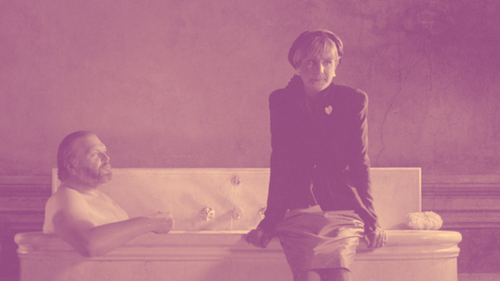
Artists feel their passion and craft on a visceral level, and Greenaway spotlights how this feels to him on an intrinsic level in The Belly of an Architect. Featuring an architect who feels every move he has made (as a visionary and a human being) in the pits of his gut, The Belly of an Architect translates the tidal waves of nausea and the punctuation puncture of stomach cramps into the lineage of a complicated soul. If we, the observer, are left to interpret or idolize artists based on the creations they leave behind, then Greenaway gives us something else to decipher when it comes to someone's legacy: the mark that they leave on themselves, even on an internalized level. While other Greenaway films may revel in the oddness of the abnormal, The Belly of an Architect somehow takes its rather strange premise and renders it understandable and realistic.
5. Drowning by Numbers
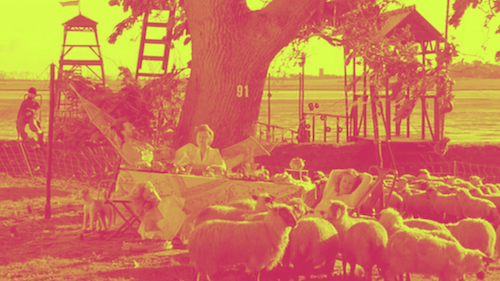
Greenaway delves into the repercussions of generational trauma with Drowning by Numbers: a cyclical fractal of perversion and vengeance. When a trio of differently-aged family members who all boast the same name (Cissie Colpitts) engage in likeminded sin as means of seeking justice, things can be described in one of two ways: exactly as nature intended, or a complete disruption of order. Which viewpoint do you subscribe to? With hidden objectives (including the impossibly unique task of having the numbers one to one-hundred depicted in each and every scene) and the art of creating new games and patterns being at the forefront of this picture, it's clear that Greenaway is acknowledging the art of semblance and the means of creating disorder; Drowning by Numbers is literally a film that is by-the-numbers, and yet it couldn't be less conventional if Greenaway tried.

4. The Falls
Greenaway's debut feature film (excluding the featurette, Vertical Features Remake), is also not quite a feature film in and of itself. The Falls is somewhat of a compilation of his numerous short films while building upon them in one cohesive, audacious way. This over-arching study (another fictional one told in mockumentary form) is a series of ninety-two vignettes spread over three hours of preposterous, borderline surreal storytelling. Covering the world after a major shift (known as the "Violent Unknown Event"), Greenaway only covers the lives of those whose surnames begin with the letters F, A, L, and L (in a sense), because this many instances will suffice. We see the myriad of ways these different lives were affected by the VUE; some are hilarious and brief, others more eye-opening and oddly beautiful. Arguably Greenaway's most complicated film aside from The Tulse Luper Suitcases, The Falls was instant proof that Greenaway could find strangeness in normalcy and brilliance in the least expected places — via a parade of shorts that paint a universal picture of helplessness, reinvention, and humanism.
3. A Zed & Two Noughts
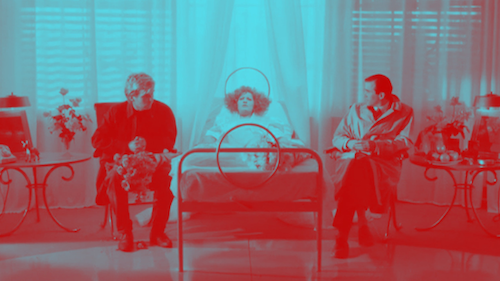
One of the most underrated films I have ever seen is the absurd masterpiece, A Zed & Two Noughts. The film is a little bit Cronenberg, a pinch of Lanthimos, and oddly Anderson (Wes, to be specific): it is somehow clinically symmetrical and aesthetic, yet it frolics in its grime and gore quite freely. Following a pair of zoologists who lose their wives in the exact same car accident, A Zed & Two Noughts plunges into the fragmented mindset of shattered dreams and grieving spirits. Greenaway's menagerie feels almost like a wayward Garden of Eden: one where animals roam freely and yet humans enclose themselves via the entrapment of their own psyches. Even though I have a couple of films ranked higher, to me this is the zenith of Greenaway's style: a world that is so distraught yet gorgeous at the same time, and a perfect blend of conventional artistry and beauty from discordance. This film is an absolute must for any fans of absurdist and satirical cinema: it could become a new favourite for you.
2. The Draughtsman's Contract
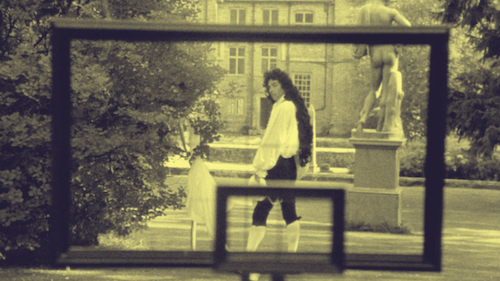
Greenaway's breakthrough film and his first feature film that wasn't a compilation of shorts (like The Falls) is The Draughtsman's Contract: a film that instantly told the world who Greenaway is and what kinds of motion pictures he was going to tell. This off-kilter costume drama (about a draughtsman's project — to work on illustrations of a luxurious estate) dares to go to each extreme and hyperbolic possibility — from how our artist is compensated, to what transpires and how his artwork can be used to figure out the intentions of a criminal. The film slowly builds itself into a non-sensical, delirious tale that will either leave you dumfounded or guffawing (or, in my case, both). When you watch a film like The Draughtsman's Contract, you are becoming familiar with how human beings are no different than animals with their instincts, drives, and mortality; Greenaway's early picture here is mysterious, kooky, and mesmerizing, all in the name of his bastardization and bolstering of the baroque mindset.
1. The Cook, the Thief, His Wife & Her Lover
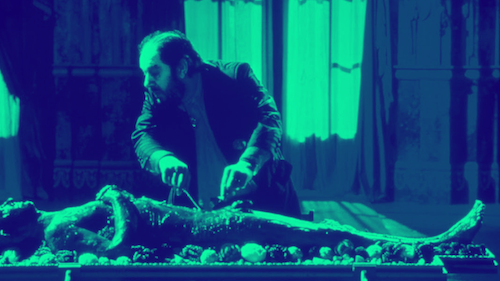
The top spot here is slightly competitive, but I also feel like no other film could top Greenaway's ranking; on that note, while the number-one selection is an obvious one, I have enjoyed the vast majority of his feature films and would consider him one of the all-time greats. Of course, the highest ranked film is The Cook, the Thief, His Wife & Her Lover: mind-boggling exercise in black comedy and violent outbursts. While a majority of Greenaway's pictures can be described as an amalgamation of high art and lowly behaviours, this particular film is his most confrontational: like a Rainer Werner Fassbinder rush of melodramatic, excruciating rawness. At its barest level, The Cook, the Thief, His Wife & Her Lover is merely an emotional story about adultery, but Greenaway turns this dramatic scenario into a zoetrope of agony — from the unthinkable culinary elements, to the inventive depictions of pain and devastation. Essentially, you can chalk up this setting as one of Dante's levels of hell as per Inferno (in that sense, this film truly is a divine comedy).
By making such a confrontational and aching portrait of vice and corruption, Greenaway is challenging the notion that art has: that we must find a piece of ourselves in what we experience — that art has to not just speak to us, but that it has to speak for us. When you watch a film like The Cook, the Thief, His Wife & Her Lover, you will hopefully not see yourself within it; however, you will most likely take away a bit of a shared conception of how society functions. The elite are depraved and spoiled, the rest of us helpless and clinging on just to get by. The act of consumption can be out of necessity to live, or it can be a sign of something far more telling (tyrannical power, a lack of grace, or a holier-than-thou declaration). From the different ways that the wealthy and the impoverished are portrayed (and especially the middle ground in which they meet), Greenaway is creating a world trapped under the Thatcher regime, and it is quite the hideous sight; in that same breath, this meticulous, elaborate exposition of suffering and sadism is oddly serene in the sense that the noise and calamity are deafening (Greenaway almost numbs us with the volume of abominable actions and revelations here).
Greenaway is joined by his frequent collaborator, composer Michael Nyman (his scores for The Draughtsman's Contract and A Zed & Two Noughts are also excellent); Nyman here matches Greenaway's dynamically demented ordeal with a score that is just as pretty in a cacophonous sort of way. This harmony within a dystopian nightmare is exactly what Greenaway is seeking for in a majority of his motion pictures; Nyman translates it into musical form, acting as the most digestible element of such a project. Once the music grabs a hold of you, you begin to notice a similar sense of organization within the outwardly anarchistic picture. Chances are that The Cook, the Thief, His Wife & Her Lover is your first Greenaway as it was for me. There will be one moment or sequence in which all of the madness with fall into place, turning Peter Greenaway from being seemingly a shit disturber into a master of tethering insanity and intellectualism into one conjoined manifesto. What may start off as a film that aims to be taboo for the sake of it unfurls, revealing itself to be a well-sculpted depiction of frustration and catharsis under an iron fist (and one of the great works of cinematic absurdism ever made).


Andreas Babiolakis has a Masters degree in Film and Photography Preservation and Collections Management from Toronto Metropolitan University, as well as a Bachelors degree in Cinema Studies from York University. His favourite times of year are the Criterion Collection flash sales and the annual Toronto International Film Festival.