
Filmography Worship: Ranking Every Chloé Zhao Film
Written by Andreas Babiolakis
Filmography Worship is a series where we review every single feature of filmmakers who have made our Wall of Directors (and other greats)
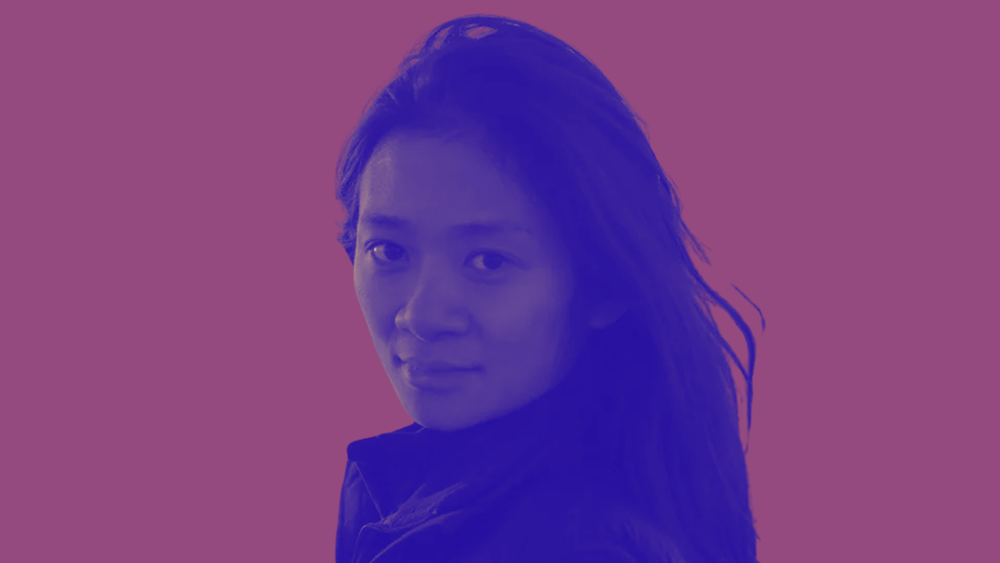
Chloé Zhao has already made quite the name for herself as an American filmmaker. Born in Beijing to billionaire executive Zhao Yuji, Zhao was no stranger to immigration and blessed opportunities; she went to boarding school Brighton College in England (where she learned English as well), and moved to Los Angeles on her own to continue her high school education. She’d move to Massachusetts and study at Mount Holyoke College, majoring in politics while minoring in film studies. This — as well as her passion for manga — kicked off her love of storytelling. She would undertake a graduate degree at New York University's Tisch School of the Arts (moving once again), this time under the guidance of renown director and educator, one Spike Lee. While creating her first short films for school, Zhao worked on the side to make ends meet (now that she was living on her own in the United States). While bartending, Zhao would hear the stories of all walks of life who would frequent the bar; this allowed her to gain major perspective on the goings-on of everyday people. After so many years of movement, academia, and immersion, Zhao knew what she wanted to do for the rest of her life: share the tales of the masses across the United States. An infamous misquote surrounding Zhao’s identity entails the director once stated as having said “[America] is now my country” when in actuality she was clarifying that America “is not my country.” When you consider how her films have been so enlightening of the American experience while she also peers in as an outsider observing the ways of the land and its people, I actually feel like both are true (despite the obvious paradox).
Since her debut film, Songs My Brothers Taught Me, Zhao has maintained a fascination with the lives of average people. Even films like Eternals — a Marvel release — and Hamnet (a biographical picture about Anne and William Shakespeare) try to take these idolized kinds of figures (comic book heroes and celebrated names in history) and find grounded, humanistic textures within them. With an affinity for anthropological representation, Zhao’s films also feel culturally and historically detailed, where the provenance of our subjects tell half the story (even if silently). Her dreamy and quiet aesthetics help make her works feel very much like the style of Terrence Malick: another American director who is inspired by the complexities of the United States as a setting and collection of societies throughout history. In a short period of time, Zhao has accumulated many awards (becoming the most awarded filmmaker in a single awards season in modern times, including being the second woman to ever win Best Director at the Academy Awards) and made a major name for herself as a director, producer, writer, and editor; her grasp of her craft is quite something. It’s safe to say that Zhao is already on route to greatness as a filmmaker. Here are the films of Chloé Zhao ranked from worst to best.
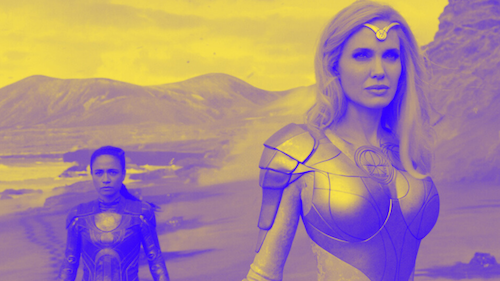
5. Eternals
Well, duh.
Eternals is easily Zhao’s worst film. While not a complete disasterpiece (remember when this was the worst Marvel film? Eternals looks fantastic compared to some of the slop the studio has released since), Eternals is still a major tug-of-war between an auteur trying to do something different with a blockbuster budget and a studio that despises change. One of the funniest things I have ever heard as a cinephile is that Argentinian arthouse filmmaker Lucrecia Martel was asked to direct Black Widow (if you have ever seen a Martel film, you’d understand how polar opposite her work is from those of Marvel, outside of her last name being one letter different from matching the comic book juggernaut); Martel spilled the beans and said that Marvel wanted her to only focus on the narrative moments while the studio handled all of the action scenes. This revelation is ever-so-blatant in a film like Eternals, where Zhao aims to show a focus on geographical splendour (from cultures to settings) and rendering the central superheroes as complicated “humans” in a near-mythological sense; meanwhile, Marvel clearly wanted a focus on special effects, funny one-liners, and other tropes that the studio is synonymous with. The end result is interesting at times but otherwise a floppy mess: a confused film that doesn’t achieve either objective. I can only hope that Eternals helped Zhao fund any other projects that would come her way because making a Hollywood studio project like this feels antithetical by Zhao’s standards and passions.
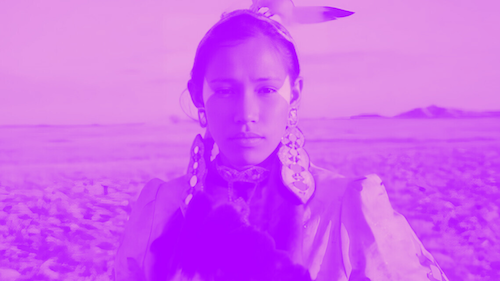
4. Songs My Brothers Taught Me
Zhao’s debut is quite slept on. Songs My Brothers Taught Me is a pretty indie film that places us on a South Dakotan indigenous reserve with a Sioux family, primarily between a brother and sister who go through hardship. The way Zhao shoots this film is as if we are a part of their downtime. Conversations are usually soft spoken or naturalistic. It’s as if we are spying on the private connection between these siblings and — subsequently — peering on difficult moments in their lives as they are caught by tragedies and dilemmas. Between the indigenous representation, fixation on certain tropes of the American western (like rodeos, dry and barren landscapes, and musical exploration), Songs My Brothers Taught Me is quite closely linked with Zhao’s breakthrough film, The Rider (which, frankly, feels like it was an effort to improve upon much of this debut’s successes). What The Rider doesn’t have is this challenged sibling dynamic that sets Songs My Brothers Taught Me apart from anything else in Zhao’s filmography.

3. The Rider
Zhao’s breakthrough film is easily one of the great indie films of the 2010s. Zhao returned to the Pine Ridge Reservation of South Dakota to tell a story about a Sioux man and his complicated family. After a near-fatale accident, Brady is essentially forbidden from being a rodeo star as to not injure himself again or exert himself to the point of triggering seizures. He lives in poverty with his alcohol and gambling-addicted father and his autistic sister; on the note of the latter, The Rider does an incredible job of creating visibility for numerous types of mental and physical disabilities present in America. Much of the film is a struggle that Brady experiences where he dreams of being a rodeo icon again but having to accept that his life just didn’t pan out in the way that he had wished; Zhao uses this realization as a way of painting a truer depiction of the average American more than most films — ones built upon ideas and concepts as opposed to facts — will deliver. As Brady grapples with hardship and The Rider wrestles with the expectations of American cinema, we see a bittersweet film that is outwardly beautiful and intrinsically saddening.
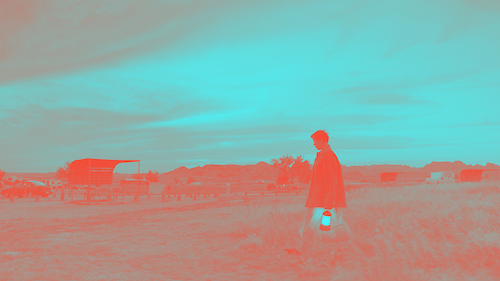
2. Nomadland
The closest a documentary ever got to winning Best Picture at the Academy Awards was when Zhao’s film, Nomadland, took home the top prize. I believe that the success of this film was due to how shaken up the industry was during the height of the COVID-19 pandemic, but I’m not going to begrudge a fantastic film from doing well even if it was during atypical circumstances. At the end of the day, Nomadland is a transcendent film about poverty and economical circumnavigation in the United States. We have only two professional actors: Frances McDormand (who won her third Best Actress Oscar for this film) and David Strathairn. Everyone else is either a nomad — portraying themselves so the film can capture their daily routines and ways of living — or a non-trained performer used in the vein of film styles like Italian Neorealism. The end result is a hyper-real look at a community of people who live off the grid in trailer homes and barely make ends meet while seeing a different side of their country that is hidden from many. It is a bittersweet life where tomorrow is always uncertain, but the beauty of nature and the warmth of the community cannot be matched. To know that a film like Nomadland was able to make a splash during a pandemic and economic uncertainty means that people like the central nomads are finally being heard and embraced; for a moment, a nomad like Bob Wells was on the same level as a Hollywood megastar.
1. Hamnet
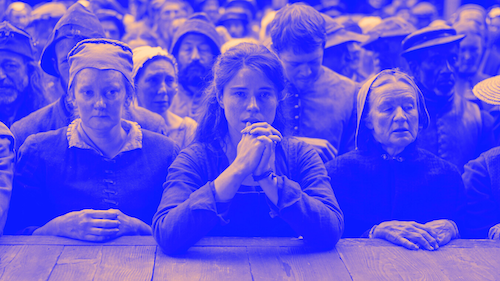
In ways, Hamnet was quite a departure for Zhao. It doesn’t take place in America. It is a biographical picture about Agnes/Anne and William Shakespeare’s family life (and not everyday people). It is shot with more polish and a higher budget (maybe not the size of a Marvel film, but my point still stands). Even so, Hamnet is very much a Zhao picture. The Shakespeares are presented as a common family from centuries ago with a dream of growing in numbers and being happy. If anything, William Shakespeare’s name isn’t even presented until the last act of the film, so much of Hamnet is the reminder that he was just a person as well with very ordinary and understandable problems, including a struggle to get his work off the ground. Of course, much of Hamnet is based on a tragedy that will define Agnes and William for the rest of their lives: an insurmountable loss and the harrowing grief that follows. There’s nothing ordinary about that when one experiences it, and yet it is the kind of event that sadly has happened to many families before and after (there is no such thing as being untouchable as a revered figure when we are all equaled by these devastating shared occurrences of the human experience).
If Zhao was heavily inspired by Malick with her other films (sans Eternals), Hamnet still feels influenced by the American great but it also mirrors the style of another cinematic master: Ingmar Bergman. The Swedish auteur’s ability to turn sad stories into theatre-like productions of tragedy is on full display here. Zhao also flexes with the most bombastic performances of her career through stars Jessie Buckley and Paul Mescal; they deliver on Zhao’s promise for Hamnet to tear your heart out. What could have been a traditional biopic with very-Hollywood tropes is instead a bridge to guide mass audiences towards more challenging filmmaking; I think it succeeds with flying colours. In the way that her other films have brought viewers to new settings and communities, Hamnet leaves us with a historical drama that pushes what such a film can be, especially when Hamnet allows for its central play to overtake the film; it is a portal into William’s heart and Agnes’ crushed soul. Not many films nail the realization of loss, the agony of acceptance, and the permanent waltz of grief like Hamnet does, and it took Zhao’s dedication to honesty within representation (even with big names, bigger subjects, and the biggest budgets) to make this exquisite masterpiece. I wept watching Hamnet through catharsis, devastation, and beauty; I cried even harder the second time. This is the human connection, even via the seemingly untouchable. Hamnet is Chloé Zhao’s magnum opus.


Andreas Babiolakis has a Masters degree in Film and Photography Preservation and Collections Management from Ryerson University, as well as a Bachelors degree in Cinema Studies from York University. His favourite times of year are the Criterion Collection flash sales and the annual Toronto International Film Festival.