
Filmography Worship: Ranking Every Todd Field Film
Written by Andreas Babiolakis
Filmography Worship is a series where we review every single feature of filmmakers that have made our Wall of Directors

The briefness of a career does not take away from its greatness. Can we not consider the Sex Pistols a perennial band in punk music simply because they only had one album (Never Mind the Bollocks, Here's the Sex Pistols)? It is apparently true that American filmmaker Todd Field is no longer making motion pictures, and that the three feature films under his belt are all that we will ever get (outside of his short films, which I won't be covering today but do recommend for any fans of his). That doesn't make what he has released any less remarkable. What might set Field apart from filmmakers in a similar position is the consistency of his ethos: he has always embodied a specific take on the American Dream and how the nation deals with culpability and sin through his art. Way at the start of his career, Field was a baseball fanatic, having played throughout his youth. An always-amusing tidbit is that he helped co-create the beloved Big League Chew recipe with Portland Mavericks pitcher Rob Nelson (his affiliation with the brand, however, ends at its creation). Field was also an aspiring musician, playing trombone as a teenager. This passion would eventually lead to the theatre, where Field learned that he had a knack for acting. This trajectory would prove to be his breakthrough.
As an actor, Field worked with many of the greats of his time — from Stanley Kubrick (and his swansong, Eyes Wide Shut) to Woody Allen (Radio Days: Field's first film as an actor). He acted from the late eighties until the early aughts, while working on short films in the nineties (he enrolled as a Directing Fellow at the AFI Conservatory, and released his thesis film, Nonnie & Alex, in 1995; a majority of his short films were also made while he was studying, hence why I haven't included them here). By 2001, he was ready to release his debut feature film, and — in baseball terms — he knocked this preliminary attempt out of the park with the crime drama, In the Bedroom. The rest is history, with a trio of sterling motion pictures — and their visceral depictions of America — that has shaken up the film industry time and time again. So, yes, even if this is the last that we see of Field, I would still consider him amongst the top filmmakers of the twenty-first century.
Through his analyses of suburban America, his affinity for tradition (and the best ways to subvert it, as well), and all of the lessons that he learned from the masters he worked with, Field has painted a very specific version of America: one that is gritty and hostile on its surface, sure, and yet there is still a beating heart within the cynicism. Blood is warm when it first hits the floor. The moon that illuminates the misdeeds of the night is still pleasant with its glow. The aftermath of an awful event can sometimes bring people closer than they ever were during the "good old days." If there is someone who resides in the grey area and renders it a sublime sepia hue, it's Field who — seemingly — doesn't open his mouth or make a motion picture unless he truly has something to say. I hope that this isn't the last that we see of him, but, if it is, he has already blessed cinema tenfold. Here are the feature films of Todd Field ranked from worst (or, in this case, least good) to best.
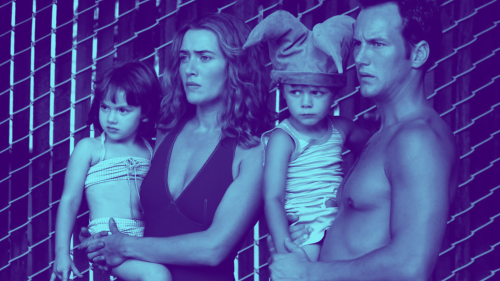
3. Little Children
If your worst film is Little Children, you must be a phenomenal filmmaker. Like a Todd Solondz picture without any of the bleak laughs, Little Children is almost too good at stitching together a decrepit picture of suburban America: one rife with poisonous inner thoughts — and the even more dangerous utterances that actually get spoken. While not quite a hyperlink film, there are slight tendencies from the genre here — including the piecing together of overlapping storylines of guilt, trauma, helplessness, and dark catharsis. If Sam Mendes' American Beauty is the capturing of the existential dread of the American Dream, then Field's like-minded manifesto is the realization that there was never a dream to chase; instead, we all came up with our own little conquests to feel alive. This lack of control results in a spectrum of shame — from the frowned-upon (adultery) to the abominable (pedophile tendencies). Field takes on the audacious task of trying to find common ground between those who made a mistake or two and a full-on monster, recognizing that we are all human and that one or two slight differences separate the everyday person from those burdened by the worst of our addictions and mental health. To try and make such a film could have been career suicide for many; for Field — who was patient enough to listen to all of the characters of Tom Perrotta's novel — this was an opportunity to get into the narrative areas that most story tellers would avoid.

2. In the Bedroom
Field's debut film, In the Bedroom, is far more mature and nuanced than most filmmakers' entire careers. What could have been a simple, typical, oft-told drama about domestic relationships and tensions instead becomes a crime picture for the ages: one that recognizes that the act of killing is not a reward for a genre that begs for it, but, rather, the turning point of countless lives (and the finality of at least one). Field's picture handles the concept of grief and the boiling points of a family that is falling apart (as well as a family that must stick together through it all). Where exactly is the point of no return — the same yard line that determines when a family is forever connected, or when they are permanently detached? By giving us a warm-yet-unfoolish vision of a domestic crisis before everything comes crashing down, Field recognizes that there is much to say in the average suburban household if their walls could talk; that isn't to say that the events within In the Bedroom are common, but, rather, appearances aren't always everything — those same families we strive to be like are likely harbouring their own demons. Most first-timers want to go with major declarations to get their name out there. Field wanted to make a film about saying the quiet part out loud via a film of unearthed secrets.

1. Tár
It took sixteen years for Field to follow up Little Children with what might be his final film, Tár, but that wait was beyond worth it. Considering that he is no stranger to taking on the kinds of topics that many other directors would bypass by any means necessary, so of course he would dive head-first into the conversation that would have gotten most other directors cancelled: cancellation. To be fair, Field tackles the topic with pure class (like always), and he never demeans himself or his capabilities just because he is taking on a difficult or controversial talking point. Here, we follow a fictitious, world-class conductor-composer named Lydia Tár (who Field makes so realistic that many swore that this was a biographical picture; it doesn't hurt that star Cate Blanchett turns in her greatest performance to date, and that's saying something considering who she is). Instead of focusing solely on Tár's downfall, Field sets every little block in place: who this icon is; her impact on the world; her hidden secrets; her worst tendencies; the little red flags that populate all around her, which she — a tyrant from a place of privilege — ignores, since she is accustom to doing so.
The effortlessness of those red flags piling up until the turning point — where Tár's reputation is now on the line, and there is no turning back now — is one of the greatest revelations that Field has ever achieved. So many other directors would have tried to sell this pivot to make it count, but Field understands the weight of the event and the fact that it doesn't require any additional legwork or aesthetic to inform audiences. Is sensationalism not the epitome of why information goes unnoticed or not cared about? Are we not completely inundated with falsities to the point that we are no longer interested in the barrage of bad news that hits our retinas and eardrums on an hourly basis (even if this information winds up being true)? The ultimate power move Field could make in the day and age of social media is make Tár a film that resides outside of the realm of the digital age; yes, the story takes place within it, but the art, tone, and aesthetic of the film does not match a generation that is chronically online (thus, a sign of Tár's timelessness to come).
Not once does Field relish in Tár's collapse, nor does he try to offer her as a martyr for the elite. Instead, he recognizes her not as a celebrity but simply a human being: one who is capable of being monstrous and vulnerable within the same mental breakdown. In a nation that is divided and forced to pick blue or red, Field has made a picture that resides in the limbo of in between: an apolitical look at sociopolitics. We have enough films, people, and news sources barking ideologies at us; to have Field create such a textured, fully-fledged, and tonally neutral film in the early twenty-twenties almost feels like a miracle. Besides all of that, it's a bloody excellent picture: one that is already being crowned one of the best films of all time — if that last sentiment is true, then so should be the one that Todd Field is a master of filmmaking, even if he has only had three tries at making feature films. If Little Children being his weakest is a testament to his greatness, so should the impossible perfection of Tár — his magnum opus.


Andreas Babiolakis has a Masters degree in Film and Photography Preservation and Collections Management from Toronto Metropolitan University, as well as a Bachelors degree in Cinema Studies from York University. His favourite times of year are the Criterion Collection flash sales and the annual Toronto International Film Festival.