
Filmography Worship: Ranking Every Terry Gilliam Film
Written by Andreas Babiolakis
Filmography Worship is a series where we review every single feature of filmmakers that have made our Wall of Directors

A majority of the most idiosyncratic auteurs have surprising upbringings and origin stories. However, Terry Gilliam wouldn't be one of those people. Seeing that the American-English director got his start with the iconic sketch comedy troop Monty Python, his directorial work almost makes perfect sense. Gilliam was integral to the avant-garde group and their affiliated works (including the television series, Monty Python's Flying Circus: a mainstay in my life), serving as the extra je-ne-sais-quoi via the form of his absurdist, cut-out animated sequences that connected dissimilar sketches together, but only barely (Gilliam's segues would be just as random and chaotic as the live-action silliness that bookended them). He had a taste for directing alongside Python alumni Terry Jones when directing Monty Python and The Holy Grail (one of the funniest films ever made); he would also direct the bizarre sci-fi interlude in Jones' Monty Python's The Life of Brian, although I won't be including that film here simply for the one scene that Gilliam worked on — believe me when I say that this film is somehow even better than The Holy Grail, if only slightly).
After that, Gilliam continued down this path as one of the most cerebral, whimsical, and outlandish filmmakers of his time. He started off by following suit of his Monty Python days with films like Jabberwocky, but he would soon forge his own path with his original ideas that would often push the envelope intellectually, his bridge between the unknown and the unorthodox make even his weakest experiments rather interesting. Like anyone else in the Python gang, Gilliam was hilarious yet also deceptively brilliant as an academic and free thinker; those who fully explore Monty Python or any of their affiliated projects would know this by now. For decades, Gilliam's works have dazzled us with their fish-eyed lenses, kooky characters, and elaborate imagination (like blending the curiosity of a child with the darkness of the real world), while making us face some of society's biggest demons (the blessings and curses of technological advancement, the mundanity of everyday life in capitalistic society, the existential dreads of the enlightened, and the dullness of being uninspired in a life full of opportunities).
For me, Gilliam was a major name growing up. Having said that, as I get older, I have gotten detached from certain works; I bring this up because I have a feeling that my placement of certain films may seem contrarian, and that is not my intention. In that same breath, my connection to some of his other films has only strengthened over time — perhaps what I once thought was a delirious satire of the world now rings truer than ever through Gilliam's warped-yet-honest gaze. Similar to the works of Guillermo del Toro and Tim Burton, Gilliam can effortlessly find a spark within darkness, playfulness within the deranged, and emotion within the abysmal. Most importantly, he finds normalcy within the abnormal, either through his unique comedic chops or his thought-provoking cautionary tales. Here are the feature films of Terry Gilliam ranked from worst to best.
13. The Brothers Grimm
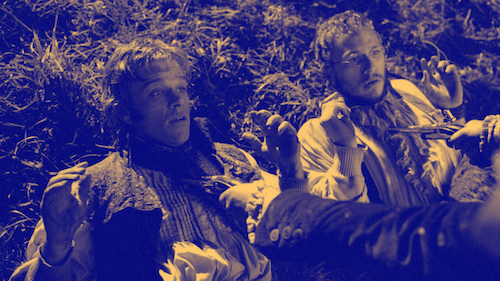
Even though I feel like Gilliam has some hiccups, to me his worst film has to be The Brothers Grimm. What feels more like an attempt to join in on the then-rising superhero and action film wave of the early aughts, The Brothers Grimm takes the lore of Jake and Will Grimm (the writers of various fairy tales) and turns them into Guy-Ritchie-esque con artists and their various encounters with fantastical and supernatural entities. Even though Gilliam's imagination is on full display here (perhaps one of the only saving graces, alongside leads Matt Damon and Heath Ledger), The Brothers Grimm is such a strange endeavour; if this is too scary and mature for kids yet too juvenile for adults, who is this film for?

12. Tideland
Even though I think that Tideland is a greater misfire than The Brothers Grimm, I cannot comfortably place it last simply because there is something gorgeous and so meaningful about this picture; it is perhaps a potential masterpiece inside of the husk of a dull, tonally awkward film. Within the mind of a lonely and hurting child, Tideland shows us both the horrors and beauties of the real world, especially when one is forced to experience it far too early. I just wish that Tideland didn't feel like such an exercise — as if we are dragged through this world that Gilliam has created as opposed to exploring it of our own free will. There is something to this film; I have yet to feel it in full, though.

11. The Zero Theorem
I like the idea of The Zero Theorem: Gilliam's take on the metaphysical scope of human existence via the vehicle of an elite computer hacker's conquest (like a throwback to what some of the films of the late nineties were all about). However, it is one of the worst offenders of Gilliam being unable to contain himself. With so much nonsense tossed at the wall, I lose interest in the wit and depth that The Zero Theorem has because I am too busy fending off these frustrating little gnats of spunk, silliness, and whimsy swirling around my head. I do like what Gilliam has to say about our relationship to technology in a philosophical sense: I just don't like how he says all of this, here.

10. Jabberwocky
Gilliam's first film as a solo director is Jabberwocky -- perhaps the most Terry Gilliam picture of all time. What is essentially his way of making sense of the nonsensical poem by Lewis Carroll (famously featured in Alice's Adventures in Wonderland), Gilliam's Jabberwocky aims to create additional lore within the mystical and abstract. Unfortunately, his noble efforts don't work out too well, given that this debut film is also a playground for Gilliam to run amok; he would soon learn how to best toe the line between bonkers and annoying without falling overboard. I have a bit of a connection to this film because of how inspired it feels, but this also feels more like a sandbox for a Monty Python member to stretch his legs than it does an actually fleshed-out feature film.

9. The Imaginarium of Doctor Parnassus
If anyone could have made The Imaginarium of Doctor Parnassus even remotely feasible, it's Gilliam. The story surrounding this film is much larger than the film itself: it is famously the film that Health Ledger was starring in when he died, and his part was incomplete; Gilliam turned his character into a shape shifter, with actors like Colin Farrel and Johnny Depp filling in as other personas. The film itself is just as scattershot as this resolution, but Gilliam is able to make some sense of this otherwise sprawling, all-over-the-place adventure. In a weird way, this film is a real treat to watch as an object: one that resembles a broken production, and the end result crafted via the broken pieces to commemorate an icon after he passed away. The film on its own is not as memorable or effective as the film is as a memento.

8. Fear and Loathing in Las Vegas
Yes, I know. Teenage me is angry at this placement as well. What was once the world being my oyster via an LSD-laced lens now feels a lot like a sea of rambling and incoherence. I love Hunter S. Thompson's gonzo masterpiece Fear and Loathing in Las Vegas. I think that Gilliam's highs are tremendous. Together, both minds almost seemingly cancel each other out, with Thompson's rebellious, wanderlust spirit clashing with Gilliam's climb through your cerebellum. Even though both storytellers feel limitless and unhinged, I do not get nearly as much out of Fear and Loathing in Las Vegas as either maverick intends. Sure, I bust my gut laughing with one of the most hilarious films I have ever seen (and I do mean that), but most of this film's mythology, lessons, and findings are surface level; let's just say it made more sense when I lived in a university dorm and leave it at that (it has not followed and informed me more about the experience of life as I have gotten older, like the best searches of soul, mind, and heart).

7. The Man Who Killed Don Quixote
A number of Gilliam's films deal with the chasing of the Holy Grail — some more literal than others. Gilliam's own Holy Grail was his film, The Man Who Killed Don Quixote. For decades, Gilliam tried to get this film made and the production felt cursed (down to Gilliam having a heart attack right before the film's release — thankfully, Gilliam was okay). The end result of these many years of work is a decent meta film about the desire to take the story of Don Quixote and try to make a film about it (in the form of a delusional man who believes that he is Don Quixote, being chased after by an ambitious film director). I think that this is another Gilliam effort where the premise is smarter than the end result, but I liked The Man Who Killed Don Quixote more than I thought I would. Gilliam is often too scared to open up with his hyper-intellectual absurdities; here, he feels his most vulnerable and honest, and I think this film is worth seeing for that reason alone.
6. The Adventures of Baron Munchausen
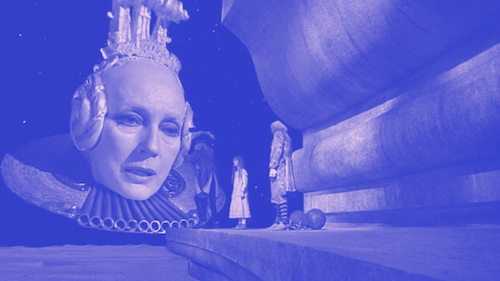
I'm not quite sure why The Adventures of Baron Munchausen wasn't well received when it first came out — as if critics and audiences were lumping in this film with the works where Gilliam loses control of himself. I find that this film is amongst Gilliam's most playful and inspired efforts which dares to fly to the sun before turning away right at the melting point. Taking the literary character's elaborate, extravagant tales and turning them into Gilliam's wonderland of epic proportions, The Adventures of Baron Munchausen is so much fun, and it somehow makes us feel like there is much more to our world than what we see on a daily basis. How do you take the words of a traveler and make them exciting when we have already seen it all? You make a tall tale like Gilliam does here.

5. Time Bandits
This film doesn't resonate with everyone, but I think that Gilliam's Time Bandits is his first solo effort that perfectly replicates what his very ethos is: to take us to new places, mindsets, and viewpoints that our hum drum lives could never muster. One of the great family films by an auteur (so, all-ages affairs with some extra spice and flair), Time Bandits takes us alongside a wide-eyed child who winds up traveling the world and throughout time to find treasure with his new gang of bandits. While not quite a history lesson in a conventional sense, Gilliam's flurry of places and people is an immersive plunge into the recounts and stories of old that you would read about — here, you can bask in the realities of others, all in the name of a wild chase and a quest for discovery. I can see why this film would feel overly loud and animated to some, but, to me, Time Bandits makes me feel like a child again — that ambition to take on the world has returned.

4. 12 Monkeys
Who would be crazy enough to take Chris Marker's short film masterpiece, La Jetee, and attempt to turn it into a fully-fledged feature film? Gilliam, of course. While a few of his other ideas didn't take off in the ways that he would have planned, one of his tallest orders — the adaptation 12 Monkeys — actually succeeds quite well. While remaining faithful to the ambiguity and ominous mist of Marker's original picture, Gilliam turns this science fiction masterwork into a sociopolitical thriller (with Gilliam's signature kookiness, of course). This is a post-apocalyptic fever dream that takes us through a pandemic-ridden world, its chilling aftermath, and the blurred lines between insanity and genius. While it is nice to see how electric Gilliam can be at his most serious, finding a film like 12 Monkeys where Gilliam prioritizes the emotional stakes of a story is quite the reward as well.
3. The Fisher King
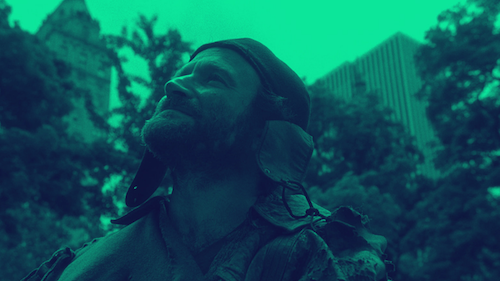
We now have two blatant films about the search for the Holy Grail back to back. The first is the most mature film Gilliam has ever made: The Fisher King. Following a shock-jock who feels responsible for the deaths of many (after a shooter is inspired by these airwaves), The Fisher King unites this radio legend who has fallen from grace with a homeless man who was connected to this tragedy. The destitute man — played by Robin Williams at his very best — hallucinates horrific visions that overtake our realities as well; occasionally, his delusions are blissful, like when Grand Central Station gets turned into a sea of waltzing vagabonds. While one man is fighting for his grip on reality (as to find purpose in life), our former radio jockey finds magic within life by opening himself up. Together, they search for the Holy Grail: even though one man believes in its existence and the other doesn't, the fulfilment they will have once they find this iconic trinket will be the same and immeasurable.

2. Monty Python and the Holy Grail
To rank a film that was co-directed by someone else this high on an individual director's list feels a bit strange, but how can I rank Monty Python and the Holy Grail anything lower than this? One of the greatest comedic films ever made, this collaborative effort by Gilliam and Terry Jones is just pure stupidity in the best way. Following King Arthur and his mission to round up a troop to seek the Holy Grail, this Monty Python feature film is one of the top post modern comedies. A film that continuously breaks its audience and itself, The Holy Grail is as influential as it is hysterical. How many of us have recited lines from the film (or have outright recreated scenes)? Consider how Gilliam co-directed this film and felt inspired to keep making motion pictures once he dipped his toes in this pool. I can only imagine how many other people have wanted to create after watching something like Monty Python and the Holy Grail: the subversion of the creative process (what a paradox this is).

1. Brazil
I have a small list of films that I saw for the first time and then had to rewatch either that same day or the day afterwards; I do not include films in theatres for this list. Such rarities include David Lynch's Inland Empire, Rob Reiner's The Princess Bride, and Brian De Palma's The Phantom of the Paradise. The first time I ever had such an inkling, I was a teenager and I watched Gilliam's Brazil after renting it from the library. It was a bit of a blind watch based on some random acclaim that I read online regarding the film and its legacy. All I know is that my understanding of both life and cinema were forever changed that day. I watched the film again, and I only loved it even more. For most of my life, Brazil has been a perennial effort that only progressive gets better. Additionally, when going through all of Gilliam's films, I only appreciate Brazil even more; knowing that he went off the rails with a few of his visions, and then seeing him contain insanity, anarchy, desperation, and endlessness in this science fiction satire will never cease to take my breath away. How did Brazil not combust? How does Gilliam take us so close to the edge here without us careering over?
Brazil is a magnificent film told by a sadly unreliable narrator: Sam Lowry — a bureaucratic employee who dreams of a greater life. Brazil is based heavily on George Orwell's 1984, and, quite frankly, Gilliam's take on the classic novel might be the best put to the screen because of how far Gilliam is willing to go. By following Lowry, we are introduced to a bleak dystopia that looks threatening, sterile, cold, and punishing at face value. Lowry gets motivation when he sees the girl of his dreams (quite literally, in this case) out in the real world: he finally has a reason to keep going. By trying to find the girl, he digs deeper and deeper into the true corruption of his state: one that polices and monitors everything, and any false move could get you placed in jail, in a psychiatric ward, or — worst of all — with a bad credit score. When I first watched this film, its twist ending left me thinking about the final act. After countless watches over the course of my life, I wonder how much of the film even happened as we see it and that is the power of Gilliam's Brazil. Unlike some of his other works that we must observe as-is, Brazil could be a straightforward depiction of a warped society through the eyes of a crushed mind. How much of the film do we trust or take as truth? As much as we want to.
By turning a controlled and scrutinized dystopia into a playground, Gilliam helps us keep going through the worst of civilization; as time goes by and 1984 becomes more true, so does Gilliam's take on it all. How could it not when Gilliam — acting as a cinematic jester — makes us laugh over hard truths like the financial repercussions of being wrongfully accused, the constant lies of capitalism, the turning of the holidays into judgment day, and — by God — the fucking paperwork that suffocates us no matter where we go? As time goes by, how hyperbolic is Brazil really? It might actually be Gilliam's least fabricated picture, and that is the horrifying truth of the matter. This film is equal parts hilarious and absurd, freaky and mortifying, beautiful and surreal, and an alarming wake-up call that we all need. We can keep dreaming, or we can wake up. When reality looks less normal than dreams in Gilliam's Brazil, it tells a story: our fantasies are not the unobtainable but, rather, the life that we were promised and kept away from by any means necessary. Our aspirations are not unreasonable: they were of the world that once was that we can no longer revisit. Our dreams are forms of grief: the yearning and longing for the paradise that was once Earth but is now a photo we put on the wall of our cubicle in order to stay motivated (as we cycle in one spot). Terry Gilliam's magnum opus Brazil is not a caricature of how life will be: it is a borderline documentary of how society already operates. Do you see it aligns more with your every day life or the nightmares that haunt you in your sleep? Either way, Brazil is everywhere. We are all Sam Lowry. Is it better to wake up or to remain asleep and under the spell of fantasy?


Andreas Babiolakis has a Masters degree in Film and Photography Preservation and Collections Management from Toronto Metropolitan University, as well as a Bachelors degree in Cinema Studies from York University. His favourite times of year are the Criterion Collection flash sales and the annual Toronto International Film Festival.