
Filmography Worship: Ranking Every Henri-Georges Clouzot Film
Written by Andreas Babiolakis
Filmography Worship is a series where we review every single feature of filmmakers that have made our Wall of Directors

Many early thriller films were affiliated with the film noir style, but it was important that cinematic thrills were expanded upon. One such figure in the evolution of silver screen thrills was French auteur Henri-Georges Clouzot, who was churning out some of the most nerve-wracking films of the fifties (and of all time). Clouzot was inspired by the gritty, shadowy films of German expressionists like Fritz Lang and sought to mimic their unnerving, stylish, inventive approaches to cinema. While recovering from a nearly fatal bout of tuberculosis in 1935, a bedridden Clouzot read up on the many ways he could improve his cinematic ideas. After eventually leaving this sanatorium, it was World War II and Clouzot's refusal to accommodate to the Nazi leanings of an Occupied France got him in hot water. He was broke, relying on friends and family to get funded for his cinematic ideas, and one false move away from severe consequences in a controlled state. He reluctantly but cooperatively worked with a German film production company as a last resort; this would wind up being his big break.
Even though much of Clouzot's influence stemmed from the German film industry, he did not condone the then-contemporary practices with political and propaganda leanings. Therefore, he didn't comply, releasing films like Le Corbeau which got him deeper into trouble. His desperate hour would also prove to be karmic for him despite his refusal to play ball with the Germans, because — once France was liberated — any filmmaker who worked with the German film industry was tried in court; Clouzot was once banned from directing for life before having his sentence mysteriously and graciously cut down to just two years. Upon his return, Clouzot released some of the biggest films of the time, and revolutionizing the medium with his uncompromising acts of tension that rivaled Alfred Hitchcock. Due to the late start and the number of hiatuses in his career, Clouzot sadly didn't make many motion pictures, but a majority of them are worth exploring. Here's to one of the masters of cinematic anxiety. Here are the feature films of Henri-Georges Clouzot ranked from worst to best.
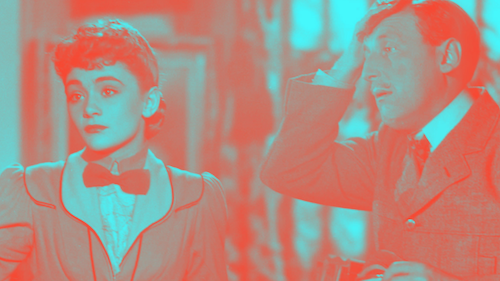
11. Miquette et sa mère
I will always celebrate auteurs working against type especially if their experiments work out for the better. I don't believe that Clouzot could never make a comedy film, but it's somewhat telling that his lone comedy feature film — Miquette et sa mère — is his weakest effort. Clouzot would likely agree with my assessment, given that he apparently was contractually obligated to make this silly caper about a protective mother's efforts to rescue her daughter from an unsuitable suitor. All of the rising intensity, boiling chemistry, and embedded anguish of his classics is all but non-existent here, which would be fine if the film worked well on its own; instead, this lighter piece kind of just exists without any inner movement, and you will never feel like this title will rise to anything more than neutral.
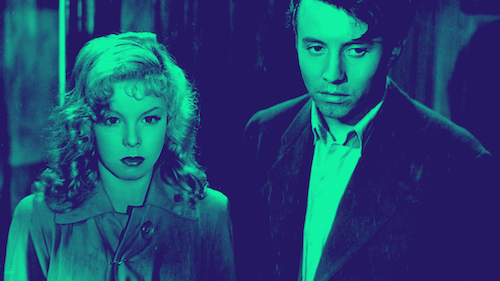
10. Manon
Clouzot adapts Antoine Francois Prevost's Manon Lescaut for a new audience, modernizing it from an eighteenth-century classic to a World War II retort for audiences after the dust had settled. You can see why he would want to make such a picture: one that scolds those who collaborated with the Nazis while also painting a picture of how entire nations had to walk on eggshells those past few years. However, it appears as though his rage got the best of him and he wasn't thinking with his clearest mind, seeing that Manon meanders quite a bit and, eventually, abandons ship with some awkward narrative and tonal shifts that come from out of the blue. Even if you are channeling your emotions into your work, you must stay level headed; Manon is an example of what it looks like when a director loses their grasp of their subject.
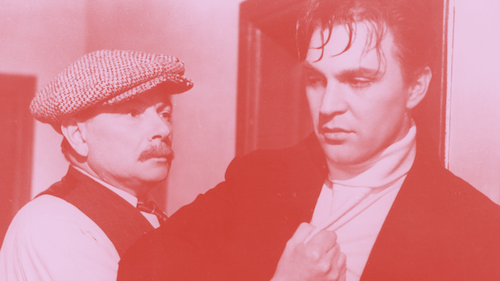
9. Les espions
The film industry continuously remakes projects that performed well, which has always been the worst approach. The kinds of films that should be remade are the whipsmart ideas that don't quite come to fruition, like Clouzot's Les espions (or The Spies). There's something incredibly clever about its premise: a psychiatric hospital which is inundated with new kooky patients who all may or may not be spies trying to assess which of the new patients is a specific one with a particular past that can prove to be plentiful for their respective nations' intel. In ways, Clouzot is the man for the job, with a film that is legitimately mysterious, but I also feel like someone who could lean into the silly and fun side of such a bonkers premise would have sufficed; instead, Clouzot's self-seriousness makes Les espions occasionally feel like a slight parody of itself.

8. L’assassin habite... au 21
Clouzot's debut feature film is L'assassin habite... au 21 (or The Murderer Lives at Number 21). It might be his most simplistic film in a narrative sense (about an inspector who moves into a boarding house in order to find a serial killer as discretely as possible), but Clouzot was not beating around the bush when making this picture. While weaving a series of genres together (including the expected, mystery and thriller tropes, and the unexpected comedic flourishes), Clouzot aims to dig deeper into the thriller genre with this mission statement (one that declares that he has much to give). This film is entertaining and engrossing; even if it can't quite compare with his greatest motion pictures, L'assassin habite... au 21 is still a sign of a director who didn't want to settle for less and was wanting to get the most from out of his pictures even from day one.
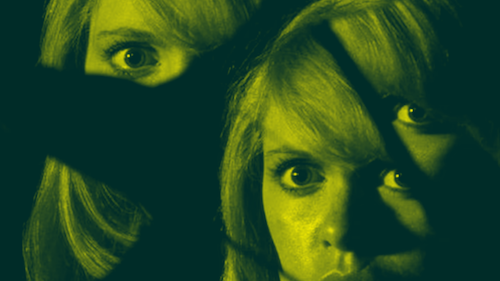
7. La prisonnière
Clouzot's swansong is La prisonnière: a recontextualization of what art cinema can be. Clouzot's sole film in colour (the director was one of the great black-and-white visionaries of his time, after all), La prisonnière sees a fascinating hypothesis surrounding the creator and both their subject and their audience within the same entity (think of Michael Powell's Peeping Tom and what it says about the onlooker versus the voyeur). What starts is one of Clouzot's most breathtaking and effective pictures: a relentless, haunting look at perversion and the mind of a provocateur. Sadly, the film doesn't quite stick its landing, and it appears to settle when it should soar. Even so, this might be one worth checking out for its first two thirds, which are amongst Clouzot's best as a director.
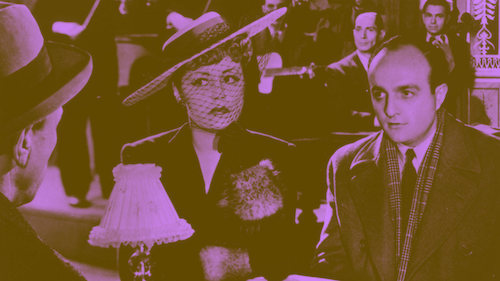
6. Quai des orfèvres
We have now reached Clouzot's essential films, which span over half of his quaint filmography. This peak includes Quai des orfèvres (or Jenny Lamour): Clouzot's first film after his temporary ban from making motion pictures. So many crime films invest themselves with the bleak motives of broken people, as to justify or explain why they reach these dark places when they commit heinous or monstrous acts. With this picture, however, Clouzot goes one step further. Featuring an egomaniacal husband who wants to murder the man who his wife may or may not be cheating on him with (only for the husband to be too late), Clouzot's reintroduction to the director's chair throws us in for a loop. What happens to our expectations if we were way off about what would transpire? Analyzing the true essence of the mystery genre (to keep audiences guessing), Clouzot's Quai des orfèvres makes it feel fun to be so gullible and stupid while watching a film.

5. La vérité
The beauty of filmmakers like Clouzot is that there are the handful of films that many cinephiles already know inside and out, and yet there are still the strokes of excellence that are ready to be discovered alongside them. We can see tis with La vérité (or The Truth), Clouzot's penultimate film — and one of his most de-constructive depictions of what constitutes as cinematic dread. A blistering courtroom drama that sees a woman being tried for the murder of her partner (and the courtroom has to discern whether or not she was defending herself or wanting to slay her partner out of malice), La vérité cleverly places us in positions of both sympathy and intrigue. As a fellow human being, our heart aches for this protagonist, as we worry about the testimonies that are to come. As animalistic beings, we are glued to the primeval nature of things: what drives people to such dark places, and are we capable of such? Clouzot explores both sides of this same coin.

4. The Mystery of Picasso
It's clear that Clouzot was a master of mystery, but one of his greatest achievements regarding the genre is by not working within it whatsoever. Instead, his documentary — the appropriately named The Mystery of Picasso — seeks to do the opposite of his murky narratives: it aims to dispel and demystify the iconic painter's artworks, gaze, and mind. The project couldn't be simpler; it's literally just a camera pointed at Picasso as he works on paintings in front of us. I understand the slightly polarizing response that this film has, seeing as some find The Mystery of Picasso to be as boring as cinema can get. For me, however, I fall under the spell of both Pablo Picasso and Clouzot; seeing a master at work is always going to be rewarding for me (and someone like Picasso will always be fascinating when you see how strange his end results are). The restraint Clouzot has — to never try and outshine Picasso — also makes this film significant in my eyes.
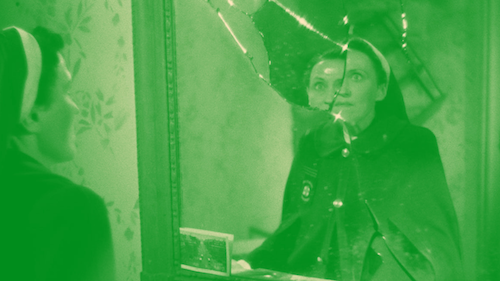
3. Le corbeau
Clouzot's sophomore film, Le corbeau (or The Raven) is unquestionably his breakthrough effort, to the point that it remains a staple in his filmography. Focusing on a French village which has been cursed with circulating poison letters of defamation, Le corbeau is an early look at mass hysteria in cinema (and what a bold time to release such a film, too — smack dab in the middle of World War II and a plethora of global witch hunts and mass slaughter). What could have just been an intriguing mystery gets elevated by a seemingly frustrated Clouzot who had more to say — particularly how easy it is to see society fall apart at the hands of very few (and how ill-equipped we are at protecting ourselves from our worst inner thoughts and capabilities). Writing this blurb in 2026, I can honestly and tragically say that we have learned nothing, and that the ability to destroy inner circles and communities based on the most meager forms of hatred and corruption is still as present as ever.
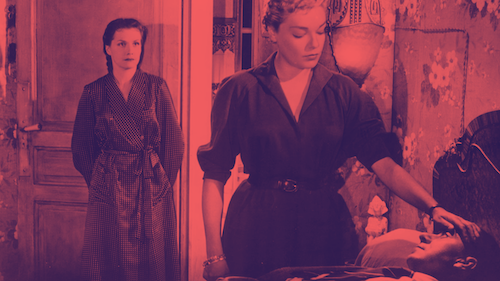
2. Les diaboliques
There are a handful of films that you will never forget your first viewing experience with. Where were you when you first saw the psychological horror film Les diaboliques (or The Diabolical Ones)? I was in my twenties and stumbled upon it. I was interested in seeing an introverted, mystical picture about the apparent curse that follows two women affiliated with the murder of a corrupt and abusive headmaster at a boarding school. What I was not prepared for is how far Clouzot was willing to go with his damning and haunting visuals, his nauseating overloads of tension, and some of the most unforgettable scares of all time (that bathtub sequence will remain one of the most inventive and shocking images I have ever seen in a feature film). What good is a psychological film if it only places us in the head of a protagonist? Clouzot couldn't agree more with Les diaboliques: a slice of the damned that makes us feel as though we are going crazy ourselves.
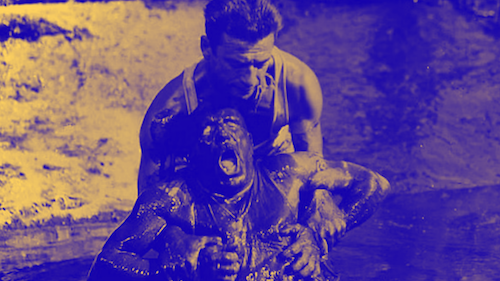
1. The Wages of Fear
If you want to see how Clouzot could be a master of tension, you have two sterling examples. Exhibit A: the majority of his career. Exhibit B: specifically the film The Wages of Fear. While the top six films here are all excellent to varying degrees (and I am a massive fan of Le corbeau and Les diaboliques), I think it is safe to say that The Wages of Fear is a stone-cold, clear-cut masterpiece. The winner of the Grand Prix (later renamed the Palme d'Or) at Cannes Film Festival and the Golden Bear at the Berlin Film Festival, it's obvious what a stranglehold this film had on audiences upon its release in 1953 — how the hell did Clouzot even get away with a film this harrowing, cynical, and uncomfortable back then, with his seemingly twenty-first-century mindset? Case in point: New Hollywood master William Friedkin would remake this film as the now-adored Sorcerer; while I think this, too, is a great film, I must side with Clouzot's film as the stronger rendition because of how intrinsic the French director's dread feels compared to Friedkin's gritty spectacle of the same story.
The Wages of Fear follows a shipment of the ultra-fragile nitroglycerine and the four men who are plagued with having to transport it with zero equipment, no support, and a short time limit. For two-and-a-half hours, we don't get much more as a story: just the four poor souls who have to carry this explosive, threatening material across the worst obstacle courses that nature and humanity could build for such an assignment. If anything, this film can be used as a writing exercise: it's proof that you do not need to add arbitrary twists, turns, and ideas if your bare concept can deliver nearly three hours of blistering agony on its own. Preceding films like Kathryn Bigelow's The Hurt Locker by over half a century, Clouzot's The Wages of Fear is the best kind of anxiety that the motion picture medium can offer: the kind that feels like it is happening to you, and that no one within the film is safe. Now, this is a master of tension and unease: watching Henri-Georges Clouzot pull your strings and press your buttons without having to try at all makes you feel so vulnerable and helpless — reminding yourself of how much technical and artistic brilliance is taking place here (to make the most of every microsecond of anticipation and trepidation) is when The Wages of Fear reveals itself as a magnum opus of filmic panic and devastation.


Andreas Babiolakis has a Masters degree in Film and Photography Preservation and Collections Management from Toronto Metropolitan University, as well as a Bachelors degree in Cinema Studies from York University. His favourite times of year are the Criterion Collection flash sales and the annual Toronto International Film Festival.