
Filmography Worship: Ranking Every Germaine Dulac Film
Written by Andreas Babiolakis
Filmography Worship is a series where we review every single feature of filmmakers that have made our Wall of Directors

The beauty of technology — even if it isn't represented by the low attention spans and laziness created by the online culture of today — is that we have access to almost anything we desire. Not only does this make us connected to the artifacts and masterminds of yesteryear, it allows for the unsung to finally have their day with a new audience (one they couldn't even imagine). One of the most underrated filmmakers of all time is Germaine Dulac of France: a sensational auteur during the silent era who never got her dues during her time alive, nor was she as celebrated as she should be for decades after her passing (she died young at fifty-nine in 1942). What doesn't help is that she is someone who is certainly — at least partially — buried in the sands of time. A vast majority of her films are lost, and that has been the biggest upset for me when reaching Dulac's filmography for this project; it's one thing to not have one or a couple of films be accessible for me to watch and review, but when I saw that over twenty films are inaccessible (and only thirteen presently remain), it felt kind of defeating; what good is ranking an entire filmography when two thirds of it aren't even retrievable?
However, I love enough of Dulac's surviving titles that I want to still celebrate her talent and visions. Dulac was always interested in art, even at a young age; however, when she was a teenager, she was intrigued by feminist and socialist politics as well. The two sides of her identity would merge in her professional life, including her early days as a journalist who would also become a critic. She would turn to cinema in 1914 where she was able to detail her expressions and ideas here via surreal, artistic experiments. Her philosophies and theories were highly progressive, from radially feminist imagery to her queer identity (while not a major theme in her films, Dulac is alleged to have been bisexual, which was seen as taboo back then). Her film career was rather short lived, as she pivoted during the early days of sound cinema; she would make newsreels until she died. Her approach to directing felt like the kind that would come out of the sixties (or the thirties at the very earliest, with directors like the sociopolitical Jean Renoir and the experimental Luis Bunuel in mind). Her ambitions range from avant-garde short films to a five-hour serial. We will go over anything that I could get access to; it isn't much, but I hope it will serve her legacy well. Here are the surviving films of Germaine Dulac ranked from worst to best.

13. The Devil in the City
I place The Devil in the City last not because it is a bad film (it's decent) but because it feels the most ordinary (oddly) of any of Dulac's films; there isn't much I can take away that points to Dulac being a forward-thinking, inventive filmmaker with a film like this one. It's got a slightly German Expressionist feel to its story (with a character who may or may not be the devil and all), and the film looks quite nice aesthetically, but this film otherwise just feels as ordinary as she's ever been; this is clearly a film that was assigned to her that she didn't see herself within. This one is for Dulac completionists only (well, as much of one as you can be, given how many films are missing).
12. Spanish Fiesta
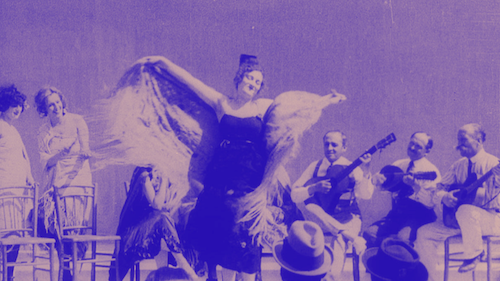
While not present in its complete form, the half-hour we get of Spanish Fiesta is enough to know the extent of what Dulac's picture would be like. A bit of a spin on the cookie-cutter romantic film and the concept of a love triangle, Spanish Fiesta sees a woman who chooses neither of her pursuing suitors in hopes of a man who is much more to her liking instead; meanwhile, the two other guys will die trying to get her. It's difficult to know what would have been in the missing footage (quite a chunk is lost; at least a half-hour's worth), but the little we do get is pure melodrama in the face of filmic sensationalism; I feel like the complete version of Spanish Fiesta would have crafted an even stronger picture of worship and lunacy.

11. Disque 957
Has a song ever taken your brain to places that are impossible to describe? Dulac's experimental short, Disque 957 (or Record 957) accomplishes just that: an astral projection of how she interprets Frederic Chopin's composition, Preludes 5 and 6. Shapes, physics, and light all swirl and waltz together in this unthinkable exercise in abstract filmmaking, and it still feels like a film from the future nearly a century later. However, the film is also just a little too short at just over five minutes in length, and Dulac's Disque 957 feels more like a test than a complete project that I was so prepared to be swept away by. I still love what I saw, but it isn't long enough to completely hypnotize me.

10. Danses espagnoles
Years before avant-garde minds like Maya Deren would tackle such a concept, Dulac presented her own take on how experimental cinema could portray the art of dance. Danses espagnoles isn't much on paper; just a seven-minute short that captures two routines by flamenco expert Carmencita Garcia. While Garcia dances, Dulac uses her camera to enhance the choreography and routine to the point of feeling like this is art in the fourth dimension: one that transcends time and space. To me, this feels like Dulac paying tribute to an artform she adores (dance) while exploring what she can achieve in her own medium; the two in tandem work quite well.

9. Celles qui s'en font
Decades before the French New Wave even existed, a film like Celles qui s'en font (or Those Who Worry) showed the French cinema that was to come. In six minutes, Dulac paints a desperate picture between a hopeless alcoholic and a prostitute; these could be a pair of separate, broken souls, or two sides of the same brutal coin. Unlike something like Disque 957, this film doesn't need long for me to get the full picture of poverty, depression, and suffering. Released in the early days of the economic crisis that would rock a generation, Dulac's film acts as a nervous mind anticipating the road ahead, and that makes it beautifully devastating.

8. Gossette
If you think the concept of a miniseries is around fifty years old, let me introduce you to the concept of the serial: going as far back as the silent age, these films told in multiple parts could take up a majority of your day. Case in point, Dulac's Gossette, clocking in at five hours and divided into six parts. This epic undertaking feels like Dulac proving that she could be one of the next mainstream, studio-minded directors of the then-green Hollywood. Her tale of bohemian orphan Gossette and her complicated life sees Dulac commenting on manners and social classes with extreme directness; throughout this lengthy, epic affair, Dulac channels her affinity for experimentalism into the camera lenses and pacing of her film, as if we are watching this life through a warped vision. Gossette is a sterling example of early feminist filmmaking that doesn't hold back (how could it at five hours in length?).

7. Arabesque
I consider all seven of the remaining films must-watches in Dulac’s career. Films in the silent age were often forced to tell us what we needed to know via intertitles. However, some directors would try their best to allow their images to speak in their own way. Dulac's Arabesque is pure cinematic poetry that tries to find "choreography" and harmony in the world around her (all throughout nature, architecture, and any form of "design"). While many other cinematic dreamers were hoping to join the burgeoning industry to see what money could provide them, Dulac scales back with this exquisite short film and utilizes only what she has at her disposal: the world around her. Dulac expands on the original purpose of film: to translate what we can see onto the big screen (she does so with breathtaking cinematography).

6. Thèmes et variations
Dulac needs all but ten minutes for Thèmes et variations to take a hold on us. This short is centred around ballerina Lilian Costantini and her glorious routine. At the time, film was still quite mechanical with its static placement, primitive editing techniques, and limited capabilities. However, in the context of a film like this, Dulac makes filmmaking as fluid, graceful, and freeing as the routine it frames; suddenly, we are one with the music in this perennial slice of pure cinema. Dulac captures both sides of the equation: the industrial, robotic use of technology and the liberating endlessness of art. Dulac could see this wonderful marriage between culture and innovation during a time when many filmmakers were only seeing film as a blossoming business.
5. The Smiling Madame Beudet
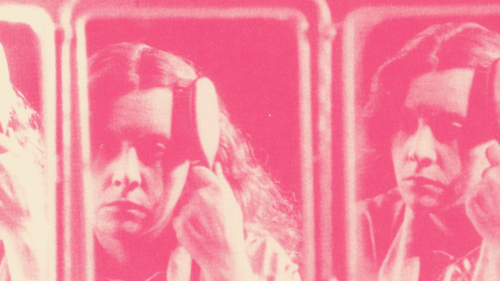
While many screwball and comedic filmmakers would play into the toxicity of relationships in hopes of brushing off any red flags as unserious, Dulac doubles down in The Smiling Madame Beudet. The titular character is stuck in a relationship where her husband threatens to commit suicide on a daily basis; Beudet uses this hostile tomfoolery as a means of exacting revenge on him. In shocking fashion, her plan greatly backfires in Dulac's gripping film about suffocating marriages and spousal torment. The biggest twist is not what sparks may fly but, rather, Dulac's decision to make her film's resolution square one: it is the helpless realization that, for many, there is no getting out of a corrosive environment.

4. The Cigarette
When Dulac wasn't specializing in avant-garde, cerebral art, she was making pictures that felt more real and severe than many others of her time. One such expressionist tale is The Cigarette: a featurette of burning proportions. Following a troubled man who leaves his life in the hands of fate (after he suspects that his wife is being unfaithful), The Cigarette uses the titular object as a harrowing symbol. Our protagonist leaves a poisoned cigarette in his cigarette box and awaits the moment when it will all end for him; his wife suspects nothing. This bitter allegory about tortured relationships carries the same sentiment in quite a few different ways: you don't know what you've got until it's gone. Even when she is straightforward, Dulac is so inspired and different with her approaches that I feel as though we are deprived of the possibility of numerous other similar titles in the form of her lost works.

3. Invitation to a Journey
Decades before feminist directors like Chantal Akerman would create their own filmic depictions of domestic prisons, Dulac's Invitation to a Journey is a hint of the sweet life of liberation for a poor, trapped housewife and her efforts to escape the ways of her selfish husband. She vows to find a new life for herself, and she wanders into Paris in the evening, hoping to be whisked away by the nightlife. Dulac seemingly bridges her impressionist phase with the surreal and rhythmic cinema of her latter stages in this eye-opening picture: Dulac depicts the plight of housewives all around the world in this intense-yet-imaginative featurette.
2. Heart of an Actress
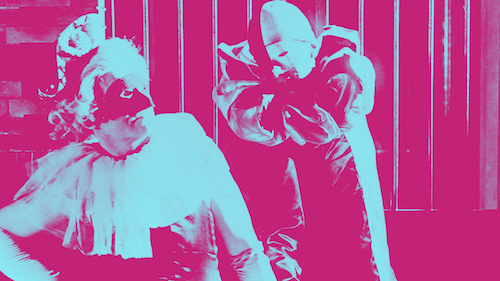
The idea of being pursued by the opposite sex in cinema is often a romantic cue or plot device. In Dulac's Heart of an Actress, she uses the dominance of men to instead pinpoint the difficulties of being a woman in society. Helen (the title actress) is stuck between a wealthy man who promises to back and fund her life (while possessing control over her) and a fellow artist who wants Helen to be his muse. Instead of fawning over either suitor explicitly, Dulac allows her film to show the real concern at hand here: a reality in which a woman cannot create or express herself freely. Heart of an Actress is a vulnerable vision of damnation that Dulac used to tell an important message within a male-dominant industry: women have much to say as well, and their visions needn't be tainted and sullied.
1. The Seashell and the Clergyman
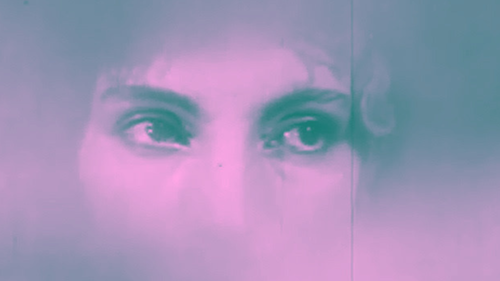
Dulac is a great director overall, and I hope that this list has helped place her surviving films on your map. However, it was never up for debate what her greatest achievement is. The Seashell and the Clergyman is one of my favourite silent films and it instantly made me want to see more of her oeuvre once those forty mind-blowing minutes were up. This featurette features a clergyman who cannot contain himself when it comes to a general's wife; based on a story by Antonin Artaud, Dulac's take is a highly feminist look at objectification and the pummeling, poisonous act of obsession. The central priest begins to lose his mind over his fantasies (and, thus, The Seashell and the Clergyman caves in on itself as a vicious example of avant-garde filmmaking). This man's galloping fetishization is paradoxical; on one hand, his craving is problematic in the sense that we are concerned for the woman he wants. On the other, Dulac has the upper hand by controlling his dreams via her abstract, kaleidoscopic hallucinations.
The Seashell and the Clergyman is one of the earliest surrealist opuses, predating even Luis Bunuel and Salvador Dali's Un chien andalou by a year. While the two aforementioned men were trying to break the mold of what storytelling could be via their stream-of-consciousness pictures, Dulac had a different motivation at hand: the projected images of a plagued mind. Similarly, nonetheless, Dulac's film is so postmodern that much of her rebellious, sharp artistry is ambiguous; her scorn is blatant but our interpretations of each image and sequence may vary. In the end, while cinema was evolving into a more technically advanced medium, Dulac encouraged us to not look further into what could be; rather, she wanted us to look deeper into ourselves. What do we make of motion pictures as we watch them? These are works you do not have to be sold on via marquees or marketing. These are films that your soul makes a connection with. The Seashell and the Clergyman is a masterwork of experimental filmmaking made during a time when cinema was finding its own footing; even so, Germaine Dulac pushed back on expectation with a film that defied the odds. Tragically overlooked throughout time, I truly believe that there will come a day when people recognize the genius of a film like The Seashell and the Clergyman (and the brave director responsible for it).


Andreas Babiolakis has a Masters degree in Film and Photography Preservation and Collections Management from Toronto Metropolitan University, as well as a Bachelors degree in Cinema Studies from York University. His favourite times of year are the Criterion Collection flash sales and the annual Toronto International Film Festival.