
Filmography Worship: Ranking Every Buster Keaton Film
Written by Andreas Babiolakis
Filmography Worship is a series where we review every single feature of filmmakers that have made our Wall of Directors

One of the hardest workers in the history of entertainment is Joseph Frank “Buster” Keaton, who was an expert in thrilling and captivating audiences for many years. He was born into a Kansas, vaudeville family on October 4, 1895, and he joined his parents in the comedy act of The Three Keatons (starting at the age of three). He would partake in some questionable stunts that appeared to be forms of physical, child abuse, including Keaton being hit by objects or the young Keaton even being thrown into the audience. However, Keaton — even at that young age — declared that he was fine: that every bit was a tactically performed stunt that reduced pain as much as possible, and everything was planned out by the young star and his parents. If anything, the act of being tossed and banged around even entertained Keaton, who would laugh during his bits; however, he learned that the crowd responded less when he was amusing himself, and so he adopted his father’s practice of remaining as neutral as possible — leading to Keaton’s iconically still “stone face.” Once vaudeville started tightening up its laws on child performers (including outright banning them), Keaton — now a young adult — transitioned into theatre instead; he fled to New York city to escape his father’s worsening alcoholism. After serving in the American Expeditionary Forces during World War I, he was ready to take on a then-burgeoning medium that connected directly with the stage: cinema.
Even though Keaton didn’t have too much faith in the then-green medium of film, he was inspired by one Fatty Arbuckle to try his hand at acting. Keaton was an instant success on the screen: with everything he learned through his vaudevillian days (how to work a crowd, how to get the biggest laughs, how to maintain that neutral face, and how to perform insane, life-threatening stunts), he was destined to be on the big screen (even when film was only just becoming a major draw). However, Keaton was also transfixed by the camera that shot him towards the end of his shoots, and would ask to see how the camera operated (as to learn for himself). He would quickly direct (alongside Arbuckle) his first short, The Rough House (and only his second film as an actor, after 1917’s The Butcher Boy). Keaton would star in a handful of films before creating Buster Keaton Productions in 1920, where he would begin to direct far more frequently, starting off with the beloved short, One Week. While starring in both his own works and the works of others (he was kept quite busy), Keaton would finally direct his feature-length debut, Three Ages, in 1923; he hit the ground running in the twenties and directed a dozen features.
However, as promising as everything sounds here, a number of factors made Keaton’s career come to a screeching halt. First, there was the dawn of the talking picture: a technical shift in cinema that threatened this star — and many others — who was dominating silent motion pictures (much of Keaton’s charm was his expertise in being quiet and miming his comedy). Keaton was also finding it difficult to maintain complete control as a filmmaker; a few of his reappraised successes, like The General, were not as cherished upon release, and he experienced financial loses. He tried hopping from United Artists to MGM, and he had an admittedly difficult time directing The Cameraman; he found the screenplay far too bloated for a comedy, and that the studio meddled in every choice he made (in fact, the film — co-directed by Edward Sedwick — didn’t even credit Keaton as a director when it was first released). Between his struggles behind the camera, with studio heads, and at home (with wife Natalie Talmadge, who he also seldom worked with), Keaton began to mirror his father and turn to alcohol to ease the pain. This addiction (and the challenging behaviours that came with it) tarnished his reputation, and he was borderline unemployable during the thirties (he was also fired by MGM in 1933). After two directed efforts for MGM, Keaton never directed another film again. His marriage with Talmadge ended in 1932.
Keaton experienced a bit of a career resurgence in his golden years, thanks to the help of television (and new audiences experiencing his films), tributes (like Donald O’Connor playing Keaton in the 1957 biopic, the Buster Keaton Story), and other forms of celebration (like Keaton having a cameo appearance in Billy Wilder’s Sunset Boulevard). Thankfully, he lived to see this new respect; he passed shortly after his renaissance in Hollywood in the sixties, dying of lung cancer in 1966. His influence and brilliance continues to resonate throughout cinema. His iconic brand of comedy is still referenced to this day. Even his taste for danger has proven to be inspirational, with action megastar Jackie Chan declaring Keaton his ultimate idol (I do want to make it clear that Chan is correct: Keaton is one of the great stunt performers of all time, and his dexterity, bravery, and lunacy should be as celebrated as his hilarity). While I won’t be covering his numerous short films today (maybe another time), I do recommend checking out the majority of them (especially One Week). For now, I am going to focus on the feature-length works of Keaton, since they show more of a mastery behind the camera, a sense of artistic inclination, and narrative care than most of the shorts do. There isn’t much to complain about with these twelve feature films, so let us dive right in to the filmography of a mogul. Here are the films of Buster Keaton ranked from worst to best.
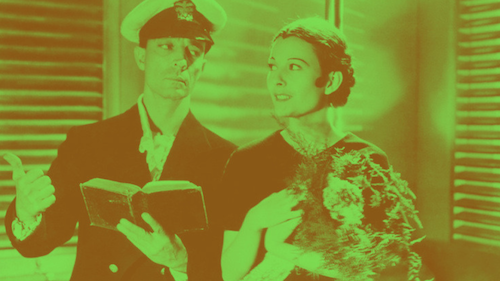
12. Spite Marriage
While not a bad film, I find it simple to place Spite Marriage last because it is clearly a bit of a confused film. Keaton’s final directorial effort (and a co-directed project featuring Edward Sedgwick), this was meant to be the next step for Keaton. What was supposed to be a sound film (and Keaton’s foray into talkies) and a comeback in the MGM era wound up being another silent project (albeit with synchronized tracks) and the end of the road for Keaton. In the same way that the film features a man being used as fodder to make his fling’s partner jealous, I cannot help but feel the sense that Keaton is being toyed around with this run-of-the-mill comedy; even if this unfortunate history wasn’t attached, there’s barely any innovation or element that stands out (which, to me, feels antithetical of the Keaton experience). This film is fine (it is actually kind of uplifting and enjoyable), but it’s Keaton’s worst nonetheless.
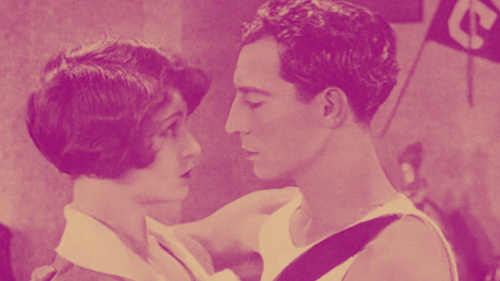
11. College
This feels like a Keaton classic on paper, but College may only be one on paper. Co-directed by James W. Horne, College sees our star, Ronald, getting caught up in a typical predicament that you’d see in silent cinema: an everyday guy wanting to get (or, in this case, keep) a girl and doing whatever it takes to do so. Here, Ronald wants to impress his girlfriend by becoming more affluent in athletics. Things go exactly as you’d expect them to, with Ronald getting wrapped up in shenanigans and facing tribulations (the college dean worries about his dropping grades). College is just ordinary, which is not an issue but it does factor into a list like this one (where I am placing films in order); toss in the always-dated-and-problematic use of blackface (ugh), and College is unsurprisingly near the bottom of this list.

10. Battling Butler
We have seen so many boxing gags in the silent era, and Keaton’s Battling Butler is no different. Our lead is, once again, trying to win over the affection of a woman, and he does so in the boxing ring. To be fair, a lot of Battling Butler’s comedy is physical, and this film might be one of the best opportunities to see how gifted he is physically; he may sell himself as a clumsy goof, but this man is kind of a beast. Now, him pretending to still be athletically inept is hilarious when you can see how sculpted this guy is (whether this is intentional or not). Otherwise, Battling Butler is a fairly good film that is sure to provide you with the signature Keaton silliness. It does feel a little bit more like a Charlie Chaplin or Harold Lloyd film (or, simply, a number of other silent comedy masters), but that is most certainly not a bad thing; Keaton’s strength does stand out as his own trait, though.
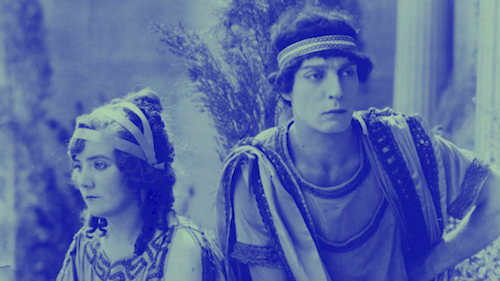
9. Three Ages
Keaton’s debut feature film as a director is the ambitious Three Ages, and it pinpoints his mindset when tackling this film. Firstly, he (and co-director Edward F. Cline) went all-in on spoofing D. W. Griffith’s Intolerance (which, at the time, was one of the biggest films ever made). Thus, we see Keaton pop up in three different parts of history (as per the title): the dawn of humanity, the classical age of Rome, and the then-contemporaneous Roaring Twenties). The vignettes are all the same shtick: a guy wanting to impress a girl. However, with all three stories together, we get a larger commentary on the futility and ineptitude of heart-struck men, and this makes each story land its punches harder. Of course, Keaton would become a stronger artist and presence later on in his directorial career, but Three Ages is a pretty good way to start (especially back in 1923).
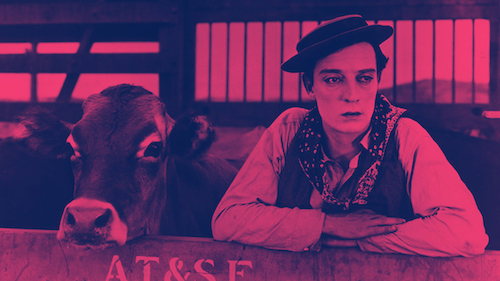
8. Go West
The quality of the remaining films is now quite high. Now, this may not be intentional at all, but the biggest message I got from Keaton’s Go West is the chaos of wrangling cattle, as if to say that this comedic western is what it feels like to work on a film set as a director. Without grasping at more straws, I will be more objective with what I like about this film. You have your typical Keaton theatrics (you know he is going to go the extra mile when it comes to farm-related stunts like dealing with a bull), but you also get something a bit more that you don’t find in many comedies of the time: heart. When Keaton’s character develops a bond with a cow (the lovely Brown Eyes), this elevates Go West beyond being another comedy of the time that chases after your obvious romances: instead, this is a union of drastically different worlds, between two beings who are caught up in their own respective places of hardship. Thus, Go West becomes oddly beautiful at times.

7. Seven Chances
How do you take the tried formula of the romantic comedy of the twenties and make it feel fresh again? By adding chaos. Seven Chances is more than a love story: it is a peculiar challenge where Jimmie (Keaton) must get married later that day in order to inherit seven million smackeroos. On one hand, Jimmie is now set to find the love of his life. On the other, his efforts to find love in less than twenty-four hours results in a shitload of possible lovers who all want a piece of his inheritance. You can imagine how crazy things get for Jimmie, but Keaton makes each situation go the extra mile; it is clear that a film like Seven Chances will be funny, but the amounts of craziness that transpire with this film is what may catch you off guard. This one is an instant picker-upper if you are in a sour mood.

6. The Navigator
When you think of Keaton’s greatest successes, chances are you aren’t considering The Navigator (yes, this film did better at the box office than all of his other works). However, that isn’t to say that this film is not special in its own right. This film is quite ahead of its time when it comes to its depictions of conflicts — humans versus technology (especially sea-based equipment and vessels), humans versus the elements, and humans versus each other. Simply, a playboy and his socialite neighbour who he wants to marry wind up getting trapped in the middle of naval nowhere, on a ship that may wind up virtually anywhere at this rate. This effort by Keaton and director Donald Crisp is quite a riot, and — even though I feel like other Keaton films have aged even better — it is easy to see why this parade of dilemmas was such a hit back in the twenties.
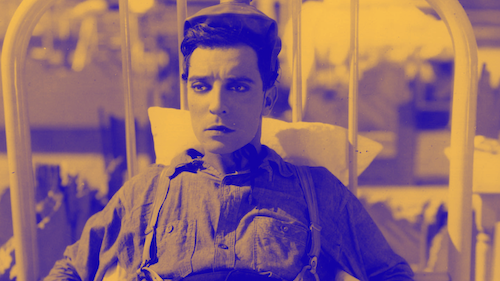
5. Steamboat Bill, Jr.
Keaton’s final film directed for United Artists is Steamboat Bill, Jr., and I think you will agree with me that the fact that this film was not a success when it first came out is ludicrous. We see a young son reunite with his estranged, gruff father (who is also the captain of a steamboat), and you can expect worlds to collide (they do). However, seeing what Keaton makes not just of life at sea but also everyday life in American suburbia. The final act is a gauntlet for Keaton: one involving the destruction of a vicious cyclone, sinking structures, and the now-legendary stunt where a wall nearly kills Keaton, only for the actor/director to narrowly miss this fate through the wall’s tiny window (however, you can still see the moment where he dislocated his shoulder during this insane sequence; the professional that he is, he doesn’t even react to the excruciating pain). This one is endlessly sensational.
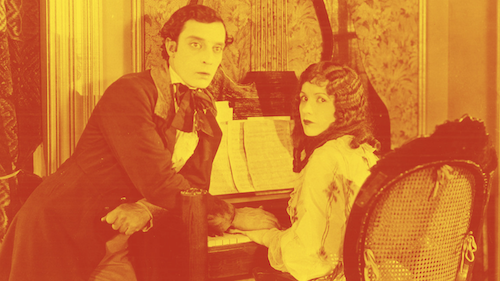
4. Our Hospitality
It didn’t take long for Keaton to direct his breakthrough feature film (with John G. Blystone, here); Our Hospitality was only his sophomore effort, and what a hysterical one it is at that. In a way that reminds me of Shakespeare’s Romeo and Juliet, Our Hospitality sees two dueling families who hate each others’ guts; naturally, decades after this rift started, a man and woman from the opposing sides fall in love, resulting in our groom (Keaton) now having to fear for his life for… well, the rest of his life. The sense of danger throughout this film only adds to the electricity throughout this feature, and the realness of Keaton’s sequences adds to that danger. Overall, this is a constant force of unexpected calamity, and yet this is the moment where Keaton chose to try and experiment with the cinematography and scale of what a comedy can look like; not only was Keaton pushing himself with Our Hospitality, but he was forcing the industry to keep up.
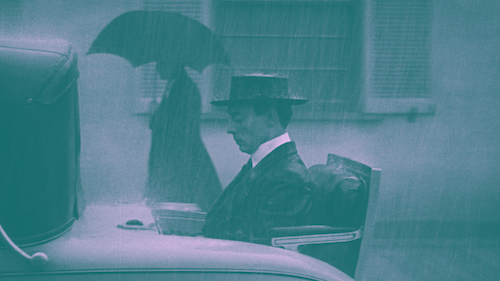
3. The Cameraman
Oh, how bittersweet is The Cameraman. It’s easy to see how this film is a blemish in Keaton’s career, seeing as it ushered in the dark MGM years that Keaton would regret. In hindsight, however, it is worth celebrating a film that is this good, even with the baggage it carries. This is a two-way street between Keaton and MGM: we have your conventional story about a comedian who wants to win over the girl of his dreams (perhaps to appease MGM) while operating a camera for — you guessed it — MGM. This is already an excellent comedy that is classic, peak Keaton (I must give co-director Edward Sedgwick credit here as well), but it’s the meta angle that brings this to a whole different echelon: a tug-of-war between an auteur and his new studio. It’s too bad that MGM seized control from Keaton for the most of their relationship (I suppose that much of what you see in The Cameraman is factual).
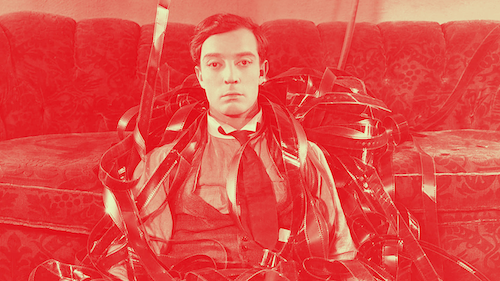
2. Sherlock Jr.
Even though The Cameraman exists, Keaton’s greatest love letter to cinema must be Sherlock Jr.. What may seem like a mystery picture to the uninformed is actually a candid confessional through the eyes of a dreary-dreamer projectionist (Keaton). He loves cinema but, seemingly, won’t be anything more than a projectionist. He falls asleep and becomes a mega film star in the form of a cinematic detective who is ready to crack his next case (to be fair, he is stuck in the middle of his own mystery, seeing as he has been framed for stealing his girlfriend’s father’s valuable watch). The comedy-mystery storyline is one of Keaton’s best, but a major reason why I adore this film is because of the absolutely bonkers stunts Keaton undergoes (one of my all time favourite stunts in cinema is the collapsing bridge with Keaton riding the handles of a bicycle). If our projectionist is imagining himself as a big screen champion, Keaton sells this idea as both a director and an actor with Sherlock Jr.: a masterclass in silent-film comedy.
1. The General
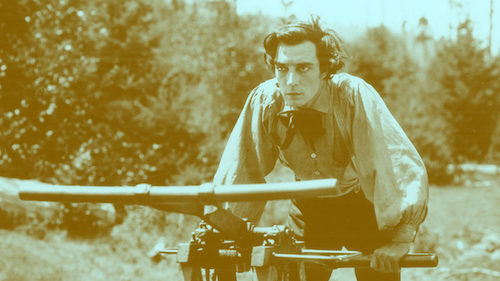
Picking one Keaton feature to crown is no easy feat, and I think that any of my top seven choices here are borderline interchangeable (and they can easily be anyone’s favourite Keaton picture). Today, I am settling with The General and I have quite a few reasons why. Like a few other films here, it is a borderline flawless Keaton affair. Secondly, it exemplifies everything great about Keaton motion pictures: from the sterling comedy to the intense stunts (and, believe me, when Keaton has cannonballs and other heavy objects being fired at him while he rides the front of a train, you know that this film is the real deal in this respect — this is far from the only stunt in this film as well). Keaton teamed up with Clyde Bruckman to direct this audacious, intricate, jaw-dropping film that is as artistically rich and technically impressive as it is — most importantly — genius as a comedy (it is one of the best films of the genre). Released near the end of the silent era, this film was likely meant to show what the future of film could be. However, the adverse effect happened where The General didn’t do well when it was first released and it, instead, represented why cinema had to move on from silence; what a crying shame.
Nowadays, The General is rightfully cherished as one of the great silent films, and — outside of the aforementioned reasons — one key element why is because this film boasts the strongest story in any Keaton picture (which are, as you can see, strong films overall). Here, Keaton is the engineer of the titular train: one that has been stolen and seized during the Civil War (where he has to face Union spies). Our lead character wanting to be a part of the war also plays a big part in this romantic, kinetic, terrifying picture: in a plethora of ways, Keaton’s protagonist finds himself in a series of other battles outside of seeing combat. From the engrossing story and the astonishing action (with, need I remind you, zero CGI enhancement), to the constant glee and laughs that will pour out of you at every turn, The General is one of the prime examples of what a silent comedy — nay, a comedy period — can be, and this is also exhibit A of the magnificence of one Buster Keaton (the vaudevillian entertainer, comic master, extreme daredevil, and exemplary storyteller, all found in one stoic, neutral package).


Andreas Babiolakis has a Masters degree in Film and Photography Preservation and Collections Management from Toronto Metropolitan University, as well as a Bachelors degree in Cinema Studies from York University. His favourite times of year are the Criterion Collection flash sales and the annual Toronto International Film Festival.