
Filmography Worship: Ranking Every Guy Maddin Film
Written by Andreas Babiolakis
Filmography Worship is a series where we review every single feature of filmmakers that have made our Wall of Directors

When you think about the great Canadian auteurs, chances are you will come up with some creative, unorthodox, atypical minds. There’s David Cronenberg who specializes in horror and thriller genre flicks, Atom Egoyan who effectively bridged the style of arthouse and underground aesthetics with mainstream cinema, and Xavier Dolan and his bombastic approach to melodrama and independent dramas. Then, there is Guy Maddin, who not only comes from an experimental filmmaking background but is one of the primary practitioners of the primitive process of silent cinema. Maddin developed an interest in arthouse cinema in university, discovering the likes of Luis Bunuel, Man Ray, and David Lynch; he was particularly attached to their low-budget, minimalist approaches to breaking open the human psyche. Maddin kicked off his directorial career making short films — something he has specialized in his entire career (I sadly won’t be covering these today since there are far too many to boil down into one list here, but — should you like the feature films below — I do think they are worth looking into). It didn’t take long for Maddin to direct his first feature length effort, Tales from the Gimli Hospital. This film achieved everything he idolized in his influences: a motion picture that feels like it came from another dimension and pushed viewers beyond their comfort levels (with as little money as possible).
Decades later, Maddin remains one of the most unique minds in all of cinema. He effortlessly combines the provocative, rebellious ways of Canadian arthouse cinema with autobiographical catharsis and vulnerability; I would argue that most of his films do not feel like diary entries, but they all stem from Maddin’s fascinating, complicated mind. Furthermore, the fact that he has committed to the art of incorporating silent film traits into his works (even if they have dialogue) is a devotion that most other directors would have shed by now; usually, greater budgets and popularity would encourage a director to relax a bit with their style, but not Maddin who only triples down in the face of notoriety. A vast majority of his projects are as gorgeous as they are disturbed: as if we are looking into the void and allowing the ebbs and flows of life to coalesce in the pits of our cerebellum. They will remain in your mind for your entire life, as if you dreamed up these images and woke up forever affected. Here are the feature films of Guy Maddin ranked from worst to best.
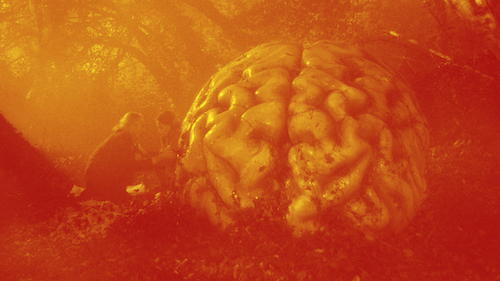
13. Rumours
For me, Maddin’s weakest film is a no-brainer (pun intended). One of his co-directed works with Evan and Galen Johnson (including a couple of feature films and a slew of shorts), Rumours is a fairly good idea on paper: a satire about the ineptitude of the G7 during their summit (and, ultimately, the early phases of apocalyptic threat). However, Rumours slips during its balancing act (one that handles experimental aesthetics with biting commentary on contemporary sociopolitical themes), and it goes from a fairly compelling spoof picture to a borderline ridiculous romp that makes very little logical sense. A satire can only be foolish on paper; it must secretly be smarter than its audience at all times. Rumours gets too carried away in its own buffoonery to properly work, and you will be left noticing its numerous lapses (particularly in its final act).

12. Keyhole
Oh, how I wish Keyhole worked more than it does. Maddin attempts to turn one’s home — an exhibition of domestic provenances — into an odyssey, as a gangster winds up exploring his past and psyche in a very literal — yet figurative — way. Maddin also uses the art of filmic haze (despite this being an unusually digital film for the auteur who usually favours celluloid) to create a ghostly representation of one’s past and present converging. However, Maddin gets caught up in making a film that you are meant to dissect (perhaps like a Lynch work), but he forgets to give you enough to actually grasp on to in order for you to make your own deductions. As a result, Keyhole feels more like a series of ideas and a portfolio of eerie serenity than it does a complete experiment.
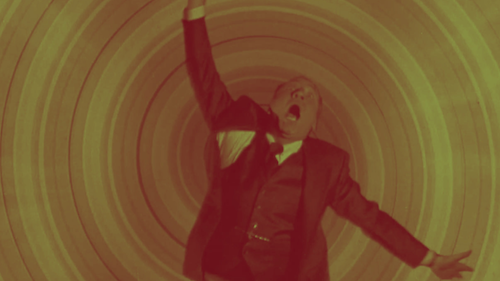
11. The Green Fog
In Vertigo, Alfred Hitchcock perfected the concept of the cinematic double: the uncanny uncertainty that derives from seeing two people who look alike (or so it seems in his magnum opus). Many decades later, Maddin (with Evan and Galen Johnson) directed The Green Fog: a tribute using nothing but other bits of footage to try and recreate Hitchcock’s classic. This film works brilliantly at first: as if you are rewatching the beloved motion picture with an amnesic mind. However, considering that this film is an hour long, the appeal wears off a little bit, and The Green Fog becomes an exercise; how much of this experiment resembles Hitchcock’s film, versus how much feels of its own universe. The Green Fog is a decent film that stems from a terrific idea; I’m not sure if you will like the same parts that I did, but you may agree that it feels difficult to love the entire film. When you get the picture of what The Green Fog is aiming for, you may be wondering how much is left.
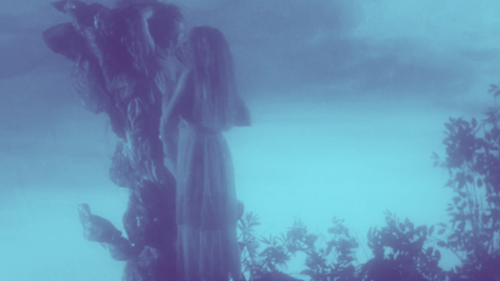
10. Twilight of the Ice Nymphs
A majority of Maddin’s works are considerably polarizing, but one of the few titles that Maddin himself was displeased with is Twilight of the Ice Nymphs. He reportedly struggled against the expectations of the film’s producers (which leads me to ask: what did these producers expect from a Maddin film), and you can tell that not every piece lines up in this fantasy hallucination. A big appeal to me when I watch the strongest Maddin films is how it feels like he has assembled his own language that we somehow understand; with Twilight of the Ice Nymphs, it feels like he isn’t a part of his own realm. I am a sucker for a number of the fantasmagoric sequences, and I want to become more acquainted with this picture, but it is seemingly impossible when not even Maddin himself is connected with it.

9. The Forbidden Room
The rest of the films on this list are ones I would recommend. The strongest of Maddin’s feature film collaborations with either of the Johnsons (here, he is joined only by Evan Johnson), The Forbidden Room sees Maddin shifting from a surrealist jokester who has invented his own style of comedy, to an exhibitor of more contemporary forms of bizarre gags (something far more in line with 2010s absurdism, whereas his strongest films still feel like they stem from the future). The Forbidden Room feels a little bit like his take on Andrei Tarkovsky’s Stalker, but we are going insane alongside our travelers in this case. As we are trapped alongside a crew inside of a submarine, their vessel slowly loses oxygen during their journey. Maddin and Johnson ensure that we know what this may seem like via their own twisted interpretations. So, yes. Lose your mind watching The Forbidden Room: this is one that you should not try to figure out, and that is half of the fun.
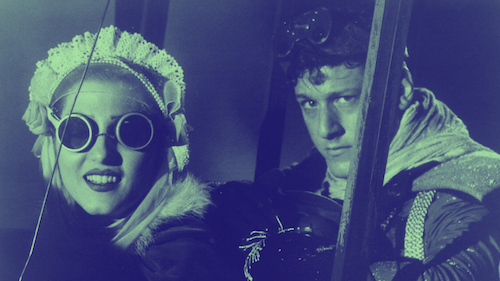
8. Archangel
Maddin’s second film is more than an homage to the silent era: it is a reconfiguration of what the Soviet films of the twenties (like the works of Sergei Eisenstein and Alexander Dovzhenko) can be. Archangel is such a niche picture that only a small number of cinephiles would understand and digest as intended, but that might be what makes it so special: it’s a trinket that feels warped with time and has been unearthed by a dreamer. Even if you don’t have a thorough knowledge of Russian silent pictures or classics, Archangel is passionately made to the point that you will want to tag along anyway. What transpires is a bittersweet look at memory — attributed to the infliction of PTSD from combat. While Maddin would learn how to refine his ability to blend absurdist nonsense with heartbreaking realizations, Archangel is quite a strong early attempt at his wheelhouse style.
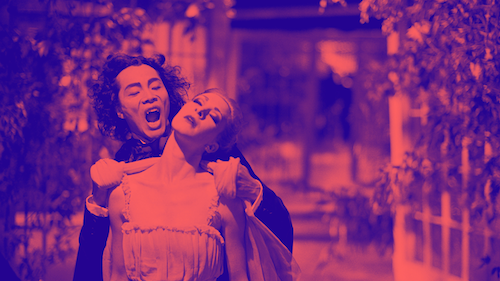
7. Dracula, Pages From a Virgin's Diary
Are you the kind of cinephile who wants to discover something that is unlike any other motion picture ever made? Toss his Maddin project onto your to-watch list. Dracula, Pages from a Virgin’s Diary is Maddin’s documentation of the Royal Winnipeg Ballet’s rendition of Bram Stoker’s Dracula; to only further complicate this premise, Maddin turned this performance into one of his token silent pictures. The end result is far less interested in retelling a tale as old as time; instead, Maddin crafts a vision of recollection — like a riddled psyche hoping to piece together a memory from many moons ago (and inadvertently making its own tale instead). Furthermore, I’d consider this one of Maddin’s handful of love letters to his nation and province (it’s no secret that Maddin is one of the most acclaimed residents of Winnipeg out there). Maddin is taking art that he appreciates and rendering it his own work; the end result is like rewatching an old recording of yours that you no longer associate with (and yet you yearn to).
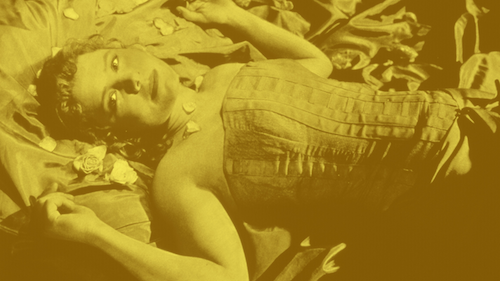
6. Careful
When Maddin evokes the styles of yesteryear, he isn’t doing so out of blind allegiance. He is forever trying to find new stories to tell via old means, even if that means reinventing how these means can be incorporated. With Careful, he could have simply made a tribute to the expressionist movement. Instead, he turns the typically black-and-white and shadowy style into a colourful string of surreal circumstances in a humble-yet-mysterious village. While some of the lower-ranked films here may feel alienating with how disjointed they are, a film like Careful is instead alluring, inviting you to follow Maddin and his fleeting imagination no matter where it should go. When Maddin breaks the laws of reality time and time again in a film like Careful, you begin to forget about the laws as to what is possible and the opposite; seeing him make sense out of the abnormal and miraculous makes a film like Careful feel like a nostalgic trip for something you never even experienced before.
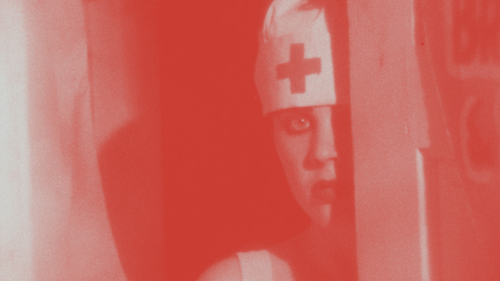
5. Tales from the Gimli Hospital
Maddin’s debut film is clearly an attempt to achieve what David Lynch did with Eraserhead: a motion picture that doesn’t even feel real — as if you accidentally thought it up while your mind wandered (when, lo-and-behold, it’s nothing more than a midnight picture that will follow you for the rest of your life). Tales from the Gimli Hospital takes the concept of impending grief (in the form of two kids preparing to lose their ailing mother) and turns it into a haunting, satirical take on cautionary tales (mainly fairy tales). As our two protagonists listen to their grandmother’s stories and warnings, Tales from the Gimli Hospital makes you feel like you are losing your grasp on reality as it ventures forth; Maddin constantly reminds us that we will never have life figured out, no matter at what age — and that tragedy and euphoria are as peculiar and undefinable as each other.

4. Cowards Bend the Knee
Cowards Bend the Knee walked so My Winnipeg could run. One of Maddin’s authentically silent pictures — and an “autobiographical” film (whatever that means here) — Cowards Bend the Knee sees Maddin (played by Darcy Fehr here) and his career as a hockey player (erm) and his many personal afflictions. You can argue that Maddin closes himself off with this avant-garde testimony full of quick cuts, alienating images and sounds, and a plethora of twisted plot points that will make you feel like you are imagining things. However, to me this is proof that a guy like Maddin is actually opening up: what good is a story about someone’s life in a conventional sense? Here, we get to actually meet Maddin one-on-one with a film that is far more memorable than most of its ilk. If silent cinema was the jumping off point of the medium in its early days, then Maddin’s Cowards Bend the Knee is meant to be square one for us overly comfortable cinephiles: here’s what it feels like to discover again.
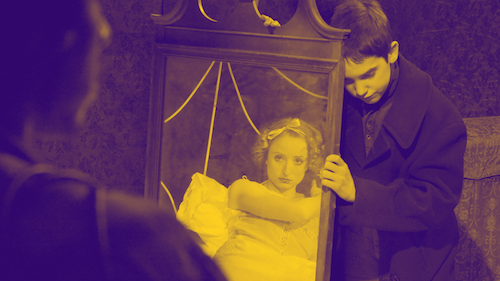
3. Brand Upon the Brain!
Well, before we get to My Winnipeg running, Cowards Bend the Knee brings us to its like-minded sister film here. The greatest of Maddin’s authentically silent films is Brand Upon the Brain!: another attempt at Maddin representing himself in narrative form. While Cowards Bend the Knee feels more like a reality check in a hectic mind, Brand Upon the Brain! is a bit more mature and serious in its nature (while never forgoing Maddin’s signature sense of avant-garde maximalism). Unlike the previous film, Maddin isn’t avoiding talking about himself through a sea of deceptions and hyperboles: instead, Maddin here is grasping with trauma and hardship through a hall of broken mirrors that distort the reality of things (and yet they still reflect enough for us to understand where he is coming from). This is as existential as Maddin gets: via an encapsulation of his entire life in an obfuscated corridor of memories and dreads.

2. The Saddest Music in the World
When the twenty-first century hit, that sense of wonder that films had was slowly dissipating: all of the intrigue surrounding what the future of cinema would feel like just didn’t survive for long past the Y2K era. If there was ever a lost soul who still held on to that fascination with the possibility of what cinema could be, it was Maddin with his typically archaic lens; he looked ahead by looking backwards. While other directors found their footing in the new decade, Maddin purposefully leapt off the deep end with The Saddest Music in the World. Somehow securing the likes of Isabella Rossellini (who has worked with him again since), Maddin pushes against the traditional Hollywood picture with this bonkers satire that reacquaints us with the woes of the Great Depression; this is not your mother’s kind of historical picture by any means. Instead of rehashing established information, Maddin rewrites history and the culture of thirties Winnipeg via this kooky and illusory fable of corruption, tribulation, and all of the frills that come from dreaming big. If this is as close as we get to seeing Maddin making a conventional film (and, even then, it’s barely one), then so be it; this is far more refreshing and inventive than most of the films it rebels against.
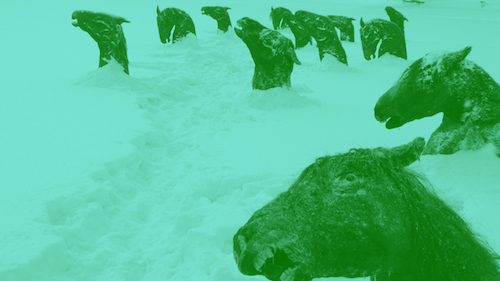
1. My Winnipeg
If Cowards Bend the Knee saw Maddin pretend to get into his life, and Brand Upon the Brain! proved that he could open up just a little bit when he felt comfortable enough to, then My Winnipeg is a full-on confession. Easily Maddin’s most renown picture (and I concur with many of you that it is his masterpiece), My Winnipeg returns back to the same well of focusing on Maddin’s own version of his life. However, here he is actually granting us with a documentary in the loosest and most inventive form of this term. Maddin narrates this otherwise-silent picture, telling us about his life in Winnipeg. His relationship with his stomping grounds is complicated. He misses much about where he once lived, including people he knew and the places he frequented. On the other hand, he despises much about the cold mundanity of Manitoban life. He is not only detailing his life in this documentary: he is trying to disassociate with Winnipeg via his own mythologies and lore (think of the urban legends spawned in Tim Burton’s Big Fish, for instance). Even this doesn’t tell the full story; much of My Winnipeg is based on the concept of memory and how fickle it may be. When we lose loved ones, leave domiciles, or change as people, sometimes all we have are memories. They cannot be the sole, truest version of reality, but they are as real as things get for us when we have lost all else. My Winnipeg turns from absurdist comedy to a bit of a tragic realization in this way.
Maddin’s confrontational silliness wears off pretty quickly, but My Winnipeg doesn’t suffer; if anything, it blossoms as a result. When you realize how much his film actually reveals about him despite the diversions and exaggerations, you learn how vulnerable and daring this film actually is. For those of you who would argue that a film like this cannot be a documentary because of how much has been conjured up by Maddin, allow me to play devil’s advocate. Firstly, all documentaries have bias associated with them, and you can argue that there are varying amounts of fibbing affiliated when you consider the magic and deception of the editing room and the filmic corpses left on the cutting room floor. Secondly, Maddin is still exposing as much of himself as he possibly can in his own way, and is it not a more beautiful and inspired end result when he refuses to compromise his style while projecting his life and trauma? This is still a film that documents Maddin’s existence and experience, even when he delves into surreal and avant-garde territories; these are all in the name of protecting and projecting the true story (as Maddin sees it). You know an arthouse film is special when it transcends being confined to a small audience; the fact that My Winnipeg is still a beloved sensation is proof that Guy Maddin’s magnum opus connects with people in ways that many other films cannot. If that is not real to you, then I don’t know what would be.
One final brief note: if you ever have the opportunity to see a screening of My Winnipeg with Guy Maddin live reading the film’s narration, I implore you to go. To see Maddin being at peace with himself and able to revisit these dark — yet humorous — visions in his life is an unreal experience that only elevates the film even more. It is one of the most unique film experiences I’ve had.


Andreas Babiolakis has a Masters degree in Film and Photography Preservation and Collections Management from Toronto Metropolitan University, as well as a Bachelors degree in Cinema Studies from York University. His favourite times of year are the Criterion Collection flash sales and the annual Toronto International Film Festival.