
Filmography Worship: Ranking Every Carl Theodor Dreyer Film
Written by Andreas Babiolakis
Filmography Worship is a series where we review every single feature of filmmakers that have made our Wall of Directors

The biggest shift in innovation in film history is the leap from silent pictures to sound cinema. You will find that this pivot left some directors in the past, ushered in new names, or encouraged some directors to swim rather than sink (directors like John Ford or Alfred Hitchcock figured out how to adapt despite their head start in the silent age). One of the more peculiar filmographies on this subject is that of the Danish master, Carl Theodor Dreyer. His silent films feel ahead of their time (like prophesies of the future), and yet the works that transpired seem attached to the ways of old (in the case of Vampyr, which is heavily a silent film despite the new recording technology available in 1932). Dreyer's films exist in their own little world: one that defies the binary labels of pre-sound and post-silent; even though a majority of his works from the thirties onward did have sound, their aesthetics, editing, camera placements, and other elements were certainly of yesteryear. Needless to say, Dreyer marched to the beat of his own drum, and his audacity has rendered him one of the preliminary and perennial auteurs.
Dreyer's upbringing was a tumultuous one. He was the bastard child of an affair between a married man and his maid; they put him up for adoption, and Dreyer was housed in an orphanage for two years before being adopted by Carl Theodor Dreyer; he took his adoptive father's name. His parents were quite negligent and gruff, and Dreyer left home for good when he was only sixteen years old. His career in film started when he worked as a writer for title cards for silent films. He would direct his first film, The President, in 1919. His output in the twenties was fairly steady by today's standards but not quite the prolific nature of most directors in the silent age; needless to say, he had eight feature films in the 1920s and was releasing a film almost every year. By the time he released Michael in 1924, it was as if Dreyer was becoming more meticulous than the average filmmaker at the time, and his perfectionist nature would show little by little; by 1928's The Passion of Joan of Arc, it was clear that he was on a whole different echelon of expressionist artistry and innovation.
Having said that, that sentiment is told with hindsight, and Dreyer wasn't the biggest success during his career; if anything, most of his now-beloved classics were complete bombs at the box office. He would struggle to get financing in Denmark and would occasionally rely on working in other nations' industries, like French and Swedish cinema. After 1932's Vampyr, Dreyer laid low from releasing feature films for quite some time (outside of two works in the forties — Day of Wrath, and Two People), and he relied on making a slew of short films before his career renaissance (of sorts) in 1955 (I usually ignore the short films of a director who is not renown for making them, but I will include them this time around because they paint a fuller picture of what Dreyer was experiencing during this stretch of time). 1955 saw Dreyer's penultimate film, Ordet, and a nine-year hiatus until his swansong, Gertrud; both films weren't as cherished upon release, but they are considered masterworks now. He was working on his answer to the religious epic (a tale about Jesus Christ) when he passed away at the age of seventy-nine. While he wasn't as appreciated during his life, Dreyer is rightfully deemed one of the great visionaries in cinema; he's one of my favourite early filmmakers as well. I don't have much to criticize with Dreyer's filmography; even his worst works are understandable in their nature and serve specific purposes during each phase of his life. Here are the films of Carl Theodor Dreyer ranked from worst to best.
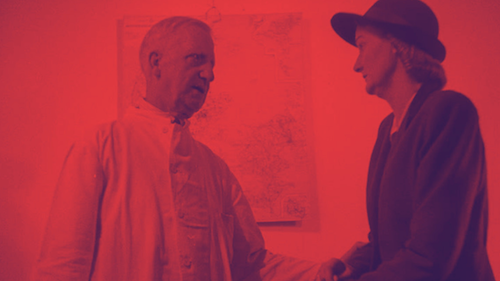
22. The Struggle Against Cancer
It feels silly to place such a film last, but something has to be. Why am I even including a public service announcement? It shows what Dreyer was working on to get by in the forties. So, yes. Here is a PSA that alerts people to not ignore the early warning signs of cancer in your body; this is a noble message, at the very least (especially since cancer was not nearly as treatable back in 1947, and catching it early was a literal life saver). There isn't much to comment on here at all.
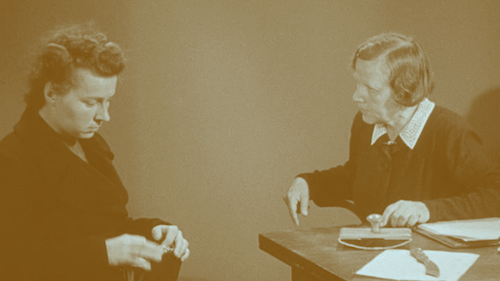
21. Good Mothers
The first short of Dreyer's thirteen-year stint making them is Good Mothers: a documentary PSA about abortions and planned parenthood for single mothers. I understand that the mindset was different back in 1942, but justifying the context of a film doesn't make it good in quality. If anything, it's a little problematic to only encourage one option in such a dicey, precarious conversation, but I suppose the film is meant more to be an aid for single moms who are unsure of how to raise their infants alone. Dreyer films the hell out of this PSA as if it were the motion picture of the year, and that's kind of endearing, at least.
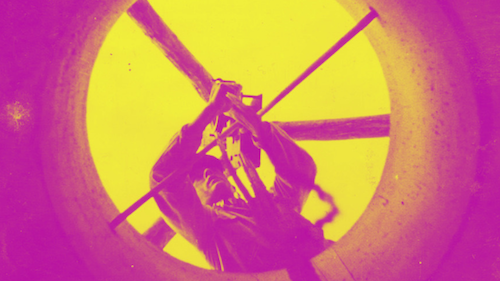
20. Water from the Land
Ah, yes: the importance of building a well properly as to not make your citizens ill. Dreyer's Water from the Land is a scathing documentary short about the water pollution in Jutland. This is the kind of documentary that gets lost in time once technology changes, protocols shift, and the subject at hand is decades old. There isn't much to reflect on or learn from here, and this was clearly a job for Dreyer at the end of the day. Next.
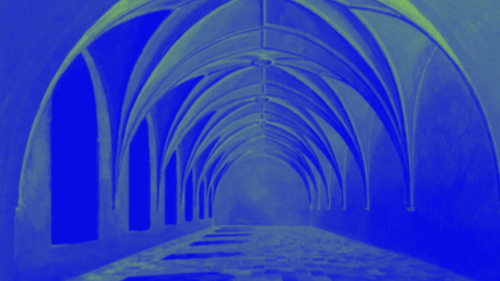
19. The Castle Within the Castle
The last short Dreyer ever made, in 1955, is this architecture-driven documentary — A Castle Within a Castle. It's only nine minutes long and it touches upon the Castle of Krogen (built within the Castle of Kronborg). Dreyer captures the design process via the reconstruction of these structures. The film is marginally intriguing but also quite ordinary in its nature; it's the kind of film that would wind up being a blurb on a random website or content on social media nowadays. It serves its purpose for nine minutes, and you move on with your day.
18. Once Upon a Time
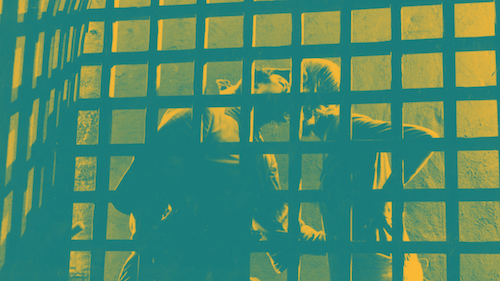
The worst feature-length film by Dreyer might be one of his most unexpected projects: can you imagine the super-serious perfectionist making a fantasy romantic-comedy picture? The primary reason to watch Once Upon a Time is to finish Dreyer's filmography. Otherwise, you watch it because your curiosity got the better of you. On both of those notes, a portion of the film is forever lost so you won't even be getting the complete picture here. From what you can watch, this is a strange take on a fairy tale that is meant to be sweet and endearing: feelings Dreyer didn't chase often.
17. Love One Another
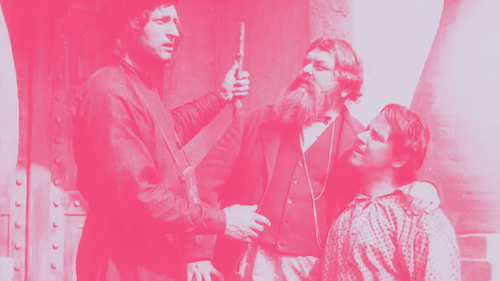
Years before the atrocities of World War II and the Holocaust took place, Dreyer's German silent picture from 1922, Love One Another (also known as The Stigmatised), delved into the subject of antisemitic persecution. While a noble concept and a fairly good execution, Love One Another is also an unusual instance in which a Dreyer film appears to be a little all over the place; while it is centred on a young Jewish girl as a protagonist, the film also tries to take on many plot points to the point that it feels needlessly robust. It feels like Dreyer is figuring out how to sculpt his grande ideas here, which is a treat in and of itself.
16. Leaves from Satan's Book
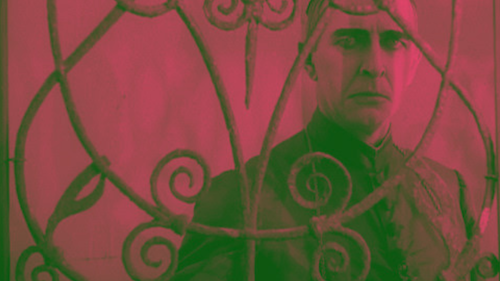
On the topic of a director champing at the bit to exercise his creative side, enter Leaves from Satan's Book: a heretic odyssey in which Satan has been tossed out of Hell and is forced to live on Earth (ugh). He goes through a couple of challenges in order to try and regain proper power, and his various forms of meddling and destruction are captured here. A film like this almost feels like an adolescent coming up with their idea of an "amazing" film and tossing everything they have out there; while Dreyer's version of such recklessness is better than the average person's (at least Leaves from Satan's Book is a little wild and hectic to the point of feeling alive), this is still one of his wonkier efforts (even if it's kind of exciting as a result of its messiness).
15. The Bride of Glomdal
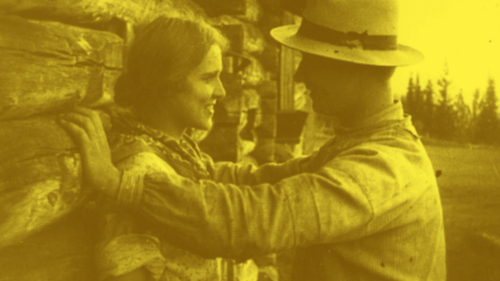
Not even Dreyer was able to shy away from the frequently-told trope of the love triangle during the silent era, but he has a few things going for him that render The Bride of Glomdal a little different from its peers. His common theme of the suffering lower and working classes is replicated here in the form of a broke man who wants to be with the daughter of an aristocrat; she is being forced into marriage with a far wealthier suitor, and she does not want to see this union through. So that tale is quite familiar, sure, but the way that Dreyer shoots his wide-angled landscapes that envelop his aching characters, and the ways he captures his leads feels like a precursor to the closeups he would utilize in his greatest efforts. Dreyer would make better films than this, but he was able to make The Bride of Glomdal more memorable than your average romance at the time.
14. The Storstrom Bridge
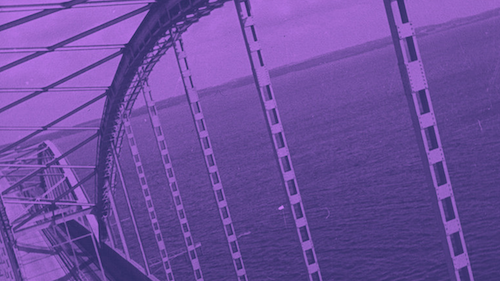
Dreyer's answer to the city symphony (sort of) is The Strostrom Bridge: a seven-minute documentary that, well, showcases the titular bridge. There is nothing else to say about the film at all (there isn't even voice over narration), but I will say that it feels more like an experiment or test for Dreyer: how can he make the most with the least? I don't have many takeaways, but I do know that I was at least somewhat transfixed by how Dreyer shot this bridge — as if it possessed all the answers to life's mysteries. It didn't move or affect me in the way the best architecture or minimalist documentaries do, but it was quite pleasant for a little while.
13. The President
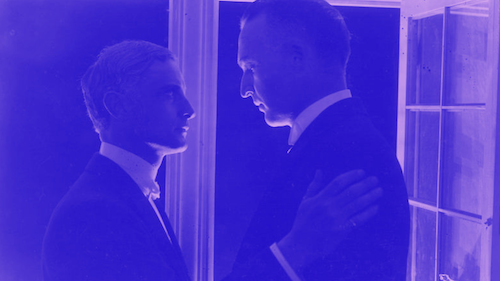
Dreyer's debut film, The President (all the way back in 1919), is clearly his earliest effort in the sense that you can see an auteur trying to figure out how the cinematic medium operates. However, what a glorious series of hypotheses this film is. Right out the gate, Dreyer was flexing his muscles with how to best utilize and optimize camerawork back in the earliest days of feature-length motion pictures. His visual style — in this fairly harrowing film about a life-changing trial — is blatant, and he already feels certain as to how he should compose his mise-en-scene in each sequence. He maybe didn't have the best grasp on his actors yet (whose theatrical acting at least adds some sort of hyperbole to the already-accented aesthetics present), but Dreyer was already proving that he was meant to be making feature films.
12. Thorvaldsen
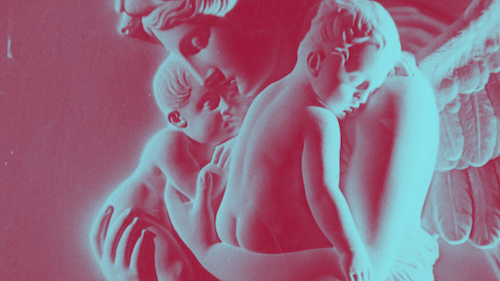
Similar to The Strostrom Bridge, Thorvaldsen is another documentary short that simply captures the work of others; in this instance, Dreyer shoots the sculptures of Danish artist Bertel Thorvaldsen. Here, there is a bit more to look at for ten minutes, and Dreyer's short acts as a moving exhibition; since Dreyer is a brilliant auteur, he is able to elevate the act of pacing around a museum to something a bit more captivating, as if the ghost of Thorvaldsen lingers amongst his creations. You might not learn too much about Thorvaldsen as a person as much as you will feel the essence and importance of his art, which means that Dreyer's film works well enough.
11. The Danish Village Church
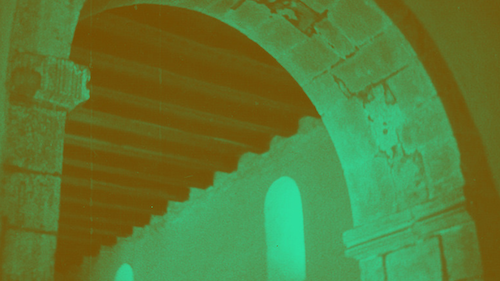
Another city-symphony-esque picture by Dreyer, The Danish Village Church -- like The Strostrom Bridge -- spotlights architectural landmarks. The slight difference here is that Dreyer canvases across Denmark to focus on multiple churches. Thus, Dreyer paints a picture of Denmark's religious provenance, the nation's cultural design, and — to a brief extent — the shifts in the country's faith over time. This is yet another snapshot of a subject that Dreyer was interested in, but I would argue that there is a bit more to The Danish Village Church compared to some of the other documentary shorts.

10. Two People
One of Dreyer's Swedish efforts is Two People: a Hitchcockian drama about brutal accusations and even stronger confrontations — all confined to one single room. Built almost entirely around the performances of Georg Rydeberg and Wanda Rothgardt, Two People (an appropriate title, all things considered) is quite a notable experiment by Dreyer in low budgeted filmmaking. For seventy minutes, Dreyer takes us through the motions in a film that could have easily been dull, monotonous, repetitive, or just plain boring; instead, it is quite exciting. Even though Dreyer still had much to show during his slowest period, Two People was proof that he had more to offer still.
9. Master of the House
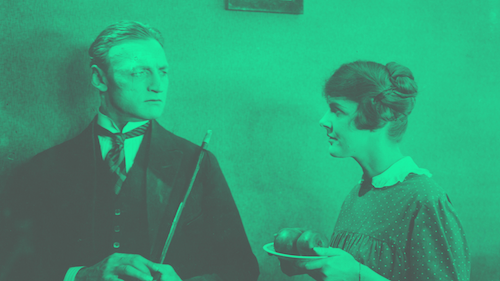
Perhaps stemming from Dreyer's difficult childhood, Master of the House is a cynical, exaggerated statement on the ripple effects of domestic abuse and toxic leadership. So, Dreyer showcases the worst elements of being a shitty husband and father (especially in a house full of women, as can be seen here) but he also allows his other characters to fight back in this melodramatic look at the schism of a family. If this were latter period Dreyer, I feel like he would have gone all-in on the pessimism of this story (maybe to the point of being almost satirical), but, instead, we have a happy ending of changed hearts that I will let slide because this is a film from 1925; I'd argue that Master of the House is greatly effective otherwise.
8. They Caught the Ferry
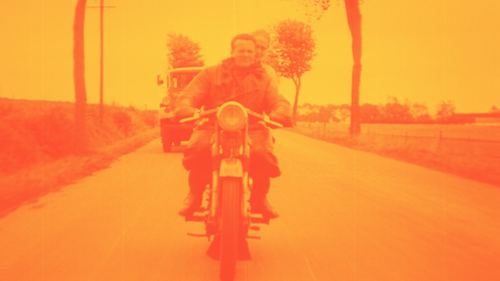
The best of Dreyer's short films is easily They Caught the Ferry: a docudrama for the Ministerial Film Committee in Denmark. However, this doesn't really read as a promotional or political short film in any way; if anything, it showed life in Dreyer's career during his semi-drought of the forties. For eleven minutes, all we are doing is watching a couple hoping to catch the ferry that is located on the complete opposite side of the island that they are traversing. This race against time is clearly something Dreyer took very seriously (I mean, he handled his PSA shorts with far more care than most directors would). I recommend it if you want to see what Dreyer could pull off in as little time as possible (given that he is known for his more glacial, patient filmmaking ways).
7. The Parson's Widow
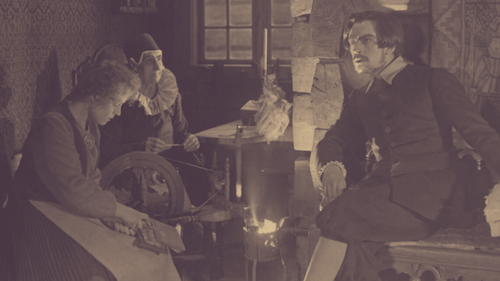
The President saw Dreyer trying to make a name for himself right away. Some of his other early silent works proved that Dreyer needed to find ways to control his visions before he would deliver his greatest works. In between those two periods is The Parson's Widow: Dreyer's second effort, and what a singular film this one is in Dreyer's career. A comedy-drama that is a declaration of the oddities of marriage and life, The Parson's Widow sees a parson (who is already married) being forced into being with the widow of the previous parson. They could not be more opposite, and she is many years older than he is. What starts off as a bit of a kooky and strange picture turns into an oddly beautiful one with key lessons and a fairly moving story; I consider this Dreyer picture quite underrated.
6. Michael
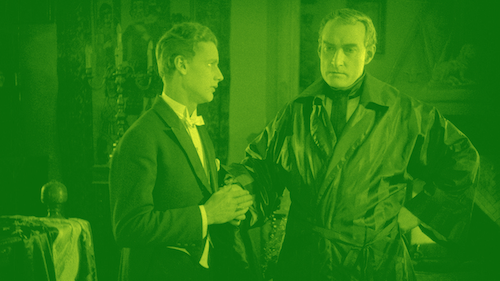
The following six films are Dreyer's masterpieces, and we start off with one of the most undeniably progressive films of the twenties: Michael. This picture is one of the only queer films of the silent era, and the way that Dreyer handles the subject is with grace and commitment (not exploitation). Dreyer's romantic drama is achingly gorgeous and exquisitely tragic: a film that reminds you of both the blessings and curses of being alive and in love. By 1924, Dreyer was becoming an expert in shaping his narratives so that they conclude with unforgettable climaxes, and Michael is one such example: a bittersweet realization that will have your heart racing and your eyes welling up with tears. Chronologically, it is Dreyer's first stroke of genius, with a handful more to come throughout his career.
5. Day of Wrath
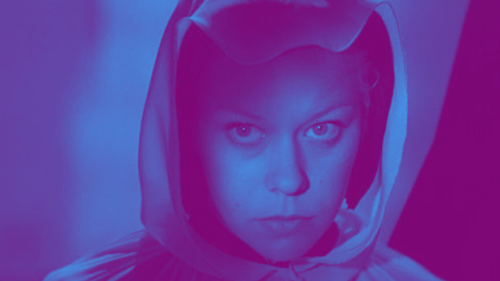
One of the two feature films Dreyer directed in the forties is Day of Wrath: a religious melodrama caught in the middle of an infamous witch hunt. Blending the faith behind Christianity and the cultism behind hysteria, Day of Wrath showcases the true story of Anne Pedersdotter: one of the most famous cases of a woman being declared and tried as a witch. Decades after his brilliant silent film The Passion of Joan of Arc, Dreyer revisits a similar tragedy via this one-sided debate: as if she was cursed from the moment that she was born. What a punishing film to bear: the vision of history repeating itself as reflected by the story laid out before us in cyclical fashion, reminding us of the many such cases just like it (involving witch hunts in both literal and metaphorical instances). Between The Passion of Joan of Arc and Day of Wrath nearly twenty years later, Dreyer was essentially saying that some things never change.
4. Vampyr
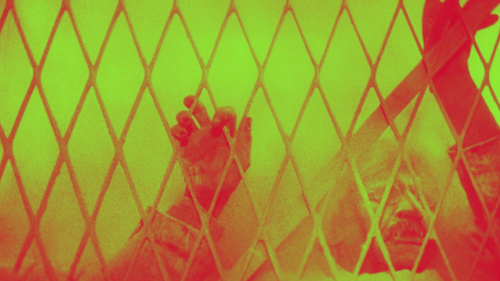
The silent era was now long and gone, but Dreyer was not finished experimenting with its form just yet. Vampyr may have been made some years too late, but I wouldn't change a thing about this sound-silent hybrid. One of my favourite horror films, Vampyr proves that Dreyer understands the uncanny nature of title cards and images you cannot hear diegetic sounds with. Following the paranormal aficionado Allan, Vampyr uses celluloid magic and synchronized sound to plunge us into the depths of our deepest nightmares. It is an example of pure atmospheric filmmaking to the point that you no longer feel as though you are watching a motion picture but, rather, a fever dream zip past your eyes; you cannot turn away from these ghastly images. When so many other filmmakers abandoned ship, Dreyer was one of the last remaining bastions of the silent era who knew that there was still a little bit of exploring left to do (even if Vampyr had one foot out the door and into the age of talkies).
3. Gertrud
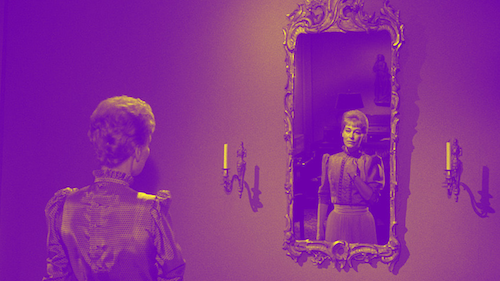
Like most of Dreyer's films throughout his lifetime, Gertrud — his final motion picture — wasn't celebrated when it first came out. Unlike anything else he made, however, Gertrud took far longer to be reassessed. If anything, it still feels like a film that you can only come across if you are in the know; how many people are championing this film on a large scale? Well, this is my opportunity to share it with you. A slightly Faustian effort, Gertrud sees the title character forgoing her marriage to chase after a musician (so as to find a spark in her life again). To me, this film resembles Dreyer being unable to give up his passion for creating art: life does not make it easy for art to exist, but the real creators cannot keep going without it. As Gertrud is forced to pick between the reality of things and what she dreams of, we understand Dreyer's paradox: what life without art is worth living? As Dreyer implements long, static takes that were highly unorthodox for their time, he creates a juxtaposition between the limbo of monotonous living and the appreciation of existence as the ultimate masterwork.
2. Ordet
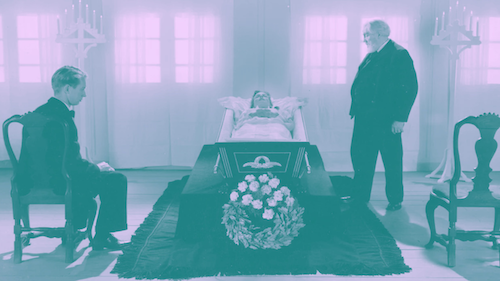
If Dreyer's career was proliferated by motion pictures that weren't properly received when they first came out, then consider Ordet a strange outlier — in the sense that it was the only Dreyer film to actually perform well upon release. His penultimate effort and released in 1955, Ordet acts as an exemplary parable about the strength of one's faith. A family of three sons all have different beliefs, showing how they each strayed away — or stuck close, in ways — to the teachings of their shared parents. One child is akin to his devout, farmer father; another is a staunch atheist; the middle child has lost all sense of reality and foresees himself as the son of God. This trio of different souls gets thrown in for a loop once they begin to experience a series of familial traumas, and Ordet both unites and divides its participants in varying ways. For a filmmaker who often succumbed to cynicism and darkness, Ordet is a purely breathtaking effort by Dreyer that continues to be one of his most popular and life changing efforts: it's the kind of picture that will crush and elevate your soul, even if you are irreligious.
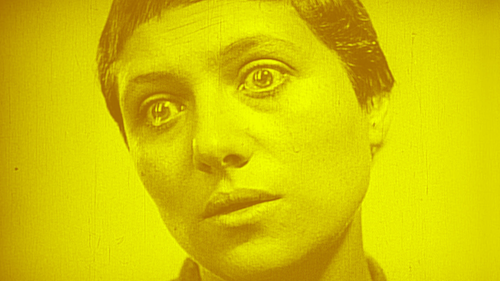
1. The Passion of Joan of Arc
If you have been a long time reader of Films Fatale, you may know that I like quite a few cinematic portrayals of the tragic figure of Joan of Arc; some major highlights to me are Robert Bresson and Jacques Rivette's takes. However, the de facto magnum opus of such a frequently-adapted moment in history has to be Dreyer's greatest achievement, The Passion of Joan of Arc. One of the strongest silent films period, Dreyer's 1928 classic is an eighty-minute film that feels eight hours long in the best way possible. Dreyer himself was not a deeply religious man, despite how many films of his touch upon the subject. However, he saw perseverance and fight in those who were connected with their faith, just as he does in a person like Joan of Arc. As a result, he delivers one of the most visceral films ever made: a series of torture that are so agonizing that they almost feel transcendent (as if death is the only release out of this hell on Earth). Dreyer may not be religious, but he saw how it could help those who had literally nothing else to protect, cure, or aid them.
In order to match Dreyer's harrowing depiction of Joan of Arc's final hours alive, he needed the ultimate, well, Joan of Arc. Enter Renee Jeanne Falconetti, whose life and legacy are impossibly ambiguous but whose work in this film is unquestionable: there is a reason why this is considered one of the strongest performances of all time (it certainly is a highlight for me as well). If Dreyer is a perfectionist in the sense that he labours over each and every scene so that it turns out just right, then Falconetti is the martyr who gave us everything she could muster take after take; her performance is one that will rip your spirit to shreds. For this reason alone, no other cinematic depiction can match this version, even with the tough, aforementioned competition; who else could replace this Joan of Arc (the best silent performance there ever was)?
Then there is Dreyer's side of the same equation: the one who frames Falconetti's pitch-perfect performance with innovative, extreme close ups that are sure to burn her haunting, broken gaze into the pits of your mind. Dreyer shoots this film as if it were a drama, horror, and thriller all in one: it is an endlessly pummeling picture that emphasizes the weight of the crisis at hand, here (a life slain, and for what). Most importantly, Dreyer dips into Joan of Arc's psyche: sure, she was religious and believed that she could talk to God, but Dreyer also shows how others perceived her (as a mentally broken blasphemer). No matter how you read her, Dreyer offers a highly sympathetic, abundantly devastating portrait of someone being tried and massacred. This brutal-yet-otherworldly event has been mirrored and reflected upon in other noteworthy works like Larisa Shepitko's The Ascent and Andrey Tarkovsky's Stalker: these are all depictions of people pushed beyond their limits to the point of co-existing in heaven and hell. Carl Theodor Dreyer was exhibiting this famous moment in history as a turning point in cinema: both the medium and its subject being pushed beyond their limits. The end result is a film that will both amaze and destroy you: this is as vulnerable as cinema has ever gotten.


Andreas Babiolakis has a Masters degree in Film and Photography Preservation and Collections Management from Toronto Metropolitan University, as well as a Bachelors degree in Cinema Studies from York University. His favourite times of year are the Criterion Collection flash sales and the annual Toronto International Film Festival.