
Filmography Worship: Ranking Every Alexander Dovzhenko Film
Written by Andreas Babiolakis
Filmography Worship is a series where we review every single feature of filmmakers that have made our Wall of Directors

When the conversation of silent Soviet films gets brought up, certain names are brought up. These include the master of documentary-based montage, Dziga Vertov, and ambitious visionary Sergei Eisenstein. However, one name is relatively unsung by comparison and yet his contributions are quite significant: Ukrainian-Soviet filmmaker Alexander Dovzhenko (also known as Oleksandr Dovzhenko). His works are equally powerful and poetic, and this comes from the yin-and-yang of his upbringing: surrounded by the lush Ukrainian countryside, and tossed in the middle of combat as a result of political conflict. As a young adult, Dovzhenko was held in prison after partaking various protests and demonstrations during and after the Anti-Hetman Uprising. Once released, Dovzhenko first taught geography and history before working various odd jobs until he finally stumbled upon the art of filmmaking in 1926. Throughout his career, Dovzhenko was caught in a complicated web: one of wanting to detail his political views whilst also making propaganda works to maintain good standing within the Soviet film industry. Despite heavily identifying as a Ukrainian citizen, Dovzhenko often depended on the power and capabilities of leader Joseph Stalin. In his life, Dovzhenko only released just over a dozen films (with a few considered lost and, thus, omitted from this list), and around half of these works were co-directed efforts. You will find that Dovzhenko’s talents and the quality of his films waned as he surrendered to the comfort and security of propaganda titles, so you can certainly claim that his career started at a high and ended severely low. Due to his complicated history, there are some films that may leave you puzzled, but his strongest titles are absolute musts for any cinephile. Here are the films of Alexander Dovzhenko ranked from worst to best.
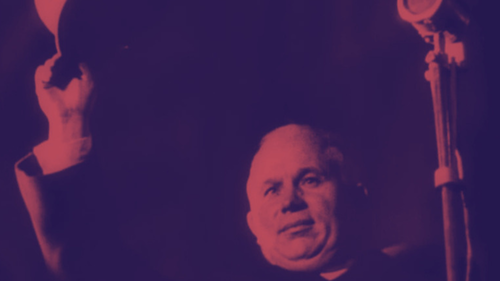
14. Liberation
Considering how frequently Dovzhenko sought to tell the truth about his nation, his propaganda era is contradictory and hypocritical to the point of frustration. His worst film must be Liberation, which is an hour of pure drivel and kitschy, rah-rah pseudo-patriotism. Co-directed by Yuliya Solntseva, Liberation is a dull, boring, loaded documentary that is precisely the definition of the cultish, brain-washing nonsense that you expect propaganda films to look like. Decades later, this film is about as effective as a wet pasta noodle on the floor. It isn’t worth wasting any more of my energy even discussing a film as pointless as this, outside of understanding that Dovzhenko made this film out of desperation; it shows.
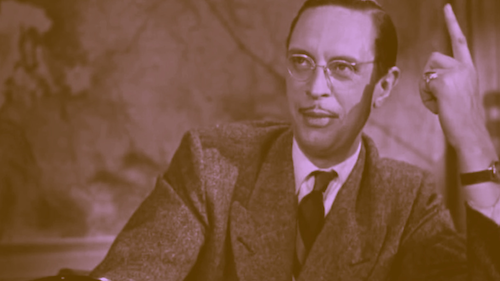
13. Farewell, America
Dovzhenko’s swansong is about as anticlimactic as you can imagine when you consider the downward trajectory his work experienced. Farewell, America is not quite his worst film, but it is close enough. A major reason why is out of his control; the film is unfinished. The seventy minutes that we have here are fine enough (if not politically loaded and kitschy), but you cannot really gauge how a film is when it is considerably incomplete. This one is for completionists only (which is a little ironic, given that the film itself renders that mission impossible).
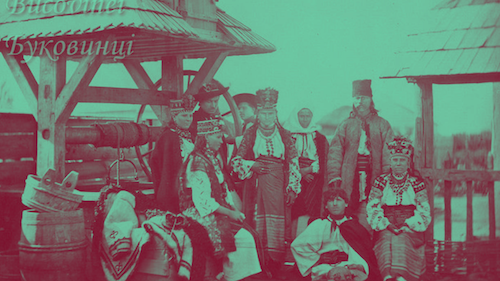
12. Bukovina: a Ukrainian Land
You know it’s not the best news when a documentary short still feels too long; Bukovina: A Ukrainian Land is only a half hour long, and yet it feels as though it drags itself out unnecessarily. A well-intentioned (albeit forceful in a propaganda-esque way) lesson on the Bukovina region in the Ukraine (as well as Romania), Dovzhenko’s educational film has aged quite poorly mainly because much of its passionate, supportive filmmaking has been rendered blemished by the shifting events of the history that transpired; so, not only is Bukovina: A Ukrainian Land kind of a drag, but it is also not beneficial in the way that it intended.
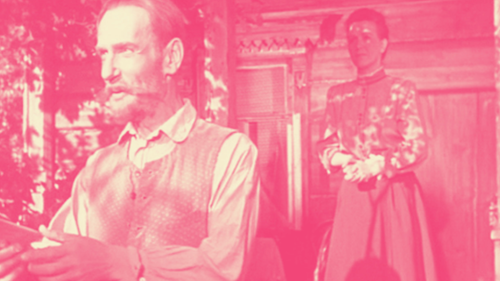
11. Michurin
Another depressing, late-period Dovzhenko work, Michurin — or Life in Bloom — is meant to be this glorious biographical picture, but it is about as impressionable as a crushed snail on the driveway. I will say that this film about Russian biologist Ivan Michurin is a well shot picture that feels like a great film, but the film contradicts itself with preachy, sterile storytelling. If anything, this film saddens me because it almost feels like a tale of two Dovzhenki: the one of old who put his everything into his artistry, and the newer Dovzhenko who wanted to play ball in order to keep going. There is a beautiful film within something this loaded — as if there is sincerity within the insincere.
10. Aerograd
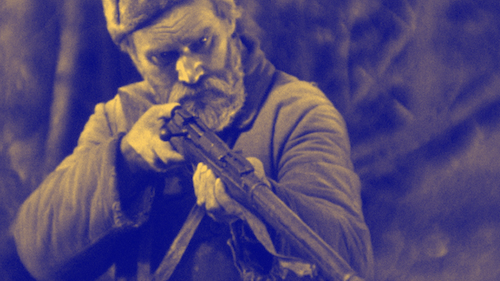
Before you believe that I made this list to just lambaste Dovzhenko again and again, we have reached the part of the article where I appreciate the remainder of the films far more than what we have covered by now. The worst of the best (if you will) is Aerograd: a thriller about a Russian outpost that is threatened by a Japanese attack during World War II. A film that details its strife in a series of vignettes, Aerograd is meant to cover all of the possibilities during combat. The end result is decent (especially compared to the works that come below it): a bit of a mixed bag that tries to condense as much as possible in eighty minutes. At least this film feels like a considerable effort; it’s just too much of one at times.
9. Ivan
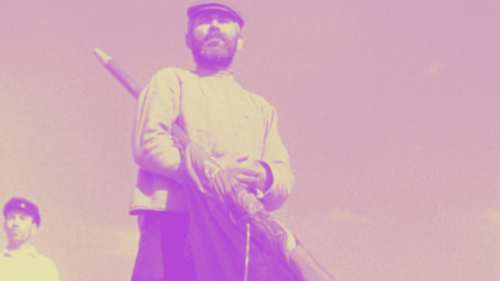
Dovzhenko’s first film after his glorious and iconic Ukraine Trilogy, Ivan had some fairly big shoes to fill. Even when observing the film on its own and away from such stiff competition, this film feels like the start of the filmmaker’s descent into the wrong kind of political filmmaking. Following the titular farmer, Ivan sees a man who is struggling to stay afloat and who ultimately resorts to joining the Communist party (gee, I wonder why he would do such a thing). It seems as though Dovzhenko is not trying to make an outright piece of propaganda, and he is opting for somewhat of a grey area here: is Ivan correct in wanting to join a party that goes against his family’s views? However, Dovzhenko is conflicted enough to not know how to make Ivan fully function: it is caught in between being a poignant statement and a flimsy invitation.
8. Battle for Soviet Ukraine
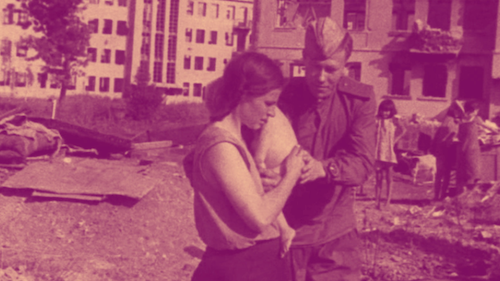
Another Dovzhenko documentary, Battle for Soviet Ukraine is focused on the Battle of Kharkiv; this film is another co-directed effort with Yuliya Solntseva. You can argue that there is meant to be something integral here, especially with all of the harrowing images of combat. However, underneath all of these meaningful, challenging sequences of corpses and death is something more nefarious: the intention to recruit and advertise. While far better than Dovzhenko’s worst titles (at least this one doesn’t completely reek of propaganda intentions), Battle for Soviet Ukraine still stunts itself by being affiliated with propaganda ramblings nonetheless; this film would have been far more meaningful otherwise.

7. The Diplomatic Pouch
It feels rough to be too difficult on The Diplomatic Pouch since a few portions of the film remain missing, and so we cannot even critique an entire film on its own accord. However, the little we get is ambitious. As Dovzhenko’s second film (and his first feature), The Diplomatic Pouch intends on plunging us into a Soviet espionage flick full of intrigue and mystery. Dovzhenko wrote off this film as rubbish, but I think he’s being a little difficult on himself; compared to his propaganda titles, at least this film is honestly made. The little we get feels like a director exercising his early capabilities, and it is that hunger and drive that I find admirable more than Dovzhenko himself; yes, even in this fragmented, incomplete picture.
6. Shchors
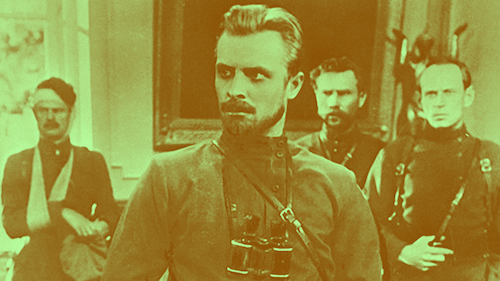
Another Dovzhenko biographical picture, Shchors isn’t nearly as shameless as the lowest films on this list but it is still at least a little rocky compared to the filmmaker’s greatest works. Based on the efforts of Ukrainian figure Nikolai Alexandrovitch Shchors, the aptly-titled Shchors sees our protagonist rally his troops up against the Polish Pans as they enter the Ukraine. Even though there is a hint of Dovzhenko’s worst tendencies (especially the inaccuracies in the name of propaganda design), Shchors is a bit of a stunning film that is in his signature style through and through: politically driven prose that showcases the joys of the world and the bloodshed that happens within it. This one is almost there, but Dovzhenko still gets in his own way.

5. Love’s Berries
Of the stronger works in Dovzhenko’s career, it’s strange to kick off such a section with an atypically comedic picture by the super serious Soviet savant. Love’s Berries is a silly short film that kicked off Dovzhenko’s career with a romp about a barber who is hell bent on passing off his bastard child to someone else. This questionable premise is dated, sure, but in the context of a 1926 silent film, Love’s Berries is goofy, peculiar fun that is meant to find the best in the worst of humanity. At least there is that ongoing theme in Dovzhenko’s filmography: there is always brilliance in atrocity. Well, I may be grasping at straws with this one, but Love’s Berries is your typical silent slapstick, and that may be more than enough to sell you on it.
4. Victory in the Ukraine
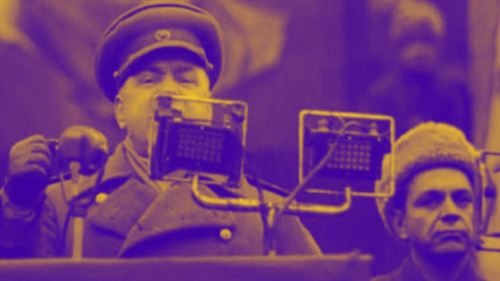
The best documentary Dovzhenko worked on (and another co-directed effort with Yuliya Solntseva), Victory in the Ukraine almost feels like an anomaly. While much of Dovzhenko’s later career works were plagued with artificiality and loaded political overtones, his penultimate film is a breath of fresh air: a return to something more real and visceral (despite also being a propaganda film, I would argue that this film is heads and shoulders above most of its peers). This is a film that feels dynamic and intense even within the confines of its own context: the then-contemporaneous battles between Ukraine and Nazi troops during the Second World War. In hindsight, however, a film like this blares its message even louder, particularly when considering Russia’s infiltration of Ukraine: this is a nation that will never give up.

3. Zvenigora
I have spent much of this list complaining, which feels paradoxical when you consider that I am suggesting that Dovzhenko is one of the most important directors of the early days of cinema. Well, we have reached the point where I prove this. Enter the exemplary Ukraine Trilogy: a sensational triptych that details a nation in such rigorous, magnificent ways. The first of these films is Zvenigora, and it creates a fable that unites Ukrainian culture, art, and history into a whimsical journey that is so ahead of its time. The way Dovzhenko combines the then-present with history and mythology almost feels like a very early precursor to the kinds of images that Theo Angelopoulos would want to tell decades later: the weaving of ideas, facts, inventions, and predictions to make a metaphysical map that details as much of Ukraine’s ideologies as possible.

2. Arsenal
The second of Dovzhenko’s Ukraine Trilogy is his most gut-wrenching: Arsenal. The most similar to other Soviet war dramas of the time, Arsenal is also his most focused film narratively within this trilogy. Centred around the woes of a soldier’s return back home, this is Dovzhenko’s version of an odyssey: the impossible return back home. Even if our protagonist finds his way, how is he to never be haunted again by the ghosts who refuse to leave him in peace (the very visions that Dovzhenko funnels to us and forces us to grapple with)? What is the concept of home if you are forever cursed? Weaving in documentary footage and various vignettes that depict a far bigger story of carnage, Arsenal is the realization that trauma is permanent (and so is the wake left after all of the destruction). When you see a film like this, you might understand why I was so harsh on Dovzhenko’s staunchly propagandist titles: how could the man who made Arsenal go down this other path?

1. Earth
The last — and best — film in Dovzhenko’s Ukraine Trilogy is Earth. It is another cinematic poem — this time, Dovzhenko reflects not on the demons of his time serving, but, rather, the nostalgic memories of the Ukrainian countryside: the kind that he had in the back of his mind when he fought for the freedom of his people. In almost biblical fashion, Dovzhenko paints the preliminary farm communes of Ukraine in a heavenly, atmospheric haze; to us viewers, it appears as though these are communities from another reality, but to Dovzhenko, this was paradise. However, there is trouble in holiness here: the kind of sin that stains the riches that surround us. Within the gorgeous imagery, breathtaking montages, and poised allegories (the kind of aesthetics that will leave you flabbergasted as to how Dovzhenko could abandon this kind of filmmaking — I don’t care what his reasons were), there is a tragic story of loss, turmoil, and hopelessness. In this vision, we understand his entire operation: how he feels about his homeland as a nurturing landscape, and his thoughts on how some abuse it and its inhabitants for their own selfishness. This isn’t just the farmlands or even the Ukraine: this simply is Earth.
This list might seem silly when you consider that I have insisted that Dovzhenko makes my Wall of Directors: a list of the greatest directors of all time. Subjectively, Dovzhenko has made quite a few duds. Objectively, one cannot deny his importance and influence. Even though there are a couple of films that extend the notion that Dovzhenko was a talented filmmaker (even when working against the best of his abilities), all you need is to see a film like Earth and understand that a director like this one has to be considered in the grand scheme of things. Yes, it is true: bad filmmakers can make good films. Despite some of what transpired above, I still don’t believe that Dovzhenko was a bad filmmaker: just a misguided, and jeopardized one who lost sight of what he was great at because of a greater conflict (one that would determine his livelihood). Revisiting Earth was like a breath of fresh air: seeing the apex of a visionary who was frequently holding himself back and knowing what he had inside of him this whole time. If the latter majority of his career was like seeing light leak through the cracks of Pandora’s box, then Earth is seeing said symbol break wide open and understanding the ebb and flow of harmony and cacophony that Alexander Dovzhenko felt for his nation. Just like the highs and lows of his filmography, patriotism can be hideously blinded or it can be exquisitely ardent. Earth is that dichotomy between sorrow and serenity that makes this filmic journey beyond worthwhile.


Andreas Babiolakis has a Masters degree in Film and Photography Preservation and Collections Management from Toronto Metropolitan University, as well as a Bachelors degree in Cinema Studies from York University. His favourite times of year are the Criterion Collection flash sales and the annual Toronto International Film Festival.