
Filmography Worship: Ranking Every Stanley Donen Film
Written by Andreas Babiolakis
Filmography Worship is a series where we review every single feature of filmmakers that have made our Wall of Directors

When you think of Hollywood directors, few are as bubbly, vibrant, stylish, and radiant as Stanley Donen. One of the great masters of the Hollywood muscal, Donen's films were crucial to the shift from the post-war era into the Technicolor age of the big screen. His musicals would never feel like they were set on the Broadway stage, nor were they confined to the imaginations of his characters in some sort of metaphysical way. His films rested somewhere in between: blurring the lines of daydreams and reality. While he worked with some major names a number of times (like dancer extrodinaire Fred Astaire, and acting legends Audrey Hepburn and Cary Grant), his most well known partnership is with Gene Kelly, who actually helped co-direct a few of their motion pictures. The honus of who is the most responsible for their successes is still to be determined, but I will say that Donen has enough of his own strong solo works that I sense that his involvement was quite prominent (especially the colourful aesthetic of his pictures). Having said that, there has been much talk about how Kelly would dominate sets while Donen would obey, but, if Hello, Dolly! is any indication, Donen would likely be able to reel Kelly in should the latter get too carried away.
However, the same might be true for Donen, who has his own fair share of misfires. Of all of the filmmakers on my Wall of Directors, Donen is the one who I returned to time and time again, wondering if he fit amongst the rest of his peers. There are quite a few Donen films that you may have to brace yourself for because I don't have the nicest things to say about them . However, I did have to take a few steps back and reflect on what I do like, and I have decided that Donen's highs greatly outweigh his lows. There's the fact that I never have to watch the films I hate ever again, whereas his best films (yes, even his solo ones where Kelly was not involved whatsoever) are ones I can watch again and again without ever getting tired of them; as to not spoil this information here, I will disclose roughly how many times I have seen the top two films here. The ultimate deciding factor that made me realize just how good Donen can be — outside of his inventive work with cameras, elaborate sets and choreography, and affinity for trying new things (even if they work as well as a sandwich full of razorblades) — are the films that maybe shouldn't work yet they entertained and gripped me nonetheless (call them guilty pleasures or enjoyably misshapen works, I love them nonetheless). Here's to an incredibly inventive mind within Hollywood, whether he was changing what the musical could be or trying his hand at other genre pictures that couldn't be anymore different. Here are the films of Stanley Donen ranked from worst to best.

28. Saturn 3
At the risk of spoiling what film comes next, do you know how bad a motion picture has to be to be worse than Blame It on Rio? How is that even possible? Well, we have Saturn 3: amongst the worst films by a respectable director that I have ever seen. When people erroneously proclaim that science fiction is boring, clunky, awkward, sterile, and out of touch with reality, a film like Saturn 3 will sadly prove them right for once. This film feels designed by a twelve year old, executed by someone one-hundred-and-twelve, and is so annoying and terrible that it seemingly isn't meant for anyone in between those ages.

27. Blame It on Rio
Don't get too comfortable, Blame It on Rio, for you are just barely better than Saturn 3. All you have going for you are the lovely location shots that bring us away from our mundane lives and all the way to Rio (naturally). Otherwise, this film is beyond creepy with its insane plot about two traveling fathers and their teenage daughters; how we were okay with the "romance" that ensues (and all of the grooming that comes with it) is beyond me, and I don't care that it was the eighties. This nauseating film is more than just problematic. It is a comedy with zero laughs, a romance with zero chemistry, and a motion picture with next to zero motion. Blame It on Rio? No. This time, I blame it on Donen.
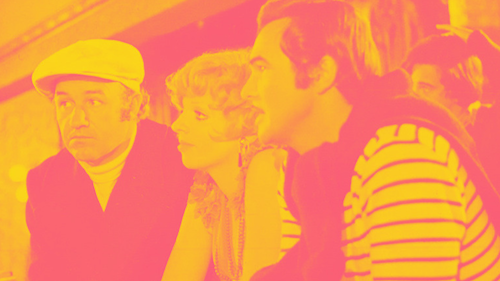
26. Lucky Lady
I'm not finished complaining yet. Lucky Lady will not be lucky today; just because Blame It on Rio is worse, that doesn't mean that this other late-career trash heap will go unnoticed. What is meant to be a return to Donen's genre-bending ways of the sixties is instead a complete mess of a picture (in fact, calling it a picture feels like a lie). A trio starring Liza Minnelli, Gene Hackman, and Burt Reynolds looks good on paper, but the insane editing, whirlpool of tonal inconsistencies, and the coherence of three waves of diarrhea after a bad night at Taco Bell make this film barely watchable. It gets the slightest edge above the other two films because Saturn 3 briefly made me hate cinema, and Blame It on Rio is repulsive by its very premise; at least I have three likeable leads, here. Lucky Lady would be dead last on many other lists, believe me.
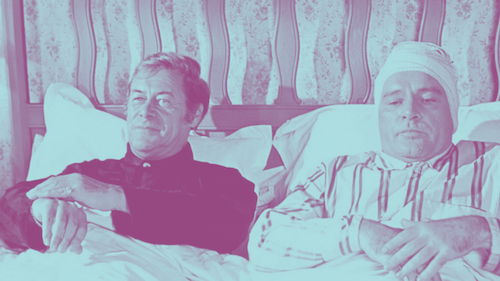
25. Staircase
Even though we are now past those three atrocities, the coast isn't exactly clear yet; we have moved on from the abysmal to the simply bad. Staircase is meant to be a progressive film (I suppose) with a gay couple at the forefront and both their love and their differences on full display over the course of an evening. The idea here isn't the worst (especially since this couple is brought to their wit's end, and you can see how their relationship is both strong and fragile), but the execution is just way too shoddy; between some head-scratching plot choices and the dullness that ensues, Staircase is meant to be a riveting character study when it is, instead, a lethargic chore.

24. Love Is Better Than Ever
The year is 1952. You'd think that a film directed by Donen and starring Elizabeth Taylor would be a knockout success. It is not. Love Is Better Than Ever is a romantic comedy that is about as likeable as sitting in a kiddie pool until you are well past the prune phase and are borderline turning into a sponge. How fun or engaging is a film where you watch a one-sided, toxic relationship that tests your patience for eighty minutes? Outside of a few flashes of fun, Love Is Better Than Ever becomes one of the worst marketing campaigns ever; you won't believe in love at all after this one.
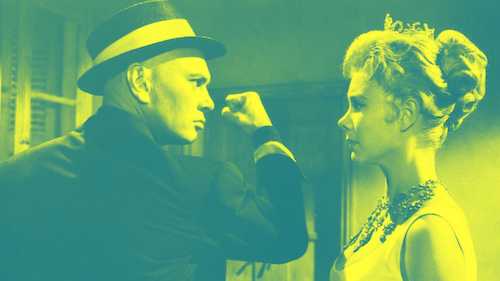
23. Surprise Package
Surprise! This film is bad. Surprise Package feels like one of Donen's more ambitious choices in terms of story, cast, and tone, but, unlike his stronger films of the sixties (more on those far later), Surprise Package just feels like a parade of mistakes; from trying to make Yul Brynner a goofy comedic lead, to the intended crime-genre chills and thrills that never arrive. The biggest offense here is that it doesn't even amount to much as a comedy film, which is meant to be its primary specialty; you will go "huh" far more frequently than you let out an audible "hah."
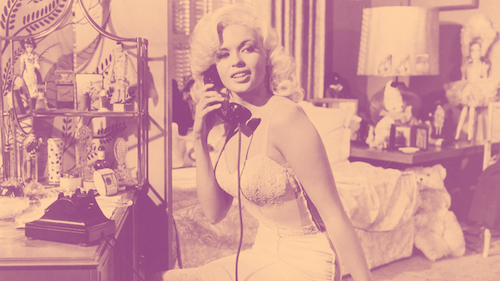
22. Kiss Them for Me
Oh, goody. A rom-com romp by Donen starring Cary Grant, Jayne Mansfield, and Leif Erickson. This is meant to feel like a wild time where prim-and-proper navy veterans decide to let loose and par-tay, but Kiss Them for Me makes you feel like the designated driver or responsible adult watching a bunch of buffoonery while you worry about your antique furniture being knocked over. It isn't fun: it's taxing. At least you get a bit of reprieve in the form of Grant and Mansfield making this film somewhat watchable as charismatic leads, but this film is otherwise a headache.
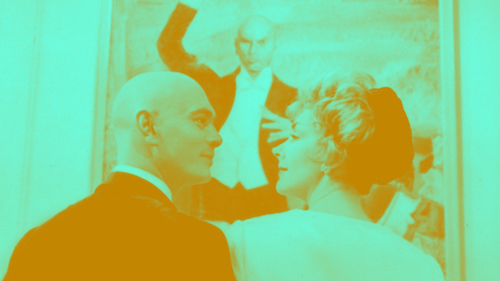
21. Once More, with Feeling!
In the same way that I am putting up with Donen's worst films because of what is to come at the higher end on this list, Once More, with Feeling! is another film about a lopsided relationship, this time with Yul Brynner as a selfish, abrasive conductor who threatens to lose his wife for good once he commits to having an affair. You are meant to worry for this conductor and the film is an attempt to show his regret and change, but Once More, with Feeling! doesn't do enough to make us ever care about what happens (if anything, this film only made me appreciate what Todd Field accomplished with Tar even more).

20. Love Letters
Thank goodness for this television movie, because ending a career on Blame It on Rio is criminal. Then again, Love Letters is not exactly a tremendous send-off, either (it is at least leagues better than what we could have had). The idea is a little bit nice, as we follow a U.S. Senator who realizes what he has lost when he harkens back to his one true love via the form of her letters. However, my biggest problem is that many of these kinds of films feel constrained: if you feel swept away by memories, you can feel the emotions of the dreamer; if you are forever reminded that we are reading letters in the present, a film can start to feel like a never-ending monologue where you are constantly reminded of how badly you need to go to the bathroom during this diatribe. At least Laura Linney makes these regrets and passions feel alive.
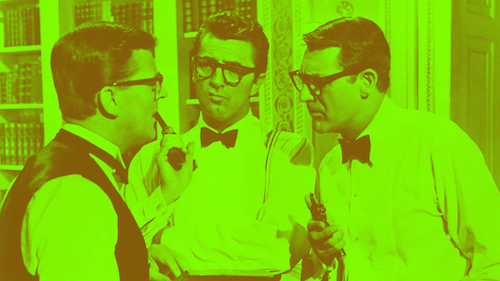
19. The Grass Is Greener
The best of the three films Donen rushed out in 1960 (the competition isn't stiff when you're dealing with Surprise Package and Once More, with Feeling!), The Grass is Greener is more than just a love triangle: it's a love square. Oh, joy. A film that may have worked better ten years later when the New Hollywood movement worked its way outside of the Hays Code's limitations, The Grass is Greener is meant to feel like a chain of love and hilarity but instead it just feels like meet-cutes potentially happening for one hundred minutes; at least we have some likeable leads like Deborah Kerr, Cary Grant, Jean Simmons, and Robert Mitchum to pull us out of the pedantic writing. Three films at once is bad; working on Charade for three years will prove to fair far better for Donen.
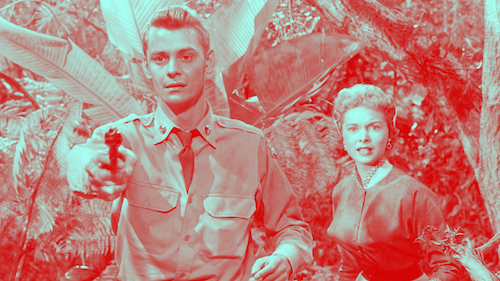
18. Fearless Fagan
Who doesn't love an animal picture: a comedy where car-azay shenanigans take place with confused people and an exotic creature who winds up in precarious situations? Well, if you aren't Bringing Up Baby, chances are you are far more cheap and half-baked. Such is the case with Fearless Fagan: a picture about a pet lion (of course) who gets let loose in a military compound. This film gets minor grace from me because I am easily amused by animals, but I refuse to pretend that it is anything above substandard when a majority of the film feels subservient and unimportant to the primary cause: what other lion nonsense can it show at any given time?
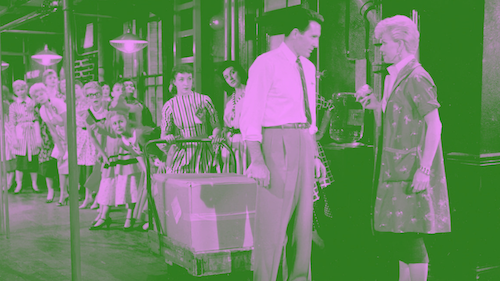
17. The Pajama Game
Nothing makes me want to sing more than narcissism, sexism, and class disparity! The Pajama Game is such a strange film to turn into a musical (I suppose Donen was game to try anything at this point). Co-directed by George Abbott and featuring the choreography of one Bob Fosse, no less, The Pajama Game is a peculiar Doris Day vehicle where the numbers are decent, the dancing is lively, and there is some charisma to take note of, but the story feels like it comes from a completely different film. I can call The Pajama Game entertaining (slightly), but it is just way too contradictory to ever feel even satisfactory.
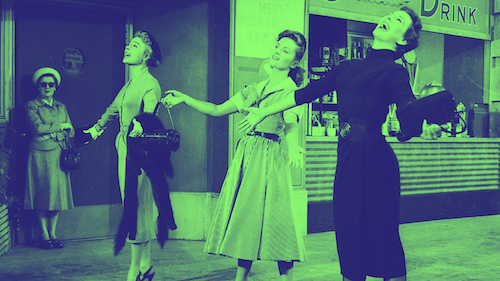
16. Give a Girl a Break
What feels a little bit like an attempt to capture Singin' in the Rain again, Give a Girl a Break is decent but it still comes up a bit short because of its narrative thinness; while you get an ocean of feeling and context in the earlier film, Give a Girl a Break feels a little bit more like an excuse to hear music and see dancing. The end result is still a somewhat fun slice of escapism, with the universes of drastically different styles of dance (from Debbie Reynolds to Bob Fosse) colliding into this pretty-good expression of glee and splendour. I wouldn't start with this film, but, should you be a completionist, Give a Girl a Break may scratch that itch once you are done with Donen's musical mainstays.
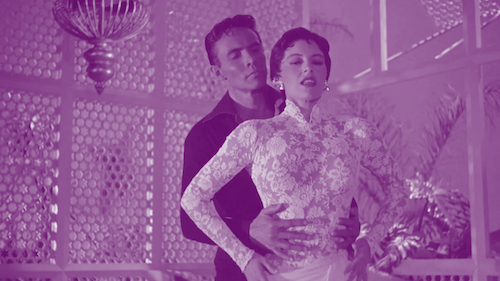
15. Deep in My Heart
I'm sure this film won't resonate with everyone, and I will say that Donen's biographical picture, Deep in My Heart, is kind of a drag (especially when it is over two hours in length), but this film has something that many of Donen's worst films lack: passion. Donen cares so much about the art and life of his subject — composer Sigmund Romberg — that you can at least feel something within this film; even during its dullest moments, there is a beating heart underneath it all. When Deep in My Heart shines, it is a classic Donen picture; if only it was consistent with its illumination.
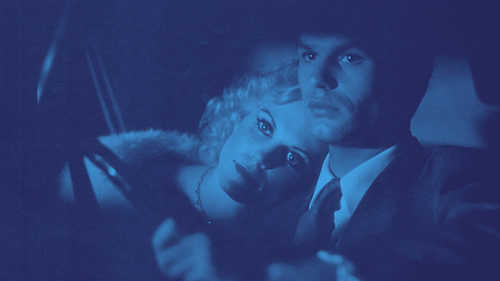
14. Movie Movie
Seemingly one final attempt at blending genres (sort of), Donen did something fairly drastic towards the end of his career: two films that have virtually nothing to do with one another (outside of the shared cast) for the price of one. The first film is a satire of the sports and legal genres as a boxer develops a change of heart; it is then followed up with something Donen should know enough about to parody — the musical comedy. In between both films is a fake trailer for a World War I epic, just for the hell of it. While I don't think either film is exemplary, I do commend Donen for trying new things even within the musical genre, as he hopes to comment on the serendipity and forced cohesion of the dying art of the double bill. As an idea, it's fairly great. The end result is not bad.

13. Royal Wedding
While not the most memorable of Donen's films with Fred Astaire, Royal Wedding is still quite a treat for fans of musical pictures. Meant to be a vessel that contains the electricity surrounding the titular event, Donen's film feels more like a series of separate ideas — all in the name of celebration and passion. This film is loosely based on an event in Astaire's life that he shared with his sister. Our dynamic duo here (Astaire is joined by Jane Powell) are exciting on their own, even when the film loses sight of what it could be (it often settles for being a nice time out with showtunes and flurries of quick steps). I still had a nice time with this film that never really overstays its welcome (thankfully); sometimes, just being blown away by technicality and artistry for ninety minutes will suffice.
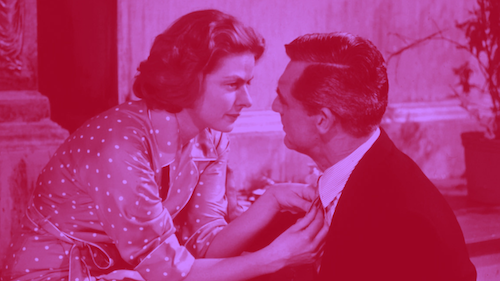
12. Indiscreet
It took a while, but we made it: the portion of the list where I recommend the remainder of the films. We start off with Indiscreet: a nice reunion between Cary Grant and Ingrid Bergman (of Notorious fame). While a bit of a standard romance in concept (the impossible fate of finding love), Donen leans into the difficulty of meeting "the one" later on in life and deep into your career (in this case, Bergman plays — as she is — an iconic actor with much to her name). It's one thing to fall in love when you are young, eager, energetic, and the sky is the limit; it's another when you are accepting that doors are closing and there isn't much left to look forward to. Indiscreet is rather sweet in this inoffensive, darling film.
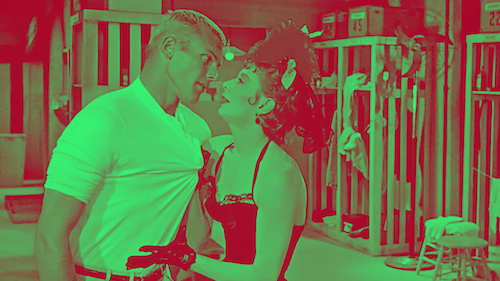
11. Damn Yankees!
We now have two films about people who make a deal with the Devil (something Donen cared about a lot, clearly). The first is a co-directed effort with George Abbott, who brought his own Broadway musical to the big screen here. Damn Yankees! Sees a fan of a baseball team (no, not the New York Yankees: the Washington Senators) who gives up everything in hopes of his favourite team winning the championship. The film is quite a hoot and it somehow works despite how questionable its narrative is, but a major draw here is to see the iconic pairing of Bob Fosse and Gwen Verdon doing their thing (no selling of souls required to see them electrify any shot they share).

10. Bedazzled
Chances are you are like me and grew up on the millennial take on Donen's Bedazzled — the one with Brendan Fraser and Elizabeth Hurley. I am happy to report that the 1967 version of a desperate man selling his soul to the devil in order to find love is also a heap of fun. Here, we see Peter Cook as the Devil, and his frequent acting partner, Dudley Moore, as our hopeless chap. He gets seven wishes to win over Eleanor Bron (Donen and company unfairly introduce Raquel Welch as a foil as well), and, as you can imagine, things aren't smooth for our poor — yet misguided — protagonist. Considering how sloppy Donen can be, he directs Bedazzled with a sense of controlled insanity which makes it feel all the more spellbinding.

9. The Little Prince
As we have seen, Donen — when uncontrolled — can easily fly off the rails. However, there are a couple of times where he teeters on the edge of a cliff without ever falling off, and these films can be such sights to behold as a result. One such film is his family musical, The Little Prince: the kind of motion picture that makes you feel like you are a child again and that the world is your oyster. Adapting the iconic story to the big screen is no easy feat, and Donen's attempt here is so inspired, imaginative, and whimsical. Uniting a number of drastically different entertainers (from Gene Wilder, to Bob Fosse — the latter who inspired a number of Michael Jackson's biggest dance moves via this film), Donen gives us a feast for the eyes and spirit via a magical journey that may put some pep in your step.

8. On the Town
The breakthrough film for Donen is this debut, co-directed effort with Gene Kelly; while On the Town is clearly an exercise in seeing what they can accomplish together, this musical film is pure bliss. As we follow three navy sailors on their return back to New York City for twenty-four hours (they are Kelly, Frank Sinatra, and Jules Munshin), we see the city come to life like the backdrop of a Broadway special; if this is the city that never sleeps, then On the Town makes sure that it doesn't even close its eyes. In short, this is a classic musical film that is sure to bring a smile to your face. However, I would be remiss if I didn't bring up the ugly side of this same equation: some impossibly racist material and song numbers that have aged as well as cottage cheese inside of a volcano. I must bring up these brutal sequences because they are not just a blemish on an otherwise sensational film: they are hideous reminders of what was once deemed permissible back in 1949 (in a film that would feel ahead of its time on a technical level).
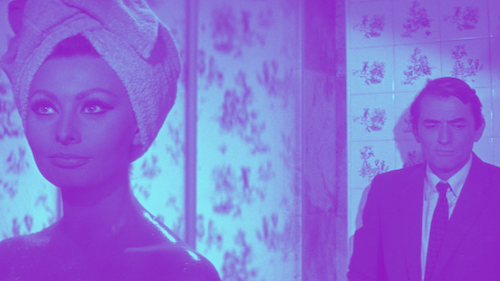
7. Arabesque
I don't know if I want to call this a guilty pleasure or a misunderstood film, but I absolutely love Arabesque. As a big fan of Charade, sure, this film feels like Donen tried to catch lightning in a bottle again with weaker results. However, this film is such a neo-noir ride that is completely unhinged. Instead of Cary Grant and Audrey Hepburn, we have Gregory Peck and Sophia Loren (two people who I wish Donen worked with more often, quite frankly) in a calamitous caper about a surfaced scheme that may uncover entire generations of sin and conspiracy. Our leading professor (Peck) is continuously taken for a fool (and, to be fair, so are we), and Donen goes all-in with the trippy cinematography, delirious editing, and goofy dialogue that make this film feel like a psychedelic hallucination. Yes, Arabesque isn't quite perfect, but the fact that it is so out-there and unorthodox may have only been held back by strictness; I love how batshit this film is and I won't stand for any slander towards this underrated freak-out.
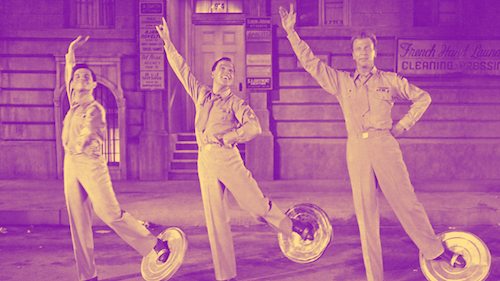
6. It’s Always Fair Weather
What feels a bit like an answer to the breakthrough film On the Town (and, to me, is even better), It's Always Fair Weather reunites Donen with Gene Kelly, bringing back the concept of a trio of fighters (instead of the navy, here, our leads are G.I.s) and making a musical about their experiences outside of combat. However, this film is far darker and serious: an interesting risk for both directors. This film acts instead as a testament of trauma, the many ways that life takes us down different paths, and an existential realization that life is short and it is impossible to accomplish everything that we set out to do. This mature, severe look at life gets picked up by the musical numbers and spark that is usually reserved for theatre audiences; here, it gives our characters purpose as well.
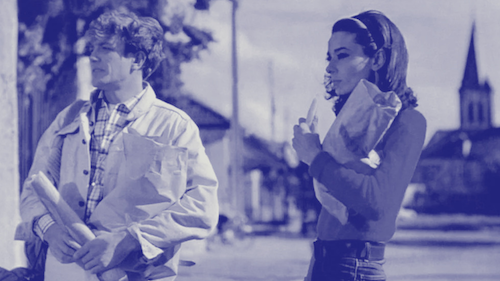
5. Two for the Road
I know that a majority of this list was devoted to the many times that Donen lost sight of what he wanted to do and got carried away with being silly, but then you see a film like Two for the Road which is incredibly mature and beautiful, and you understand Donen's strength when he kept it together. This incredibly underrated dramedy about a marriage in peril — shown through different generations of their union, with each timeline interspersed with one another — is quite an eye-opening look at love. You see young souls offering each other the world, and older spirits who have now taken to seeing the world through only their pair of eyes. Our struggling couple is played by Audrey Hepburn and Albert Finney, and the two are a match made in heaven (sort of). Their triumphs and tribulations co-existing in this portrait of bittersweet matrimony is a lesson what it means to fall in, out, and back in love in this crazy experience we call life.
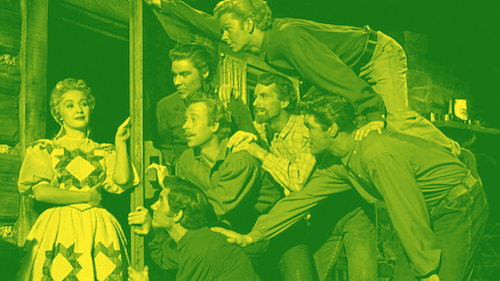
4. Seven Brides for Seven Brothers
If you needed any validation that Donen could direct a musical with zero involvement by Gene Kelly, then Seven Brides for Seven Brothers is a clear example of what he could accomplish (the next two films on this list prove to be as such). There is a lot to unpack here narratively when you consider a family of seven brothers who all want to get married; you can see this as a charming film of the fifties or, quite possibly, a daunting proclamation of thirst in the year 2026 (the men yearning for women has aged quite poorly). However, what I appreciate about this film is its inventiveness with its musical numbers — how the world around our leads can turn into sound stages, with farming equipment being used as dancing props, for instance. Even with its dated concepts, it's hard not to feel swept away by a film as mystifying and breathtaking as Seven Brides for Seven Brothers.

3. Funny Face
The best musical that Gene Kelly didn't help Donen direct is Funny Face (I believe that any cinephile may have a different answer, but I am firm in how I feel here). The tale is a bit of a classic dream sequence where a book clerk (Audrey Hepburn) becomes a superstar fashion model overnight, thanks to an inspired photographer (Fred Astaire). The way Donen captures the sensation of being in a photoshoot is borderline surreal in a fantasy way (it feels like editorial shoots come to life during some sequences). If musicals can prove to be forms of escapism from our everyday lives, then Funny Face shows what that looks like if we get whisked up in a whirlwind of the high life all thanks to the flights of fancy and the paths of serendipity. From the gorgeous tunes to the emotional revelations, Funny Face "s'wonderful."
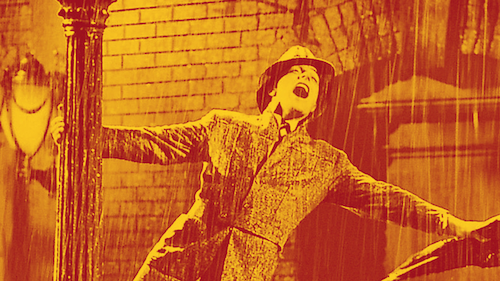
2. Singin’ in the Rain
It will not surprise you to see Singin' in the Rain this high up. One of the greatest movie musicals of all time, this Donen-Gene-Kelly affair is one of the ultimate forms of feeling happy after a bad day; pop this classic on, and you will be grinning from ear to ear. An overwhelming spectacle of a picture that showcases the quirks and innovations of the transition from the silent era to talking pictures, Singin' in the Rain equates industry woes, economical uncertainty, struggling careers, and the uncertainty of Hollywood with unforgettable sequences and personalities; if the titular dance number is a top-five contender in the history of cinema, then the "Make Them Laugh" number must be my favourite of all time. Kelly has never been better, and he is joined by top-notch work y Debbie Reynolds, Donald O'Connor, and even the shrill Jean Hagen (and, in her voice, I kyan't styand hah). I have seen this film maybe dozens of times, and it never ceases to make me laugh, smile, or even tear up a little bit (I even adore its polarizing dream sequence in its final act that many see as a weird detour; to me, it is a sign of things to come in cinema). With this, I ask: who couldn't love Singin' in the Rain (one of the great crowd pleasers of all time)?
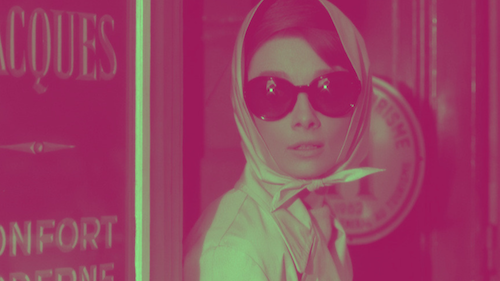
1. Charade
It's true: it will not surprise you to see Singin' in the Rain this high up. However, it may shock you that it wasn't placed number one. In the same way that it took a lot for a film to be worse than Blame It on Rio, it takes a miracle for a film in someone's filmography to be stronger than Singin' in the Rain. Like he did in many ways (good and bad), Donen defies the odds with Charade: one of my personal favourites of all time. In my Mount Rushmore of films, you have my favourite film ever — Ingmar Bergman's Persona — my choice for best written film (and strongest American film), Chinatown, and my favourite film of the twenty-first century (David Lynch's Mulholland Drive). To balance things out, I think my Mount Rushmore would need something fun in there, and so I will always elect Donen's Charade as the most fun film I have ever seen in my life. What might be the greatest example of a genre-bender in film history, Charade not only blends romance, comedy, mystery, and horror together effortlessly: it heightens all of these genres exactly as much as they require. The romance oozes off the screen, even if there are so many deceptions on the big screen. The laughs are genuine, featuring a godly screenplay by Peter Stone (one of my favourites ever). The crime is legitimately graphic for its time, with some shocking and horrifying images that will make you wince; how could this image be from the same film as the passing-the-orange game?
This screwy, brilliant caper about the recently-widowed Regina Lampert and her ties to a dark underworld of money and corruption is to die for. I will never get tired of how hilarious this film is. I recall when I first put it on: I saw Lampert (Audrey Hepburn) being blasted by a water pistol, only for her to retort to the mischievous child "Don't tell me you didn't know it was loaded." She calls for the child's mother and asks her "Can't you get him to do something productive, like start an avalanche or something?" I knew by that one line that I was hooked, and that this was my kind of film. I was then blessed with the introduction of Cary Grant's character (shush) moments later; his exchange with Hepburn — and their countless jabs at one another — only proved me correct. That incredible opening on the slopes of the French Alps has been viewed by me approximately over fifty times. Actually, I should correct this statement: that opening and everything that comes afterward has been viewed by me around fifty times. It remains my most-watched film of all time.
I have struggled with sleeping disorders for much of my life. Before I figured out how to best tame my demons of insomnia and sleep apnea, I would be anxiously awake in the wee hours of the morning and trying to figure out how to calm down. My go-to method (when I was too delirious, exhausted, and dizzy to get out of my bed) was to put on Charade on my smartphone (the film, infamously, is one of the few that was shoved into the public domain due to legal loopholes, and so it is legally viewable in many ways). When I was unable to go to sleep but also too weak to go to my film collection (where I also possess Charade on my shelf), I would be brought back to this place of glee, comedy, suspense, and entertainment: a singular picture that I could never get tired of. It always calmed me down and brought me peace and rest. In short, I cannot even deny that Charade is my comfort film because of how much serenity it has brought me.
However, the film is far from a simply positive experience. There is a reason why many call this the greatest Hitchcock film Alfred Hitchcock didn't direct. Charade has a mystery, whodunnit plot that is fascinating, clever, and worthy of being considered one of the great genre stories in all of cinema. Lampert's husband has been killed and those he has wronged (and who have hoped to wrong him) are out to get her (and the money they believe he owes them). Promising to be by her side is Grant's character, who we quickly learn is not who he says he is. The beauty of the film is its many abilities to misdirect you, so you never fully pick up on who is who and what the totality of the story is until you are meant to know. When you rewatch the film, it's just as strong as ever (in fact, even more); this isn't a series of twists that let up once you are in on the jig. Everything is calculated so perfectly, and Charade is one of the strongest experiences of being played for a fool by a film (up there with The Sting). For a film this kooky, it's mind boggling how clever its narrative infrastructure is.
In the same way that characters take on many personalities, Charade is near-perfect with all of its own identities. It is evidently magnificent as a screwball comedy, a harrowing crime mystery with complete stakes, a pulsating romance with highs-and-lows, and even a psychological thriller that will have your heart racing. I chalk up many of Donen's failures after this film to his efforts to try and make a film this idiosyncratic again: how do you consciously make Charade? It almost feels like a film that just happened to exist from out of thin air, and yet there are so many indelible moving parts; Henry Mancini's iconic score; the enigmatic performances; the abundance of style in a film that is meant to be fun (and yet it possesses so much flair and cinematographic excellence); the dread that undercuts the hysteria. This film is far too meticulously constructed to be a happy mistake. All of the stars aligned, here. Despite the many films that insist he isn't, Charade proves that Stanley Donen is one hell of a filmmaker when he focuses without overly exerting himself, lets go without losing all inhibitions, and has the same drive he wishes to instill in us. For making Charade alone (never mind some of the other higher films here, especially Singin' in the Rain), he is one of the greats.


Andreas Babiolakis has a Masters degree in Film and Photography Preservation and Collections Management from Toronto Metropolitan University, as well as a Bachelors degree in Cinema Studies from York University. His favourite times of year are the Criterion Collection flash sales and the annual Toronto International Film Festival.