
Filmography Worship: Ranking Every Satyajit Ray Film
Written by Andreas Babiolakis
Filmography Worship is a series where we review every single feature of filmmakers that have made our Wall of Directors

If you are a cinephile, you will stumble upon the name Satyajit Ray at some point in time. When you do, you may discover a certain series -- The Apu Trilogy -- or an individual film. You will be curious to watch it, knowing that so many of your favourite filmmakers have championed this Indian auteur's work. You will likely like what you have seen and are curious to watch more, only to find one of the most consistent, high-caliber filmographies of all time. Ray is beyond just a strong filmmaker: he is one of the unquestionable masters of the filmmaking craft. Born to Bengali writer and illustrator Sukumar Ray, Ray started out as an artist in Calcutta. He connected with Jean Renoir (who also made the bridge between the art world and cinema, seeing as he is the son of Impressionist icon Pierre-Auguste Renoir); Renoir was in India shooting The River. Ray was able to ask Renoir questions about making independent pictures and was inspired to make his own films. Ray took inspiration from the Italian neorealist movement when making his debut film, Panther Panchali. Most auteurs have a team behind them who help conjure up their vision. Ray, on the other hand, wrote (via storyboards) and had his hand in many departments. It resulted in one of the greatest feature film debuts of all time.
Ray would often incorporate elements of his life into his films, including growing up in the Bengal Province of India, his family dynamics, and the kinds of films he grew up on. Had Ray just focused on his neorealist-adjacent works, he would have already been a major name in film; The Apu Trilogy alone is a monumental project that uses three films to follow a young Bengali boy's life from Nischindipur all the way to adulthood and independence. However, the fact that Ray got adventurous and made so many different kinds of films and exercising what he could accomplish in the medium is what makes him one of a kind; this is someone who wanted to see everything that film had to offer. As a result, I feel like everyone will have a completely different list of their favourite Ray titles, and I hope that my selections will suffice in your eyes; with an artist like Ray, there isn't a wrong answer as to what his magnum opus is (and I did toy around with my rankings quite a lot this time around).
Ray worked for as long as he could, until he had a heart attack in 1983 while working on an adaptation of Ghare Baire. While he was slowed down after this episode, he still released a handful of films, all the way up to 1991's Agantuk. After this film, his health took an even steeper decline. Just under a month before his death at the age of seventy, he was presented an Honorary Academy Award; he accepted it virtually, and called it the highlight of his career as a director. What he left behind is one of the great idiosyncratic, international slates in all of cinema: over thirty works that are as artistic as they are literary, expressionistic as they are realistic, and creative as they are autobiographical. You will find early examples of hyper-detailed shots, experimentation with cross-cutting and editing, and many other traits that are hard to pinpoint, seeing as Ray never settled for one set of tropes; he was forever wanting to see what else he could accomplish. I wouldn't dare call any of his films bad or even mediocre, so don't take any of the placements below personally; see this list as a well of brilliance that you can keep drawing from. Let's dive into one of the most rewarding and fulfilling filmographies I have completed. Here are the films of Satyajit Ray ranked from worst (or least good, I suppose) to best.
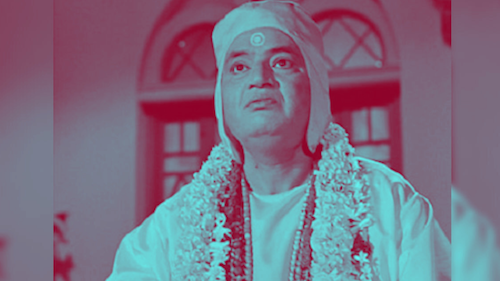
37. Mahapurush
Mahapurush — or The Holy Man — is last here because something had to be; however, it’s actually a fairly decent watch. Circling the proclamations and life of a con-artist “Godman”, Mahapurush clearly has something to say about blind support, the hysteria of prophesy, and our constant urge to feel connected to something in our existentially punishing lives. Mahapurush is quite short at an hour long, and there is quite a lot going on here that feels almost overly wacky or satirical to the point that I think we needed more time for everything to develop properly or matter more. However, this is still quite a bold film that toes the line between tones and genres; even if it doesn’t compete with Ray’s strongest works, Mahapurush is a commendable effort (which is as great as a “worst” film can get).

36. Bala
Bala is a documentary short by Ray: a format that you may not know he excelled in (more on his strongest examples later on). I only place Bala at the bottom of these kinds of films because I feel like it would have been better served as a feature or, hell, even a featurette. A half hour is simply not enough time for us to get fully acquainted with the iconic Bharatnatyam dancer Balasaraswati; we mainly become familiar with the extent of her legacy while “sitting down” with her in her geriatric years. I also love seeing how Ray interprets her talent and goes toe-to-toe with her — from camera to swirling subject. Bala ends on such a high that I feel like I need more, and we never really get it. Despite its briefness, this one is a must for fans of dance-based documentaries.

35. Rabindranath Tagore
To honour the iconic, Indian polymath Rabindranath Tagore during the centenary of his birth, Ray released the documentary named after him. In less than an hour, Ray doesn’t try to outdo or even catch up to the many things Tagore was known for (writing, art, politics, philosophy); he simply lets his subject’s output do the heavy lifting. If anything, Ray knows a thing or two about excelling at many different things, so it makes sense that he is able to speak the same language as (and, thus, best represent) Tagore; even though Rabindranath Tagore is a fairly standard and short documentary, you can spot all of the ways that Ray wanted to channel Tagore in his own work. If Ray is your idol, it may be worth seeing who inspired him through his own eyes.
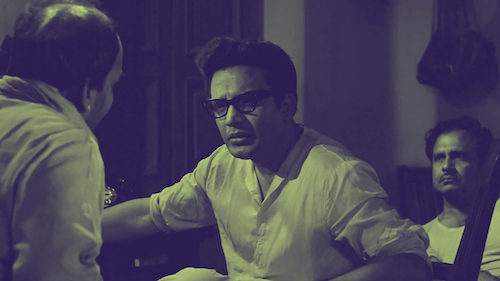
34. Chiriyakhana
Once “crowned” Ray’s worst film, Chiriakhana (or The Zoo) is, indeed, quite meandering and convoluted, but I think we can respect and appreciate this crime thriller’s swirling insanity more as a metaphor of the complexities of the criminal underworld. On its own, however, Chiriakhana is a little unfocused, especially by Ray’s standards. We are tethered to a gumshoe who is yanked from one part of his city to another with a case that only gets stranger and stranger. At least we are driven by star Uttam Kumar, who adds some sense and semblance to a film that feels like it is on the verge of flying off the rails at any given moment. Besides, I would rather see an auteur giving their all — even if it can be seen as trying too hard — than one who completely gives up on their project. I think Chiriakhana is fun, even if it is a little rocky.
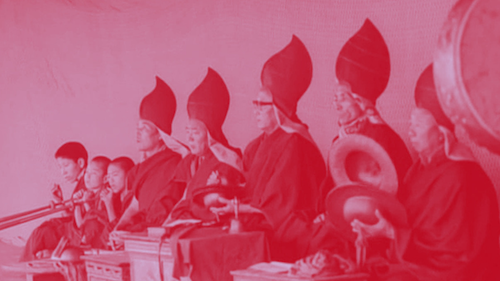
33. Sikkim
Sikkim is one of Ray’s more complicated films. Commissioned by the head monarch of the nation of Sikkim (as a means of proving its sovereignty), Ray’s documentary was banned once Sikkim merged with India and its original cut is nowhere to be found now. An hour-long version still exists once the ban on the film was lifted in 2010. What reads as a propaganda-esque exercise on paper winds up being something a little more sincere: a poetic look at a community through the eyes of a visionary. This is artistically and tonally quite different to Ray’s signature style, and any fans of this filmmaker may find it most interesting in that respect (even if the film is a little emptier in its current, findable form).
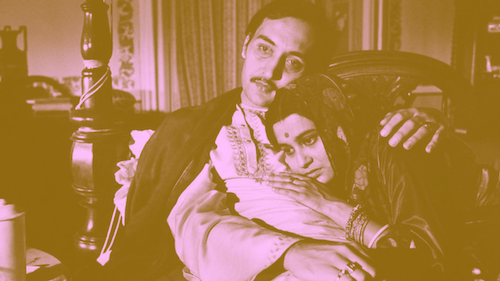
32. Ghare Baire
The heart and the mind are not the same vessel. Ghare Baire (or The Home and the World) is a complicated romantic drama by Ray about a housewife who is provided the means of education. She is introduced to a highly, viciously political mindset, and she is now torn between these new teachings and her traditional life. There is a poignant message about the layered difficulties of sociopolitics, but Ray seems to get a little carried away with his message and themes to the point that Ghare Baire is a twisted love triangle that questions our lead’s beliefs and unconditional support, yet it doesn’t fully explore either its romance or the brutal world surrounding them. However, even with a film that is partially flawed like this one, Ray is always fascinating to watch and he makes his central character impossible to turn away from (even when Ghare Baire overworks itself just a teensy bit).
31. Sadgati
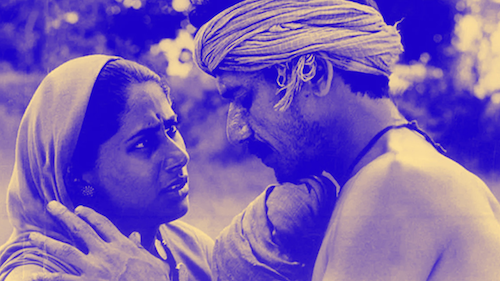
How much does the world honour us for our efforts? How much do we have to give up of ourselves in order for us to be respected? Sadgati — or The Deliverance — is an 1981 featurette by Ray that details the many forms of sacrifice a father undertakes in order to get the date of his daughter’s upcoming marriage fixed, but all of his efforts are not enough in the eyes of the priest. There is a fairly booming story here that still packs quite a punch — I dare you to not feel sick by the end of this depressing, filmic fable. However, I also feel like Ray should have tightened this film just a small amount to make its wrath as direct and undeniable as possible; it does feel like Ray tiptoes somewhat because he has too much faith in humanity (and his warm heart is forever cherished by me); Sadgati is still highly effective as a statement on how the world values some lives more than others.
30. Pikoo
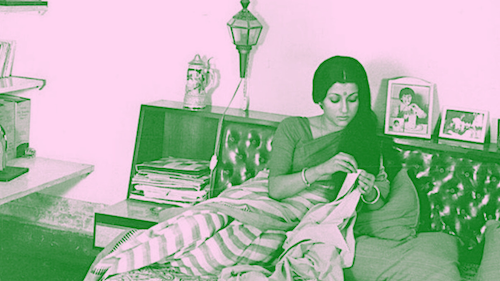
Decades after The Apu Trilogy concluded (and separate from his loose Calcutta Trilogy), Ray returned back to Calcutta to tell another coming-of-age tale; although, this one is far less optimistic and ambitious. Instead, this is Pikoo: a bleak short film about someone who maybe didn’t have the fate that Apurba had. Pikoo has the young child of the same name instead: someone with a father who is working himself to death, a mother who feels helpless and dreamless and finds joy in an affair, and a grandfather who is dying. This is a life that — if the existences of those around him are any indication — will not have any chance to blossom or progress. This is the everyday struggle and hardship of a child that, this time, Ray cannot save or protect. This is a return to the agony of neorealism in such an unflinching way; I would argue that twenty-five minutes isn’t enough time, but it’s also a sign of grace by Ray to his characters.

29. Sukumar Ray
Another documentary short that acknowledges someone Ray looks up to, this time, Ray focuses on his late father, writer and artist Sukumar Ray in the film of the same name. The last short Ray ever worked on, he released Sukumar Ray in 1987 — the one-hundred year anniversary of his father’s birth. The motivation is clear: Ray was trying to shed light on who his father was and his importance in Bengali literature (particularly his nonsensical works); despite the intended abstractness in his writing, Sukumar Ray’s son creates meaning in the madness. While that was Satyajit Ray’s intention with this documentary, what we get is something even more moving: a showcase of Sukumar Ray’s influence and what it turned into decades later via a career unlike any other, and a documentary representation — here — that barely scratches the surface of Satyajit Ray’s capabilities (but what a strong this short is nonetheless); this is the power of the inherent talent found within a family tree.
28. Ganashatru
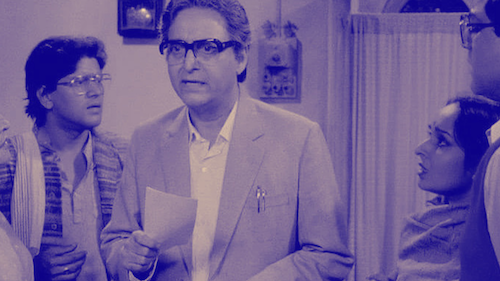
Don’t you hate when filmmakers are cognizant of the issues of the world and their warnings were never adhered to, addressed, or acted upon? Ganashatru (or An Enemy of the People) is a late-career release by Ray that is sure to bring your blood to a boil. Centred around a doctor who discovers that the contaminated water at a nearby temple (honoured as holy water) is spreading jaundice in the citizens of of his town, Ganashatru feels like a list of the many ways that our government and society can fail us. Ray is also not a glutton for depression, so he blessed Ganashatru with some hope and optimism even though you can sense that, deep in his heart, Ray was aware of the impossibility of things improving. How is this film over thirty-five years old and yet it feels even more important now than ever? As the film details, whistleblowers like our doctor here are often treated as — you guessed it — An Enemy of the People (and not their representative). We are helpless.
27. Parash Pathar
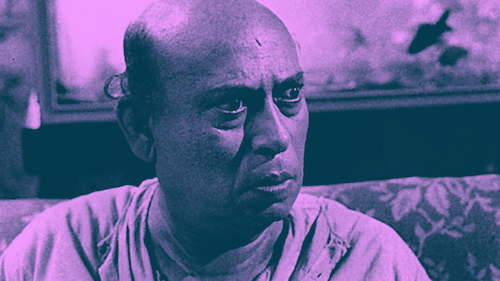
Ray finished what he started with his titanic undertakings like The Apu Trilogy, but he was forever looking at new ideas to encourage himself to branch out and never get stale. Outside of the country of origin, would a film like Parash Pathar ever seem like it could possibly be made by the same man who made Aparajito? Parash Pathar (or The Philosopher’s Stone) is a bit of a silly fantasy-comedy with a fable-esque message about corruption and value via the premise of a working class man who unearths a miraculous stone that can turn objects into gold. This protagonist’s intentions of getting rich quick gets way out of hand, and Ray never loses sight of the meaning within the madness. Even so, Parash Pathar is a bit of a strange film for Ray and that may make me like it even more: it’s usually fascinating to see how a serious auteur handles the whimsy, imagination, and curiosity of such an abnormal story.

26. Shakha Proshakha
Ray’s penultimate film, released in 1990, is Shakha Proshakha (or The Branches of the Tree); a bold observation of a dying, elder father and the many affected generations surrounding him. Ray was potentially reflecting on his own health concerns and mortality with this dramatic epic, and it can be quite emotional to feel his vulnerability in such a picture. On the other hand is an elaborate depiction of domestic conflict in the face of tragedy: a family that threatens to cave in on itself. Ray crafts such multifaceted and nuanced family members here, detailing that such devastation is never easy and that the concept of the family tree is a highly complicated one. When such sadness can unite loved ones, Shakha Proshakha proves that it can also push us further away from one another than ever before.
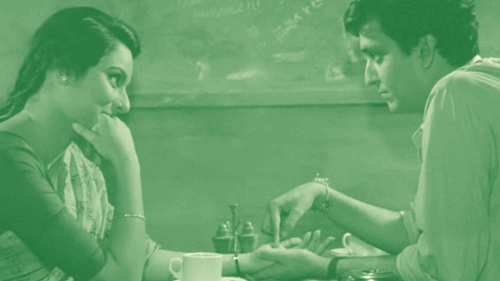
25. Kapurush
Ray wasn’t that deep into his career when he released Kapurush (or The Coward), yet this is a fairly meta reflection of self. Following a screenwriter who is trying to work on his latest project, Kapurush dives into his psyche as he is haunted (or comforted, depending on how you analyze it) by his past in an unexpected way; the film plays like Ray’s mind as it festers on a moment in time and contemplates — in exaggerated fashion — what may have transpired since this memory took place. Ray’s daydream is a non-linear, somewhat fragmented look at creation, regret, and catharsis; while Ray was always trying new things, a film like Kapurush appears to be one of his most daring experiments.
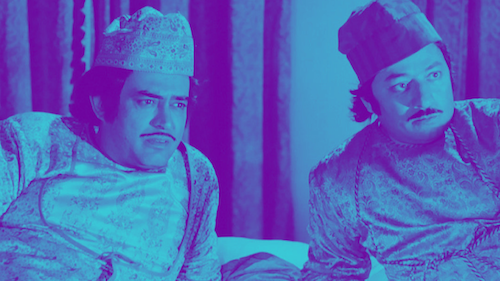
24. Shatranj Ke Khilari
Oh, how telling of an allegory is this film? Shatranj Ke Khilari (or The Chess Players) sees, well, two chess players get caught up in their passion while their world shifts around them (the film takes place on the eve of the Indian Rebellion of 1857). Here, a game acts as a nice form of distraction, sure, but chess is far more than an escapist past time: it is a gauge of one’s ability to strategize, take over, conquer, and protect themselves. Mirroring — and contrasting — their intense backdrop, our chess players recognize the stakes of winning (a board game or a historical battle). Ray’s parable is powerful; this ability to reflect and build upon this moment in time via such a striking metaphor (courtesy of the short story by Munshi Premchand that he adapted) makes Hatranj Ke Khilari quite a compelling ride.
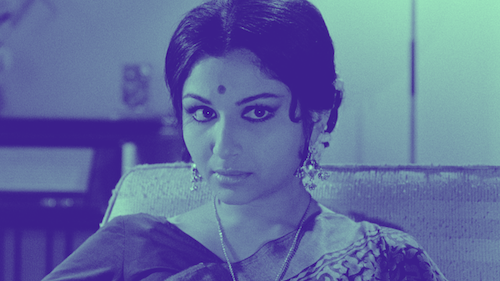
23. Seemabaddha
The second portion of Ray’s Calcutta Trilogy, Seemabaddha (or Company Limited) is the ebb and flow between the speed of life (via the form of the proverbial rat race) and the act of slowing to a crawl when settling down (essentially, is workplace progress more important than family life). Ray understands the importance of succeeding — and evolving — in a rapidly evolving world (here, it’s the evolution of Calcutta in a sink-or-swim sort of way), and our lead, a businessman, hopes to prove to himself and his in-laws that he is worthy of more. Ray manages to balance the acts of both ascension and collapse in single motions with Seemabaddha: a cautionary tale of the costs of progress.

22. Kanchenjungha
If Ray vowed to zero-in on the individual lives of various Indian citizens time and time again, then Kanchenjungha is a massive undertaking in trying to embody the collective of a community all at once. For nearly two hours, this film circles around the numerous members of one Bengali family vacationing in Darjeeling. Ray sets out to make each player a superstar, even if for brief moments in this swirling tapestry of connectivity: one that refuses to have a concrete through-line, message, or purpose (outside of uniting all of these different souls and allowing them all to shine). Ray’s first original screenplay, as well as his first film in colour, Kanchenjungha was clearly meant to be a stepping stone towards whole new realms of greatness for the director (who was hungry for more); even his version of dipping his toe into something new — like Kanchenjungha — is beautiful.
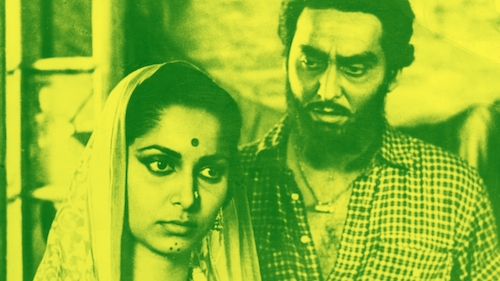
21. Abhijan
Does the thought of an Indian neo-noir thriller that served as a major inspiration of Martin Scorsese’s Taxi Driver entice you? You’re on Films Fatale: it damn well should. Ray’s Abhijan — or The Expedition — feels like another one of those times where the Bengali auteur was trying to stray outside of his comfort zone, but his efforts this time around are quite glorious (in a fairly gritty and nerve-wracking way). A taxi driver’s pilgrimage back to Rajput (as a means of rediscovering himself) goes awry when he gets wrapped up in an underworld of drug smuggling and human trafficking; Ray exposes more of his shattered and tumultuous settings here than in a majority of his motion pictures. It is normal for Ray to paint a picture of jagged sociopolitical situations in his films; it’s another for the filmmaker to flirt — and fully dance — with danger like he does with Abhijan, and it is quite a spectacle to behold.
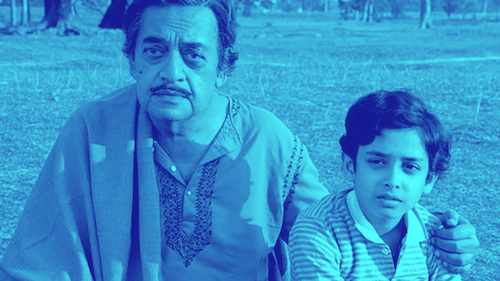
20. Agantuk
Ray’s final film showed that the Bengali great could finish nearly as well as he started. Agantuk (or The Stranger) is a magnificent sendoff by the filmmaker who overcame a number of health-related obstacles in his latter years. His swansong is a testament of the power of storytelling, via a wandering stranger who arrives at a household and insists that he is related to one of the family members there. What transpires is a series of confessions, recollections, and tall tales, all stitched together in a gorgeous proclamation (the ability to command attention and captivate audiences). Whether it is our mysterious character or Ray’s film after decades of mastery, Agantuk exemplifies the magic that some behold when it comes to sharing pieces of themselves to the masses.

19. Teen Kanya
As I always say, I am not the biggest fan of anthology films simply because of the encouraged possibility that one story will outshine the others, or that the pacing will feel like a series of stops and starts. Ray delivers quite a strong example with Teen Kanya (also known as Three Daughters), and each of the titular girls gets their own story (The Postmaster, Monihara, and Samapti). These are stories by his influence Rabindranath Tagore (the very Tagore he made a documentary short about), and Teen Kanya proves that he paid attention to his idol’s teachings. Each of the parts of this triptych range from quite good (Monihara) to excellent (Samapti), and Ray’s depiction of the formative moments in the lives of his young, female protagonists is consistent across the board (whether he is dealing with neorealism, or fantasy-based symbolism; you get a range of approaches in all three films).
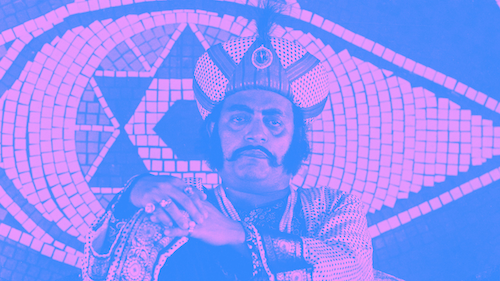
18. Hirak Rajar Deshe
The biggest issue with ranking these films from lowest to highest is how little sense a film like Hirak Rajar Deshe — or The Kingdom of Diamonds — will make when you are reading an article about Ray and are unfamiliar with him or his Goopy Gune Bagha Byne series (more on that film later). This sequel is just as insane as its predecessor, and discovering that Ray was even capable of making such silly, bonkers satire — let alone proficient in it at least twice — has been a joy. Our duo of Goopy and Bagha return here, invited to perform for The Diamond King for the anniversary of his kingdom. Ray’s film — like its previous iteration — feels almost cartoonish and yet it manages to still depict governmental ideologies and societal themes with clarity (a contrast of its abrasive and fun nature). Considering what a success the first film is, it would have been stupid if Ray didn’t try to capture lighting in a bottle twice; Hirak Rajar Deshe is proof that he is one of the only people ever to be able to.
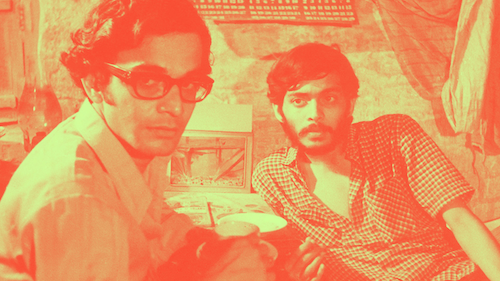
17. Jana Aranya
The last part of Ray’s Calcutta Trilogy, Jana Aranya — also known as The Middleman — is sadly far too realistic for many of us today (as much as it was back in seventies India). A bright-eyed young adult is prepared to seize the opportunities of the big world ahead; he has made it this far, so the sky is the limit for him. However, Ray’s story is a major reality check for both the protagonist and many viewers: finding employment, let alone dominating the business world, is a tall order and your competition may eat you alive. Trapped in this purgatory between the riches of the upper class and the damnation of poverty, our lead becomes a blank slate for many of us: a cycling series of lies to one’s self in order to keep going, all while we dangle over the pits of despair.
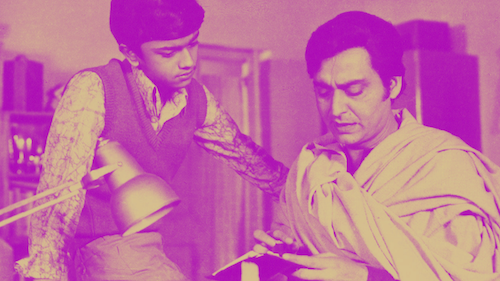
16. Sonar Kella
Ray flexed his literary muscles when he wrote his beloved novel, but he was just showing off when he adapted his own work into two equally-successful motion pictures. The first of these is Sonar Kella (or The Golden Fortress) — the same name of his book. Here, Ray conjures up a spellbinding world of corruption, adventure, and near-surreality. Ray’s detective, Feluda, chases after the conmen who are after a young boy with a fascinating capability (a spiritual connection to a hidden gold fortress). Ray makes all of us feel like mesmerized children with a film like this one, as we are gripped by each and every sequence and are aching to learn more. Ray wrote an actual page-turner, but with this cinematic adaptation of his own story, he was able to pull off the filmic equivalent in Sonar Kella: a film you never want to end.
15. The Inner Eye
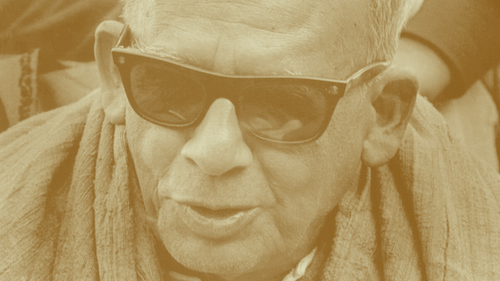
Yet another documentary short where Ray details the influence someone else had on him, The Inner Eye is a little bit different. Instead of solely championing the works of painter Binode Bihari Mukherjee, The Inner Eye goes the extra mile: to be his literal perspective for the world to witness. Mukherjee lost his sight after a botched operation, and he refused to let his impairment stop him from creating art. Not only does Ray show the Mukherjee of old and new, he provides the artist’s vision to the world in a metaphysical way. This short is actually quite astounding with what it accomplishes in just twenty minutes: its educational lessons, its message of triumph, and the use of cinema in such an inventive way.
14. Joi Baba Felunath
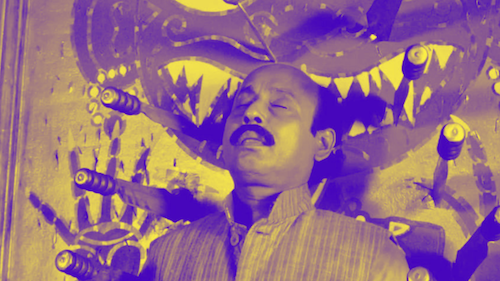
A sequel to Sonar Kella, Joi Baba Felunath (The Elephant God) furthers the lore of detective Feluda. After the successes of the first film, Feluda and his team find themselves hunting for a stolen artifact. All of the mystery and thrills of the first film return here, but I will give Joi Baba Felunath the slight edge because of how much closer we get to our lead characters as personalities; if Ray was forever an expert on connecting us to his hyper-real characters, then I find him equally as impressive with his construction of genre-based souls. These people are pulpy, detailed, and enthralling, which makes their pursuits and deductions all the more entertaining. Even though we get so much out of these two Feluda films, I can imagine a sea of stories involving this character like he’s India’s answer to Sherlock Holmes or James Bond; then again, maybe it’s better that we keep that mystery alive rather than running this character into the ground (not everything needs a thousand spinoffs and sequels).

13. Pratidwandi
We have reached the essential films of Ray’s career (as if the majority of his filmography wasn’t worthwhile to begin with). The first — and best — of Ray’s Calcutta Trilogy is Pratidwandi (The Adversary). Unlike some of Ray’s other films which detail the rises of underdogs, Pratidwandi sees a promising doctor-in-training have to give up everything when his father dies, and he is smack-dab at the bottom of the world again. His predicament is bad enough, but his mental fortitude gets put into question as Ray allows his inner demons to overtake his life and, as a result, the entire film delves into a psychological downward spiral. This is beyond neorealist; this is neo-surrealist, if there ever was such a thing. Pratidwandi is a sign of how one tragedy can lead to another, and how the world doesn’t take kindly to those who are going through tough times (even if they were once accepted on top of the world). This film will break your spirit time and time again before its final fatal blow: there is more than one way to die in this world.

12. Nayak
Oh, to get into the mind of an artist. Ray was not even halfway through his career when he released Nayak (or The Hero): his take on the mist inside of an artist’s brain (akin to Federico Fellini’s 8 1/2). We sit with a matinee idol on a train who is on the way to pick up the umpteenth accolade in his career. A journalist approaches him and thus begins a deep dive into the career of this individual; however, Ray opens his character up and exposes all of his insecurities, dreads, and existential concerns. The train just keeps on flying while our idol unravels; is this still a monolithic being if we know all of the things that render them human? Nayak is an exquisite exercise in deconstructing those who we commonly build up to untouchable proportions; Ray reminds us that just because he became iconic, that doesn’t mean he isn’t one of us.
11. Goopy Gyne Bagha Byne
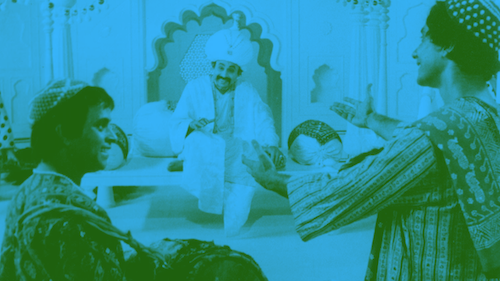
If you aren’t overly familiar with Ray’s filmography but know about his biggest titles, a film like Goopy Gyne Bagha Byne will greatly confuse you: the Satyajit Ray made a musical, fantasy-comedy about awful musicians who become responsible for preventing a war and meet the king of the ghosts? The fact that this film is remotely good is a miracle; when you consider that Goopy Gyne Bagha Byne is actually brilliant, it feels impossible. It’s true. This goofy film is actually special (consider how highly I have rated it on a list of this quality). Part of the magic is that Ray is serious about making this film come to life, ensuring that it dazzles and cheers up his audience; the film also never comes off as self serious either, which is important. All of this is an effort by Ray to honour the invention of his grandfather, Upendrakishore Ray Chowdhury, who wrote the original story, and all of his love and dedication results in a generational passion project; it’s only fitting that Ray’s son, Sandip Ray, furthered the series with the third film Goopy Bagha Phire Elo in 1992 (which Satyajit Ray wrote).

10. Two
The best of Ray’s shorts (and not a documentary like the others), Two is not based on one influence in Ray’s life like his other shorts are. Instead, it is an unlikely pairing between two children. One comes from a rich family, and the other is from an impoverished shelter nearby. They compete in the one way that unites these two different walks of life: the act of play. There isn’t even a single line of dialogue. The film communicates via their trials. They compete with each other, trying to one-up the other as proof that they have a richer life over the other (is how I interpret it). Seeing Ray weaponize toys in Two is enough to leave you speechless; these are much more than play things. These are symbols with entire lifetimes of truth within them. These are the objects held by children who are already trying to knock the other down when they should be friends without any malice towards one another. Two is more than a short about feuding kids: it is a disheartening look at a society that has failed the next generation.

9. Days and Nights in the Forest
Ray is excellent at creating character studies, but a bulk of his films analyze one or two key characters. With Aranyer Din Ratri (or Days and Nights in the Forest), Ray is taking on four different characters and the many ways they compliment or differ from one another. If Ingmar Bergman’s Wild Strawberries is a road film about someone who is looking back on their life via his many diversions on his journey, then Ray’s film is the start of a series of lives and, essentially, where the path will split for all of them; they discover all of the ways that they are not on the same page in this film. Yet, their separation is somewhat beautiful as Ray allows each character to grow and shine. Ray’s philosophical, ambitious conquest here paints a nuanced portrait of society in a way that isn’t even monumentally overwhelming; even our small web of acquaintances can be a breathtaking, eye-opening series of multitudes and facets. Days and Nights in the Forest is Ray’s ultimate test of creating characters; not only does he have strong people in his film, he finesses how they exist in the capacity of one another and independently with great ease — he’s just showing off, here.

8. Mahanagar
While not a part of the Calcutta Trilogy, Mahanagar — The Big City — is one of his best films about the city and its overwhelming nature. Our star, Arati, needs to support her family and so she accepts a job as a saleswoman (against her husband’s wishes). She works her way up while her husband gets laid off, and the once-traditional household gets subverted in tremendous fashion in Ray’s classic film. What a celebration of women, only for Ray to acknowledge the likelihood of what would happen in such a situation; the disappointment of typical, societal suffocation. Maganagar goes from a rebellious picture to the full-on embrace of stigma: if we do not go forwards as a society, we go backwards. From progress to uncertainty, Mahanagar is Ray’s way of pulling the rug from underneath you in a world that already feels too big to navigate, let alone take control of.

7. Ashani Sanket
What do we sacrifice in order to help others? Would we do the same if we are in dire need ourselves? Ashani Sanket (or Distant Thunder) sees a Bengal in ruination during the Second World War; the Great Famine is taking over many communities. Ray never sugar coats the scale of such a tragedy in Ashani Sanket: this is a crisis that claimed millions of lives. He reminds us of the brutal reality that lower-class communities are already powerless; when they are starving, they have literally no say in their fate. The bleakest film Ray ever made by far, Ashani Sanket does have glimmers of hope in the efforts of those like our leads — those who wish to make a difference when society is falling apart. When Ray focuses on a select few people (be they those who are in dire straits, or those who give up everything to help the needy), Ashani Sanket reveals its power: the importance of a life and the insurmountable magnitude of a civilization in peril.

6. Apur Sansar
Trying to rank any part of the Apu Trilogy is almost a foolish task, seeing how integral each segment is to the other in order for the full trilogy to work. To try and take it apart at all is unwise. However, while I have kept some trilogies together in past lists of my Filmography Worship series, those were for works that — I feel — are meant to be seen as one sole film. The Apu Trilogy is still meant to be a trilogy of separate parts of a whole story. With that in mind, I will place Apur Sansar— or The World of Apu — last only because I feel like it is (barely) the weakest on its own (its true power is at the end of this massive undertaking, concluding this epic odyssey from childhood to the real world). Feeling as aimless as he did in his youth, Apu aspires for a better reality (after all of his efforts to leave a life of squalor). Perhaps Ray sees himself as Apu, and so do all of us adults who feel as though we are still helpless children trying to figure out their place in the world. This might be the most identifiable part of this trilogy for us viewers: acknowledging that we are forever wondering what comes next. Life isn’t some complete package; much is unaccomplished even when we die. However, you can guarantee that Ray was an expert at extrapolating the most out of the everyday person, and Apur Sansar makes someone’s quest for normalcy and sustainability feel like a mythological epic.

5. Charulata
Many of Ray’s films turn working class folk into icons, and Charulata is no different. Here, the titular character — a housewife — yearns to feel special (nay, important); is that so much to ask for? While her successful-yet-negligent husband remains on his own trajectory, she finds purpose in her cousin-in-law: a like-minded individual who makes her feel seen, supported, and loved. Things are not so simple in Charulata, seeing as Ray never loses sight of the tragedy of such an overlooked life to begin with. He makes his character matter to us via strong writing and direction, but it is star Madhabi Chakraborty — who delivers one of the greatest performances of all time — who makes her life feel crucial to us. In a way I can only compare to Alfonso Cuaron’s Roma, both films are heartbreaking looks at overlooked lives who their respective filmmakers transform into mythological beings (perhaps Cuaron was inspired by Ray). Despite how otherworldly Ray shoots Charulata, her suffering makes her feel so human to the point that you feel her pain within you. With the film’s famously ambiguous ending, do you go with your heart or your mind: a cinematic deception, or the harshness of the reality of the situation? Ray, like Charulata, allows you to dream if you want to.
4. Aparajito
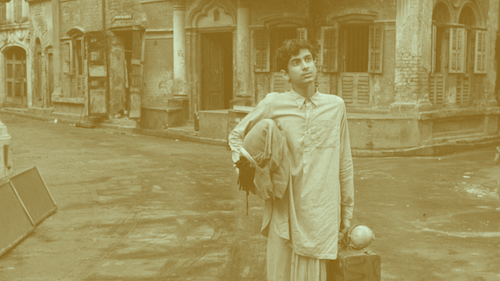
The second part of the Apu Trilogy (and the winner of the Golden Lion award at the Venice Film Festival), Aparajito takes us from Apu’s youth to his formative teen years. When you consider that this is the middle of a three-act structure, it should realistically be the weakest film of the trio; however, the fact that Aparajito can stand on its own is incredible. The major connection here is between Apu and his mother (even though a major theme is his place in India and, additionally, the world), and Ray makes sure to keep that the central purpose of this part of the triptych; it’s the key element that helps it stand out amongst the others. What does it mean when we leave home? When we wish to be different than the goals our parents set for us? Aparajito is a two way street. We cheer for Apu when we see him study and go places academically, but then we grapple with the severity of what is in store for Apu: the unfortunate turning points that make him an adult. It isn’t the lessons we experience in school that shape us as much as it is the tragedies we overcome.

3. Devi
How do we match the bars set by our parents? Ray takes the frequent possibility of a child disappointing their parent to a whole new extreme in Devi via a borderline ludicrous plot: a father who has a dream that his daughter-in-law is actually a goddess. Instead of this ridiculous prophesy being shot down instantly, the insanity of this situation grows larger and larger; this take on ridiculous expectations turns into a commentary on the objectification and misogyny of women in society (once our lead character becomes an idol to many). In case it isn’t obvious, I have appreciated the vast majority of Ray’s films, but Devi took me to places that most of his other films didn’t: a weightlessness that only a select handful of works can fulfill. I simply couldn’t believe what I was seeing in Devi — the equivalent of a car accident that you wish to prevent but have zero power over. How could we fail a little girl this badly as a society? Why do we put so much stock in faith-based concepts over concrete facts? How do we listen to lunacy over the cries of the real?

2. The Music Room
How much value do appearances grant? The Music Room sees a landlord who misconstrues his passion and nostalgia for music as a means of outshining his richer neighbour. He pawns off various valuable items as a means of fulfilling his dream, even though it places him and his family in unfortunate economic positions — people are unhappy despite having everything they could have ever hoped for (the grass is always greener). Watching our protagonist slowly lose everything that matters to him is devastating, but he is simply addicted to this cause when, in reality, it matters to no one but him. Losing sight of everything and being brought to complete delirium, this psychologically draining drama shows how broken someone can get in Ray’s cataclysmic fable. Ray’s most aesthetically poignant film, The Music Room allows us to know what glory feels like before we feel it all slip away in the hands of someone who simply needed more and winds up left with nothing. It would be one thing to watch someone throw their life away; when The Music Room showcases the decimation of entire legacies and provenances, you know how deeply this concerns Ray.

1. Pather Panchali
Placing only one film first in this list may have been the toughest task I have had doing any of these Filmography Worship articles; I struggled figuring out the placement of the top seven films here. Ultimately, I went with Pather Panchali (the first film of The Apu Trilogy) for a couple of reasons. It kicks off one of the greatest trilogies of all time, and, while it can easily exist on its own, it is what enriches both other parts (Aparajito and Apur Sansar) so greatly; this film doesn’t rely on the other two nearly as much. Secondly, this being Ray’s debut film, you can feel every ounce of passion and hunger that this then-new artist had making this picture: a neorealist tale this raw, visceral, and honest could only come from someone with untapped talent that was waiting to burst. Sure, part of the appeal of the entire trilogy is watching little Apu age before our very eyes (hence why it is such an iconic series), but to consider Pather Panchali on its own is to recognize what it truly is: a shocking coming-of-age story about a young boy and his harrowing, broken family dynamic — with a father who has left in search for greater opportunities, and his wife left to take care of all of their children by herself (essentially). How will things ever improve for Apu and his family?
When you see the entire trilogy, you acknowledge what Apu overcomes. However, with this first film on its own, it’s a whole different mission: to see another day, and to find the things that will keep us going when all feel hopeless. For two hours, Ray’s picture reminds us of the difficulties of life while reacquainting us with the joys of our childhoods. A bulk of the film circles around Apu and his relationship with his sister, Durga: a major pair of siblings in the sense that they encompass both of Ray’s statements on the outcomes of millions of impoverished children in India (and around the world). This gut-punching picture is equally poetically gorgeous and emotionally destructive. Pather Panchali features the circle of life in the most upfront and devastating way: with the acknowledgment that we should forever cherish life because we have zero indication as to how much time we truly have left. Ray is one of the strongest filmmakers of all time, and I have come to realize that he has quite a few masterpieces under his belt (more than most other directors); however, deciding what his magnum opus is has been a challenge. I have settled on Pather Panchali because of how much he sees himself in this life-changing picture: how many elements he had a hand in as he perfected every little thing to tell this story; how he recognizes both the impossibility of making it out of poverty while facing the very-real odds that many other families are cursed with; setting a mark that he tried to best for the rest of his career. I don’t mean to imply that he never made a film better than his first (again, these top seven are neck-and-neck), but Pather Panchali exemplifies everything that makes Satyajit Ray a major name in cinema (and it just so happens to be one of the most unforgettable films I have seen, which certainly helps).


Andreas Babiolakis has a Masters degree in Film and Photography Preservation and Collections Management from Toronto Metropolitan University, as well as a Bachelors degree in Cinema Studies from York University. His favourite times of year are the Criterion Collection flash sales and the annual Toronto International Film Festival.