
Filmography Worship: Ranking Every Ang Lee Film
Written by Andreas Babiolakis
Filmography Worship is a series where we review every single feature of filmmakers that have made our Wall of Directors

Ang Lee's name is so massive in Hollywood that it sometimes feels untrue that he was a major name in the Taiwanese cinema movement of the nineties. In that respect alone, I find him one of the most fascinating contemporary filmmakers. Next, consider how he tries something drastically new with each and every film. He either attempts a genre he's never handled before (with full gusto or a revisionist mindset), or he attempts technical risks to heighten what filmmaking can be. Needless to say, Lee and his films have been fascinating audiences for decades. He holds the bittersweet accolade of having two Best Director wins at the Oscars with zero Best Picture awards (he shares such an accomplishment with Mexican titan Alfonso Cuaron); I think we all know that Lee deserved at least one Best Picture win by now, and I think most of us can agree what that film should have been. Regardless, Oscar or no Oscar, Lee's filmography is impossible to ignore in this day and age; he is one of the most important Hollywood figures in the twenty-first century.
While struggling to get into university at a young age, Lee was enrolled at the National Arts School in Taiwan by his father, with the intention that he became a professor. Instead, Lee discovered his passion for film there, with Ingmar Bergman's The Virgin Spring proving to be a massive, early influence on him. In a weird way, there is enough thematic crossover appeal between the Swedish auteur and Lee — mainly the expression of repressed thoughts and feelings that explode off the screen. Lee would serve his mandatory military service, and then continue his studies at the University of Illinois, graduating with a Bachelor of Fine Arts. His initial goal was to be an actor, but he found that it was difficult to perform and speak English at the same time. He pivoted to the director's chair and studied furthermore at the Tisch School of the Arts; he was classmates with Spike Lee, and even worked on the latter's thesis film, Joe's Bed-Stuy Barbershop: We Cut Heads. While studying, Lee also met his eventual wife, Jane Lin.
His wife helped him after graduation, since finding work was a huge challenge for Lee. He would write screenplays to get by, including submitting his writing to various competitions. His screenplays for Pushing Hands and The Wedding Banquet — two future films of his — were selected by producer Hsu Li-kong, and Lee's career was finally underway. After releasing three Taiwanese classics (the third would wind up being Eat Drink Man Woman), Lee transitioned to English-language efforts, starting with the Oscar-winning, Jane Austen adaptation, Sense and Sensibility. The rest was history, and Lee would continue to make his mark with Taiwanese/Chinese films and English-language works throughout the new millennium. Like Taiwan's answer to Robert Zemeckis (and, in my opinion, a stronger and far-more consistent answer at that), Lee is forever trying innovative approaches to each film; I will try to detail each of those below. Even when his films fail (and, I would argue, very few do), at least Lee has something to show for them that make them feel unique and worthwhile. Here's to one of the most unique directors of our time. Here are the films of Ang Lee ranked from worst to best.
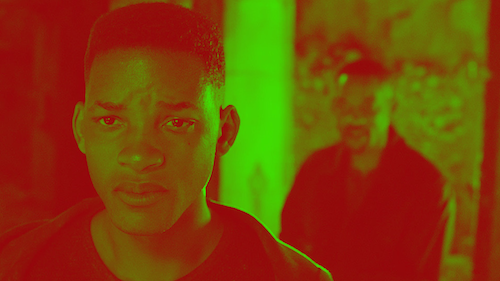
14. Gemini Man
The only Lee film that I think is outright bad is Gemini Man, but I do hold a smidgen of respect for it (I think I shit on it enough in my original review). The idea is interesting. We live in a time where video games are highly respected by many, and the artistry in that medium is now blatant. With so many filmmakers trying to adapt video game properties into motion pictures, it appears that Lee was trying to adapt the sensation of playing video games to the big screen. That seems to be the idea. Now, the execution is whack. The high frame rate becomes headache inducing (120 frames per second is overkill), and it isn't like the story is interesting enough for you to want to muster the eye-sore storm (and, need I remind you, that this is a film about Will Smith being hunted by a younger clone of Will Smith, so how this comes off as boring, of all things, is almost an unfortunate miracle).
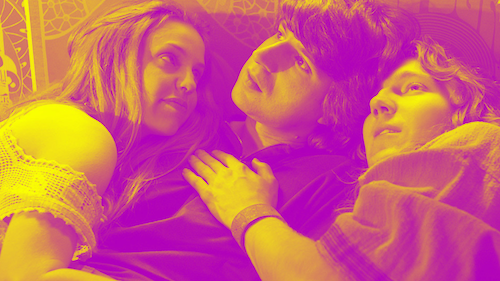
13. Taking Woodstock
I know that there is a bit of a cult following for this film, but I find Taking Woodstock interesting as a story and quite dull in execution. Following Elliot Tiber's perspective of Woodstock and his story of how he lent his family's motel to the concert's organizers, Taking Woodstock is meant to be an insightful look at an iconic musical event that almost didn't happen. Lee places us in Tiber's shoes, even down to a trippy sequence involving the use of hash brownies. I suppose much of the film is meant to show how Tiber discovers himself through all of this, including his sexuality. All in all, Taking Woodstock is meant to be a parade of revelations, but it comes off as dull, unseasoned, and — sadly for a Lee film — a little tame.

12. Billy Lynn's Long Halftime Walk
One of the strangest films in recent memory is Billy Lynn's Long Halftime Walk. Like a blend of both aforementioned films (Gemini Man and Taking Woodstock), this biographical drama about the Iraq War vet and his post-traumatic stress disorder has some interesting ideas. These include the extensive feature of the halftime show that he and other vets — as well as Beyonce — are a part of; as if his visions of war are clouding his mind even during such a big moment in his life. There are bold casting choices, like Steve Martin playing against type, Chris Tucker during a lull in his career, and then-unknown Joe Alwyn to lead the entire film. Then, there are other bold choices, like having the entire film run at 120 frames per second; this kind of works with the halftime sequences (feels like a television broadcast we are enveloped by) and the war flashbacks (and the trauma that ensues), but it is a bit of a disaster pretty much everywhere else. I don't dislike this film as much as some people do, but it's also far from perfect.
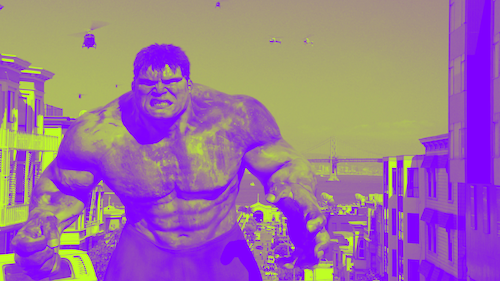
11. Hulk
I have to admit that I have a bit of a soft spot for Lee's Hulk. It came after Sam Raimi's Spider-Man, and it felt like this could have been the future of comic book films when you're a tween or teen like I was. I know that the film is too long, tonally confused, and trying way too much at once (I can turn a blind eye to how poorly the CGI has aged). However, I do love some of the choices Lee makes here; when I was a child, the transition effects that make each image look like a comic book panel leaking into another astounded me. The end result of this superhero film (and psychological drama, let's face it) is quite messy, but I will say that, in hindsight (and without nostalgia goggles getting in the way, either), this feels refreshing compared to the ten thousand Marvel films and series that continue to be released; even if most are stronger overall, Hulk at least feels like it was made by a real person, and I welcome a weaker film with risks over a decent film that feels the same as everything else (but Hulk is still a weak film, all things considered).
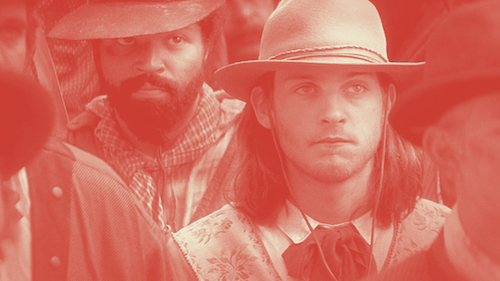
10. Ride with the Devil
We have reached the top ten, and, with that, all of the Lee films I consider good or better. Lee's first brush with the western genre — before the revisionist film, Brokeback Mountain — is this Civil War drama, ride with the Devil. With a highly eclectic cast — Tobey McGuire as a confederate soldier, Jeffrey Wright as a former slave, and pop singer Jewel… just Jewel being here is interesting enough — Ride with the Devil went the distance with either combatting or complimenting what a star-studded cast in the late nineties could look like. The extended cut is the way to go with this one, even if its two-and-a-half runtime feels daunting; you can tell that Lee was itching to create an epic with this film (while he would achieve his goal with other works, at least he gave Ride with the Devil a fair shot with solid returns).
9. Pushing Hands
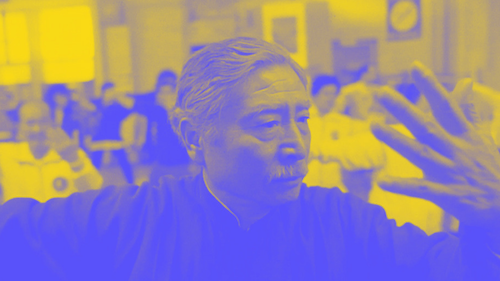
Lee's debut film — and the first film of his "Father Knows Best" trilogy — is a solid, yet underseen, Taiwanese staple. What feels like a clash of Lee's academic upbringings (between Taiwan and America), Pushing Hands is the blending — and contrasting — of cultures and ideas, in the form of a tai-chi instructor living in America to try and bond with his son and his Caucasian, American in-laws. However, this culture and language gap is far from the only details that get lost in translation; Lee paints a picture of a hustle-bustle world in which we all need to take deep breaths and slow things down. Even though I feel like Lee would refine his style quite quickly after this film, Pushing Hands is a pretty good way to start a career: with signs of wisdom and expertise before he even showed his true talent.
8. The Ice Storm
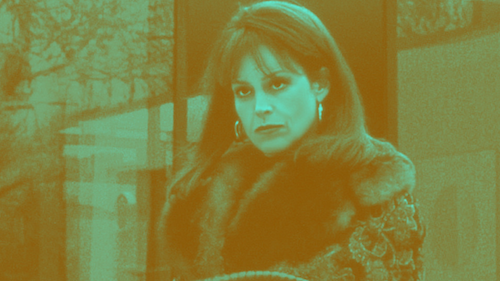
Lee's answer to the archetypical indie film of the nineties is The Ice Storm: a drama that feels more like a Gus Van Sant project than a Lee one. Here, the vices and addictions of suburban families are exemplified via a scrutinization of various households (the Hoods and the Carvers, mainly). Thanksgiving weekend becomes an allegorical timeline for our various citizens to double-down on their obsessions, guilt, and regrets; meanwhile, the threat of climate change — in the form of the titular phenomenon — looms over our characters, like a play whose curtain is descending, whether our actors clear the stage or not. In a sense, our characters are destroying themselves in the same way that the planet is self-destructing (then again, humans are responsible for this impending ice storm as well). Like an American Beauty before Sam Mendes's film got released, the melodramatic collapse within The Ice Storm may have seemed excessive for its time, yet it speaks to the maximalist, anxious, and heavy art that dominate contemporary cinema; it has aged quite well.
7. The Wedding Banquet
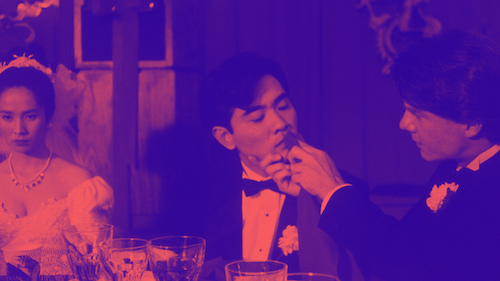
It was only Lee's second film when he was officially a must-watch filmmaker. Also the second film of the "Father Knows Best" trilogy, this highly progressive film was already pushing the boundaries of Taiwanese cinema (in the same way that Lee would encourage Hollywood to do the same). Following a queer Taiwanese-American man who is seeing someone already, The Wedding Banquet details his two-birds-one-stone plan: he "marries" a Chinese woman to help her obtain a green card, while he convinces his family that he is actually heterosexual so they can stop prying into his life. Naturally, this sets off a chain reaction that spirals out of control. Underneath the comedic calamity, there is a tragic angle: from a character who cannot be open about his sexuality, to another who is finding it hard to assimilate and call a place home, The Wedding Banquet connects us with people who are unable to be the true selves in an intolerant world. Even so, Lee has enough optimism and hope that render The Wedding Banquet a fun and engaging time, even with its sad core.
6. Lust, Caution
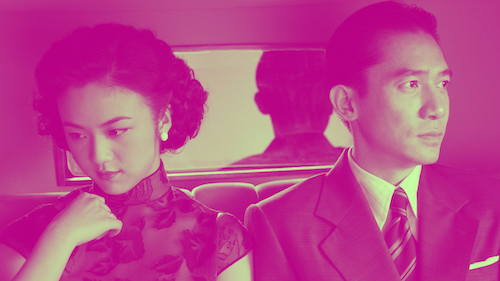
What has been poorly shunned as simply "that one film with the non-simulated sex scenes" by some has been rightfully celebrated as a powerful, erotic espionage film about deep desires and incriminating secrets. Lust, Caution was so taboo for its time that Lee got into a bit of hot water (and star Tang Wei, later known for films like Decision to Leave, had her entire career on the line). Lee isn't the first or the last director to include such explicit and pornographic sequences in a film, but I will say that his shots actually feel artistic and effective (compared to, say, a Gaspar Noe or a Lars Von Trier). Here, Lee uses such sequences to detail a political game of chess during World War II: one where the pieces are thrown out the window when love intrudes (there is a conflict between complete devotion and unbridled reservation during these moments of intimacy). Lee's experiment results in some genuinely shocking revelations, mainly because he was so successful in bringing our guard down, making us feel vulnerable, and placing us in the mindset of people who are calculating far too many moves mentally while yearning for love emotionally — driven by two devoted performances by Tang and Tony Leung.

5. Life of Pi
There is no way that Yann Martel's Life of Pi could have been made into a feature film, let alone an excellent one. Lee takes this near-surreal, fairly meta, coming-of-age novel — about a stranded man nicknamed "Pi", a Bengal tiger named Richard Parker (from his family's zoo), and a handful of other animals — and turns it into a spellbinding feast for the senses. On that note, Lee was one of the only auteurs to truly capitalize and revolutionize that brief 3D film craze that followed James Cameron's Avatar; Life of Pi is easily one of the greatest films to utilize this gimmick (especially any of the watery landscape shots, or that breathtaking transition of Pi swimming across our gaze) — I wish more directors followed suit instead of cheaply using 3D technology to sell more expensive tickets. After a soul-crushing first act (you know a film is effective if it gets you sobbing before it truly takes off), Life of Pi's survival tale makes you feel two parallel sensations. The first being that you are trapped alongside Pi, and that there may actually be no way out. Then comes the mediative journey, where Life of Pi becomes a transcendent, unforgettable union between biology and the spirits all around us. Life of Pi greatly excels at both.
4. Eat Drink Man Woman
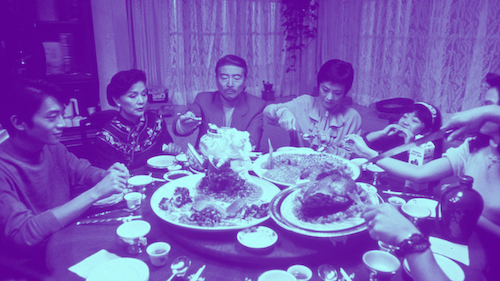
The best film of Lee's excellent "Father Knows Best" trilogy is Eat Drink Man Woman: a monumental film of nineties Taiwanese cinema. One of the great works of the niche food film genre, Eat Drink Man Woman finds unity amongst family members over the joys of nourishment and cooking. Otherwise, there is a clear disconnection between a father and his three daughters, and their individual lives threaten to fracture the family furthermore. Lee smartly uses the act of self-sustenance as a means of showing the impact of guidance in a child's life (yes, even if they are adults, they are children to their parents) in this bittersweet look at letting go, self-discovery and exploration, and navigating trauma and depression together or alone. Eat Drink Man Woman is all about the replenishment of our souls in whichever way works; Lee's homely and sublime direction makes his film its own tool to repair your broken heart.

3. Sense and Sensibility
The costume drama can often be where promising filmmakers go to die, with high ambitions and expectations with very little return. Or, you can be Lee and make a period piece classic that matters. Of the countless Jane Austen adaptations, Lee's Sense and Sensibility is easily one of the greatest examples. While this film can certainly be chalked up as an Emma Thompson passion project (she not only stars as the iconic Elinor Dashwood, but she solely wrote the Oscar-winning screenplay as well), it is Lee's direction that makes Sense and Sensibility as lush, moving, and pleasantly depressing as the film is; this is somehow both dainty and devastating. It takes a lot of talent for a film to play the part of a genre without really trying to rewrite the rule book, whilst also being one of the leading examples of said genre; Lee's Sense and Sensibility shows how far traditional costume dramas can go if a filmmaker is inspired, creative, and serious enough (and not just trying to cheaply gain a ton of awards the easy and mediocre way).
2. Brokeback Mountain
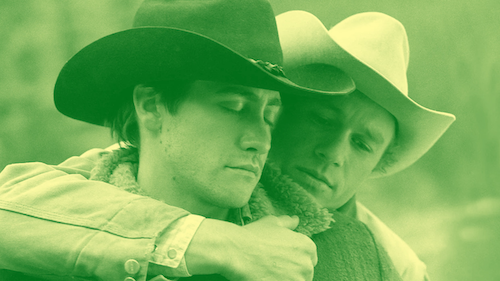
Lee's top two films are almost interchangeable because of how crucial they are for different reasons. Narrowly in second place is the romantic, revisionist western, Brokeback Mountain: the film that aches your heart when you watch it and guts your soul when you are forever reminded that this did not win Best Picture, losing to the forgettable and imperfect Crash (it is clear that Brokeback Mountain came out during an era of intolerance and backwardness). This tragedy between two shepherds and their unexpected love for one another over the course of generations and chapters in their respective lives is one that continues to shatter us. No matter what your orientation is, the themes of forbidden love and conflicted adoration are universal; even so, Lee's handling of this queer story of heartbreak is honest, upfront, and magnificent. With two committed and powerful performances by Heath Ledger and Jake Gyllenhaal (and a slew of fantastic supporting work behind them), Brokeback Mountain is one of the weightiest films of the twenty-first century: an examination of the undeniable adoration that stems from longing and loss.
1. Crouching Tiger, Hidden Dragon
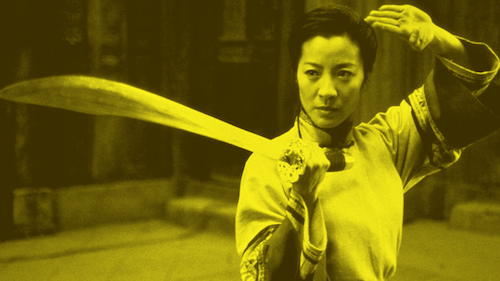
As much as I love Brokeback Mountain, I am going to give Crouching Tiger, Hidden Dragon the very slight edge in the sense that I find it hard to top a film that might be in the top five of a genre for me. Yes, it is true. Crouching Tiger, Hidden Dragon would make my Mount Rushmore of action films (and I do mean in an "all-time" sense). In fact, I will go one step further. Lee was trying to pay tribute to the then-extinct wuxia genre with this callback to the ways of the soulful, majestic, fantastical action genre (and its use of mixed martial arts in ways that feel mythological and other-worldly); instead, he created the greatest wuxia film of all time. What helps as well is Lee's focus on practical effects to make his fighters feel like Gods — as they walk along the tops of trees, break the floor tiles below them with crushing strikes, and twirl in the air as if they are submerged in water. Compared to, say, Lee's Hulk, Crouching Tiger, Hidden Dragon still looks phenomenal over twenty-five years later, and it has to in order for its powerful poetry to truly work (what good is a spiritual film that you cannot feel because you are too distracted to let it consume you).
Lee tells a tale of old and new through an eighteenth-century lens; warriors of yesteryear are confronted by a younger thief who they pursue (to retrieve the Green Destiny sword). What unravels is a number of revelations of self — be they reflections on the past and the present, former loves, hidden motivations, and final forms (via incredible fighting sequences). With that in mind, the entire film is already perfect: this is a rare action film that will leave you bawling — out of pure beauty, sadness, and awe. I must also point out the greatest action sequence of all time: the iconic throne room fight between Michelle Yeoh and Zhang Ziyi's characters. The generations of old and new rifle through a slew of weapons against one another. In my near-forty years as a cinephile on Earth, I have never seen an action sequence that has dazzled, amazed, and stunned me as much as this one does on the thirtieth watch, let alone the first.
To know these characters as mythological, near-biblical beings is to know what losing them feels like as well. No matter how strong these fighters are, they are still penetrable and mortal. Crouching Tiger, Hidden Dragon creates a trust between us and these beings that are painted out as untouchable superheroes, only for Lee and company to make us know what losing them will feel like. With a cataclysmically devastating climax — the kind that dispels the scope of mythos — Crouching Tiger, Hidden Dragon almost becomes a parable; these aren't extraordinary people, but, rather, how extraordinary someone appears in your eyes if you cherish or fear them (both contrasting sensations provide a similar result). Despite the difficult competition (especially from Brokeback Mountain), to me, Lee's masterpiece is Crouching Tiger, Hidden Dragon because of how effortlessly he is able to make a film that is such a visual spectacle, a technical thrill, an emotional roller-coaster, and a spiritual cleanser. When I was a kid, this is what movie magic was all about. As an adult, this remains one of the very few films to still make me believe in the magic of motion pictures, as if I were watching films for the very first time again. I cannot thank Ang Lee enough for that.


Andreas Babiolakis has a Masters degree in Film and Photography Preservation and Collections Management from Toronto Metropolitan University, as well as a Bachelors degree in Cinema Studies from York University. His favourite times of year are the Criterion Collection flash sales and the annual Toronto International Film Festival.