
Filmography Worship: Ranking Every Howard Hawks Film
Written by Andreas Babiolakis
Filmography Worship is a series where we review every single feature of filmmakers that have made our Wall of Directors

It isn’t uncommon for filmmakers to take on multiple kinds of genres nowadays. However, back in the Golden Age of Hollywood, someone this versatile was a dime a dozen, especially when they are as eclectic as Howard Winchester Hawks (one of the first chameleon auteurs in cinema). It would be one thing if Hawks simply made films in these genres, but the fact that he has made stone cold classics in the screwball comedy, traditional western, musical, film noir, biographical picture, and romances (amongst even more labels, believe it or not) is a testament to his ability to change shape for any assignment. Furthermore, he was an early example of a Hollywood triple-threat who directed, produced, and wrote on the regular; with nearly forty films to his name and a frequent rate of output between the twenties all the way to 1966, this is an incredible sign of endurance. Hawks’s origins are a bit different than what you’d expect for a filmmaker. A budding, barnstorming pilot, soapbox driver, and tennis player during high school, he was as much a jack of all trades in life as he was as a filmmaker. He was recruited to serve for the United States Army during World War I. While there, he taught soldiers how to fly planes. Hawks’s expertise in flying connected him with many pivotal names, like cinematographer Victor Fleming and Hollywood mogul Cecil B. DeMille. After the war, Hawks was keen on using his knowledge and relationships to make his own motion pictures.
After being a prop boy, story editor, and a number of other positions, Hawks started directing his first works during the remaining years of the silent era. He kicked off his prolific streak right away, with seven silent films in the span of three years (The Road to Glory and The Cradle Snatchers are lost to varying degrees, and sadly won’t be considered on this list — nor will his first talkie, The Air Circus). Hawks was quite a booming presence during the pre-Code era as well; his repertoire here includes crime films, melodramas, and war pictures. The rest, as they say, is history. Hawks was everywhere in the thirties, forties, and fifties. If you watch a lot of films but, say, have a faulty memory as to who directed what films, chances are you are already quite familiar with Hawks’ works and just didn’t know it (nor would you believe that the guy who directed “X” also directed something as different as “Y”). Using his technical expertise and thirst for thrills in his films, Hawks not only figured out how to nail cinema as a spectacle, he was paving the way for the complicated choreography and precise stunts in his works (even in something as innocent as a romantic comedy, Hawks was trying new and challenging things).
Hawks worked until 1970 when he started developing Parkinson’s; an injury on the set of his final film, Rio Lobo, also crippled his leg and made it difficult for him to continue producing films. Hawks would pass away at the age of 81 in 1977 from prolonged complications after a fall. Half a century later, his influence only grows more and more. While he may not be as widely celebrated as a number of his Hollywood peers, Hawks is essentially your favourite director’s favourite director. The way he transformed depending on the project that he worked on is otherworldly; his style would always be present, but Hawks also never let himself be completely defined by a set of expectations and signature traits. The Hawksian woman character also proved to be monumental; the ways he wrote women with the same care, substance, and complexity as he wrote men was highly ahead of its time (and you will likely come across some fantastic female characters in the list below). While I have learned that there are some Hawks films that I do not need to see more than once, of his nearly-forty existing titles, there are quite a few motion pictures that I now could not imagine my life as a cinephile without. If there is a director who could cater to any mood you are feeling, it’s this trailblazing dare devil who helped set the tone for Hollywood during its formative years. Here are the works of Howard Hawks ranked from worst to best.

36. Today We Live
The writing of William Faulkner doesn’t translate to the big screen all that well in Hawks’s Today We Live: a World War I-based romantic drama. Despite its leading cast — a young Joan Crawford and Gary Cooper — Today We Live is quite a flat and uninspired film: it almost feels paradoxical because the story has almost too many disparate ideas thrown together, so you would think that a film like this would feel overworked (instead, it is under-cooked). I couldn’t justify this underwhelming film as an early Hawks film since he was clearly releasing some gold in the pre-Code era; this is simply a misfire.

35. Paid to Love
I think Paid to Love’s biggest issue is when it came out. If this were a thirties screwball talkie, I think that this complicated, economical scheme of a story would have made more sense (especially with that rapid-fire Hawks dialogue that the director would become known for). However, as a silent film, Paid to Love comes off as overly complicated (having four credited screenwriters doesn’t help) and simplistic at the same time. There’s an interesting story here, but Paid to Love doesn’t best represent it.
34. Red Line 7000
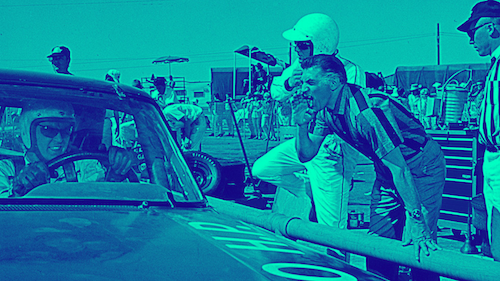
One of Hawks' more polarizing efforts is Red Line 7000: a film that should have been a slam dunk, and yet it feels more like just constant noise and chaos for the sake of it. Considering Hawks's affinity for racing, this narrative web of race car drivers and their relationships to their girlfriends should feel like an effortless feature for him. Instead, it is all action and next to zero narrative semblance, so much so that Hawks and star James Caan wrote off the film even only a couple of years after its release. Outside of some fun racing stunts, Red Line 7000 is mostly a flat-lined film with zero spark.
33. Fig Leaves
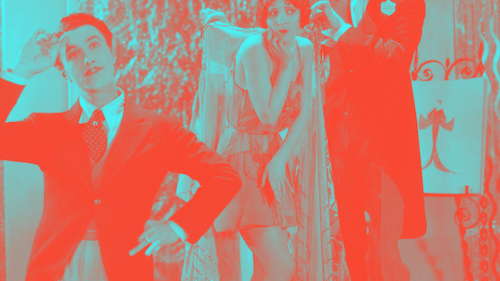
In his earliest surviving film, Hawks modernizes the biblical story of Adam and Eve in Fig Leaves. Instead of the traditional Garden of Eden with the forbidden fruit, our couple now lives in the Big Apple; what is a little strange is that there are still remnants of a fantasy world of yesteryear here shown in the dated technology (or lack thereof) despite being a then-contemporaneous story. With Adam as a plumber and Eve as a flapper, this comedy (of sorts), there is clearly some sort of intended commentary that Fig Leaves is trying to project (maybe about the never-ending gender expectations), but the film doesn’t really figure itself out for that message to come through in one piece. At least I can say that the early inclusion of colour via 2-strip technology for one sequence is a fantastic addition for its time.

32. Tiger Shark
An early attempt by Hawks to make a different kind of romantic drama, Tiger Shark is a lot of creative choices and very little cohesion or substance. Featuring Edward G. Robinson with a Portuguese accent that may make you think he's actually Irish, this tale of a fisherman, his wife, and the man the fisherman saved becomes a love triangle where you won't feel like rooting for anyone. At least the actual fishing sequences are kind of remarkable?

31. Fazil
While the silent — excuse me, sound synchronized silent film — Fazil feels like Hawks trying his best to explore his artistry as a director, there isn't much to save when a screenplay like this feels dead upon arrival (again, another film with a handful of screenwriters, and yet this is a run-of-the-mill romantic drama about culture shocks and sociopolitical discrepancies between lovers). Sure, Fazil looks nice and the sound palette is quite something for its time, but this is highly forgettable outside of these flourishes.

30. A Song Is Born
The Golden Age of Hollywood saw many reasons for directors to remake earlier films of theirs; Hawks utilized the revolution of Technicolor (this would be his first film to use it) to remake his screwball classic, Great Balls of Fire, into a musical named A Song Is Born. With a slew of iconic jazz musicians like Louis Armstrong, Lionel Hampton, and Charlie Barnet, A Song Is Born should be a show-stopper. Unfortunately, it feels far more rudimentary than its source material, and all of the cameos and vivid colours can only do so much when this only feels like half the film the original was.

29. The Crowd Roars
What is the point of competing if you do not want to come first? However, what is the price you pay should you win? Hawks's The Crowd Roars dares to complicate the sensation of triumph when a racing legend is now having to face his younger brother in a local race. Furthermore, the eldest brother gets in the way of his sibling's love life as well, meddling in far more than their shared passion for auto sports. While the racing sequences are quite fun, The Crowd Roars is an ironic title for a film that feels a bit more than a ho-hum affair, while it never fully rises to the occasion.
28. Rio Lobo
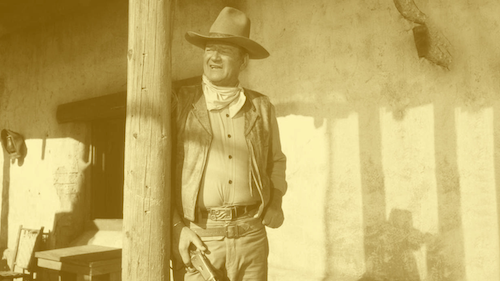
Hawks' final film, Rio Lobo, is an answer to El Dorado (which, in itself, is an answer to Rio Bravo). Ending on one of his signature westerns, Hawks uses Rio Lobo as an opportunity to return back to the same well once more; his past hang-out westerns were game changers, so third time's the charm right? However, what is a hang-out if people have run out of things to say? Rio Lobo is a bit of a whimper to end a massive career on, considering how little it offers to both the western genre and Hawks' filmography as a whole; what may be fun to produce does not always translate well to the big screen, and a film like Rio Lobo — which is lovingly made but empty and soulless — proves it.
27. Land of the Pharaohs
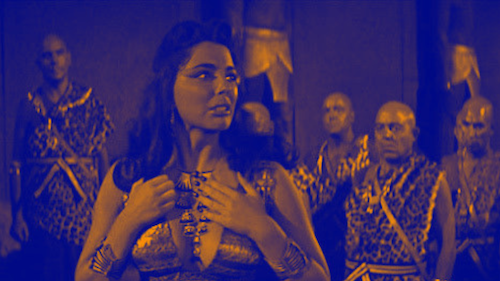
When the Hollywood epic was on the rise — and both Technicolor and CinemaScope were booming — such was the perfect time for Hawks and company to make a film like Land of the Pharaohs: a massive historical film about the construction of the Egyptian pyramids (with a reported cast of thousands of people). Hawks turns a historical tale into a sword and sandals drama about deception and corruption. I feel like the film gets in its own head a little bit: trying too much in ways and too little in others. With a slew of instances of brown face (a hideous look by today's standards) and some instances where the film surrenders to convention and expectation, Land of the Pharaohs is entertaining because of its ambition and technical capability, but its flaws cannot be ignored.
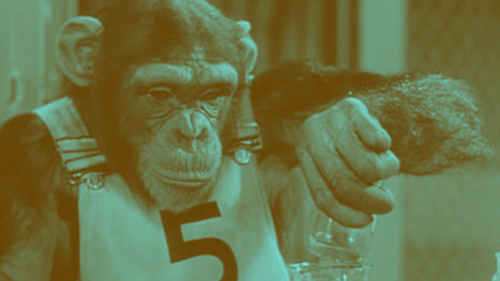
26. Monkey Business
You remember how Hawks directed a film starring Cary Grant, an iconic actress, and an animal in Bringing Up Baby? Did you ever want to see him try this again, except the leopard is now a chimpanzee, Katharine Hepburn is now Ginger Rogers, and the story is now about a chemist and the titular creature discovering the capabilities of the fountain of youth? If your answer is "yes," then Monkey Business is, indeed, a real film that feels quite insane for Hawks — as if it was a ChatGPT-generated idea seventy years before that was even a thing. If your answer is "no," you might hate Monkey Business. For me personally, this film is so bonkers that I have at least some appreciation for it despite its lunacy.

25. Air Force
Even though it was always easy to discern what Hawks's politics were when watching his films, Air Force maybe feels the most like his answer to the propaganda film. Now, part of me feels like this highly-American endeavour is propelled by Hawks's affinity for flying (naturally, these sequences are gorgeous). Otherwise, this Pearl Harbor story feels more like a technical exhibition more than anything else (it can drag a little bit at times, unfortunately). If you want to watch any plane-based film Hawks ever made, then Air Force is sure to scratch that itch of yours. If you are anticipating one of Hawks' narrative whirlwinds, then you may not quite get what you desire.
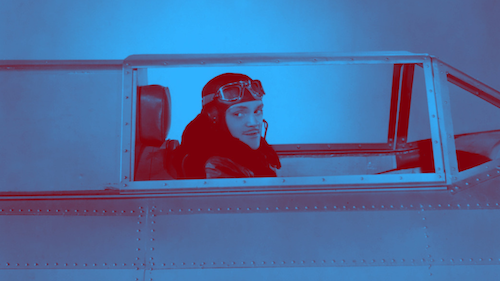
24. Ceiling Zero
Hawks tried to merge a few of his passions — flying, war dramas, romantic tales, and comedy — in a film appropriately titled Ceiling Zero (where the sky seemed like the limit, but perhaps Hawks got caught up a little bit in the thick of it all). Between the flying stunts, occasional moments of comedic relief, and the doses of super seriousness that stem from consequential actions, Ceiling Zero is the kind of film that will understandably have its superfans; I think it is quite good but maybe trying to pull off a little too much when it could have afforded some authenticity (it comes off as a wee-bit theatrical and, as a result, melodramatic in a non-complimentary way).

23. I Was a Male War Bride
Two of Hawks' signature genres — the screwball comedy and the war drama — come together in I Was a Male War Bride: a series of hijinks based on a very real and serious matter. A romance unfurls between an American lieutenant and a French captain, and much of I Was a Male War Bride is spent on the precariousness of Germany post World War II. The film takes a bit too long to get to the meat and potatoes of its insane premise: Cary Grant passing off as a woman to use loopholes and use the War Brides Act to obtain a visa. Even with the narrative meandering, this is a Hawks deep cut that might tickle your fancy should you be craving some of his sillier efforts.

22. The Big Sky
We have reached the threshold; anything from this point on is a good-to-excellent Hawks gem in my books. We start of with The Big Sky, which is, indeed, a big film. Hawks' scope is sizeable, as this western feels like it goes as far as the eye can see. The survival element — between the central mountaineers and those around them — makes The Big Sky feel like a daunting, enthralling exploration. Then, there is the film's excessive runtime during an era where Hollywood compulsively felt the need to keep going bigger; two hours and twenty minutes is just a little too long for The Big Sky. Outside of the occasional glacial moment, The Big Sky is a classic Hawks western through and through.

21. The Criminal Code
Hawks' pre-Code crime films never forget the price one pays when they dip into the underworld. He would get better at having finesse while detailing these karmic tolls, but The Criminal Code is a strong-enough early entry by Hawks. Following a convict who now has the opportunity to be the chauffeur of the very man who prosecuted him (and is now the prison warden), The Criminal Code sets up a peculiar-yet-realistic hierarchy within the prison system: one that exhibits corruption, vices, and cyclical patterns. How can one succeed when their demons keep pulling them back? How can one cleanse themselves when society doesn't really care about their progress or wellbeing? The Criminal Code is one of the more under-discussed Hawks films that might be worth your time.
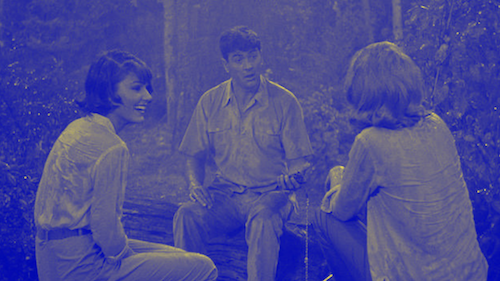
20. Man’s Favorite Sport?
When one is all-talk with nothing to show for it, you must call them out. I'm not sure if Hawks was fighting back at critics when he released Man's Favorite Sport?, but it sure seems like he had some legitimate points (yes, even I, a critic, can agree). However, Hawks doesn't use film to display these arguments: he uses the world of fishing. Rock Hudson stars as a supposed fishing guru, but the catch (heh) is that he has never even fished; all of his proclamations do not stem from his own experience. Once he is now forced to partake in a fishing tournament, all hell breaks looks. Hawks' Man's Favorite Sport? could have been a goofy and unserious time, but this is a late-career example of Hawks proving that he could still make great screwball films with poignant statements.

19. Come and Get It
A collaboration with filmmaker William Wyler, Come and Get It is an adaptation of Edna Ferber's novel of the same name. This film has tall ambitions in terms of its lumberjack narrative and the romantic complications at its epicentre. What feels massive in scope is a far-more intrinsic story about family and business dynamics — one that feels very Wyler in nature, and yet the film boasts Hawks's visual thumbprint more than anything. While not exactly the zenith of either man's career (I mean, look at what else they both made), Come and Get It is still a solid drama that manages to cram many years of story and history into a lean ninety-minute runtime (perhaps because this was the thirties, and most films were forced to be shorter to account for audio recording costs and capabilities).

18. A Girl in Every Port
Hawks creates an allegory for the expression "there are plenty of fish in the sea" with a bit more humanism in A Girl in Every Port: a silent-film comedy (and Hawks’ best silent film) where two sailors keep finding new women at various destinations. Once they both come across the same "one" — who could only be played by Louise Brooks (she was the it girl of the late twenties) — their friendship gets tested. This buddy-buddy film is equal parts silly and creative, and it never really runs out of steam or entertainment. It's easy to see why A Girl in Every Port feels like the unofficial breakthrough film of Hawks' career: this is the first to feel like a signature film of his (yes, even during the silent age).
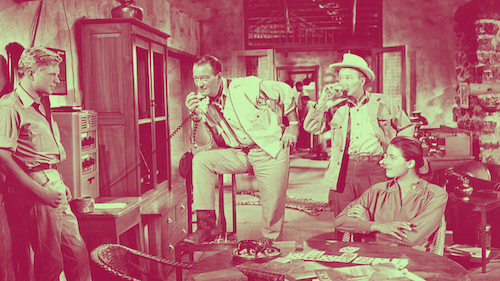
17. Hatari!
One of the things that made Hawks feel special is his tenacity, and a film like Hatari! feels like a director going above and beyond to capture the sensation of love, discourse, and the passion of one's endeavours via the act of game catching. While understandably problematic by today's standards, Hawks' animal capturing sequences are inherently intense: they are technically astounding while also emotionally harrowing. All of this to detail the relationships between complicated people who, coincidentally, behave animalistically with each other. Equal parts an adventure film and a study of the inner spirits and hearts of its leads, Hatari! is a tug-of-war between massive spectacle and engaging character studies.
16. The Road to Glory
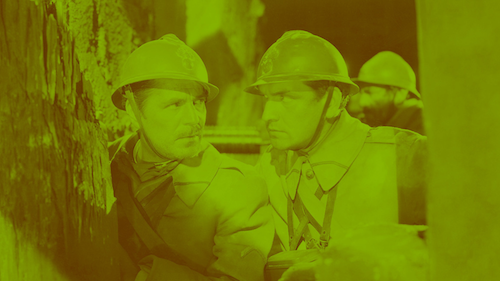
The best of the three films Hawks released in 1936 (the others include Come and Get It and Ceiling Zero) is The Road to Glory. With that in mind, The Road to Glory is a remake: of Hawks's debut film. I cannot compare these films considering that the Hawks original is lost, but this return to The Road to Glory is at least driven by strong performances, pure chemistry, and Hawks's cemented thoughts on war and what it does to people psychologically and emotionally. Focusing on a developing love triangle during World War I, The Road to Glory fixates on the decisions one makes when under duress and with no time for contemplation (so, essentially, when you fly by the seat of your pants). Does it get any more Hawksian than that?

15. The Dawn Patrol
One of Hawks' earliest sound films, The Dawn Patrol feels highly personal to the former flying ace. Following an expert pilot during World War I who becomes responsible for the wellbeing of other pilots (this sounds very similar to Hawks' role as a teacher for fighting aces), The Dawn Patrol gets caught up in the cycle of violence and the never-ending monstrosity of war. Seeing as Hawks didn't have to abide by any Hollywood Code just yet, The Dawn Patrol makes sure to drill its heavy, shocking point home: that death begets death. Featuring some stunning airplane sequences (as is the case with all of Hawks' aviation-themed works), The Dawn Patrol is the yin and yang between Hawks' heart for flying and crushed soul from serving in battle.
14. El Dorado
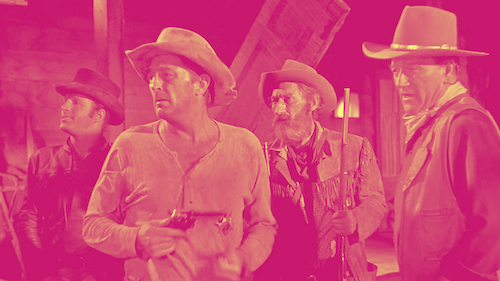
When you make a film as good as Rio Bravo, chances are that the film will be remade. Well, what if the original director decided to be the one who took such a responsibility on? Hawks goes for seconds with El Dorado: another western hang-out extravaganza that isn't quite as good as Rio Bravo (to be fair) but is a guaranteed success for those who loved the original. John Wayne returns, but this time he is matched with the likes of Robert Mitchum, James Caan, and Charlene Holt. I find that there is a bit more substance in Rio Bravo as well, but El Dorado is — essentially — just guys shooting the shit (and, well, shooting in general). Somehow, Hawks makes such a bare concept feel enticing, entertaining, and energetic; this feels especially surprising for a film that is essentially a retread.
13. Barbary Coast
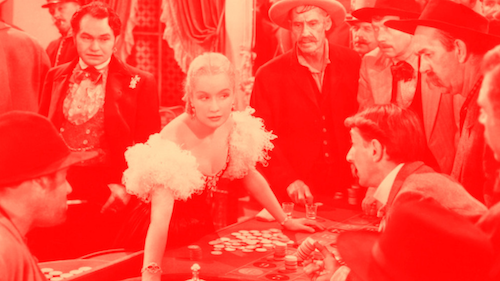
Hawks was always known for his ability to adapt to any genre. However, his knack for combining genres should also be recognized. An example is Barbary Coast, where Hawks amalgamates the classic western with films noir, and the melodrama. All of this boils down to a blistering story about a woman and her brushes with both luck and misfortune during the times of the Gold Rush. Our protagonist is played well by Miriam Hopkins who helps steer this film's highs and lows through the cohesion of a well-plotted character arc. The end result is a bit of a slept-on Hawks title that will make you feel like you have traversed much ground and encountered many life-altering experiences — all in the crisp runtime of ninety minutes.

12. Twentieth Century
Hawks would become one of the masters of the screwball comedy, and the earliest signifier of such has to be his pre-Code film, Twentieth Century. With John Barrymore at the forefront, this story of a narcissistic Broadway producer and his latest disciple (an untrained actress who is becoming the it girl, of sorts) is a contest between braggadocios souls and the importance of being a star (and, as a result, loved). In reality, this is an acting exposition between Barrymore and Carole Lombard, as well as an exercise by Hawks to see how quickly he could have his stars riddling off their dialogue; maybe this was a means of getting as many lines into ninety minutes as possible, but what transpired was Hawks's iconic flow of verbal bullets that would define some of his best screwball works.
11. Ball of Fire
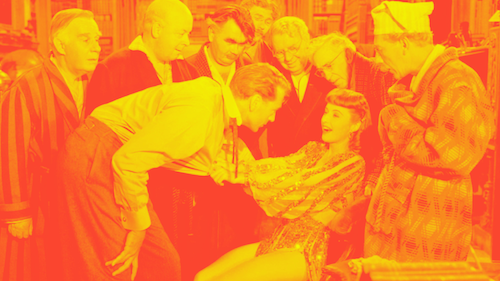
Language is an important factor of Hawks's films, seeing as most of his screwball works deal with miscommunications and misunderstandings. He decided to make such a phenomenon — the inability to converse with ease — an entire film, with Ball of Fire. With megastars Barbara Stanwyck and Gary Cooper at the forefront, this comedy about the evolution of slang is purposefully ridiculous: Hawks leans into the stupidity of certain phrases and expressions while also dissecting them. He must he hip enough to know how to dismantle the language that is usually just squawked out of most people; here, Hawks makes then-contemporaneous language both absurd and fascinating. All of this happens on top of a bonkers narrative that proves to be as chaotic as the language that sits on top of it. Decades later, despite there not being an updated version of Ball of Fire (we can ignore A Song Is Born), Hawks's film still makes perfect sense.
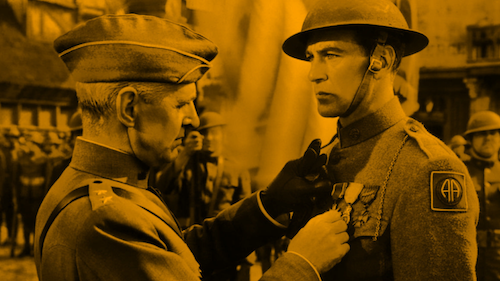
10. Sergeant York
Were you ever a fan of Mel Gibson's Hacksaw Ridge? You know, the film about a pacifist who served in a war without ever firing a rifle and was awarded for his services? Want to see Hawks take on a similar story but with far more complexity? Introducing Sergeant York: a true story about Alvin C. York who, similarly, vowed to not kill during World War I because of his religious affiliations. However, his stance gets tested when he sees his comrades mowed down by enemy forces. He acts out of the necessity of his loved ones; his country; himself. However, he feels conflicted with what it took to survive — he is declared a hero nonetheless. York didn't even want a film to be made about him because of his reservations about what he had to do; I hope he felt that Hawks's Sergeant York was an honest and successful representation of such a textured human being and his biggest battles during wartime.
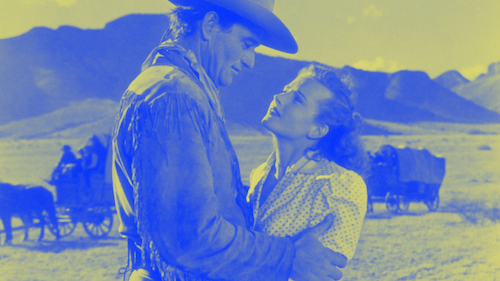
9. Red River
One of Hawks's best westerns is Red River: a journey along the Chisholm Trail with a father, his adopted son, and their massive cattle drive. While not quite the "hang-out" film that Rio Bravo and the like are, Red River allows us to bask in the presence of its characters nonetheless; only, here, things feel a bit more tense (as if all people and cows are walking on eggshells). Between the stunning landscape photography and the hundreds of cattle flocking at every bend, Red River is a classic Hawks production in the sense of its artistic and technical capabilities. What elevates it even more is how much our leads go through as written characters and emotional beings; we face the elements almost as directly as these characters (and cows) do. By its conclusion, this might be the film that makes you wonder how Hawks pulled this off (no, not his films about racing, combat, or plane stunts — but the one about the hundreds of cows going on a nation-wide adventure).

8. Gentlemen Prefer Blondes
Hawks made so many westerns, screwball comedies, and war films, that you knew he would nail one of his many attempts. However, he didn't make nearly as many musicals and had far fewer opportunities to make one of the greats. He still manages to do so with the sublime Gentlemen Prefer Blondes, featuring a dynamic duo of Jane Russell and Marilyn Monroe. This battle of the sexes is an absolute riot — between its cheeky showtunes and the flurry of one-liners that feel like proverbial slaps to the face, this is an endless stream of sass and entertainment. Around the time that the movie musical was both at its highest and slowly on its way out (before its eventual exit in the mid-sixties), Gentlemen Prefer Blondes feels both traditional and progessive: an homage to the ways of old while pushing the narrative and artistic capabilities of the genre in ways that felt like new life could be breathed into it.

7. Only Angels Have Wings
The best plane-based film that Hawks ever directed was Only Angels Have Wings, and it is easy to see why. Hawks took both the thrill of flight and the devastation of risk that he experienced in his personal life and rendered them a powerful fable. Here, the lives of pilots are in jeopardy all in the name of a potential contract that could benefit their air freight service. Hawks is willing to go far enough with what transpires in this cautionary tale, with enough of its results guaranteed to anger you (how could the lives of people be less of a priority than capitalistic gain?). With one of Hawks's weightiest stories and some of his greatest technical sequences, Only Angels Have Wings is a jaw-dropper in multiple ways.
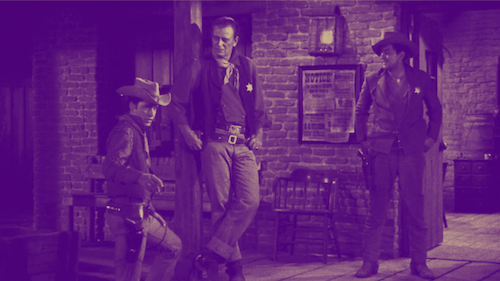
6. Rio Bravo
Of course, this is Hawks' greatest western film (seeing as it is one of the best westerns of all time). Rio Bravo took the concept of the classic western — with gun slingers, outlaws, and towns that ain't big enough for two of these folk — and turned it into a character study. Rendering this established genre as a hang-out film (according to people like Quentin Tarantino), Hawks makes us feel like we are a part of the lonesome west, with dust circulating around us and the possibility of a bullet to graze past our ear imminent. Essentially, we join a sheriff and his unlikely troupe in the unforgiving task of protecting a jail and who it houses. Rio Bravo turns a chore into the very definition of cool (without losing any sense of its danger), and an anxious-yet-enjoyable time with characters you never would have considered (and, yet, they now define a moment in your life).
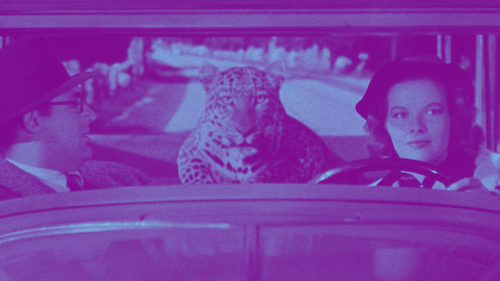
5. Bringing Up Baby
Shockingly, Bringing Up Baby was a box office and critical disaster when it first came out. I guess audiences and critics back then weren’t too keen on a film about Cary Grant as a paleontologist being forced to babysit Katharine Hepburn’s exotic pet leopard. What has rightfully been crowned one of the great screwball films of the thirties since then, Bringing Up Baby is cleverly orchestrated to allow for as many dominoes (or dinosaur bones) to fall as possible; once every piece has been set up, Bringing Up Baby becomes a chain reaction of nonsense, misconceptions, accidents, and a leopard named “baby.” The charm between Grant and Hepburn is undeniable, and their connection helps add some sense into a film as loony and hysterical as Bringing Up Baby. In the hands of anyone else, this could have been a stupid and forgettable film. With Hawks behind the camera, what transpires instead is a human relationship amidst madness and delirium — maybe even one we can identify with despite us never having crossed paths with wild cats or unearthed fossils (at least, maybe not to this degree).

4. To Have and Have Not
The next two films on this list make for an excellent double feature for Hawks, Humphrey Bogart, and Lauren Bacall. First up is To Have and Have Not: one of the best adaptations of an Ernest Hemingway novel in filmic form (and that goes without saying). In a way, you can consider this Hawks’ greatest war film (despite how much of it has nothing to do with actual war-based combat) since you get entangled in the inner-combat politics surrounding World War II. While an expatriate is helping members of the resistance move undetected, our layers get into a complicated romantic debacle as well (the heart wants what it wants, even during the Second World War, I suppose). Both plot lines develop layers and even get entangled with one another, as the fate of our expatriate, his smuggled fighters, and the leader of the resistance (and we cannot forget his wife) gets tossed up in the air; their souls — as lovers, and as living, breathing beings — are constantly in jeopardy in this exquisite war drama.

3. The Big Sleep
The second film of our Hawks-Bogart-Bacall double feature is The Big Sleep: one of the greatest films noir of all time. Part of the appeal to me is how this mysterious story always feels like two streams of thought at the same time: it is always ten moves ahead of its audience, while simultaneously feeling like it is leaping right into darkness without any calculated thought. How could both be possible? In a Los Angeles cloaked in ambiguity, surrounded by crime, and riddled with dark secrets, you will forever feel lost; at least we have the iconic gumshoe, Philip Marlowe, to yank us around at every turn (now, whether he has it all figured out or not is to be determined by the end of the film). This magnificent adaptation of Raymond Chandler’s iconic novel (with a screenplay co-written by another brilliant author, William Faulkner, who actually collaborated with Hawks quite frequently) is to die for (in more ways than one); I know being confused by or lost within a film should not count as selling points, but believe me when I say that The Big Sleep is amazingly impenetrable — to the point that you will once again understand how big and bad it is out there in the real world.

2. Scarface
I will likely alienate many of my readers at this very point. I do not care for Brian De Palma’s Scarface. I think it tries way too hard and feels insanely bloated, outside of a few key scenes for me. Then, there is Hawks’s original take on Armitage Trail’s novel, also named Scarface. Perhaps De Palma was trying to usher in a new age of unapologetic cinema when Hollywood was simmering down a bit in the eighties; at least, this was what Hawks did with one of the great pre-Code gangster masterpieces. Instead of Al Pacino, we have Paul Muni (one of the first — and best — chameleon actors) as immigrant Tony Camonte. This film, by comparison, does not feel like it is trying too hard or going overboard. If anything, it feels more like a very threatening message — as if Hawks has more up his sleeve that we have yet to see (should we double-cross him). Now, Hawks never did wind up being as dangerous or vicious as he is here with Scarface, but what he accomplishes here still feels like a warning more than anything. As it stands, Scarface is a punishing look at karma within crime, with the exemplary choreography of bodies and glass falling — all in the name of chasing the American dream. This is what gangster films look like.

1. His Girl Friday
When a filmmaker has made a variety of different kinds of films, it feels impossible for their greatest work to be a comedy. Then again, only one director has made His Girl Friday. Hawks’ finest achievement is a film with lightning-fast dialogue; half of the comedy is what is being said, and half of it is the speed in which it is being said. These chin-waggers are all journalist experts. There’s editor Walter (Cary Grant), his ex-wife, reporter Hildy (Rosalind Russell), and the fact that she is both leaving him and his firm for her husband-to-be. Furthermore, Hildy is to cover one last piece of scoop — the execution of criminal Earl Williams, who Walter believes is falsely accused (and, it just so happens that Earl is on the loose and is being searched). Oh, and Walter may or may not have framed Hildy’s husband-to-be for theft and getting him locked up in jail. As you can see, the snowball keeps rolling and the insanity only escalates more and more; trying to keep up with the events and how they are verbally relayed is half the fun. Then, there are our amazing leads who deliver two of the best performances in the history of comedic cinema; Grant’s Walter signalling for everyone to “get out” will always pull a guffaw out of me.
Now, if His Girl Friday was just a funny film, it could go down as one of the greatest films of that genre. However, it is also far more than that. It actually is an excellent journalistic film as well: so much so that the central case is a compelling one that we are made to care about, and this only adds fuel to the fire (the calamity worsens when the people involved matter to us, and we are also drawn to what is transpiring). With everything considered, His Girl Friday is simply galvanizing. One of the most energized films in all of cinema, His Girl Friday delivers narrative updates and pivots at breakneck speeds (and jokes at an even faster rate). While you may feel your head spin, you can still make sense of what is happening amidst all of the chaos. This is what it feels like to navigate information at lightning speeds — or to be in the head of a master of journalism. Howard Hawks allows us to feel like we are a part of this team during their breakthroughs and their crises; the fact that no one here feels above their audience is a major reason why His Girl Friday works so well (in that same breath, they trust us with their speedy dialogue, complicated plot, and dizzying revelations, so they take us seriously in this respect as well). All of this amounts to a film that most cinephiles will recognize in three simple words: when you think of many similar films, they are always compared to His Girl Friday, one of the greatest screwball comedies ever made.


Andreas Babiolakis has a Masters degree in Film and Photography Preservation and Collections Management from Toronto Metropolitan University, as well as a Bachelors degree in Cinema Studies from York University. His favourite times of year are the Criterion Collection flash sales and the annual Toronto International Film Festival.