
Filmography Worship: Ranking Every John Cassavetes Film
Written by Andreas Babiolakis
Filmography Worship is a series where we review every single feature of filmmakers that have made our Wall of Directors

In order for the American independent film scene to truly take off, it needed that slight Hollywood connection: that channel that brought many viewers to a sector of cinema that they would otherwise ignore. That vehicle was John Cassavetes: one of the biggest names in the contemporary indie scene (especially in regard to how we got here). He was primarily an actor first and foremost, having taught performance workshops in 1956 to combat the rise of the notorious method-acting ways (of Marlon Brando, Montgomery Clift, and the like). Cassavetes saw acting as an expression of inner self, not a pulverizing exercise that demanded the energy, blood, and soul of an actor. He staunchly opposed the ways of acting coach Lee Strasberg and his Actors Studio. As a test, Cassavetes feigned being too poor to afford to attend the Actors Studio. Sympathetically, Strasberg offered to cover Cassavetes' scholarship. Cassavetes then refused entry, insisting that Strasberg knew nothing about acting if he fell for Cassavetes' acting and lies.
Early in his career, Cassavetes did pick up quite a bit of acting work in both film and television, with a few noteworthy roles being that of the title character in Johnny Staccato, appearances in anthological series Alfred Hitchcock Presents and Playhouse 90, and a lead role in Martin Ritt's Edge of the City alongside Sidney Poitier. Inspired by one of his improvisation exercises that he helped run, Cassavetes decided to get into filmmaking. He pooled together money from his industry friends and listeners of Jean Shepherd's Night People radio show to extend his findings from the classroom exercise, and the final result was Shadows: a breakthrough film in independent filmmaking. It was clear right away that Cassavetes' films made us feel like we were a part of a stage production, with the electricity of riffing actors prickling in the air and whirlpools of dialogue sucking us in to the hellish dramas of everyday people. We were not an audience: we were a part of an acting exercise and feeling the thrill of a scene that should have concluded — and yet it keeps on going because everyone is operating at an all-time high, and there is no way we could now cut the scene when it continues to get more interesting.
This ethos would continue throughout his entire filmography as a director. He would work as a filmmaker and actor in tandem. He would make films like Faces and Husbands while starring in Roman Polanski's Rosemary's Baby, Elaine May's Mikey and Nicky, and more. During the seventies, Cassavetes would hit the ground running with his prime: a number of exceptional titles that will be covered in full below. Part of this run included his most frequent collaborator, Gena Rowlands — they were also married. This dynamic duo showcased breathtaking, nerve-wracking acting and direction — as if Cassavetes was acting alongside Rowlands despite being behind the camera for the majority of his own films. Then, there was Cassavetes' alcoholism: a frequent theme of his works (if his actors were putting themselves out there for the world to see, warts and all, then Cassavetes felt as though he had to do the same). It is this addiction that would prematurely claim Cassavetes' life; he died from cirrhosis of the liver at fifty-nine years of age, just three years after his final film, 1986's Big Trouble.
Through Cassavetes' acclaim and reputation as an actor within the New Hollywood movement, he brought many eyes to the indie scene to see a different side of American filmmaking; while not every independent film feels like a Cassavetes project, there's a reason why many nowadays do. This was the introduction to the scene for millions of Americans. His impact and presence have been a mainstay of the New Hollywood era despite being quite antithetical to a lot of what the movement represented. Cassavetes' films were far more intrinsic and minimalist compared to the pushed boundaries of New Hollywood, and yet Cassavetes was similarly proving that there was more to the American film industry than what was dictated by the Hays Code. Today, Cassavetes' oeuvre is still admired, discussed, and vital — from film courses, inspired films, the mumblecore movement, and acting classes, to that Le Tigre song that questions the role that women play in his works (was Cassavetes promoting feminism, or was he harsh on his female characters?). He only had a dozen feature films, and I think that all of them offer something for you to take away from them (even the works that I consider weaker, except for one blatant example); meanwhile, you have a handful of some of the greatest indie film classics here — the kind that feel life-changing if you connect with them. Here are the films of John Cassavetes ranked from worst to best.

12. Big Trouble
Sadly, Cassavetes' career ended with a thud in the form of the production nightmare of Big Trouble. In all honesty, this is barely a Cassavetes film by any way, shape, or form. Called in as a hail Mary to save a doomed project, Cassavetes was essentially doing a favour for friend and collaborator Peter Falk. Part screenplay that is criminally indebted to Double Indemnity, and part comedy that is just a little too stupid to actually work, Big Trouble at least has some interesting performances by stars like Alan Alda and Falk, who work nicely under Cassavetes' purview. Otherwise, this is a no-brainer: Big Trouble is easily his worst film (it is more difficult to pick just his best work). Love Streams feels like his true swansong, whereas Big Trouble is to Cassavetes as Squeeze is to The Velvet Underground: we like to pretend it doesn't exist.

11. Too Late Blues
With quite a significant leap from... whatever the hell that was... we have the next worst Cassavetes film which is actually quite decent. Too Late Blues sees Cassavetes get pulled in every direction through a jazz band leader's life — much in the way that the music of jazz itself can lead you on a sprawling journey. What stunts Too Late Blues a little bit is how contained it feels, especially compared to other Cassavetes titles; whereas the majority of his films usually feel endless, Too Late Blues feels like a short story elongated to one-hundred minutes. Where this film does excel is the mood that it stirs up: that feeling of being caught up in the city life of those whose hearts and souls are shaped by their surroundings. Part of this appeal comes from lead star Bobby Darin: a fascinating casting choice for such a project who brings some of his own truth to this film.
10. The Killing of a Chinese Bookie
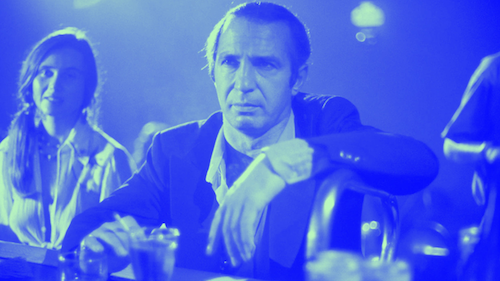
A popular favourite for many, I would actually say that The Killing of a Chinese Bookie is Cassavetes' most flimsily made classic, but I have placed it slightly above Too Late Blues just because it is so exciting and electrifying when it works (and, in that way, it feels unlike any other Cassavetes film; his works usually feel controlled despite their energy or improvised natures, whereas The Killing of a Chinese Bookie feels like it is going to fly off the rails at any second). The closest Cassavetes ever got to the traditions of the New Hollywood movement, this film unites us with a man who is afflicted with vices — to the point that his life is on the line with the mob unless he can carry out a fatal favour for them. Despite the film's blemishes and scarring, The Killing of a Chinese Bookie feels impossibly alive: as if we are feeling the adrenaline and dread of a man who has nothing — yet everything — to lose. It might be lesser Cassavetes, but it is no less memorable than his strongest works.

9. Minnie and Moskowitz
One of the most hard-hitting kinds of films for me is the romantic drama involving two lost, broken, or suffering people. When all hope is gone for these people, they cling on to another soul in order to keep going or to find purpose. There can be a greatly illuminating experience with such a story, and you'll find that in Cassavetes' Minnie and Moskowitz. Minnie — Gena Rowlands — is a museum curator who has had the worst luck with abuse and controlling men, including her current, awful husband. Seymour Moskowitz — Seymour Cassel — is an impoverished parking attendant who is searching for meaning in his empty life. Together, they find a connection in the wee hours of the morning in Los Angeles — as if their names will be the next to be placed on the Hollywood Walk of Fame. Cassavetes provides strong arguments for why they should be inducted: he turns his leads in Minnie and Moskowitz into the titans of unsung lives and aching spirits.

8. Gloria
Cassavetes' Golden Lion winner (from the Venice Film International Film Festival) is Gloria: one hell of a love letter to his wife, Gena Rowlands. Rowlands plays Gloria in a role where Cassavetes imagines his partner as a crime-fighting superhero of sorts. Through Cassavetes' eyes, that role is one of a tough-as-nails tenant next door to a slaughtered family and the lone child left behind. While this film could have felt more delusional, there's an earthiness in how Rowlands approaches this character: not as a cartoonish creation, but as a real Bronx native who has been shaped by the rough environment around her. Gloria becomes an exciting crime caper that feels like anything can happen at the blink of an eye; somewhat like The Killing of a Chinese Bookie but with more poise and control.
7. A Child Is Waiting
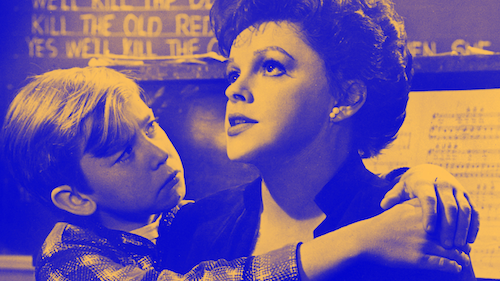
When you look at the worries one has for the next generation and their wellbeing, do you address them with the adults who could — and should — help, or with the children directly? Cassavetes doesn't try to find an answer to this dilemma, but he does present us with a hard-hitting picture that at least addresses such a crisis. A Child Is Waiting is quite a powerful look at the lives of mentally impaired and struggling children via two guardians of sorts: Burt Lancaster as a psychologist, and Judy Garland as a teacher. Driven by the ways of neorealist cinema (particularly the style's focus on the distress that many children face) and the much-needed destigmatization of mental illness in the media, A Child Is Waiting is a highly uncomfortable film to watch (and that's the point). Cassavetes gets the most out of his adult and child stars in this uneasy, pummeling conversation that must be discussed.
6. Husbands
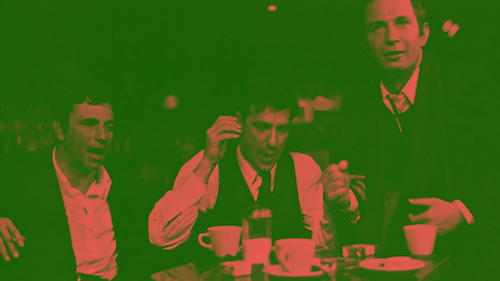
When a tragic event takes place, it can change your outlook on life. For three men in Cassavetes' Husbands, the death of their friend makes them reevaluate everything. Now, if Cassavetes was a smarmy sentimentalist, this could have been a life-affirming journey of self and the world. However, he is far more of a realist to get sucked into the illusions of fate. Husbands has a trio of guys — played by Cassavetes, Peter Falk, and Ben Gazzara — abandoning all responsibility and sensibility, trapsing around and trying to capture youthfulness once again. What can come off as a frustrating and alienating film for many (this is one of Cassavetes' most polarizing films, after all) reads as a desperate cry for help to me: men hiding behind depravity and atrocity in order to feel again (and, thus, tarnishing themselves in search of a better life). Forget midlife crisis: Husbands is the kamikaze of entire livelihoods.

5. Shadows
Cassavetes' debut film, Shadows, is quite the statement to start one's career off with. Born during an acting class exercise (one that was so profound that Cassavetes dropped everything to commit this scene to film — as well as providing more story surrounding said scene to make Shadows a feature-length effort), Shadows is what happens when you capture lightning in a bottle more than once. First came the aforementioned scene; then was the 1958 raw version of the film, where Cassavetes was finding his footing as a director. After much feedback, Cassavetes retooled Shadows in preparation for a 1959 release: this is the version that most of us know now. The end result is a progressive, transgressive masterclass in on-screen improvisation, and the birth of the American indie as we know it. Observing race relations in America (including passing, light-skinned Black people) via the jazz and beat scene in New York City, Shadows is equal parts profound and mesmerizing. With this finalized version, you can see the brilliance that Cassavetes knew couldn't go to waste: it resulted in a new kind of cinema, a crucial sociopolitical argument, and the birth of a phenomenal, directorial career.

4. Opening Night
You can boil down much of Cassavetes' career and say that his primary focus was to bring the stage to cinema (which would be a grand, over-generalization, but there is some slight truth to this declaration). If that's the case, then Opening Night does the opposite and brings cinema back to the stage. This ambitious opus sees the lines between fiction and reality get blurred to the point of being unrecognizable (think Alejandro G. Ińárritu's Birdman, but decades earlier). Actress Myrtle Gordon (once again, Gena Rowlands) has a new play debuting soon, and as the titular opening night draws near, her life gets progressively more traumatizing. Cassavetes analogizes the catharsis of the arts in Opening Night via an exquisite use of Myrtle's distress as a catalyst to keep her going. This marriage between agony and art is truly spectacular, and you see Myrtle living both lives at once in the climactic scenes of Opening Night.
3. Faces
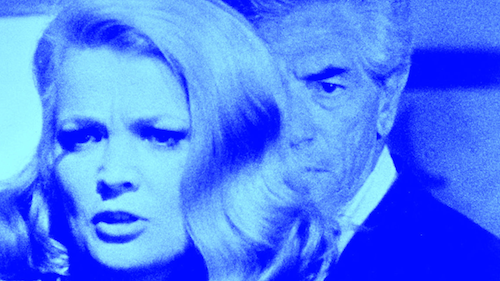
When you see marriages or relationships falling apart on the big screen, filmmakers typically opt for swelling music, extreme close-ups, and all the keys to melodrama or emotional coaching that can anesthetize any scene of true feeling and meaning. They could also go the Cassavetes route and make a film like Faces, where a divorce is shot almost like a cinema-verite documentary. Here, lovelessness is undeniable, and the hurt that people inflict on one another may damage you, the innocent bystander, as well. A middle-aged couple is separating, and both halves aspire for new leases on life — mainly in the form of fresh squeezes and love from another. While our characters may aspire for new turning points in their lives, Cassavetes presents us a midlife pit of sorrow instead: the realization that there is no going back at this point in one's journey. What transpires is dread, anxiety, and hopelessness: all within the guise of moving on to better things. Faces is as upfront as a film can be with the inner agony of someone who wants there to be more to look forward to in life (alas, there is not).
2. Love Streams
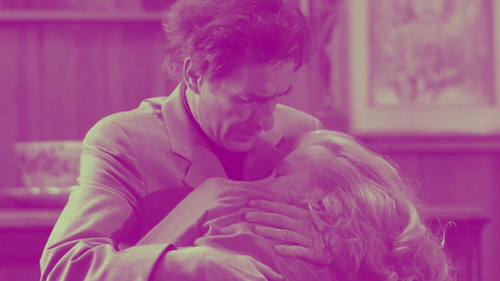
Cassavetes and Rowlands spent most of their lives together once they got married. In what I consider to be Cassavetes' true swansong, Love Streams, they play siblings instead — creating one of the great acting exercises in all of indie cinema. The rightful winner of the Golden Bear award at the Berlin International Film Festival, this film is a testament to familial bonding when a tortured brother and sister reunite to tend to each other's needs. Even though they are playing blood relatives here, Cassavetes and Rowlands are somewhat playing themselves; he, the alcoholic who may be slowly kill himself, and she the emotional wreck whose mental health is not taken seriously. Cassavetes seems to have known that the end was near for him when making Love Streams, and you feel this unbreakable connection between him and his wife (or sister, here). One of cinema's great renditions of devotion, Love Streams is an overwhelmingly crushing film to watch; it does feel like one final hurrah by someone who was content with what they accomplished as a filmmaker.
1. A Woman Under the Influence
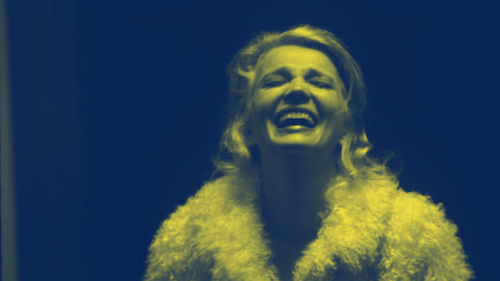
While the general order of a list ranking Cassavetes' films will usually vary depending on the person, I can guarantee that most people agree that his crowning achievement is A Woman Under the Influence. In ways, it is easily his most simplistic film in a narrative sense: its premise is literally just watching a married couple be tested by the wife's crippling mental illness. However, Cassavetes takes this premise to the extreme, with one of his longest runtimes (two-and-a-half hours) and some of his most exhausting and harrowing sequences. In short, we follow Mabel, played by — who else but — Gena Rowlands, and we see that there is something slightly off with her; she appears to be having an affair, for instance, but you get the sense that she is not fully aware that she is. Cassavetes uses this preliminary moment to harshly tell you of how badly Mabel is not in control of herself — with a sequence that will break you before the remainder of the film will proceed to wallop you some more.
As Mabel is now shattered beyond repair, the remainder of the film commences: her husband, Nick (Peter Falk), invites his crew over for an impromptu dinner (you will either crave spaghetti or never want to see it again for emotional reasons after this film). Not only is Mabel being pushed, but her marriage with Nick is as well. What transpires is some great acting by Falk, but no one can hold a candle to Rowlands, who delivers one of the greatest performances of all time. There may not be a performance more vulnerable or heartbreaking than Rowlands fighting for her life and sanity in A Woman Under the Influence — Cassavetes pushes her performance to the very edge with shots that do not cut away, prolonged sequences that refuse to end, and narrative micro-turns that still exacerbate her desperation, even if ever so slightly. No matter how difficult A Woman Under the Influence is, what John Cassavetes and company accomplish here is nothing short of breathtaking — even if it leaves you gasping for more air once it is complete, and the dust has settled within that pin-drop silence.


Andreas Babiolakis has a Masters degree in Film and Photography Preservation and Collections Management from Toronto Metropolitan University, as well as a Bachelors degree in Cinema Studies from York University. His favourite times of year are the Criterion Collection flash sales and the annual Toronto International Film Festival.