
Filmography Worship: Ranking Every Vittorio De Sica Film
Written by Andreas Babiolakis
Filmography Worship is a series where we review every single feature of filmmakers that have made our Wall of Directors

When you think of neorealist cinema, the biggest name to pop up is likely Vittorio De Sica. A master of Italian cinema — particularly in the forties and fifties — De Sica conveyed the anguish of lower-class lives onto the big screen. Born in Sora before moving to Naples, De Sica saw the horrors of humanity firsthand during the First World War. In his teen years, he practiced acting before being chosen for Alfredo De Antoni's The Clemenceau Affair. He would quickly make it to the stage as a promising lead actor, known for his gusto, looks, and charm. Once he started making more appearances on the big screen, he merged his two passions — theatre and cinema — together by directing his first film in 1940 with Red Roses. During World War II, De Sica worked with collaborator Cesare Zavattini to shift from his light comedies to something far more serious: films that spoke about the suffering of the majority of Italians during wartime (and other forms of pressurizing environments). Using his expertise as an actor, De Sica was able to coach non-actors towards delivering some of the best performances of their time.
Despite his fame and background, De Sica's neorealist films didn't make back the money that was spent on them and were considerable box office failures. This would create a difficult tug-of-war later in his career, where De Sica would bounce between neorealist dramas and more marketable titles. Meanwhile, he would continue acting; rarely in his own films but in the works of others, including Charles Vidor's atrocious adaptation of Ernest Hemingway's A Farewell to Arms (as awful as the film is, De Sica was nominated for an Academy Award and was clearly the sole reason to watch it). Throughout his life, De Sica was nominated for and won a slew of awards, including a few Oscars, a Grand Prix/Palme d'Or (from Cannes), and a Golden Bear (from Berlin). He worked until the bitter end of his life, releasing his final film, The Voyage, in 1974: the same year that he passed away at the age of seventy-three from lung cancer.
I have done a number of these Filmography Worship exercises by now, where I go through the entire filmography of cinema's greatest minds. Needless to say, De Sica's lineup was one of the most interesting that I have gone through. Part of the reason why is that there aren't many directors who have made a number of masterworks while also releasing quite a few awful films in that same breath; usually, there is a bit more consistency throughout a director's filmography than this. Additionally, there are a few slept-on films that I got out of this experience as well that I will be happy to spotlight in the ranking below. This list may feel a bit more all over the place than they usually do, but, then again, De Sica was a very interesting man who would occasionally nail his assignments, and these are the films that render him one of the all-time greats (yes, even with the handful of titles that I could have easily done without). Here are the films of Vittorio De Sica ranked from worst to best.

30. A Place for Lovers
The highs are high for De Sica, but, boy, are his lows low. A Place for Lovers is not only his worst film, but it is just an insipid, boring, and pointless affair; I'm not sure if I would agree that it is amongst the worst films ever made, but perhaps it is one of the weakest works by any legendary filmmaker. What feels like a ninety-minute perfume commercial (and not the good kind, either), A Place for Lovers is maybe a place for those who hate themselves.

29. Woman Times Seven
A director decades into his career should not be making films as tone-deaf, irritating, and flat-out embarrassing as Woman Times Seven: a series of vignettes about woman apparently made by someone who had only heard about them once before (meanwhile, De Sica actually has some sensational female-centred films and performances under his belt, so a film as tasteless and on-the-nose as Woman Times Seven feels unforgiveable).

28. Red Roses
De Sica's debut film (co-directed by Giuseppe Amato) is Red Roses: a screwy comedy about adultery in an unhappy marriage. With a husband who goes way too far to test his wife's trust, Red Roses is not really a fun film at all; if anything, it's easy to find most people involved frustrating. De Sica stars as the man of the hour, and yet — even with his presence before my very eyes — this barely feels like a De Sica film.

27. Anna of Brooklyn
A combined effort by De Sica and Carlo Lastricati, Anna of Brooklyn was by far the most difficult film to find for this article. After all that, it was hardly worth it: this romantic comedy is no different from the plethora of its kind (outside of, say, a magnetic performance by star and model Gina Lollobrigida). As Anna goes searching for love (and, wouldn't you know it, but De Sica conveniently stars in this film), we see a sweet story that is so frequently told that you cannot help but wonder if they could have given us something to chew on this time around.

26. Teresa Venerdì
What is known as a "white telephone" film (an Italian sub-genre of comedy inspired by the fluffy, politic-free works of American cinema in the thirties and forties), Teresa Venerdi is as bland as the genre implies. Centred around an orphan who tries her best to better the life of a man in her life, Teresa Venerdi is meant to be fun and adorable, but it's hard to feel that way about something that is paper thin.
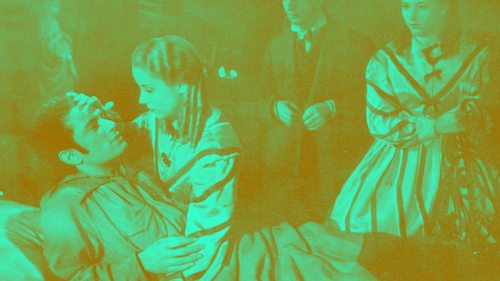
25. A Garibaldian in the Convent
The last of De Sica's early comedies (which, by nature, are incredibly forgettable and unimpressionable), A Garibaldian in the Convent is told in hindsight by an elderly woman who has lived through political turmoil. Maybe this acted as a bridge between De Sica's comedies and his neorealist pictures, but A Garibaldian in the Convent can only get to a certain level of quality because he was clearly figuring out how to convey honest depictions of hardship by this point.

24. The Voyage
If A Brief Vacation was De Sica's swansong, I feel like his career would have ended on a fairly strong note. Instead, we have The Voyage, which feels like it is meant to be cut from the same cloth as A Brief Vacation — seeing as they are two films about reevaluating life after illness changes things. However, what The Voyage gets wrong is that it gets too invested in being an emotional tidal wave (even its romance and joys feel this way). Not much of it sticks when it is difficult to take this film as seriously as it wants to be considered; this is not a good look when The Voyage deals with grief and the need to find spark in life again.

23. The Gate of Heaven
During the start of his classic neorealist period, De Sica experimented a little bit with The Gate of Heaven and this story of a train of ailing people hoping to be granted a miracle at the shrine at their destination. Even though this film actually has nice ideas and points to make, De Sica's heart wasn't fully in this film, as he has admitted that he only completed this project to distance himself from the invitation of the Nazi party to make propaganda films for Germany; I, too, would rather make a so-so film like The Gate of Heaven.
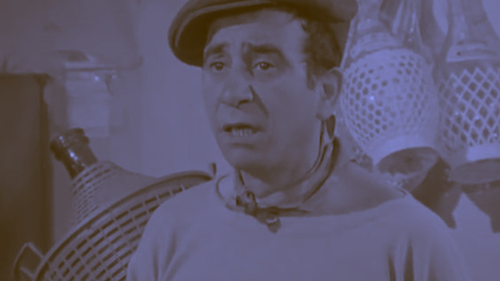
22. Lo chiameremo Andrea
I find that De Sica occasionally got confused with the tones of his films; he would excel at strictly heavy or light fare, but he would sometimes struggle to get both tones to coexist. Another one of the difficult De Sicas to find — whilst being one of his less challenging films, ironically — Lo chiameremo Andrea is a bittersweet rom com about a tricky road ahead; if two people love each other and want to spend their lives together, should it matter that they cannot have children? This is a very grey-area conversation without a clear answer that Lo chiameremo Andrea simplifies nonetheless and, thus, sullies both an important discussion and a decent idea for a film.

21. Maddalena, Zero for Conduct
Of De Sica's earliest films, Maddalena, Zero for Conduct might be the best, but that isn't saying much when everything before his neorealist period flounders by comparison. Featuring an experiment with a teacher encouraging her students to pretend to write letters to people over in Vienna (only for an actual letter to make its way to a man by accident), this film is meant to feel like the whimsy of fate or the importance of love. While not completely terrible, it just comes off as ordinary and typical instead.

20. The Condemned of Altona
What is more disappointing than a decent film? A promising film that's decent because the director wasn't in love with the project. The Condemned of Altona was all but forced on De Sica by producers since he would likely be the right guy for the job, considering this is a rather heavy film about a German magnate and his grim past coming back to haunt him while he is on his deathbed. However, De Sica's neorealist expertise doesn't fully come into play with this heavy title, and many of the ideas feel stretched thin and not completely explored.

19. After the Fox
One of De Sica's English-language works, After the Fox is actually a great film on paper, especially with Peter Sellers getting caught up in the midst of a hair-brained scheme and an experimental film set. What hurts this film is De Sica getting carried away with the absurdity of it all, turning After the Fox into a screw-up more than a screwball, but I do have a soft spot for a film this manic and out there; it isn't particularly good, but I enjoy it almost as a guilty pleasure.
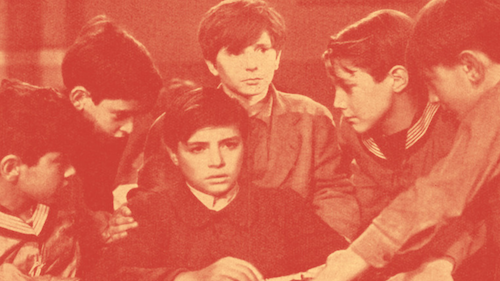
18. Heart and Soul
By Heart and Soul, De Sica was looking past just the working classes of Italy and tried to capture something bigger. With a privileged student in a class of those who have not lived such a fortunate life, De Sica hopes to educate us on the disparity that exists in reality. However, unlike his best neorealist films, Heart and Soul comes off as heavy handed and preachy to the point that it no longer feels attached to reality.

17. Un monde nouveau
By 1966, De Sica had told many difficult stories through his works and was maybe searching for more to portray. We have great examples of difficult subject matters, like Two Women (more on that later). Then comes Un monde nouveau: a film about an unwanted pregnancy and a student being forced to undergo an abortion. While well intentioned, Un monde nouveau doesn't quite get its subject matter right without feeling intentionally edgy, and we have seen many stronger examples of such films since.
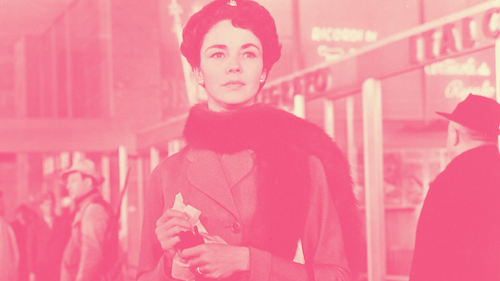
16. Terminal Station
We are now getting somewhere with De Sica's filmography; I consider this batch onwards to be at least good. Starting off with Terminal Station, we have a De Sica title that features a forbidden love between an unhappily married American woman and the new Italian guy in her life who may lead her to greater days ahead. While we have seen such a subject done better before and after (especially a film like Brief Encounter), Terminal Station is moving enough to make us question how good we have it or potentially can have it; who is to say that there isn't more misery ahead? A solid romantic drama by De Sica: someone who could clearly have made things more optimistic or pessimistic but tried to land somewhere in the middle with this cinematic dilemma.

15. The Last Judgment
While I feel like some of De Sica's films have aged poorly with time, one film that was decimated upon its release — The Last Judgment — doesn't look all too bad via today's perspective. A near-apocalyptic look at the threat of ascendency (or, the opposite) when a voice (presumably God) declares the end of days later that evening, The Last Judgment is an anthological film that takes into considering the many different ways that people can look at the end of their respective roads. While these separate stories don't really flow together too nicely, I at least find this film ambitious (which is more than I can say about De Sica's worst projects); in a way, I actually kind of like The Last Judgment and all of its eccentricities (including a musical number, because, fuck it, we may as well if everything is ending). Maybe it's these weary eyes in 2026 that appreciate such a maddening film more than those from a time period where we didn't have to worry about our global demise.

14. Il Boom
De Sica's career was full of dark dramas and escapist comedies. He met himself somewhere in the middle with Il Boom: a somewhat bitter comedy about the economic state of Italy and how many of its societal infrastructures just don't work. As Rome is being rebuilt after the Second World War, the need to get successful and rich as quickly as possible is ever present; is this really the way to go forward after much time for healing is needed? A more underrated De Sica cut, Il Boom is willing to get to where it needs to — silly or grim — in order to paint the fullest picture of false promises, broken dreams, and yet another day in paradise.

13. A Brief Vacation
Some filmmakers may find it difficult to find their footing towards the end of their career. Someone like De Sica — who didn't always have home runs with his films — managed to conclude his filmography with style, purpose, and wisdom. Well, almost. Such is the case if we only focus on his penultimate film, A Brief Vacation, De Sica looks back while facing the end of his life with a film of hopeful excursion and healing — featuring an ailing woman who is tired of suffering and wishes for a reprieve. An existential melodrama, A Brief Vacation is not as soothing as it may lead on, and that's precisely the point: no amount of escapism can eliminate all of your — and society's — problems.

12. Yesterday, Today and Tomorrow
When you think of De Sica, all of the films that he made, and consider what would win him an Academy Award for Best International Feature Film, chances are that Yesterday, Today and Tomorrow would feel a bit like an anomaly. A triptych of stories starring Italian icons Sophia Loren and Marcello Mastroianni as different couples in all three, Yesterday, Today, and Tomorrow is meant to be an exploration of the relationships between women and men — and the sexuality that brews in between them — over the course of contemporaneous Italy's history. This is a cheeky, fun film without question, and I think it is quite good on its own. I just feel like it is a real head-scratcher when it comes to the accolade it has been granted; this is the Academy's choice as one of the great international films of all time? Even alongside De Sica’s other Oscar winning works (honourary or competitive), Yesterday, Today and Tomorrow feels out of place. This is no doubt a good time with a few laughs, but I also feel like De Sica has almost a dozen stronger films.
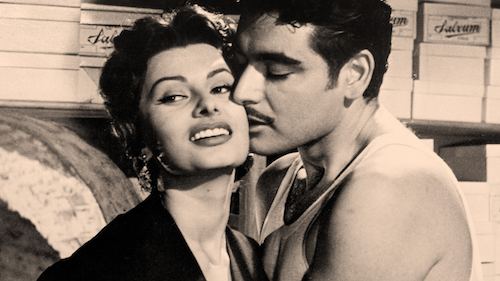
11. The Gold of Naples
De Sica resembles another Italian titan — Federico Fellini — with a film like The Gold of Naples. Rather than having a simple story, this film is an anthology of six vignettes as a means of detailing the many different sides of Naples that De Sica wanted to evoke from his salad days growing up there. The end result is a fascinating tapestry of memories — from the absurd to the tragic. We get his usual neorealist findings but also a number of other angles that sculpt The Gold of Naples a little bit more and gives it a striking identity. We see the start and end of life, and even things as menial as just a bad day that will wash over in twenty-four hours. This is Naples through and through, via a film that wants to show it from a distance (like a postcard image) while also trekking through all of its avenues and subsystems. It is clear that De Sica knows Naples — as a city, a home, and a destination — like the back of his hand.

10. Miracle in Milan
Sandwiched by two of the most depressing films of all time (in Bicycle Thieves and Umberto D.) is Miracle in Milan: De Sica's Grand Prix/Palme d'Or winning film that incorporates magical whimsy with Italian neorealism to create a rather moving fable. Unlike anything else in De Sica's filmography, Miracle in Milan takes the perspective of a suffering street orphan and makes hardship feel extraordinary, surreal, and — in a way — manageable. While not all of the film has aged incredibly well, De Sica's technical and artistic vision being at all-time highs here helps Miracle in Milan still feel like an epic, bittersweet look at what a difficult life can feel like when one's heart is full and their spirits are high.

9. The Roof
As an effort to find a place to live, a married couple try to game a system that has spent eternities gaming its own people. Apparently, at the time, the occupants of a domicile cannot be evicted if their structure has a roof over their heads. Thus begins the paradox of The Roof: one of De Sica's most interesting experiments. What constitutes as a roof if it is incomplete (even slightly)? When does morality mesh with legality? Despite the serious subject matter at hand, there is a sense of hope for our two leads to persevere; that's when The Roof hits us with its heaviest punch. All of that effort and fighting was for what? A shack in the middle of squaller. That is the biggest revelation of The Roof: how hard it is to live (what should be an essential human right).

8. The Garden of the Finzi-Continis
It goes without saying that times can get tough, and many Holocaust films take place during the height of the monstrosity. Then there is The Garden of the Finzi-Continis: a highly progressive look at what this unfortunate moment in history could look like in a unique way (which went on to win the Golden Bear at the Berlin Film Festival). See, this film begins at the top, with the Finzi-Continis family living a life of extreme wealth before World War II kicks off. As the film progresses, they gradually lose everything; De Sica goes through the entire Second World War to convey his message of tribulation and bigotry. Even though we know that the Holocaust will end, a film like this reminds us of the permanent damage to individuals, an entire culture, and the entire world; once such an event takes place, there is no going back.

7. Sunflower
De Sica's late-career look at grief, Sunflower, may be his most underrated effort. What an exquisite look at what it means to grapple with the fact that you are forever torn from your loved one. Sunflower acquaints us with a grieving wife who refuses to believe that her husband has died in battle during World War II. De Sica cleverly opens the film with this couple trying to force the husband to be delayed from being drafted; this brief breath of fresh air adds life into the mystery surrounding his whereabouts. Sunflower showcases the complete devotion one has to their favourite person during the good and bad times, all before De Sica plays his biggest card: a life that you did not envision. In a way, Sunflower subverts even the worst expected outcome for a larger version of heartbreak; even if many of his other seventies efforts proved otherwise, Sunflower was evidence that De Sica still had his talent when he saw fit to use it.
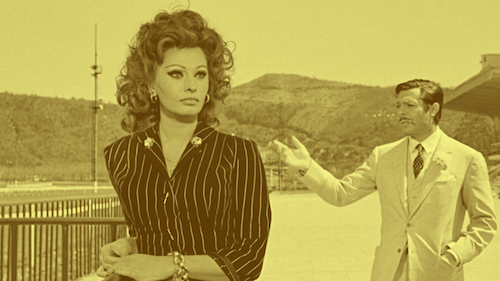
6. Marriage Italian-Style
Even though De Sica has a few films that could not blend their comedic and dramatic tones together effectively, he did so spectacularly well at least once with Marriage Italian-Style. Maybe his strongest film to pit Marcello Mastroianni and Sophia Loren together, this dramedy pits together two lost souls after the bombing of Naples. Mastroianni is a pessimistic douche bag, while Loren is a well-meaning, naive sex worker. For generations, Marriage Italian-Style uses this flimsy relationship to detail a blemished nation and its aimless people hoping to find purpose within it all. Marriage Italian-Style wears the flaws of its characters boldly, creating a realistic depiction of a complicated relationship — even with this allegorical, expressionistic backdrop. I'm not sure if De Sica was chasing after this kind of film for most of his career, but he nailed his mission here.

5. The Children Are Watching Us
De Sica's turning point film is The Children Are Watching Us. Here, he abandoned his light comedies and channeled something far more mature and gut-wrenching: the life of an unfortunate child. De Sica's first collaboration with screenwriter Cesare Zavattini, The Children Are Watching Us presents us with the realization that one's life is often determined by how it begins. We watch the groundwork for a child be destroyed in real time, and his faith in humanity (as well as his family) diminishes before our very eyes. What hope is there for the next generation when they see zero hope in what's in store for them? From ho-hum flicks to something monumental and life-changing, De Sica's pivot with The Children Are Watching Us is one of the greatest in all of cinema; even though he started strong here, I am so pleased that this was not his zenith (and he had a few other neorealist masterworks left to offer).

4. Two Women
De Sica specialized in a number of the famous pairings of Sophia Loren and Marcello Mastroianni. However, the latter is sadly nowhere to be seen in Two Women; it isn't because of his absence that this is the case, but Two Women happens to house one of the greatest performances of all time by Loren, who can play both a confident mother in the face of war, and a shattered woman beyond repair when life challenges her just a bit too much. As she tries to make life better for herself and her daughter while Italy is being torn apart during World War II, our protagonist gets pushed to the limit by the worst capabilities of humanity (in ways that feel Bressonian; these may be some of the darkest developments in any De Sica film, and they are not for the faint of heart). Two Women was a sign that De Sica saw the importance of continuing the neorealist style into the sixties, decades after it was first created; it will always be crucial to understand the strength and monstrosities of the human experience.
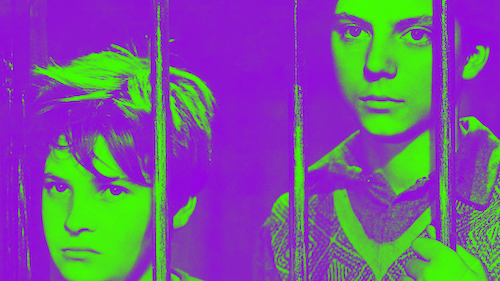
3. Shoeshine
While De Sica's neorealist peak deals with similar themes and concepts in each work, Shoeshine feels like a nearly-direct extension of The Children Are Watching Us. Here, we join two shoeshine boys and their attempts to get by in Rome during a particularly difficult economic time. De Sica shows the difficult choices the impoverished have to make (they do say that beggars cannot be choosers; I think that can apply to crises like these), and these decisions have major impacts on both the lives of these boys (as well as their friendship). When you are left scrambling and unsure of where to turn, what constitutes as the right choice gets murkier. If we cannot fathom having to face these dilemmas and their repercussions as adults, what does that say about the darkness that children have to face in these predicaments? Shoeshine is one of De Sica's neorealist classics for a reason: it completely understands how unfortunate life can be to many.

2. Umberto D.
What may be De Sica's most depressing film (and that is saying a lot), Umberto D. Is a punishing take on Italian neorealism; it would also be the film that De Sica felt the most proud of (as you can see, by placing it second-highest here, I am almost in complete agreement with De Sica). Our protagonist, Umberto D. Ferrari, is retired and at the end of his life; he is only accompanied by his dog. However, living in one's golden years is not enough safety to prevent someone from the bad luck that life can offer. Much of Umberto D. is watching his situation get worse and worse; the film starts off with him getting evicted, so you can only imagine how bleak it gets if that is the kick off. I cannot emphasize how much despair Umberto D. exhibits throughout the majority of its runtime: so much so, that you feel like there is no way out of this obsidian cavern of devastation. However, De Sica makes his biggest move towards the ending of this film: the tiniest shred of hope, with a lesson that even a difficult life is one worth living because of those you love making everything beautiful again.
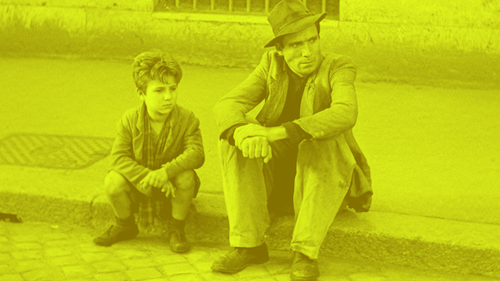
1. Bicycle Thieves
It feels predictable to have a Film 101 staple placed at the top of a list like this, but there is a reason why Bicycle Thieves continues to be taught in school: it is one of the greatest films of all time. The genius of the film lays in its central symbol: a simple bicycle. What appears to be a form of transportational conveyance for most of us is explicitly rendered an essential means of survival for a father and son in De Sica's magnum opus. To our family here, the bicycle means employment, which means security during times of economic turmoil. Once the father, Antonio, has his bicycle stolen, the fate of his family gets tossed up in the air. They cannot afford another bicycle, so the one that has been stolen must be retrieved. De Sica punctuates the severity of this situation by giving us slower moments between Antonio and his son — one of the people whose lives he is responsible and worried for (the other being his wife).
Another layer of authenticity here is the then-inventive use of non-professional actors to play these characters: a major staple of the neorealist movement. Without any care for theatrics or the kinds of tricks that training would provide, De Sica allows his performers to speak their truths through his vehicle. The end result is something you feel in spades: untold stories through thousand-yard stares, tears welling up in the eyes of actors who are identifying with their scene because they have lived a different version of it, and a lack of pretension or heavy-handedness when most other directors would aim to pull emotions from out of their audiences. There are many reasons why Bicycle Thieves has withstood the test of time, and one of those is because of the universality and rawness of its honest take on hardship.
De Sica doesn't stop there with Bicycle Thieves, however. He knows that life can be unfair in many ways. He allows the climax of his film to turn the tables of fate for his characters, so much so that he pulls a fast one on you as well. Is it right to take advantage of someone else when you have been wronged as well? Is there ever a correct time to hurt another person or take something valuable from them? In the case of Bicycle Thieves, even that is not so simple as the moral is obfuscated by uncertainty (who does this bicycle actually belong to?). The end result is a multifaceted, didactic take on tragedy that continues to test, astonish, and educate audiences. Vittorio De Sica's film is not only the best of his career: it is the greatest example of neorealism in cinematic history.


Andreas Babiolakis has a Masters degree in Film and Photography Preservation and Collections Management from Toronto Metropolitan University, as well as a Bachelors degree in Cinema Studies from York University. His favourite times of year are the Criterion Collection flash sales and the annual Toronto International Film Festival.