
Filmography Worship: Ranking Every Jean Renoir Film
Written by Andreas Babiolakis
Filmography Worship is a series where we review every single feature of filmmakers that have made our Wall of Directors

The concept of an auteur is somewhat taken for granted in this day and age. Once upon a time, during the earliest days of motion pictures, producers were often the biggest names attached to feature films and a director’s artistic voice wasn’t frequently heard (unless you were one of the greats of the tens, twenties, and thirties). Even if you had a distinctive style, chances are it was very specific and it was present in a majority of your films. A visionary like French master Jean Renoir seems highly possible by today’s standards, but he was far ahead of his time. Not only could you tell that any film he made was his own, but his thumbprint extended over a myriad of genres and stories; from stern satires and melodramas, to epics, thrillers, and tragedies. A member of the Renoir family (his father, iconic painter Pierre-Auguste Renoir, his mother, muse Aline Renoir, and his brother, Pierre, wound up being an actor), this filmmaker was already destined for greatness; in fact, Jean Renoir himself was occasionally a subject of his father’s paintings. Needless to say, the integrity of art was always in the back of Renoir’s mind. As a young adult, Renoir served for France in World War I. After being shot in the leg, he rested for long periods of time and watched films while recovering. After the war, he set his sights on filmmaking. His early films were not a success, however, and he would sell his father’s paintings (which he inherited) to get by.
Then came the thirties: an era that Renoir thrived in (so much so that I may officially call him the most successful and magnificent director of that decade; his films popped up the most on my list of the greatest films of the 1930s). After a leap into the stratosphere, Renoir took his craft to Hollywood and had himself an American era. Some of his attempts to break out into the United States weren’t overly successful, but others felt like new attempts at greatness by an inspired mind who wouldn’t settle for anything that has already been done before (yes, even by himself). Things slowed down for Renoir after the fifties, until he returned for one last television film: The Little Theatre of Jean Renoir. It felt like one last statement by someone who couldn’t resist being a part of cinema, but whose health was too poor to keep going; he would pass away in 1979 from cardiac arrest nine years later. It is a shame that he was refused proper financing in the latter years of his life, seeing as he is one of the most important names in cinematic history for the countless ways he changed the industry (including the superstar class of crew members who worked on his films and would become titans of their own, including Satyait Ray and Luchino Visconti). I feel like someone who had a decade as successful, profitable, and revolutionary as Renoir’s thirties period should never be doubted, and his glowing legacy speaks more than the years when the film industry gave up on him; the passage of time would tell a far better story than any insipid studio ever could. I will ignore his lost film Marquitta but will include any other narrative film. Here are the works of Jean Renoir ranked from worst to best.

36. Sur un air de Charleston
Renoir’s seventeen-minute short here is interesting on an experimental level, seeing as it is a surreal depiction of trends and how they are received in the present and the future (when a woman shows a man from the future how to dance the iconic Charleston of the 1920s), as well as across different cultures (from Europe to Africa). However, the short runtime, simple premise that never quite goes further than it could, and the piss-poor use of blackface (which never ages well) make Sur un air de Charleston Renoir’s weakest film, even with its signs of promise.
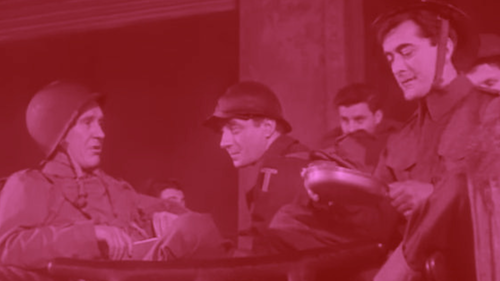
35. A Salute to France
It might seem silly to place Sur un air de Charleston below a propaganda short, but it feels easier to justify the problematic nature of these political films and their use back then than, say, blatant racism. A Salute to France is a co-directed effort by Renoir and Garson Kanin used to recruit citizens to fight for their home nation. This very much is a tale of two filmmakers. On one hand, you have Renoir doing what he does best: celebrating everyday people. Then, you have the rah-rah recruitment obsession that makes the rest of A Salute to France rather difficult to watch.
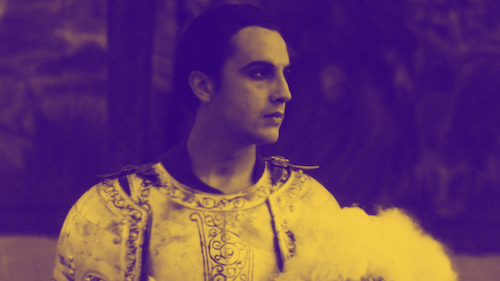
34. Le tournoi dans la cité
What might be even sillier than my previous placements is ranking a mostly-lost film above completed shorts. At least Le tournoi dans la cité boasts a bit of promise with what we do get in this medieval drama, mainly in how Renoir shoots his knight combat sequences. It doesn’t help, however, that Renoir made this film just to get by, and, despite the technical capabilities here, his heart clearly isn’t in the final product (or, at least what we can see of it); I do think very highly of the battle shots here and think any Renoir fan should seek the dregs of this film out for this reason alone.

33. Chotard and Company
The lowest rated feature-length talkie that I have here is Chotard and Company: a straightforward comedy involving the titular grocer and his daughter— who is soon to wed. What could have been an intricate observation on family dynamics, different expectations, and the unexpected twists of life is instead a fairly bland and obvious film that even Renoir himself moved on from. There’s a reason why Chotard and Company is a forgotten Renoir title: it isn’t particularly good.
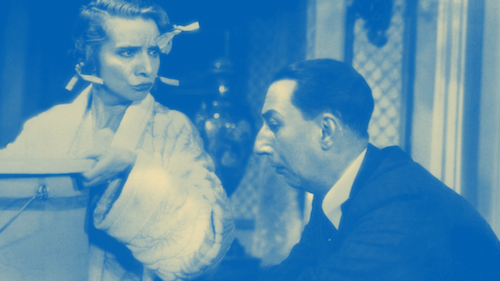
32. On purge bébé
Renoir's first talkie went through a lot of the same qualms that most preliminary sound pictures experience. See, back when sound film was first introduced, being able to hear anything was a revelation. Now, a film like On purge bébé is somewhat cacophonous (which might not be fair to declare a film where everyone worked with what they had back then, but still). This comedy about a constipated infant, a chamber pot manufacturer's quest, and an uppity military officer is meant to be screwball entertainment. It is somewhat the groundwork for films like The Rules of the Game, but it is also quite messy.

31. Catherine ou Une vie sans joie
While released in 1927, Catherine ou Une vie sans joie was actually Renoir's debut film (co-directed with Albert Dieudonne) as a gift to his then-wife, Catherine Hessling (who starred in a number of Renoir's films early in his career). Filmed in 1924, this tale of an orphaned girl and the awful people around her is fine for an early effort (and that's about it). This film does look like Renoir was trying as many things as possible (for better or for worse); from interesting camera choices to oddball characters. Not all of it works (and enough of the film is shaky to notice), but Renoir was clearly figuring everything out (the film wasn't even available for a few years; it was meant for private viewing only, and you can see why).
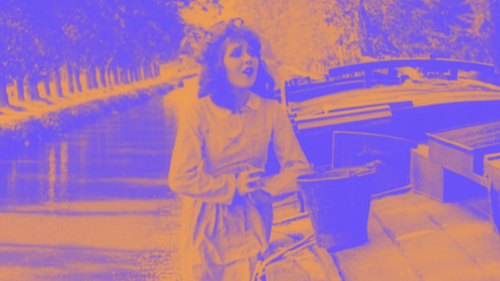
30. The Whirlpool of Fate
Renoir's debut film (of sorts; Catherine was filmed before this and released later), The Whirlpool of Fate, is early proof that the director was interested in tales of lonely and broken people: something that he would specialize in in the thirties. This preliminary attempt, however, is not as thorough as his ideas would eventually be. Outside of some decent sequences (including surreal dream imagery, which is far from the focal point of the film, mind you), The Whirlpool of Fate is not biting enough to pass off as great neorealism or societal commentary, nor is it creative enough to come off as expressionistic.

29. Le Bled
Renoir's final silent film was yet-another commissioned title that the director was not fully invested in, even though he does try to leave some trace of his ideologies within the final cut. Le Bled deals with a family that is at odds with each other as one woman inherits property, and you can see that Renoir is attempting to comment on the hypocrisies of people when it comes to wealth and privilege. However, Le Bled is simply not developed enough for any of Renoir's intentions (even the stunted ones) to flourish.
28. Tire-au-flanc
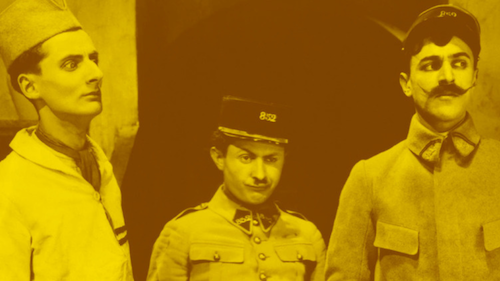
Tire-au-flanc is a bit of a peculiar entry in Renoir's canon. It's too early for his signature style to shine through, but there are glimpses of it here in a comedic turn of events between a privileged man of wealth, his servant, and their shared fate in the army (where bank accounts have no say here). This is a bit of a fun ride, but it also doesn't amount to much more than that — it becomes increasingly forgettable when Renoir himself has made the same points but far better in a number of his other films.
27. Elena and Her Men
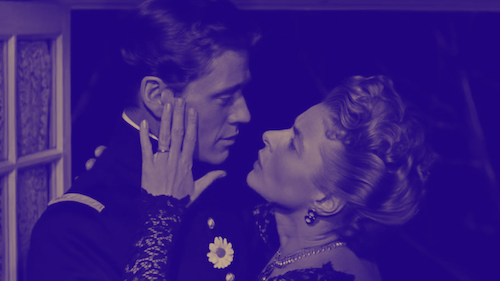
Yet another study of the elite class and their behaviours, Elena and Her Men is from Renoir's American period — meaning this film is from late in his career. Even so, this film feels more like his silent or early era with this topic, as if Renoir was trying to figure out how to best represent the issues with classism and the privileged (when, really, he was one of the best auteurs on this subject for most of his career). Outside of a great performance by Ingrid Bergman, this comedy feels all bark and no bite: a satire that doesn't over insight outside of what we could already discern.

26. Madame Bovary
Ah, yes; the oft-told tale of Madame Bovary. Renoir's take on the classic is a bit of a spin with a focus on character Emma's dynamic with her new family. The biggest tragedy here is that an over three-hour juggernaut was trimmed down against Renoir's wishes into something quite empty and think, compared to what we could have gotten. Even so, the dread and melancholy prevail here in Renoir's well-intentioned take; we have simply been robbed of a potential masterpiece.

25. The Little Theatre of Jean Renoir
We have reached all of the good stuff in Renoir’s filmography, and we kick off this remainder with his swansong. Renoir's final film is kind of a remarkable way to send off his career. The filmmaker himself appears to introduce what we are about to witness; what once felt like a reunion with a familiar friend feels like a bittersweet farewell in hindsight. What is special is that The Little Theatre of Jean Renoir is far from business-as-usual for the late filmmaker as well; if anything, this trilogy of short films feels some of Renoir's most challenging material. Of course, Renoir wasn't in the best shape towards the end of his life, but the fact that he was always trying new things and pushing both cinema and himself is quite beautiful; I wish we could have seen him do it more in the sixties and seventies.

24. The Woman on the Beach
Renoir tried his hand (a couple of times) at the classic American noir while they were still fashionable, and The Woman on the Beach is a noble effort. Like many other films noir, The Woman on the Beach aligns itself with an unreliable narrator (a sailor with post-traumatic stress disorder) and a femme fatale (the wife of a blind artist who resembles a vision our protagonist keeps having). While it never goes much further than these conventions, The Woman on the Beach is at least somewhat interesting because of Renoir's attempts to bring something new aesthetically to the style (there's shadowy cinema, and then there are the ways that Renoir works with shadow; both are present here).

23. Nana
One of Renoir's stronger silent films is his second released feature film, Nana. A recreation of Emile Zola's story of the same name, Nana circumnavigates the lifestyles of the rich and famous via the titular actor who will do anything in order to survive, thrive, and have a taste of the sweet life. Like The Whirlpool of Fate and Catherine ou Une vie sans joie, Nana appears to be an exercise of Renoir throwing everything at the big screen to see what will stick; unlike those other two titles, Nana is more cohesive. Here, Renoir's gauging results in a bit of a suspenseful and tense ride: one of poor decisions and even bleaker outcomes.

22. The Doctor's Horrible Experiment
After years of many storytellers having a go with their own versions of the characters of Dr. Jekyll and Mr. Hyde, Renoir's The Doctor's Horrible Experiment feels like one of the more creative answers. Instead of explicitly recreating Robert Louis Stevenson's story, Renoir reworks this familiar text to create a sociopolitical narrative about those who abuse their power in society. This film is actually surprisingly strong (yes, even though it gets intentionally silly at times — as Renoir frequently did). What also astounds me is that this is an early foray into television films; even so, Renoir exhibits magnificent aesthetics and large doses of entertainment, showing no signs of uncertainty or experimentation for the sake of it.

21. The Elusive Corporal
The second last film of Renoir's career (and the last before an eight-year hiatus in the sixties), The Elusive Corporal is one of his war films that touches upon his unfortunate experiences during battle. Similar to what he accomplished decades prior with Grand Illusion, The Elusive Corporal revisits the concept of a prisoner-of-war trying to escape entrapment; maybe this was a fear that festered in Renoir's mind for many years. Even though Renoir may have had more experience and wherewithal to make The Elusive Corporal, it is missing the rawness and authenticity of Grand Illusion; however, The Elusive Corporal is still a triumphant picture.
20. La Marseillaise
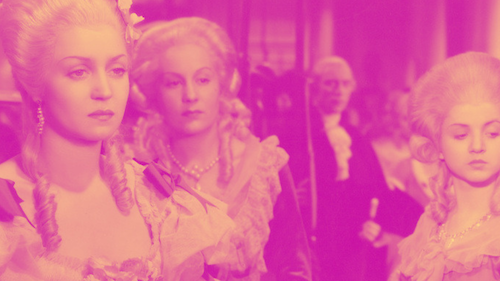
Not many Renoir films feel like a cinematic epic, so to speak (even if these films are ambitious in other ways), but the closest he ever got to such a motion picture is La Marseillaise. Exhibited like a news study about the French Revolution, La Marseillaise weaves in Renoir's interpretations (fake characters and stories) in with historically documented tales to make a thorough study of France, its people, and the need for change when society neglects many citizens; Renoir uses this backdrop to discuss the then-contemporaneous France as well. While not quite meta, La Marseillaise is technically and conceptually progressive enough that it still feels quite ahead of its time.

19. Swamp Water
After his thriving thirties, Renoir was finally jettisoned into the American market with his first Hollywood picture: Swamp Water. His first attempt at a classic film noir, Swamp Water is a fairly sizeable take by Renoir that feels like he was starting his career all over again; without tossing every idea into the final project like his earliest works, Renoir still feels hungry for creativity and passionate enough to have a film that sticks with you for a variety of reasons. Squashing us in the thick of the muck, Swamp Water entangles us with a trio of people with different pasts and secrets and expects all of us to trek out slowly but surely; for better or for worse, Renoir perfectly captures what it feels like to be trapped in a Georgian swamp.
18. The Southerner
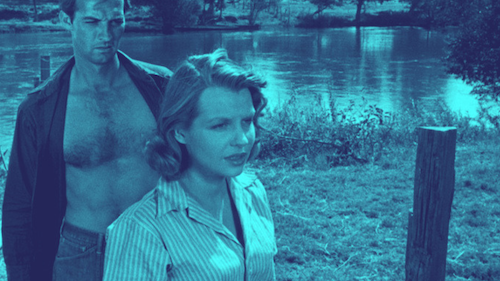
It goes without saying that Renoir was always caring about the betterment of those who were in lower classes than the wealthiest people, but seeing him transfer his message over to an American landscape in The Southerner is quite a treat. Following a family who weather a number of storms on their new farm, we feel the weight of Renoir's proverb about how the odds are stacked against the majority of us; the system isn't made for everyone to succeed. Renoir doesn't shy away from what can happen at the hands of disaster (seeing as he is a realist and all), but The Southerner also takes into account the rewards of never giving up; even if all seems doomed. There will always be another day.
17. Night at the Crossroads
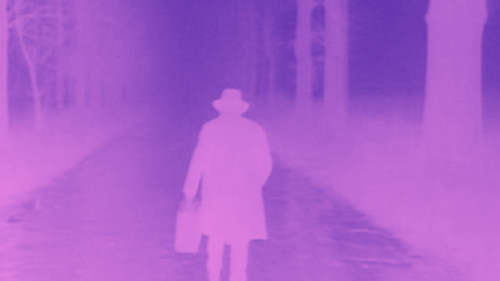
While not a widely discussed film of Renoir's stacked run during the thirties, Night at the Crossroads is a great picture that is still worthy of being celebrated. The auteur always kept the darkest side of humanity in mind even when he made comedic films, so something as grim and haunting as Night at the Crossroads feels even more connected to the worst of us. This tale of a cryptic murder and the case that ensues was apparently shrugged off by Renoir who was unhappy with the end result, feeling detached from the story he tried to tell; I would argue it is this vagueness that adds mystery and an unsettling atmosphere to a film that has earned it (what good is a film about the unexpected side of people if it is all obvious and planned?).

16. Picnic on the Grass
Renoir is a director who scrutinizes the similarities between different classes and walks of life (understatement of the century, here), and a late-period film like Picnic on the Grass proved that he still had what it took to be captivating with these remarks. Not only do we have a series of characters and their differing dreams, but latter-day Renoir was also far more visual with his artistry, and so Picnic on the Grass feels quite beautiful to look at. At times, Picnic on the Grass feels like a painting by his father; once calamity breaks loose and we see the true nature of our characters, we learn that, no, this is actually just a classic film by son Jean Renoir instead.

15. French Cancan
Renoir was always pushing the envelope at every stage of his career. Something like French Cancan feels like a watershed moment as a result. What could have been your typical musical folly instead becomes a breathtaking statement on the early days of Moulin Rouge. Part cartoonishly-vibrant extravaganza, and part artistic spectacle, French Cancan is pure entertainment crafted by someone who could easily be misconstrued as self-serious and incapable of having fun without being cynical or political. I will say that French Cancan is a little slim in the narrative department, but this is clearly a film you watch to be swept away by performers and artists operating at their very best.
14. The Golden Coach
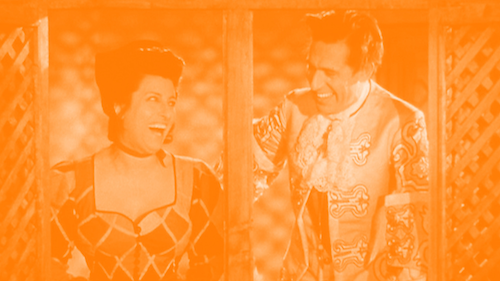
We have now reached the essential Renoir films on this list. The Golden Coach exhibits the two distinctive Renoirs that I think of whenever his name comes up. There's the traditional Renoir, and his fixation on the oddities that make us tick as human beings (yes, even the rich, who feel as though they are better than humans but whose intrinsic absurdity renders them more human than they would like). Then, there is the fifties-era Renoir who was substituting his signature shadowy images for colourful, gorgeous, cinematic tapestries and/or portraits that made him feel like a different director completely. This film about three different male suitors and their common muse — a lovely actress — feels like the bridge between his styles that conjures up the fullest understanding of who Renoir was as a filmmaker and the entirety of his vision.

13. The Little Match Girl
Renoir's best short by far (well, almost a featurette at thirty-five minutes) is The Little Match Girl. Centred around the title character — a poor girl who is struggling to survive and wants to live to see another day on New Year's Eve (by selling matches) — this Renoir fable (based on Hans Christian Andersen's story of the same name) is transcendent and crushing. Whisking us away with a gorgeous hallucination and poetic takes on hardship, The Little Match Girl sets everything up for us before pulverizing its audience with a devastating form of release. If this is a side of Renoir's that you have not seen, I implore you to see how the French master tackles a mature fairy tale like this; it is depressing yet exquisite.

12. Toni
We have reached what might be the most underrated Renoir film: a simple work that goes by Toni. Toni places us amongst hard-working immigrants (particularly the title character). He dreams of a better life, and his desires become quite complicated rather quickly; will Toni be able to muster that of which he craves? Is this truly the better life? Using non-professional actors, Renoir gives us an accurate portrayal of the dilemmas of the working class whose voices are oft silenced: this feels like one of Renoir's most upfront and realistic pictures (compared to his expressionist, satirical, or poetic takes). Seeing as many French New Wave directors have pointed to Renoir as an influence, I can see how a film like Toni helped shape what film can be; the only catch is this picture feels under watched and represented. Any Renoir fan must watch this one.

11. The Crime of Monsieur Lange
We are finally reaching the near-dozen Renoir classics and placing them all in a proper order is quite a challenge to say the least. The fact that The Crime of Monsieur Lange doesn't even crack the top ten is frustrating to me, too. Yet here we are. Renoir's pulpy crime film that entangles you in a web of relationships, politics, and mystery (don't forget to make time for romance, mind you) is so captivating. It feigns its suaveness when, really, The Crime of Monsieur Lange is far more tense and discretely chaotic than it is "cool." Seeing a calm demeanour unravel like this is oodles of fun, and when The Crime of Monsieur Lange begins to flee the scene (if you catch my drift), Renoir's film creates a resolution that feels indicative of one that the title character could conjure up: a quickly-thought escape plan that wins you over with its persuasiveness.

10. La Chienne
We kick off Renoir's top ten with his turning point film: La Chienne. Only Renoir's second sound picture, La Chienne is a highly twisted look at romance. Featuring married-yet-miserable couples that intertwine in hopes of finding true love outside of everyday life, Renoir's La Chienne is a testament to the depths of broken hearts and souls: how far desperation takes us before we are at the point of no return. This sullen picture feels like purgatory — as if Renoir reanimated the corpses of the dead and encouraged them to try and find life again. Yet life does not exist here; not in this hellscape. Even though Renoir always faced the darkness of the human experience, La Chienne might be his most bleak film because it vows to take you straight to the bottom of the pit of despair, giving everyone just one hundred minutes to claw their way out. By La Chienne's conclusion, you can argue that an effort was made but there is still a long way to go.

9. The Lower Depths
If it made sense for anyone to adapt Maxim Gorky’s play about the divide between upper and lower classes in such a blatant and visual way, it’s Renoir: the student of how to best portray class disparity on film. His version of The Lower Depths is excellent. It carries the necessary oomph to detail the severity of living in poverty while possessing Renoir’s cheeky and clever sense of humour to carry out this damning tale of false accusations and strained relationships. In a weird sense, The Lower Depths acts like a greatest-hits collection of everything that makes Renoir special (despite being released in 1936: the middle of his heyday); even so, this film never comes off as derivative or redundant because Renoir was still finding substance within desparation.

8. The Diary of a Chambermaid
It’s an understatement to declare Octave Mirbeau’s novel, The Diary of a Chambermaid, a popular source to adapt. Renoir and actor-director Burgess Meredith collaborated on their own version in 1946 (with the latter serving as screenwriter here). Together, they make magic happen on their take of Celestine’s climb up the social ladder in this biting look at the unfairness of class systems. Renoir’s take is one that never loses its levity — maybe he could always see the ridiculousness of the fact that some people are destined to live better lives than others. Does Celestine deserve to live a better life in general; because she is in love with someone more fortunate than her? I believe it takes skill and guts to find warmth, joy, and comedy within a fact that makes me lose faith more and more everyday: the system is rigged to keep unfortunate people scrambling.
7. This Land Is Mine
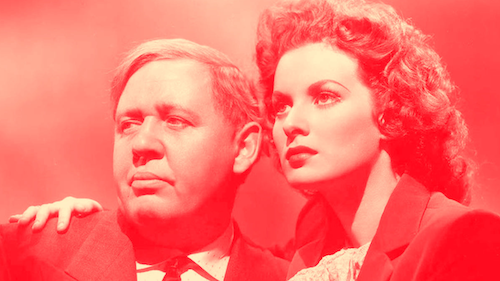
Renoir’s American era is worth it overall, but especially for the next two films on this list. One feels more traditionally “American” than the other, and that film is This Land is Mine: a sensational war film with mega stars Charles Laughton, Maureen O’Hara, and George Sanders. Having served, Renoir knows all too well how nothing is simply black-and-white, especially when it comes to war. In this drama, our protagonist teacher is caught between the two sides of sociopolitical divide: what does one do in the faces of evil, corruption, rebellion, and even fatality? Sure, This Land is Mine can be a little Hollywood about its stance on war (Renoir was fully prepared for his American residency, I suppose), but there is enough truth in Renoir’s images and the words that his players perform that This Land is Mine comes off as heroic and bold instead of theatrical.

6. The River
Then comes The River, which gets lumped in with his American-period titles but feels as though it exists in its own universe. Taking place on the Ganges River in India, The River is Renoir’s first film to be shot in colour; he collaborated with his nephew, cinematographer Claude Renoir, to make his best looking film (and one of the greatest examples of Technicolor cinema of all time). At its core, The River is a stirring and stunning look at the spirituality and connectivity between the members of an English family of colonizers, as well as the locals nearby during the celebration of Diwali. Renoir showcases the circles of life throughout The River and utilizes the Ganges River as a metaphor for the flow of existence and history in this spellbinding, sublime exploration of self. So many other Renoir films are ones you analyze and pay attention to on an intellectual level; The River is one you feel deep from within.
5. La bête humaine
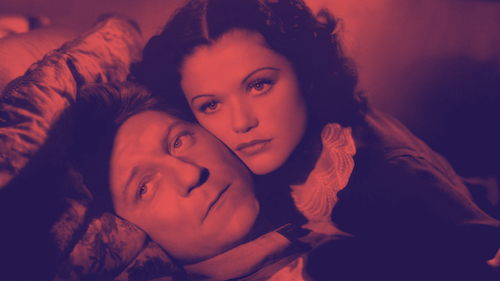
In La Bête Humaine, we are stuck on a train with two dangerous people: a railway engine driver who kills impulsively when suffering from seizures, and a stationmaster who has just killed the man his wife was having an affair with. As blame shifts and alliances are made (only to be tested), La Bête Humaine becomes a claustrophobic thriller that never eases up (least of all because the train will not slow down). A prototypical noir film, La Bête Humaine is a horrifying adaptation of Emile Zola’s novel of the same name: one that takes dread-filled text and maximizes it with shadowy images, sickening tension, and some of Renoir’s most effective direction. The director was almost always driven by the oddities of real life, but with La Bête Humaine, he got inventive with spinning a good yarn; the end results are damning and will be burned into your brain.

4. Boudu Saved from Drowning
Boudu Saved from Drowning: this sounds like an uplifting, life-affirming affair, does it not? When poor tramp Boudu is saved after his suicide attempt, things will surely take a turn for the better, yes? You simply cannot expect Renoir to do obvious things, here. This vicious satire that takes the unorthodox Boudu and lets him loose amongst the bourgeoisie is effective because it goes against your expectations; by 1932, Renoir was hitting his stride and cracking the code, and a film like this one is so atypical that it is sure to frustrate some. For me, Boudu Saved from Drowning is an unapologetic lesson in the harshness of life (and how we forgo our freedoms should we wish to live a life of privilege). What matters more? What constitutes as comfort? Financial riches, or the ability to do whatever you see fit? Renoir finds fault in both, particularly in the titular Boudu who represents the extremity of being free (to the point of anarchy and monstrosity), and it is a very bitter pill to swallow; this is an eat-the-rich film that bites back.
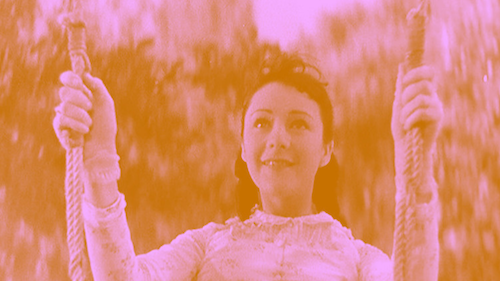
3. Partie de campagne
Renoir’s most exquisite film is an anomaly in a number of ways. It is a featurette that barely misses out on being a short (at being exactly forty minutes in length). It was produced in 1936 but was only released in 1946 — a whole decade later. It is also inexplicably gorgeous: far more compared to his usually cynical takes. This film is Partie de campagne: a breathtaking excursion to the country side with a family after what I can only assume is a grueling life of work. This film is precisely what love is all about: the sensation of falling in it, the anticipation and anxiety of where it will head, and the heartbreak of knowing that everything will conclude whether we want it or not. Even though Renoir was so good at figuring out all of the ways that human beings can be bad, watching him deduce the ways in which we are magnificent is a whole different story.
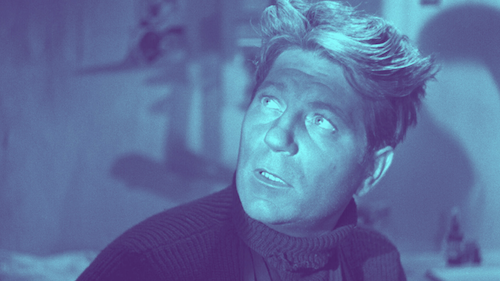
2. Grand Illusion
One of film’s greatest war tales comes from a man who saw it with his own two eyes. Grand Illusion is as humanistic as Renoir ever got; instead of boiling-down the things that make us strange as animalistic beings, he dug deep to discover what makes us brilliant. In support of a couple of prisoners-of-war during World War I, Grand Illusion takes us to the camp they are held at, only to find the biggest oddity of them all: a class system within a festering dungeon. Renoir invites us to watch two tales simultaneously: that of soldiers trying to escape torture, and of human beings fleeing from oppressive forms of government. As Grand Illusion progresses, Renoir shows us what being trapped feels like before showing us glimpses of hope and freedom. Released when the aftermath of the First World War was still breathing down the necks of everyone — and on the precipice of the second such war — Grand Illusion is as much an anti-war rant as it is a rebellion for the rights of all in the face of tyranny and death.
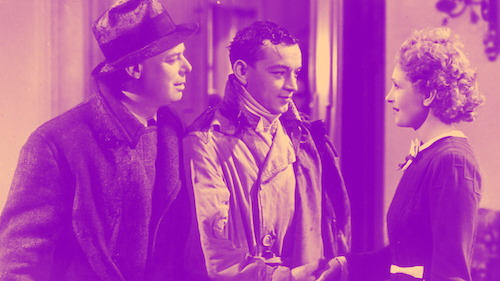
1. The Rules of the Game
Before the eat-the-rich genre ever took off many decades later, Renoir was thinking about everyday people. Cinema went from being the artform of the lower class to becoming some sort of prestigious taste-maker for the wealthy. Renoir recognized this when making a film like The Rules of the Game: a more fitting name, there could not be. Society is a game to many, and capitalism is the rule set in which to play. Well, Renoir saw rules that needed to desperately be broken, but not just the code of the rich but also the conventions of cinema; here, Renoir set the standard in two different ways at precisely the same time for a hilarious, electrifying, shocking state of affairs (in ways, I mean this literally). Some other directors have taken the standard set by The Rules of the Game and gone the extra mile; Ingmar Bergman dug into the sexual desires of his participants in Smiles of a Summer Night, while Luis Buñuel wanted his guests to wither and suffer in films like The Exterminating Angel and The Discreet Charm of the Bourgeoisie. Renoir saw fit to keep things as they are: at a bit of a neutral stance. This is the most organic approach for such an experiment; Renoir is relying solely on the idiocies, drives, and selfishness of his players to see what transpires. This is enough, especially for this initial go-around.
During the threat of wartime, various members of the elite join up for a weekend of festivities at the estate of the Marquis de la Chesnaye. Some of these guests include an ace aviator, a gamekeeper, family, the mansion staff (cooks, maids, the works), and more. We cannot forget about Octave, played by Renoir himself (especially when he dons that bear outfit for the climactic ball). This is essentially the plot, and the film would have been a normal, tepid affair had every player in this game not been left to their own devices and vices. What transpires is a chain reaction of greed and lust that feels impossible to slow down. When World War II is on the horizon, Renoir is scared that his service was all for nothing, and that the planet would keep going down the same path of bloodshed. His characters here, however, apparently have bigger fish to fry: each other. The world is going to hell, and yet the pawns — who see themselves as bishops, rooks, and maybe kings and queens — in The Rules of the Game are busy trying to destroy one another in a multitude of ways. There is a scent of the good old fashioned screwball comedy here, but The Rules of the Game is too rooted in reality (and, by that, I mean the delusions of the privileged) to be a blatant screwball. Instead, it is a satire that still feels too likely to be taken at face value as entertainment alone: these are the people who reign over us and, usually, control how we operate as a society. How are we supposed to survive when this is what our “best” look like? How can we even join the game when those who are playing are not abiding by the rules?
What elevates The Rules of the Game even further is that so many other disgruntled artists go full-force with how they view upper society folk. Renoir still has a smidgen of sympathy for them: enough to not have his players killed in a line of fire. So, yes, Renoir lets his characters get caught by the consequences of their own actions (as well as the accidental overlap that occurs by miscommunication and wrongful deductions), but he also doesn’t punish them to the point of marring them beyond repair. Instead, he eases his foot off of the necks of his cast (yes, even of his own character’s neck); these people have been reduced to the point of being animal-like beings (well, anything but humans in a conventional sense). He then lets them out into the wild to be free again, hopefully as revitalized creatures with a new lust for life and sense of compassion. We will never know, but we can only assume that the game will be played by those who replace those who leave (and then there are those who refuse to quit). The game will never stop; only its pieces will be swapped out. Jean Renoir sits you down and explains the deepest secrets, reveals the deepest insecurities, and bandages the deepest wounds of the kinds of people who are usually rendered untouchable. The Rules of the Game was made to hopefully change things for film and society; while civilization continues to be a war zone of imbalances and skewed courses, The Rules of the Game did, in fact, alter the course of cinema forever as one of the greatest films ever made. Will the wealthy people in the film care about the poor souls who are about to fight — and potentially die — in World War II? Do they care about a war they likely never have to fight because they have the right connections? Have they learned anything? Will they ever? Sadly, The Rules of the Game will always be relevant.


Andreas Babiolakis has a Masters degree in Film and Photography Preservation and Collections Management from Toronto Metropolitan University, as well as a Bachelors degree in Cinema Studies from York University. His favourite times of year are the Criterion Collection flash sales and the annual Toronto International Film Festival.