
Filmography Worship: Ranking Every Sarah Polley Film
Written by Andreas Babiolakis
Filmography Worship is a series where we review every single feature of filmmakers that have made our Wall of Directors

One of my favourite cases of what a Hollywood director could be is Toronto legend Sarah Ellen Polley, and by that I mean she is anything but one; allow me to explain. Having been a child star of various television programs like Road to Avonlea and Ramona, Polley wound up being cast in many major films of the nineties and aughts — from Hollywood pictures like Go and Dawn of the Dead, to Canadian classics like The Sweet Hereafter and Exotica; needless to say, Polley was the it girl of Hollywood, Hollywood North (as they call it), and all things Canadian that fell in between. Her itch for making motion pictures began when she worked on a film for the On the Fly 4 Film Festival — where she had to shoot and edit a film (The Best Day of My Life) in less than twenty-four hours. She would work on another short, Don't Think Twice, that same year. She was only twenty at this time. Working on a more complete short film, I Shout Love, in 2003 (and winning a Genie Award for it), she was ready to work on feature length titles.
Her debut, Away from Her, is a breathtaking way to begin a career, and one that proved that she was meant to make motion pictures. Additionally, despite her Hollywood roots, this film is almost completely Canadian (outside of the Oscar-nominated performance of one Julie Christie; Polley was also nominated for her screenplay). Even furthermore, Away from Her is so comfortable in its indie roots that you can tell that Polley was steering away from the artificiality of the industry. This is someone who knows Hollywood well enough to know how to get by without being a part of it. Since 2010, Polley has released a couple of noteworthy Canadian titles, has all but stopped acting (outside of appearing as a satirical version of herself in the series The Studio, created by her Take This Waltz veteran, Seth Rogen), and continues to be a staple of our nation's cinematic identity as one of the greats.
As a fellow Torontonian, Polley is someone who you will bump into at many local film festivals, and she is as humble in person as she is on screen or behind the camera. Nothing about her screams "superstar" with how she carries herself, and yet she has made some of the best films in our local scene. She is a natural talent through and through who fully embodies the best qualities of Canadian cinema -- the artistry, the intrinsic spirit, the quaintness, the minimalism. I feel like her films succeed not just because they are as great as they are but because they effortlessly reject the preconceptions and falsities of Hollywood filmmaking: as if Polley's exposure to the industry made her approach filmmaking in all of the ways that went against her Hollywood experience; with an underdog Academy Award win later (Best Adapted Screenplay for Women Talking), I find her and her career so easy to root for and celebrate. I won't be going over her two short films Don't Think Twice and All I Want for Christmas since they are quite difficult to come across, but all of her other films will be included here. Here are the films of Sarah Polley ranked from worst to best.

6. The Best Day of My Life
There isn't much to say about Polley's weakest film (that I could watch), outside of the fact that The Best Day of My Life was shot and edited in a single day for the On the Fly 4 Film Festival. It features two curious youths in black and white, with the crazy transformation to colour film via the act of toe sucking (this is real). While you can't accomplish too much with such a time constraint, what we can see in this peculiar short is a vivid imagination, some strong framing and shot composition, and other hallmarks of a promising filmmaker. I wouldn't put too much thought into this short outside of seeing where she started (and for trying to complete her filmography).
5. I Shout Love
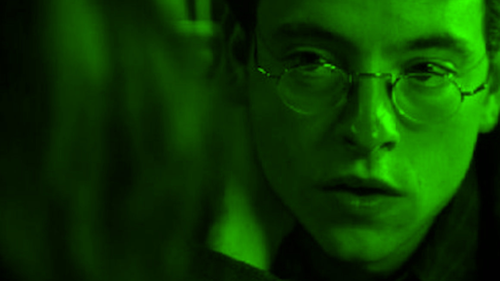
Unlike The Best Day of My Life, I Shout Love is a stronger, preliminary picture of how Polley would fare as a filmmaker. She takes the universal concept of the heartbreak of a couple splitting and turns it into a rather intriguing experiment. Here, the girlfriend encourages her soon-to-be-ex to re-record their favourite moments together on camera, and Polley's findings are quite bittersweet: the realization of what once was and what may soon be extinct. For forty minutes, I Shout Love takes a desparate request in suicidal panic and hopes to find beauty and purpose in our worst moments; I can see how the short might be tricky for some to watch given its challenging nature, but it was a clear sign that Polley was ready to be bold and take risks.
4. Take This Waltz
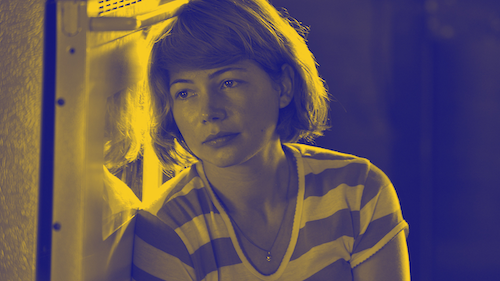
The weakest of Polley's feature films is quite great: it's the underrated Take This Waltz. After Polley broke out as a new filmmaker, her second effort felt like her attempt at joining in on the mumblecore, quirky indie scene that dominated the aughts; her film fits in quite nicely. Tossing us into the throes of a stale relationship (and the Little Portugal neighbourhood), Polley encourages us to sympathize with the complicated character of Margot, played tremendously by the always-stellar Michelle Williams. In Polley's dramedy, she circumnavigates all of the strongest emotions we feel via the tiny details we didn't know we shared. I also feel like Polley is as great of a writer as she is a director, and her original ideas in Take This Waltz exemplify her ability to make stories that feel completely human (even at her boldest and strangest).
3. Women Talking
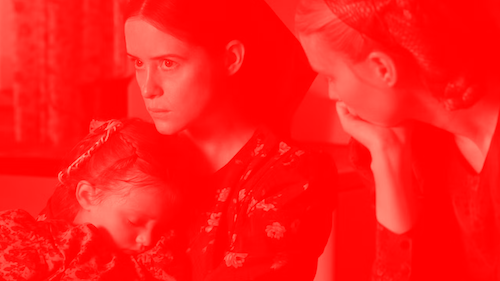
Polley is a strong advocate of womens' rights and feminism, and all of her films spotlight this fact at least a little bit (from how her lead is showcased in Away From Her with tender grace, to the shower sequence in Take This Waltz that completely obliterates the expectations of the male gaze). Her most explicitly political and feminist film is Women Talking: a quietly pulverizing look at sexual assault within religious communities. Based on Miriam Toews's incredible novel, Women Talking places us within a Mennonite circle of women who are continuously raped by the men of their colony; they talk amongst themselves and one lone man to figure out how they wish to proceed with protecting themselves. Staged like a courtroom drama in ways, Polley turns the inner fears of a scarred clan into the quietly-screamed scorns of a group who refuses to take this anymore.

2. Stories We Tell
Despite going behind the camera for many years and stepping away from acting, Polley turned the camera on herself with the daring and vulnerable documentary, Stories We Tell. While looking into her parents' relationship, she discovers that she is actually the child of a different man: producer Harry Gulkin who had an affair with her mother. She decides to dive into this complicated family tree further while putting it all out on the big screen. It's one thing to be this courageous, but Polley knows how to make an excellent film and she does so with the biggest bombshell of her life; that takes talent. One of the great documentaries of the twenty-first century, Stories We Tell knows how to take the home footage that is meant to unite Polley with her past and renders it her changed present and her new future.

1. Away from Her
Away from Her is a hell of a way to start a directorial career. Polley's feature length debut is a crushing affair: we watch a marriage dissolve when one of the partners begins to lose her memory when her Alzheimer's disease worsens. One half of the couple is played by the legendary Julie Christie with one of her best performances. She is joined by Canadian icon Gordon Pinsent who Polley places on a podium for the world to appreciate as much as us Canadians do. Christie's Fiona is heartbreaking to watch. As she loses pieces of her memories, she loses herself as a person. Pinsent's Grant is no wallflower, however, and his character's grappling of a trillion realizations and emotions will destroy you. If losing your loved one to an awful curse is not enough, Away from Her shows Fiona falling in love with someone else at her nursing home. Does Grant stop her from finding love in another, or does he want her to be happy no matter with whom?
I sobbed the first time I saw Away from Her because its emotional tidal wave was immediately devastating. I didn't know if I could stomach seeing the film again because of how much it ruined me, but then I remembered one of the film's biggest themes: facing the hardship to be reminded of the beauty. I have watched Away from Her since and am ripped apart and pieced back together in new ways every time. Years later, I can confidently say that this is my favourite Polley film. I can even go one step further: this has become what I believe to be the quintessential Canadian film (or at least one of them). When people discredit Canadian cinema as weird, boring, or weaker than American films, I think of a film like Away from Her as bold evidence of the contrary: that Canadian cinema can tap into parts of your spirit that many other nations cannot. There aren't many films as bittersweet as this one, as it reminds me of what true love is while proving how awful it is to lose said loved one in any way. This is the ultimate romantic tragedy of Canadian cinema, expressed with maturity, wisdom, and brilliance -- all of which comes from one Sarah Polley who decided she was ready to make feature films. She could have not been more correct.


Andreas Babiolakis has a Masters degree in Film and Photography Preservation and Collections Management from Toronto Metropolitan University, as well as a Bachelors degree in Cinema Studies from York University. His favourite times of year are the Criterion Collection flash sales and the annual Toronto International Film Festival.