Filmography Worship: Ranking Every Jacques Tati Film
Written by Andreas Babiolakis
Filmography Worship is a series where we review every single feature of filmmakers that have made our Wall of Directors

When you think of the great comedian actor-directors of the silent age, key names like Charlie Chaplin, Buster Keaton, and Harold Lloyd come to mind (although Lloyd did not direct nearly as frequently as the other two men). They pushed the boundaries of what storytelling could look like in the formative years of motion pictures. These names attached to silliness wound up becoming some of the best storytellers of their time because they learned how to make the pace of a film march to the beat of punchlines. They learned how to find humanity within humility. They had to adjust to longer runtimes and did whatever it took to make their short films function at numerous reels in length. What is just as remarkable is the career of France’s Jacques Tati (born Jacques Tatischeff), which is not identical but similar enough to the aforementioned minds. Tati grew up in a middle-class household and was a star rugby player in his youth. His teammates adored his impersonations of other players in the locker room and he learned he had a natural knack for comedy. Once the Great Depression hit, Tati gave up his sporting and academic prospects to pursue his sports-based comedy in the form of mime acts.
These mime routines would lead to many opportunities, including Tati starring in short films. Once World War II hit, Tati served until the Armistice of June 22nd, 1940; he would return to the film industry and his comedic bits until 1946. That year, he founded Cady-Films with Fred Orain, and Tati would house Tati's first three films (L’École des facteurs,
Jour de fête, and Les Vacances de M. Hulot). While Tati starred in most of his own films, it is the latter of these three that saw the rise of his iconic character, Monsieur Hulot: a bumbling, silent, clumsy individual driven by naivety and known for his long raincoat and pipe. Similarly to Chaplin and his Tramp character, Tati would utilize Hulot as a vessel of finding oddity within normalcy. However, Chaplin and Tati would take far different routes with this objective in due time.
After making some creative risks in the Hulot vehicle Mon Oncle, Tati became obsessed with pushing the concept of visual gags on the big screen in a way that was postmodern and revolutionary. Similarly, Tati was becoming tired and bored with his Hulot character; why should this one person have all of these mishaps happen surrounding them? If he is meant to represent the everyday person, why couldn't that be depicted by, well, everybody? His film, PlayTime, was a massive financial and artistic gamble where Tati and company built an entire city that couldn't exist in our reality: one that was slightly askew and peculiar to the point of seeming off but not blatantly (except for some key moments). Hulot is present here, but the film migrates from character to character over the course of two hours. While appreciated now, PlayTime was a disaster upon its release, stunting his career quite a bit. Tati would only release six feature films (and two shorts) in his lifetime, with a few unfinished projects to note by the time of his death in 1982 (at the age of 75). Of these incomplete projects (including Confusion: a collaboration with the band Sparks), The Illusionist would eventually be adapted into a quaint and lovely animated film of the same name by Sylvian Chomet in 2010.
Despite not having many films, the majority of Tati's work is splendid. His Hulot-heavy work was always celebrated, but I wish Tati saw how meaningful his most ambitious work would become in the cinematic zeitgeist. While you will find a couple of films that stick out like sore thumbs (more on those shortly), this is a mainly glistening career of comedic gold that still feels unequalled by anyone creating motion pictures today (are there any studios willing to make films like these anymore). Tati brought the genius of silent comedies back in such a refreshing way that took advantage of sound technology, 70mm and Technicolor capabilities, and then-modern audiences so effectively that he went too far ahead into the future with his visions; I am glad we have caught up. Here are the films of Jacques Tati ranked from worst to best.
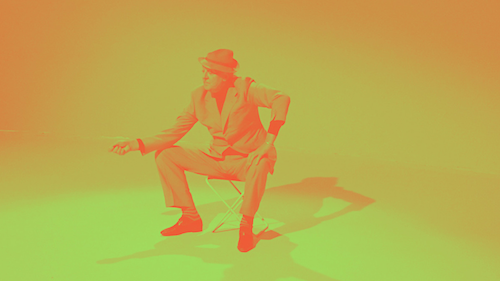
8. Parade
Tati's final feature film feels like an attempt to get back somewhere in the limelight (a specifically chosen word by me, given its similarity to Chaplin's film of the same name despite Parade not being nearly as good). Parade took us to the circus where Tati was greatly inspired during his miming days (Tati plays a clown here). While this film looks stunning (Tati never lost his eye for visual flair, and the soft, washed-out palette here makes everything almost look like a living illustration), Parade is all over the place; his past films had many forms of shenanigans happening at all times but they were still kept together by a through-line — Parade just flounders about. Some gags will land; others will not. The film is so short (ninety minutes) that it is hard to be upset with it (it doesn't really drag on for me), but Parade is not what I would call a "good" film. It is one plagued by a lack of funds and focus, and it shows.

7. Forza Bastia
Tati didn't completely shed his affinity for sports throughout his life, so it's somewhat fitting that his final project of any sort is Forza Bastia: a documentary short about a soccer match between the titular French Corsican team and the Dutch PSV Eindhoven squad. Co-directed with Sophie Tatischeff (Tati's daughter, who worked on the film when he was unable to due to health concerns), Forza Bastia is a labour of love more than anything by the duo (Tati was doing a favour for the president of the Bastia club). The film is fine. It looks decent and, essentially, covers the match as coherently as it could; considering the fact that the film was abandoned before Tatischeff picked it up and completed it in 2002, the film holds even less relevance outside of being Tati's final film for us to witness. Furthermore, this feels the least like a Tati film than anything else he ever made for obvious reason: it is a documentary commissioned by someone else. Forza Bastia doesn't hurt to watch, but it certainly shouldn't feel like mandatory viewing even if you are a huge Tati fan.
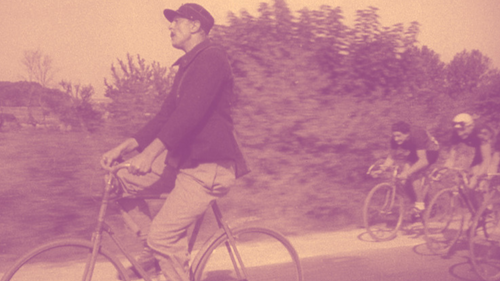
6. L’École des facteurs
Tati's debut film is a fifteen minute short, L’École des facteurs. What is clearly an homage to the comedies of the silent era in a new form, this 1947 short turns Tati into an unnamed postman who is driven by determination. This is a good short film that is somewhat overshadowed by what he would accomplish later on, especially by his debut feature film, Jour de fête — which utilizes a number of the same visual gags and ideas to a greater effect. This one is for Tati fans through and through: a launching point for an auteur of comedic cinema who was testing the waters and seeing if his mime work would translate nicely to the cinematic medium. He had acted in films previously, but now he was seeing how he would fare behind the camera (and using his Cady-Films company to produce this experiment). This isn't where you should start your Tati journey, but it makes for a nice place to end it.
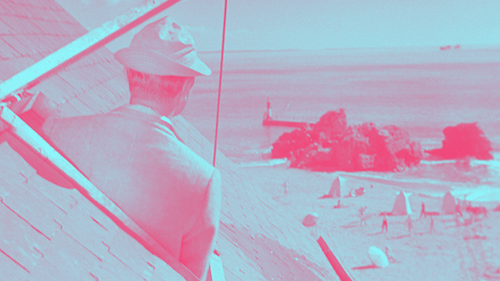
5. Les Vacances de M. Hulot
After the three previous entries, we are now in Tati's top five releases (and I consider all of these essential Tati selections). We begin with Les Vacances de M. Hulot: one of Tati's most popular works because of its heavy focus on its title character. It is clearly stated in the name of the film: this is a vacation film featuring Monsieur Hulot. That's it. What transpires is a parade of mishaps on his trip, from the arrival at his hotel to his departure (and every example of oddity in between). I feel like Tati got far more creative with how cinema can house comedic routines, but make no mistake about it: Les Vacances de M. Hulot is a riot that brings an innocence from yesteryear back to the big screen during a time where cinema was hoping to be larger, grander, and more ambitious. Tati would follow suit in his own brilliant way, but Les Vacances de M. Hulot saw Tati bringing cinema back to a more quaint and smaller place when it desperately needed to be humbled a little bit. This is kind of a no-frills comedy, but I'd argue that's what makes it special for its time (and within Tati's filmography).

4. Trafic
After the financial pitfall that is PlayTime, Tati made a much smaller followup of sorts: Trafic. Only ninety minutes in length and the last film to feature Monsieur Hulot in any capacity, Trafic borrows many similar visual motifs from PlayTime in this satire on the boom of automobiles. What feels like a slight return to his classic Hulot titles (in this farewell) and a sister film to PlayTime's brutalist-esque visuals and visual complexity, Trafic is a film I am sad to see so under discussed. This is a Tati classic through and through to me: a jovial yet thought-provoking parody of the mundanity of being alive and in this self-serious world. It is exquisitely fun, and I feel like this was one last true effort by Tati to see if his ideas would stick. Now that PlayTime has been reassessed and championed, where is this same space for Trafic? Sure, it isn't quite as incredible and massive, but Trafic is worthy of your time and love; it remains Tati's most underrated film.
3. Jour de fête
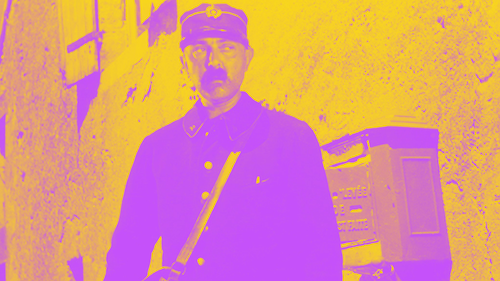
Tati's feature length debut, Jour de fête, is the best example of his straight forward comedies: a piece of evidence that there was still room for such films to exist in the industry. While not really a silent film, Jour de fête is adjacent enough to the era that this felt like a return to a retired artform back in 1949. This film is also a bit of a recreation of Tati's first short film, L’École des facteurs, but you can find the newly found assuredness in Tati's elongation of this postman story into a feature length release. Here, the same visual gags are funnier and crisper; Tati's direction of non-actors alongside his quirky antics is highly impressive as well. To add to the notion that Tati was thinking ahead, Jour de fête was shot simultaneously on black-and-white and colour stock; the colour version was unable to be completed, but Tati's daughter, Sophie Tatischeff (who also helped finish his documentary, Forza Bastia) helped piece together the existing footage into a shorter version, should you be interested. Tati's efforts to explore colour-based film would continue in the near future.

2. Mon Oncle
Tati's first film in colour, Mon Oncle, feels like a major breakthrough in comedy cinema. A major commentary on society's obsession with innovation and consumerism, this tale circling — who else but — Monsieur Hulot almost feels like the French answer to Chaplin's Modern Times. Tati feels more invested in the ways that the "ways of the future" hinder us rather than benefit us, and Hulot's stumbling-upon every concept feels like a pleasant way of making Tati's points without extreme cynicism or judgmentalism. Tati also sees the hope within pushing ahead, but within reason. There can be such a thing as going backwards by going too far forwards, and Mon Oncle pokes fun at this as well; all while being an endearing, whimsical romp. The film was such a success that it even won the Oscar for Best International Feature Film (a major oddity for a comedy film of this nature); it continues to receive its much-deserved praise today as one of the great straight-up comedies of its time.
1. PlayTime
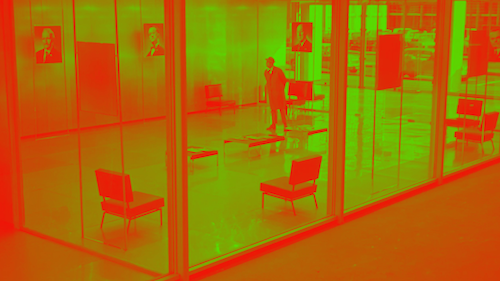
Comedy is subjective, and that is its biggest weakness. Then again, that could be its strength as well: a comedian's ability to tap into something that is very personal for you to the point that you feel seen, heard, and represented. Tati took the often-referenced notion that the world is a stage and we are its players (as per William Shakespeare) and turned that stage instead into a sandbox with PlayTime; we are still permitted to play as we see fit. There isn't really a storyline here as much as there are chapters and sequences of hilarity. Monsieur Hulot appears once more, but Tati gleefully allows his iconic character to slowly fade into the background of many scenarios, so that everyday people could become megastars on the big screen. In PlayTime, Tati took the normal routines of commoners and turned them into spectacles on 70mm. Traffic, shopping, work, waiting for an appointment, and sitting down in a restaurant all become circus-like festivities, living comic strip panels, and playground buffoonery.
What exemplifies PlayTime even more is the impossibility of it all. You can not notice every single gag in one sitting, especially because there is so much happening at once. Tati worked with every single actor — including extras — to give them all mime lessons even if they were in the film for less than a minute. This way, everyone had their moment to shine with their miming routine; you may not notice them the first watch or even the second — it matters as long as you notice them eventually. This is a visual feast for your eyes and your funny bone: a wonderland of mishaps, slight sight gags, and strangeness that you can — and should — get lost in. This is not a film driven by plot or intellectualism. You are meant to feel like a child again: one who would exit the cinema and start to question everyday life. Your lost sense of imagination could now return because Tati showed that it was possible — even if your creativity was buried deep underneath decades of being a jaded adult. You begin to find a spark in the dullness of your habitual life. You question the futility of some things you have to experience as an adult. There is no going back once you see PlayTime at least once.
However, you cannot simply watch PlayTime just once (at least, that's what I find). You have to go back and see jokes you missed the first time. Every screening is different, since what you find each time determines the flow and electricity of that particular viewing. Of course, there will always be moments that stand out, like the traffic-made carousel towards the end of the film, but Tati made all of the little things matter just as much. It is a crying shame that PlayTime was a complete dud when it first came out because of how special this film is: it completely shatters how comedy translates into film, while recontextualizing how films can be watched and appreciated. Its staying power is evident by the film's contemporary audience who have rediscovered it and understood its excellence. Now, PlayTime is rightfully seen and appreciated as one of the great satires of all time. If we were all laughing at the highs-and-lows of characters like Hulot, Tati took the time to remind us that we are just as funny, captivating, and special as the Hulots of the world. We see ourselves in PlayTime — either lost within its gargantuan sets as we try to find each and every last little stroke of ingenuity, or within its population of characters who each have a moment to get caught up in cinematic magic. There still aren't films like PlayTime today when we maybe need them more than ever. Then again, there aren't directors like Jacques Tati anymore.


Andreas Babiolakis has a Masters degree in Film and Photography Preservation and Collections Management from Toronto Metropolitan University, as well as a Bachelors degree in Cinema Studies from York University. His favourite times of year are the Criterion Collection flash sales and the annual Toronto International Film Festival.