
Filmography Worship: Ranking Every Theo Angelopoulos Film
Written by Andreas Babiolakis
Filmography Worship is a series where we review every single feature of filmmakers that have made our Wall of Directors

Greek cinema has never been as popular as it is now, thanks to the recent Weird Wave that has come out (and the biggest name attached to it: Yorgos Lanthimos). Greece is underrated as a filmic nation; while it might seem like bias coming from me, I feel like there can certainly be more kudos shown towards a country that has such politically and philosophically expressionistic cinema. The biggest filmmaker in all of Greece would have to be the late titan Theo Angelopoulos who — in my opinion — is also one of the masters of cinematic postmodernism. His films break the barricade between different moments in time, the living and the dead, and heaven and hell. A pivotal moment in his youth was when his father was kidnapped during the Greek Civil War after World War II; his father would eventually return. During his father's brief absence, Angelopoulos and his family would search through the many dead bodies (as a result of The Dekemvriana in Athens: a month-long conflict between British forces, the Greek government, extreme right-wingers, and the liberal resistance group, EAM/ELAS). While trying to see if any of the corpses were his father, Angelopoulos noted the stillness of horror, the silence after calamity, and the longevity of his frozen state; this would shape his cinematic eye forever.
He studied film at the Institut des hautes etudes cinematographiques in France, becoming a film critic before he made motion pictures. As a response to the Greek junta (the right-wing colonels who formed a dictatorship), Angelopoulos started creating politically-charged motion pictures. Even though he had a patriotic rage within him, Angelopoulos' films were soft and tender to watch. He quickly became affiliated with long, glacial shots, wide-angled images with deep focus, and washed-out colour palettes that exemplified the blue and white of Greece's villages, beaches, and flag. His works can be compared to those of Andrei Tarkovsky and Bela Tarr, but what he has that the other two do not focus on nearly as much is a radiating optimism within his tragedies and dramas: that Greek perseverance that will forever find hope and beauty within hardship. Even if Angelopoulos is not the most recognizable name to you, believe me when I state that he might be your favourite auteur's favourite auteur; his influence and innovation continue to be celebrated throughout cinema.
Angelopoulos' career lasted decades. Like Greek Orthodoxy's connection to the number three (the father, the son, and the holy spirit, for instance), Angelopoulos loved the idea of loose trilogies; he has his Trilogy of History, the Trilogy of Silence, the Trilogy of Borders, and the sadly incomplete and untitled trilogy on modern Greece. Angelopoulos got into a car accident while filming The Other Sea and passed away shortly afterward, unable to finish this third installment that was meant to accompany The Weeping Meadow and The Dust of Time. To me, this will remain one of the greatest omissions in film history: a what-if that begs for closure. While a filmmaker's death can often mark the presence of absence in their works, I am not a religious or spiritual person but Angelopoulos' spirit feels prevalent throughout his feature films; perhaps because his projects often held space for the ghosts that are looking back on historical or contemporaneous Greece within each frame. We will likely never see it, but a posthumous release of The Other Sea would be a unique experience: the most upfront example of feeling a director's existence and absence at the very same time, strictly because of how Angelopoulos' films read.
Even though I would argue he remains under-discussed enough that I feel his legacy deserves far more adoration from the majority of cinephiles, Angelopoulos was adorned with praise and accolades throughout his career. He earned a Palme d'Or (and the Grand Jury Prize) from Cannes, a number of honourary doctorates, and many awards from the Thessaloniki International Film Festival; he has also been nominated for numerous other prizes like the Golden Lion from Venice, and the Golden Bear from Berlin. His films — which often merge the past and present together in a metaphysical odyssey of Greece — are equal parts sublime and powerful. While he only has thirteen feature films (and one short) that I will be covering (none of the segments Angelopoulos directed for anthological films with multiple directors will be featured here), I am happy to report that I was pleased with his entire filmography. Not a single film here felt like a waste of time for me. That says a lot when his films are long on average; you're looking at quite a few films that are around three hours in length. I found every journey worthwhile, and I hope you do as well. Here are the films of Theo Angelopoulos ranked from worst to best.

14. Broadcast
While not a bad short film by any means, Broadcast is placed last because it is easily the film that feels the least like Angelopoulos (it also feels as though it isn't quite fully realized with what it sets out to do). More inspired by the French New Wave than Angelopoulos' own artistry, Broadcast means to merge cinema vérité slice-of-life analyses and a more allegorical look at the differences in genders in everyday Greek life. This character study shows promise, but it also doesn't say a whole lot to me. I am glad that I saw it so I could complete Angelopoulos' filmography (and also see where he started), but Broadcast feels more like an Easter egg in his career than anything else. The wrong place to start watching his films, but certainly not a bad film to conclude your marathon with.
13. Days of '36
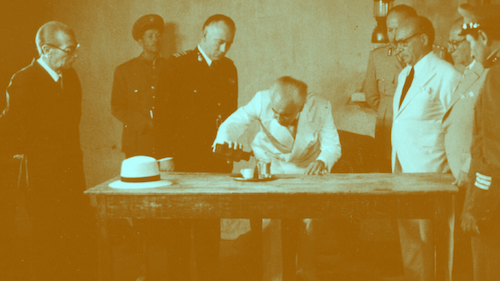
Everything else on this list feels like Angelopoulos through and through, and the one time that he felt a little carried away with style, purpose, and political rage is Days of '36: his second feature film and the first part of this Trilogy of History. You can tell that Angelopoulos was testing the waters with this angry political thriller about a government that is collapsing after a unionist is assassinated and a conservative MP is kidnapped. Clearly a reflection of the state of Greece that Angelopoulos was witnessing (and a commentary on the cyclical nature of history), Days of '36 was his earliest attempt to tell stories via his own set of rules (down to the destruction of realism via abstract and postmodern prose). It feels the slightest bit indulgent with its ambition, but it is the only time an Angelopoulos film has ever felt this way; I cannot fault him for seeing what he could accomplish on the big screen (we would have never had his best works otherwise, including the very film that preceded Days of '36; more on that film far further down on this list).

12. The Dust of Time
Angelopoulos' last completed film, The Dust of Time, is as abstract and cryptic as he has ever been; while I do think that his style has been stronger throughout his career, the emotional angle of this film allows me to still find much purpose even in the mist of images and symbolism (that, again, doesn't quite click as well as it typically does in his films). One of a couple of his films to opt for an American angle on Greek themes and history, The Dust of Time sees Willem Dafoe as a filmmaker who is trying to piece together the fragments of his ancestral history. We already have a very similar film in the form of Ulysses' Gaze that I feel was a far stronger effort, but I suppose The Dust of Time aimed to replicate what the former film achieved with provenance; this time, Angelopoulos aimed for personal identity in a very literal form (how am I like my family, and what did I inherit). This is still a lovely and thought-provoking effort by Angelopoulos that is worth watching, but it should be known that he usually operates at an even greater level than this.
11. The Beekeeper
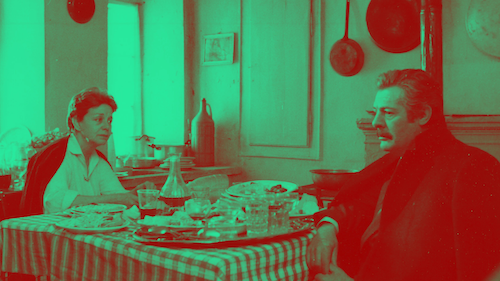
I like to mark the point on my lists where a filmmaker's work is — in my opinion — begins to become mandatory viewing for the reader. Well, believe it or not, we have already reached it. The Beekeeper is one of the many Angelopoulos films you can consider a journey, but this one is a bit more literal than some of the other examples in the sense that we follow a retired teacher across Greece in his efforts to relocate his beehives in the springtime. We get a sense of what Greece means to our character, Spyros, and his many dilemmas in his twilight years. Of course the metaphor of bees is used in a myriad of ways (from the importance of life and yearning, to the sudden and painful nature of death). I had to look at this list again and again at the brutal possibility that a film as strong as The Beekeeper could even be fourth-last, but here we are; Angelopoulos was simply that great of a filmmaker.

10. The Suspended Step of the Stork
Angelopoulos always assumed that he was acting as an artistically-inclined reporter when he made motion pictures, and his Trilogy of Borders observed multiple types of research and exposition. The Suspended Step of the Stork -- the first of this trilogy — sees a character who happens to be a reporter himself (maybe Angelopoulos saw himself in this person); he is trapped in a town just outside of Greece where many immigrants and refugees are waiting to be accepted into the country. Angelopoulos uses the concept of migration and returning to one's homeland to showcase what his connection to Greece means to him; he dives into this experiment further via a character who resembles a politician who has disappeared years prior (played by the magnificent Italian legend, Marcello Mastroianni). Angelopoulos ruminates on the many layers and complications pertaining to identity in The Suspended Step of the Stork.
9. Alexander the Great
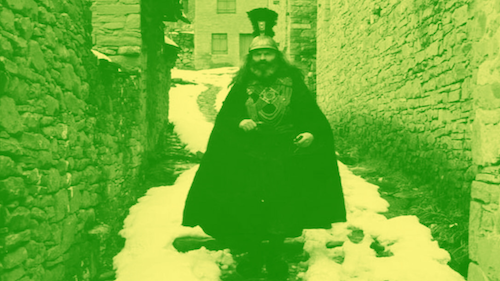
The second Angelopoulos feature film to not be affiliated with any sort of a trilogy (besides the early film, Reconsturction) is his three-and-a-half hour historical epic, Alexander the Great: not that Alexander the Great, but, rather, a leader of a group of freed prisoners. Based on the 1870 Dilessi murders Angelopoulos blurs different moments in history together to make a stream-of-consciousness amalgamation of the nation's provenance in a near-mythological way. While the film does feel the slightest bit excessive (not enough to spoil anything for me), Alexander the Great is also one of Angelopoulos' most visceral affairs: this could only be made by a citizen who loves his country but despises what has happened within it. I view the moments where Angelopoulos occasionally gets carried away as proof that the auteur is, despite all other cinematic evidences, indeed from our world and a human being (not this benevolent apparition who has somehow conveyed his findings in celluloid form, like the majority of his other films appear). This one is for fans of Bernardo Bertolucci and the like: arthouse directors who love flying by the seat of their pants and letting the vibes take over.
8. Trilogy: The Weeping Meadow
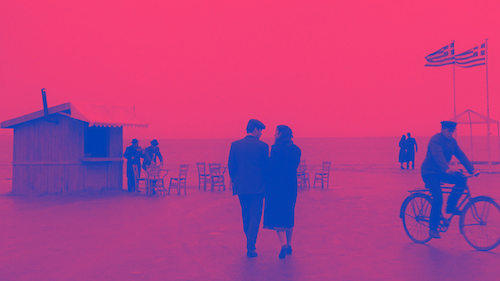
Trilogy: The Weeping Meadow (or, simply, The Weeping Meadow) is the first entry in the trilogy of films that were meant to depict modern-day Greece (which, as we sadly know, Angelopoulos never completed). This part of the triptych looked at the refugee crisis of contemporaneous Greece, stemming back from the turn of the twentieth century. In an effort to detail the current state of Greece and how many of its citizens arrived at this point, The Weeping Meadow is an extravagant, vast observation of the many shifts in the geopolitical structure of Greece via a tale of two refugees over the course of three hours. Like a couple of Angelopoulos' films, what was once deemed pretentious and unfocused can now be seen as a conscious effort to explore national identity through all angles (including the metaphysical) in a moving story of isolation and existentialism.
7. Voyage to Cythera
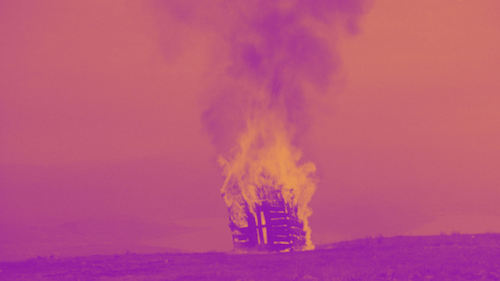
Mindsets are a fickle thing, are they not? We do not know that we have them until it is pointed out — either that, or we get older and look back at these moments in time as new people. Angelopoulos was privy to such a phenomenon when he made Voyage to Cythera: a character study featuring a geriatric communist who finally returns to Greece after living in the Soviet Union for many years (up until its dismantlement). Does Greece even qualify as his homeland since he is so estranged from it intellectually and politically? Will it feel like home now that he is forced to return? Do our political allegiances remain when we are uprooted (especially when it is clear that what we once followed did not work)? Like all other Angelopoulos films, Voyage to Cythera is certainly as much a study of self as it is a statement on Greece, but this is a film that I would deem highly applicable to all times: it is a thesis on the backstabbing ways of complete devotion to a party or philosophy.
6. The Hunters
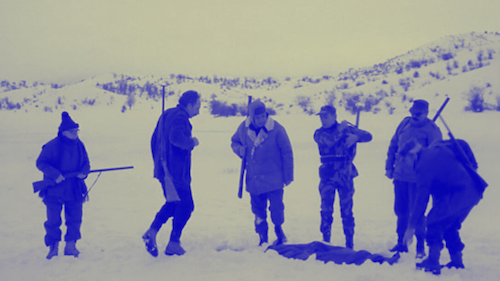
Maybe the film that most resembles young Angelopoulos' unfortunate experience with the Greek Civil War (when he was unsure if his father was alive or not) is The Hunters, and you can see what an impact this event had on his entire life. The premise is somewhat simple: five bourgeoisie members of a hunting party to ring in the new year stumble upon a corpse from the Civil War. The body is intact and continues to bleed. Angelopoulos comments on the never-ending impact of war and slaughter in a ghostly, lingering epic that makes us feel as though we are stuck in purgatory: a place amongst both the living and the dead. In a nearly-biblical fashion, Angelopoulos depicts trauma and the permanently wounded state of Greece: a country that thrives even amidst its agony.

5. Reconstitution
Angelopoulos' debut feature film, Reconstruction, might not feel completely like his style, but there are hints of how his motion pictures would be shaped in this neorealist drama. After a man is killed when he returns to the village he once fled, Reconstruction aims to, well, reconstruct his life and the murder itself; Angelopoulos blurs the lines between reality and fiction by featuring a film crew that is meant to capture the entire story (which, effectively, Angelopoulos is doing himself here). This preliminary film in his career is a terrific start: a means of dismantling the untouchable nature many filmmakers feel that they are owed — and a revelation of cinema's responsibility to remind audiences of artistic intent. Perhaps this stems from Angelopoulos' background as a critic, but Reconstruction is highly aware of both the power and the illusion of film; its self awareness is remarkable and eye-opening.
4. Landscape in the Mist
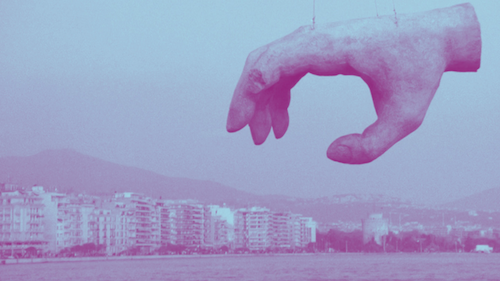
We are reaching two films that were not as well received upon release as they are now. The first film is potentially your favourite Angelopoulos film (and, for that, I do apologize not having it placed first on my list). Landscape in the Mist is an astonishing coming-of-age film. Usually, when Angelopoulos wants us to be nostalgic or reflect on the past, he will transport our present selves to a realm that simply cannot exist in reality. Here, we actually follow children who are hoping to reconnect with their father (who allegedly now resides in Germany). Still, Angelopoulos' knack for blending different moments in time — as well as memories and actuality — is at an all-time high here; we are looking at a highly complicated state of the world through wide-eyed children (and the many harsh realities they are to face). While many Angelopoulos films feel even slightly hopeful, Landscape in the Mist acknowledges the world, philosophies, and mindsets that are being left to the next generation; it is hard not to see myself — and especially the youth of today — in a film like this.
3. Ulysses’ Gaze
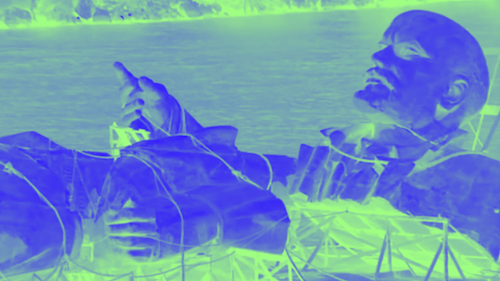
My very first Angelopoulos film was Ulysses' Gaze, all thanks to the late Richard Corliss' list of the greatest films of all time for Time Magazine. I was a teenager at the time and highly susceptible to the ratings of, say, Rotten Tomatoes, when I saw Corliss champion this film that got dire reviews online. I watched it nonetheless, and began to question myself: do I like bad films? Are Corliss and I wrong? Is everybody else wrong? Years later, I can confirm that Corliss was ahead of the curve when he declared Ulysses' Gaze Angelopoulos' greatest film; while I wouldn't go that far, I do agree that it is extraordinary. The best attempt by Angelopoulos to observe Greece via an American angle, we follow a director — played by Harvey Keitel — back to Greece in search of lost films by the Manaki brothers (existing, Greek film pioneers). I can see why some may have disregarded this film upon its release: it does slightly play like a greatest hits compilation of Angelopoulos' triumphs. However, considering the anti-Hollywood stance it upholds and how immersive and inviting it is to all audiences around the world, all I see is a unifying, postmodern quest that feels near and dear to Angelopoulos. I wouldn't dare call the film accessible, but this could be as great of a foray into Angelopoulos' films for you as it was to me. I am glad that the film is respected now.
2. Eternity and a Day
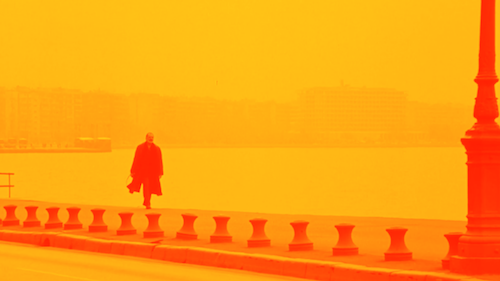
Angelopoulos' Palme d'Or winning classic, Eternity and a Day, is as breathtaking as cinema gets. Angelopoulos predicts what life might be like when he dies one day via a writer with a terminal illness. As we look back on life in a healthy state, we are still cognizant of the joys and tribulations that we have faced. With death on the horizon, these memories now become tangible objects we cling on to in order to remember who we are before we lose it all; our senses; our identities; our lives; ourselves. Angelopoulos turns such a crisis into a haunting fever dream, driven by the magnificent Bruno Ganz in a performance that makes us feel like we are looking at both Angelopoulos and ourselves (his memories become ours). Turning the past, dreams, and the dread of death into a fantastical, surreal landscape is one of the greatest experiences Angelopoulos ever granted us; I hope it helped him grapple with the inevitable as much as it has helped shape how I view death.
1. The Travelling Players
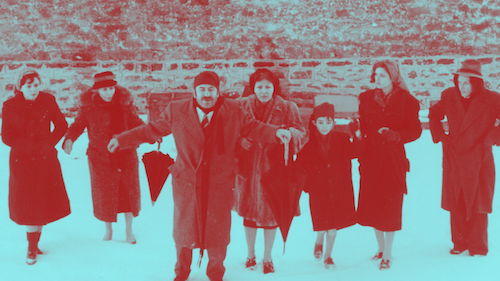
Angelopoulos is the kind of director who is so good that I expect fans to have different favourites. The Travelling Players is mine. This nearly four-hour masterwork is as inventive as Angelopoulos ever was, but the way that he turns his film into a rotating diorama of Greece's history and political landscape is pure cinematic perfection to me. The gist is that the titular travelling players are wanting to put on a show all over Greece. The key is that their surroundings are as much of a stage as the places they set up to perform are. Angelopoulos takes William Shakespeare's quip about us being the players upon the world's stage quite literally here, but he goes many steps beyond by turning us audience members into participants as well; what these players experience becomes a core part of our memories as well. The weight of history is far too much for one resource to bear, so watching it all collapse and coagulate into these seamless, transient passages of time before our very eyes is a gargantuan undertaking by Angelopoulos; he excels effortlessly.
It's one thing knowing that Angelopoulos never lost sight of what makes The Travelling Players exceptional — with a filmography that is of the utmost quality and consistency. It is another seeing a filmmaker succeed so triumphantly and so early in his career; remember that this is only his third feature film. How one man is able to muster these multitudes as if he is coming to us from another life, dimension, or reality is why one falls in love with art in the first place: because it is artists who help us tap into the impossible. You can call The Travelling Players one of the great filmic history lessons because you learn as much as you feel; how could you not ingest a film like The Travelling Players and all that it conjures up like a seance? To me, a film like this is as close as cinema can get to the works of James Joyce: a postmodern deconstruction of its medium while creating an ambitious journey that is limitless in scope, nature, and time. We experience Greece in its entirety in what I can only consider the greatest Greek film of all time (and Theo Angelopoulos' magnum opus).


Andreas Babiolakis has a Masters degree in Film and Photography Preservation and Collections Management from Toronto Metropolitan University, as well as a Bachelors degree in Cinema Studies from York University. His favourite times of year are the Criterion Collection flash sales and the annual Toronto International Film Festival.