
Filmography Worship: Ranking Every Michelangelo Antonioni Film
Written by Andreas Babiolakis
Filmography Worship is a series where we review every single feature of filmmakers that have made our Wall of Directors

If you are a fan of slow cinema or artistic mood pieces, you have to have come across Italian auteur Michelangelo Antonioni by now. If not, his career is a must. Antonioni was crucial to his time because many other filmmakers were pushing the boundaries of how you could tell stories on a macro level; with more complex narratives, layered characters, larger budgets, and crazier technology. Antonioni, on the other hand, was figuring out how to say more with less: via introspective, spacious works that invited you in and encouraged you to search around for meaning. His films often carried that sense of a viewer unsure of what they have come across whilst being unable to put their findings into words — whether these sights include gorgeous landscapes and cityscapes you never knew could exist on Earth, nighttime vibes that mute the squabbling thoughts inside of your brain, or one-off events that defy justification or explanation and are never revisited again.
Antonioni always had an interest in the arts, taking up classical violin as a child. As a young adult, he became a film journalist for multiple publications (including the Fascist magazine, Cinema, operated by Benito Mussolini's son, Vittorio. Antonioni was fired shortly after, since he strongly disagreed with the magazine's politics and refused to give in to upper management's suggestions. Antonioni used this time to try to pivot to filmmaking, when he was drafted to serve for Italy during World War II. He and his troupe were sentenced to death for being members of the Italian Resistance; his miraculous escape from such condemnation is uncertain. Once he returned from the war, Antonioni got back into filmmaking, assisting some big names like Roberto Rossellini. Antonioni was finding his footing with a slew of Italian neorealist shorts; some of which got seized by Italy's Republic of Salo; a number of his shorts were rendered incomplete or lost ever since (a major reason why I won't be covering his shorts, here).
By the time he was making feature films, Antonioni was vying for something different: something that felt like artistic escapism. Films that were as breathy as the medium could ever get, with unrelated instances strung together by existential contemplation. While the cinematic medium was getting punchier, Antonioni was exploring the magnificence of long and uninterrupted takes. These were films that made the disjointed events and drawn-out pauses of everyday life into prestigious, enriched spectacles. Antonioni never got comfortable or complacent, however. He was always pushing himself, leading to a number of sensational art films (and a couple of peculiar works that I'd argue are at least trying something new, even if they don't work out was well as I would have wanted them to). Antonioni's career was half a century long, but he worked at his own pace (outside of a prolific and incredible sixties period), making motion pictures until the nineties. He passed away at the age of ninety-four, on the exact same day as Ingmar Bergman (July 30, 2007); these were two drastically different auteurs who encouraged us to rethink life in their own ways. With Antonioni, we were invited to take deep breaths, look around us, and see the world in a whole new way: one that was always present to us, but we never took the time to reflect. It is time to meditate and appreciate what is all around us, through the eyes of one of the greats of Italian cinema. Here are the films of Michelangelo Antonioni ranked from worst to best.

16. Beyond the Clouds
Antonioni's final film (a collaboration with German New Wave mogul, Wim Wenders), Beyond the Clouds, is meant to feel like a return to form: a tetralogy of stories about romances and the female counterparts' experiences within them. Unlike Antonioni's earliest successes, however, Beyond the Clouds feels exactly like its namesake: a little lost in its own headspace. It doesn't quite succeed as a means for you, the viewer, to wander around within the realm Antonioni has made. Instead, if you are like me, you will be a bit more locked-in on wondering why Antonioni and Wenders made certain narrative choices. It's hard to be whisked away when you are kind of encouraged to scrutinize; Beyond the Clouds is as pretty as any other Antonioni and Wenders film, but it does feel more of a chore than the majority of either of their filmographies (as if his usual effortlessness was just not present).

15. The Mystery of Oberwald
One of Antonioni's final efforts is this made-for-television drama, The Mystery of Oberwald. Centred on the trauma and mystery surrounding a queen and the assassination of her king a decade prior. Antonioni uses the uncomfortable effects of uncanniness throughout The Mystery of Oberwald, from his disorienting story to the shooting on videotape throughout the entire production. The end result is a film that purposefully leaves you dizzied, dumbfounded, and aware that you are watching something in true postmodern fashion. That isn't to say that The Mystery of Oberwald is a success as a film; I didn't get sucked in nearly as much as I have been with most other Antonioni releases. However, I understand The Mystery of Oberwald and how it is far stronger as an experiment and cinematic artifact than it is an immersive project; this one is strictly for the hardcore Antonioni heads out there.
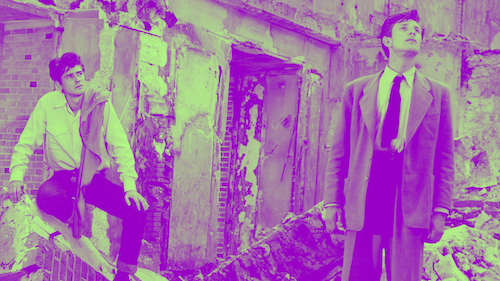
14. I Vinti
I Vinti is a bit of an excessive effort by Antonioni, seeing as it is a triptych of tales of callous murders. This anthology film was perhaps trying to test the waters for how far Antonioni could go with the cinematic medium, and it is an interesting effort that hopes to create an appreciation for life while also detailing the strangeness of the human experience in that same breath (the ways in which the killings take place get progressively inventive). What maybe holds I Vinti back for me a little bit is how it feels so invested in telling you something; most Antonioni films say very little to you, and, thus, are able to encapsulate everything (or whatever your interpretation is). I Vinti feels a bit more pointed; while still creative, it feels a little more pigeon-holed than most other Antonioni efforts.
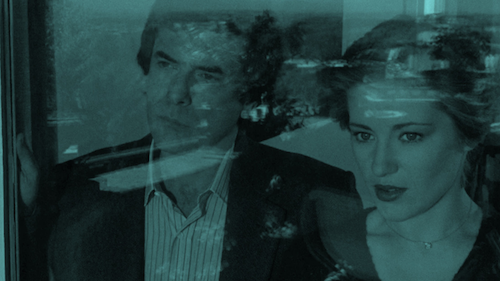
13. Identification of a Woman
Antonioni's penultimate film aims to blur the lines between real life and the cinematic arts in the ways of, say, Federico Fellini and his masterpiece, 8 1/2. Identification of a Woman features a filmmaker and his rocky life: his wife who wants to lead a new life, and another woman who also abandons him. He channels his loneliness into a film about a man who struggles to identify with women, and — by trying to cast the female lead — he hopes to find true love (both in the film and in reality). Once he finds a through line with his latest project, he is hit with the big question: what does he do next? Between his cinematic projects and his everyday life, he is left wondering about the next major turning point. We feed off of living for what comes next, as opposed to being comfortable with the present and what we have. While Antonioni's theme is an extraordinary one, Identification of a Woman feels more like a neat idea than a strong film (maybe I didn't listen to his message of appreciation closely enough).

12. Le Amiche
Le Amiche is cleverly an anthology film in the form of the goings-on of a group of women. By having us follow one particular protagonist — an inspired woman who wants to open up her new salon — we have a bit of a road to follow when Le Amiche decides to do the occasional detour with the company our lead keeps (middle-class girls who have made a bit more headway in life than our star). Antonioni uses these opportunities to detail a larger depiction of class systems and success in Europe at the time, but — unlike his strongest efforts — he feels the need to talk these ideas out via more dialogue cues than you may be familiar with for an Antonioni film. This is still an intriguing exposition of the different objectives we all have in life, but I also feel like Antonioni has accomplished this with greater results.

11. Story of a Love Affair
Antonioni's debut feature film is maybe the closest he ever got to Italian neorealism (outside of his shorts, of course). In short, the title speaks volumes: we have a woman who is married to a millionaire and leading a decent life during times of economic hardship. She reunites with her first love after years of separation in hopes of capturing that same love again. Antonioni uses the landscape of neorealism to depict a tragic tale of being lost in the game of life, unsure of what moves are right and where we are supposed to wind up. Even with this more straight-forward film by Antonioni's standards, Story of a Love Affair still gives us enough to work with, proving that he was ready to make motion pictures by this time. There is a hunger here to get us to not simply understand our protagonist as a depressing figure, but, rather, to feel every ounce of agony instead. Antonioni would continue to get us to be within the souls of his characters from this point on.

10. Zabriskie Point
After the success of Blowup, Antonioni was venturing further into avant-garde, westernized storytelling with Zabriskie Point: a film that was almost career suicide for Antonioni. Even stranger than anything he had directed before, and with a bizarre plot of a revolutionary framed for murder on the run (and an extensive "stay" in Death Valley), Zabriskie Point was Antonioni's answer to counterculture cinema. He tossed in a soundtrack full of trippy prog-rock standards, cinematography that made you feel like your mind was melting (or your eyes were dilating), and an intended aimlessness that mimicked a daydream. The ending is — perhaps a hot take here — simply sublime: a hypnotic fever dream of a house exploding, captured by a multitude of angles that is equal parts destructive and calming. Once considered one of the worst films ever made (be reasonable, folks), I find Zabriskie Point difficult yet misunderstood; it is a work that went the full mile when New Hollywood minds were going inches to see what they could get away with. Antonioni may have better, but he certainly also has worse than what was once christened his disasterpiece.
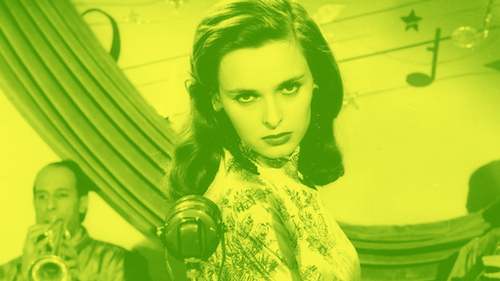
9. The Lady Without Camelias
Italian neorealism brought the stories of the lower and working classes to the big screen for the world to feel and understand. One of the more literal — yet interpretive — takes on this movement is Antonioni's The Lady Without Camelias: a film about a working woman who winds up becoming a film star at the hands of destiny. Antonioni questions what the use of non-actors in these films means when cinema renders them celluloid juggernauts; are we idolizing the person, or the character they play? Do we care about them as people or as subjects? In The Lady Without Camelias, Antonioni plants us in the near-surreality of both possibilities: the obfuscation of the truth of the masses when an auteur's artistry elevates — yet taints — their intended message. Antonioni was always one to think outside the box, and this take on the hopes and dreams of an everyday woman who suddenly becomes something more is a great early cut by him.
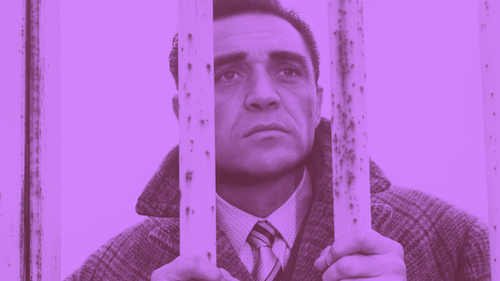
8. Il Grido
A good road film can make you not care about what destination comes next, seeing as the strongest filmmakers can make any location have purpose and meaning. Antonioni's Il Grido feels like a bridge between the different eras of Italian cinema. It kicks off with a neorealist sentimentality: a lower-class worker who proposes to the love of his life, only to be refused. He takes off on a journey to escape his sadness; this is where Il Grido steers us towards the then-new face of Italian film — one of artistic escapism. Our protagonist travels through gorgeous-yet-depressing passages of Italy that both exemplify the beauty of life and the pain of heartbreak; these excursions are as meditative as they are intellectual. Il Grido was a major turning point for Antonioni and Italian filmmaking as a whole.

7. Red Desert
Red Desert was a transitional film for Antonioni in a myriad of ways. This is the first film after his acclaimed alienation trilogy put him on the map. This is also his first use of colour on film: an opportunity he would make the most of with this stunning picture. Finally, this was his last Italian film before he explored English-language cinema and how he could break the mold with westernized films. On its own, Red Desert is a haunting piece of modernist cinema: a conquest by a shattered woman to find her place in the world by giving herself meaning — be it through an affair with her husband's friend, or her understanding of her geographical placement on Earth (as if she is one of its countless artifacts). This is the lowest ranked film of what I would consider Antonioni's essential watches. It greatly succeeds as a film that understands your philosophical dilemmas and dreads; it takes a lot for ennui to feel this grandiose.

6. The Passenger
When he made Blowup, Antonioni inadvertently inspired directors in the New Hollywood movement. By the time he released The Passenger, he was directly referencing it. This Jack-Nicholson-starring vehicle is a transcendent love letter to a new era and culture that never feels condescending; Antonioni is not redirecting American cinema as much as he is trying to open even more doors for a movement that he was nonplussed by. The auteur forgoes his usual spaciousness for something a bit more anxiety-inducing: a war correspondent who abandons his assignment and finds himself in hot water with both arms dealers and the authorities in the Republic of Chad. This might be the only time that an Antonioni film leaves you nervous with anticipation and fear; those same long cuts that once gave you room to breathe now suffocate you with your worst fears. This was sadly Antonioni's last such film; I wish he made more like The Passenger.

5. Chung Kuo, Cina
Maybe Antonioni's most underrated film is this titanic documentary (clocking in at nearly four hours) about the historical and cultural landscape of China. Chung Kuo, Cina is split into three parts but each segment details a similar story: the working classes of China, their daily lives, and the many ways the nation operates. Originally a commission that Antonioni was undertaking, Chung Kuo, Cina was banned by the Chinese Communist Party for being detrimental to their cause. Given Antonioni's refusal to play ball back when he was a film journalist to similar propagandistic threats, it's no surprise that he refused to compromise his findings in Chung Kuo, Cina: what I consider a city symphony catered not to the traveler (who wishes to romanticize cityscapes) but, instead, the intellectual. Underneath the exquisitely-composed images is a peculiar dichotomy between those who feel like they have figured out their purpose in life versus the overall question of what life is even about as a whole.
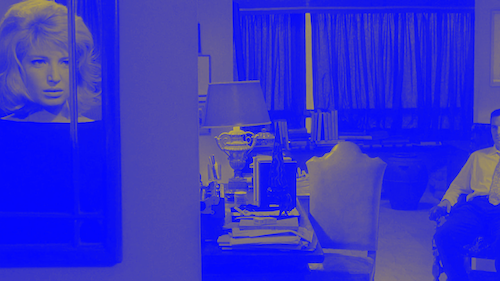
4. L’Eclisse
We have now reached the part of the list that deals with Antonioni's cherished alienation trilogy, and deciding which film gets ranked where is not an easy task; I consider all three of these works to be staples of Italian cinema. I suppose I will select L'Eclisse as the weakest of the three (by the smallest margin imaginable). The concept of finding love again after hardship gets symbolized via the usage of the titular phenomenon of the solar eclipse. Antonioni seems to remark on the paradox of two celestial or humanly bodies overlapping, giving the impression that neither are present when all goes dark. Here, two lovers are similarly looking for adoration and belonging. They try again and again to find what they are looking for in each other; Antonioni's heartbreaking look at such a dilemma results with one of the biggest gut-punches of sixties cinema — the acceptance of resignation (the only time they ever truly saw eye-to-eye). How can two people be so close and yet so far from one another? Such is the tragedy of L'Eclisse.

3. L’Avventura
The first of Antonioni's alienation trilogy wound up being one of the most influential films ever made. After L'Avventura, filmmakers felt more inclined to slow their films down to a crawl and inspect every crease and crevice of a shot for the meaning that Antonioni's wandering protagonists were craving. Here, a woman goes missing during an exotic boat trip to a volcanic island in the middle of the Mediterranean sea. However, instead of the film being about her rescue, L'Avventura prioritizes the woman's partner and friend finding love within each other; as if she was both the catalyst to unite them and the barricade in between them this whole time. The film explores what it means to be dead — either in a literal sense, or as a human being who has been hollowed out by a parade of crises throughout their life. To be in the vicinity of natural beauty and feel nothing is one of Antonioni's greatest achievements: the ultimate sense of numbness to ease the pain.

2. Blowup
Breaking up the alienation trilogy with something completely different is easily Antonioni's greatest experiment: Blowup. The Italian auteur takes a blistering concept and finds the mundanity within it; who wouldn't be interested in the rockstar lifestyle of a mod photographer? Serving as a counterculture statement against counterculture (Antonioni's avant-garde answer to the s** romp films in Britain of the swinging sixties), Blowup finds drabness in the supposed fascinating days of being caught up in a movement. Our photographer gets a bit of a shakeup when he discovers what may be a murdered corpse in one of his latest shots; so he begins to retrace his steps. Unlike Brian De Palma's Blow Out (which is heavily inspired by Antonioni's film), Antonioni doesn't care about seeing this case through. Instead, he wanted to break up the mundanity of a lifestyle — no matter who you are, your everyday life will bore you. Suddenly, Blowup becomes a carousel of vignettes that have no attachment to one another. This is the act of detonating the conventional cinematic plot in favour of a whirlwind of one-off miniature masterworks. Not once does Blowup feel anthological, either; Antonioni's ability to make this particular film actually feel like a trail of unrelated circumstances whilst maintaining the film's fluidity is astounding.

1. La Notte
While Antonioni has a few films that I would consider spectacular, it feels a little too easy for me to pick out his best film. Especially because he is a filmmaker who makes works that you feel more than you read, the fact that La Notte is a motion picture that exists in my bones is something I cannot ignore. The second film of the alienation trilogy, La Notte pools together some of the greatest international names of its time: Marcello Mastroianni, Jeanne Moreau, and Antonioni veteran (and former romantic partner) Monica Vitti. Over the course of twenty-four hours, a struggling married couple have a few life-altering experiences (from the bad — the deathbed of an ailing friend — to the supposed good — the book launch of the husband; both feel equally dismal). They then strike up a party to feel something, since they are no longer able to provide support, love, and confirmation with one another.
This party serves as an out-of-body experience for the two of them: a near-dreamlike introspective conquest where the silence of minutiae is far louder than any kind of melodrama that other filmmakers in the sixties would have sought after. As La Notte progresses, we see a couple drift further apart (which, in a way, almost unites them in their separate journeys). By the film's end, we no longer see two people who are seeking for that greener grass on the other side; we see a couple who recognize that there will never be anything better than what they have. This is not an optimistic note, mind you, but a surrender to ennui instead. If Federico Fellini brought the masses to the high life with his films, Michelangelo Antonioni destroyed the illusion with films like La Notte: an arthouse take on how no amount of fortune or luck can cure people broken by existential paralysis. He perfectly captures the sensation of being lost in thought in the wee hours of the morning; as our minds drift and our lips become lose and spill far too many secrets. Then, there is that haze of the rising sun, wondering where the night went; however, La Notte is instead dreading the speed of life as it questions how we have arrived at this point in life. This is an exquisite film that forever inspired slow cinema and intellectual arthouse pictures: a film that is both introspective and artistically expressionistic in an outward sense — and yet it feels magnificently, impossibly empty via both avenues. There's no film like La Notte.


Andreas Babiolakis has a Masters degree in Film and Photography Preservation and Collections Management from Toronto Metropolitan University, as well as a Bachelors degree in Cinema Studies from York University. His favourite times of year are the Criterion Collection flash sales and the annual Toronto International Film Festival.