
Filmography Worship: Ranking Every Abbas Kiarostami Film
Written by Andreas Babiolakis
Filmography Worship is a series where we review every single feature of filmmakers that have made our Wall of Directors

I am a massive fan of Iranian films; Iran is one of the strongest nations regarding international cinema, and I will use every opportunity to celebrate its filmic output. Arguably the biggest name in the country’s film industry (and the Iranian New Wave movement) is one Abbas Kiarostami. Throughout the course of cinematic history, you will find masters of narrative pictures, documentaries, and the rare example of someone who excels at both (like Werner Herzog or Chris Marker). Then, there is Kiarostami, who was not only extraordinary with both styles of filmmaking. He was a brilliant practitioner of postmodern filmmaking that combined both fictional and documentary features into single visions, in a way that is unlike anything that has come before or after his filmography. Starting off with political, neorealist depictions of poverty and the welfare of children in Iran, Kiarostami would become one of the biggest voices in avant-garde cinema when he would challenge what truth in a film could look like. Kiarostami had a big part in the contemporaneous influx of Iranian films that came out of the eighties, nineties, and aughts; with over forty credits to his name (as a filmmaker, writer, producer, and more), he was integral to both the careers of many and the film world taking notice of Iran's output. These include connections with Jafar Panahi, Ebrahim Forouzesh, Alireza Raisian, and more. I will only be focusing on his feature films.
With all of this in mind, I cannot take lightly the blaring allegations that Iranian filmmaker and actor Mania Akbari has come out with since Kiarostami's passing: ones that include a horrifying experience on the set of Ten (from Kiarostami apparently plagiarizing some of Akbari's ideas and work, to Kiarostami sexually abusing Akbari during production). While the only major resource indicating these events took place is Akbari's own statement, if anyone has encouraged me to question anything as truthful or artificial, it's Kiarostami himself, even if it is to his own detriment. At this point, it is difficult to know the extent or legitimacy of these claims, but I feel the need to bring them up because these allegations are damning and marring, nonetheless. I take these matters very seriously. I also want to make it known that when I write these kinds of articles, I am removing the artist from their art; in no way am I justifying or encouraging alleged or confirmed behaviours like this. As much as I love Kiarostami’s films, I — and many of us — remain uncertain of the individual who now bears these allegations; unless they are confirmed to be false, I simply cannot turn a blind eye to statements like these.
With all of this in mind, I will be focusing primarily on Kiarostami's works as they are and less on who he was as a person; despite this, he did include himself as an internal or external voice on many projects, given their postmodern nature and all. I will aim to remain objective with how these films operate. At the very least, the majority of his films are intrinsically fascinating, given their unique premises or constructions. At his worst, Kiarostmai's films might drag a little bit (even with their interesting concepts; there isn't a single Kiarostami film that is boring in nature, but not all of his concepts worked as well as his peak films did). At his best, however, you are looking at some of the most inventive, eye-opening motion pictures in all of film history. Here are the feature films of Abbas Kiarostami ranked from worst to best.
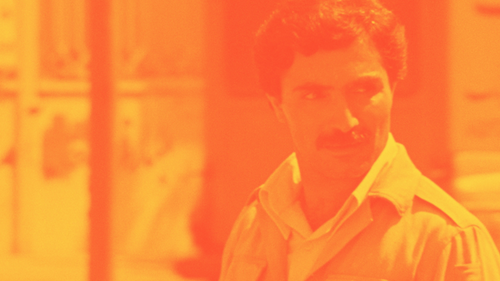
23. Fellow Citizen
In response to a barricaded section of Teheran that everyday drivers could not use, Kiarostami released Fellow Citizen: a documentary about the societal response to this decision. For fifty minutes, you are gawking at people and their various reactions to the debacle, and parts of it can feel entertaining or captivating. However, if your idea of education or enthrallment isn't watching people get confused or frustrated over the same thing, Fellow Citizen doesn't offer too much outside of its standard premise; this could have easily been a short that conveyed the same message.

22. 10 on Ten
10 on Ten is a bit of a peculiar film. On one hand, it's Kiarostami's documentary commentary where we sit with the director while he discusses his approach as a filmmaker, particularly on the 2001 project, Ten (which he films in a similar way: behind the wheel). On the other hand, this feels more like an anecdote or special feature for a different film as opposed to its own fully-realized release. Unlike some of Kiarostami's other films that are connected to one another (like Through the Olive Trees and Life, and Nothing More...), 10 on Ten doesn't really add much to the overall experience of having watched Ten. This one is for those of you who like listening to director commentary tracks, but, even then, I feel like Kiarostami has offered more to us in such a way.

21. The Report
As Kiarostami was wanting to expand his stories and themes, The Report is the result of the Iranian auteur trying new things and maybe not succeeding as well as he has before and since. This raw look at a tax collector's life and the karma that pursues him; then again, Kiarostami doesn't make things so simple, here — the collector acts out of desperation, and his choices still hound him. Even so, The Report can feel a little bit sluggish at times; despite its layered story and humanistic power, it can be a little carried away with the amount of things Kiarostami wishes to include (he would learn how to accomplish even more with less as well).
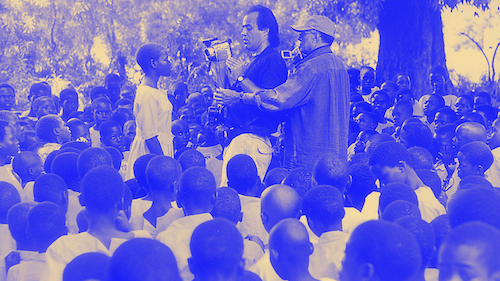
20. ABC Africa
Kiarostami's first film of the twenty-first century, ABC Africa, feels like a standard documentary with good intentions: it features coverage of the children of Uganda in response to poverty, the AIDS crisis, and other tragedies. Commissioned as a means to shed light on the extent of the struggles that were happening nation-wide, ABC Africa is a decent return to the early days of Kiarostami's analyses of how political decisions have ruined the futures for those who are too young to have had a say in their trajectories. While a strong-enough documentary by traditional standards, I feel like a film like ABC Africa isn't as powerful as it once was because of how much we know now in the day and age of the internet, and Kiarostami — known for more technical and meta documentaries — limits himself to just covering the bare basics of this sensitive topic. I feel like you won't learn more than you already know nowadays, but a film as noble as ABC Africa will forever be important regarding its subject matter.
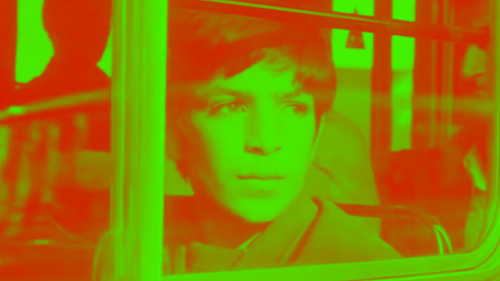
19. The Experience
Kiarostami's debut film is The Experience: an hour-long, neorealist observation of a young, abandoned teen who works for a photography studio. He tries to find the joys in life, including developing a friendship with a wealthy girl who may be able to help him out of his rough life. This is clearly an auteur's first go at a feature film: its concepts are earnest and there is a passion to tell a strong story here, but The Experience just doesn't do much that we haven't seen a thousand times from the neorealist eras of various countries by that point. It's nice to see that Kiarostami's heart and mind are in the right place here, but The Experience was far from his most revelatory film.

18. Five Dedicated to Ozu
Many directors are indebted to the Japanese legend, Yasujiro Ozu; Kiarostami included. The latter's long takes and naturalistic storytelling all feel similar to how Ozu conveyed human sadness and warmth decades prior. By the new millennium (and towards the end of Kiarostami's life and career), the auteur was experimenting with long, static shots more frequently. He would succeed in something like 24 Frames, but his homage to the aforementioned Japanese titan, Five Dedicated to Ozu, doesn't feel quite as accomplished. With just five long shots lasting eighty minutes, Kiarostami vows to find poetry in normalcy via these carefully orchestrated images. They feel okay — and even somewhat beautiful — in the moment, but his experiment feels a little forgettable once you are finished watching. Again, 24 Frames is this concept done with extraordinary power; Five Dedicated to Ozu just isn't as commanding or effective to me.
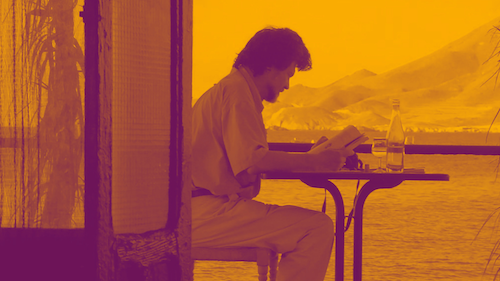
17. Víctor Erice–Abbas Kiarostami: Correspondences
What is better than listening to one director discuss their passion for filmmaking and the history and current state of the medium? Listening to two. Kiarostami joins the magnificent great of Spanish cinema, Victor Erice (The Spirit of the Beehive, Close Your Eyes, El Sur) goes into the impact that both auteurs have had on their nation and on each other. There's not much more to Correspondences than this, but that might be all that you need: the dichotomy and overlap between two drastically different minds who both have a duty to capture the world through their equally enthralling perspectives.
16. A Wedding Suit
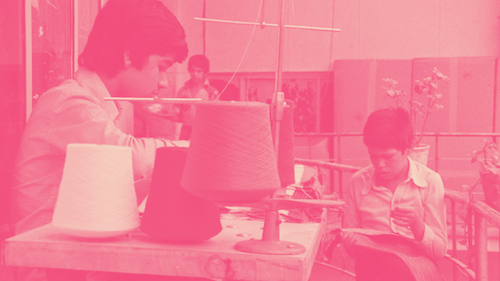
Sometimes, people of certain classes will never know what life is like for others, be they the elite never understanding the struggles of the impoverished, or the working class wondering how much easier life would be like with fortune. A Wedding Suit is a rather clever metaphor for such a conflict, where a tailor's apprentice — working on a suit for a young boy to wear to a wedding — wants to understand what donning such clothing would feel like. Things get a little hairy as a result, and Kiarostami makes sure that A Wedding Suit accounts for both the rush and the hurry that come from such a storyline. At just an hour in length, A Wedding Suit is as poignant as it is visceral.
15. First Graders
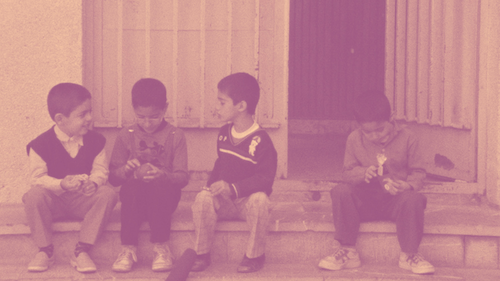
First Graders would not be the only time that Kiarostami — whose early career was invested in telling the stories of the youths of Iran — would visit an elementary-school classroom. This one is a little more standard than what Kiarostami would explore elsewhere; here, we are simply joining the aforementioned first graders on their first day of school for that year. This documentary captures the voice of a future generation, bringing us back to the salad days we now yearn for while also including the then-contemporaneous sociopolitical concerns they would one day have to face (if they weren't facing them already). If you like being a fly on the wall, then First Graders is sure to capture your attention. However, as good as First Graders is, I feel like it got bested by First Case, Second Case: a similar project with far greater results.

14. The Traveler
Welcome to the batch of films I would consider mandatory Kiarostami picks from this point on; we kick off with an early stroke of brilliance. It was by Kiarostami's second film, The Traveler, that he took the boiled-down and rudimentary neorealist concept of The Experience and dialed it up to a whole different level. From having a story about a poor youth trying to get by to The Traveler's far more interesting approach (a child who abuses the system in order to watch his favourite soccer team play in person — perhaps as a response to how society has treated him in the first place), you can see Kiarostami's inherent talent kick into top gear so quickly in his career. The director goes beyond just telling a story about a troubled boy; he adds the complications that stem from the guilt of a kid who is realizing that society is the way that it is because people — like him — turn cold; this change-of-heart and the pulverizing final act make The Traveler a fantastic fable of seventies cinema.
13. First Case, Second Case
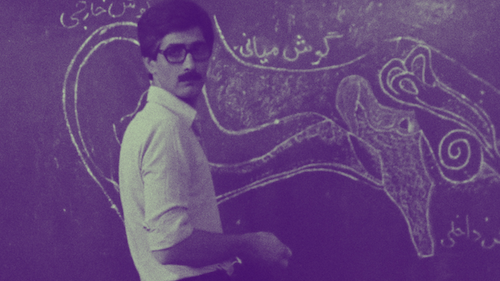
Some documentaries just feel impossibly made: as if there was the behind-the-scenes orchestration of events. A film like First Case, Second Case just feels almost narrative in nature (maybe it's work like this that made Kiarostami want to blur the lines between documentary and narrative filmmaking). For nearly an hour, we see a teacher conduct a lesson, only to be interrupted by tomfoolery time and time again. The teacher then gives them an ultimatum: the titular first and second cases of how things will go. This becomes a rather eye-opening affair, like some of the great school-based films that somehow group all of the lessons of the real world into the quarters of formative minds (like the Palme d'Or winner, The Class, or The Teachers' Lounge); Kiarostami turns the classroom into a nerve-wracking trial in a documentary that certainly feels like a coming-of-age lesson.

12. Like Someone in Love
Kiarostami's merge of fiction and nonfiction in his films is a practice that determines the inauthenticity of the human experience — as well as the truth within the overlooked and often-misrepresented moments of our life. His final film during his lifetime, Like Someone in Love, is quite a departure from his usual style that does not abandon his ethos. A Japanese-language drama, Like Someone in Love follows a student-turned-sex-worker and her new connection with a retired professor one night. Kiarostami toys with the concepts of perception, stigma, and second lives via a stylish, burning tale that results in a night you will not be forgetting any time soon. I can only help but wonder what other nations Kiarostami could have explored after this one had he still been around, because this is a great homage to Japanese cinema via a universal message.

11. Homework
Of Kiarostami's films that explore the education system and the children within it, Homework may be his best attempt (which is saying a lot). The premise is simple: Kiarostami and his crew ask young students about their thoughts on the topic of homework. What should be an expected reluctance (because most children do not like homework) instead becomes a paralyzing series of confessions: the myriad of ways these boys are "punished" as a means of getting them in line. Homework opens up connections with each and every child, and this ninety-minute affair is sickening; how can we encourage the new generation to be inspired and help society when they are given nothing but darkness and torment to the point that they barely want to exist?

10. Shirin
This film is not for everyone; its polarizing response proves it. Why would I dare rank a film like Shirin so high? Am I just trying to be difficult? To me, Shirin is a massive gamble that pays off; I don't expect there to be many films like it, but I am glad that it exists. An avant-garde experiment where we are facing away from the film (as the majority of the shots are of the audience — primarily made up of Persian women — and their faces in response to what they are watching), Shirin forces you to grapple with the fourth wall that storytellers usually try to destroy; Kiarostami prioritizes it, here. Maybe this is me speaking as a cinephile, film critic, and employee of a movie theatre for much of my life, but Shirin spoke to me. That connection I feel when I check in on a screening and just see everyone transfixed in different ways to what is transpiring on the big screen? Kiarostami nailed that. To get such a multitude of tones and vibes from these individuals who don't even know that they are storytellers in these moments is such a beautifully unusual experience for me. If this is all that Kiarostami explored with his films, I would find it tedious and annoying. He only made Shirin once, and he ensured that this bold risk paid off as well as it could; what might be boring-as-sh*t to you could be brilliant to someone else in this case.
9. Life, and Nothing More...
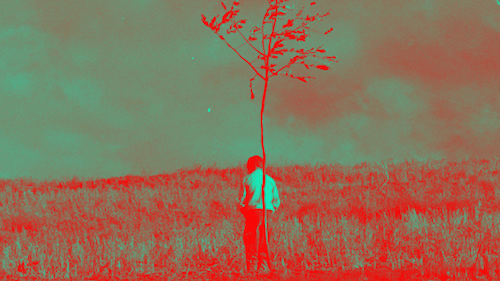
Kiarostami's Koker Trilogy is one of the most inspirational achievements in all of film history. Its separate parts encourage us to revisit the same concept in a triad of ways. The second portion, Life, and Nothing More..., is the first of the three to break the fourth wall. Returning to Koker after two major events (the filming of the narrative feature, Where Is the Friend's House?, and the 1990 earthquake that killed over thirty-thousand Iranian citizens), Kiarostami and company try to search for the cast who starred in his film from before. To make things even more interesting, Kiarostami is not so much documenting his journey as much as he is recreating it — as to amalgamate this real search with the same cinematic eye that once captured Where Is the Friend's House? and continue this cinematic chain of events. If many filmmakers have tried to place themselves in the shoes of others via their neorealist endeavours, then Kiarostami shifted what that experience would look like with a film as singular as Life, and Nothing More....

8. Ten
We have reached the rich-yet-complicated legacy of Ten. Here's the good. The film's docufiction experiment — with actor and filmmaker Mania Akbari posing as a driver getting into unplanned interactions with all ten of her passengers — is extraordinary. We learn more about these ten people and their lives, the larger state of Tehran, and Akbari as a focal point and human being throughout this experiment. There's also the subplot of Akbari taking care of her child (her real-life kid, Amina Maher) which adds an extra layer of heartbreak and oomph to the film. Then, there's the bad: the marred reputation the film has after Akbari's accusations towards Kiarostami (him sexually abusing her and Maher, as well as plagiarizing her ideas for this film). I can only judge the film as I see it, and I think it is excellent, no matter who is responsible for its existence (what allegedly went on behind the scenes, however, is unforgiveable if true). This is an enrapturing look at the intricacies of a city that are unraveled for the audience to witness; all I know is that Ten is a phenomenal film, and the additional revelations surrounding it break my heart and complicate matters.

7. 24 Frames
In a standard motion picture, there are twenty-four frames per second in order to uphold the illusion of movement. Kiarostami's sole posthumous release is the aptly titled 24 Frames: an avant-garde hypothesis on what twenty-four frames can mean in the motion picture arts. There are twenty-four vignettes that act as moving pictures (even this notion is challenged, as Kiarostami takes a note from Sergei Parajonov's book by making twenty-four static compositions with slow movement, as if these are stirring photographs or paintings). For four-and-a-half minutes each, we see what unravels: a potential plot thread, an action, or perhaps nothing at all. This is unquestionably a challenging film, sure, but those of you who want to have your perception of cinema broken and reconstructed via a breathtaking project owe it to yourselves to watch 24 Frames. If you love film as an artistic process and the scrambling of the cinematic language to create new messages and statements, 24 Frames is a must.
6. The Wind Will Carry Us
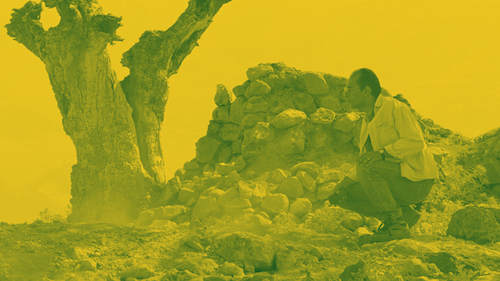
Towards the end of the nineties, as many other people were looking ahead at a new millennium, Kiarostami was looking back at what intrinsically renders us human with his 1999 release, The Wind Will Carry Us. Following a journalist who treks to the rural countryside to celebrate the life of another (through life and death), The Wind Will Carry Us encourages us to reflect on where we came from. However, such a relationship — one with our former stomping grounds — is not so simple when we have allowed life to carve us in so many different ways; what we once were no longer pertains to us in the present. And still we yearn; as we try to learn about the lives of others, we will have to be reacquainted with our past selves as well. The Wind Will Carry Us toys with the idea of making a film in such a life-affirming way — with a familiarity of how things should be without concrete knowledge of what presently is and what will transpire, via an experiment that has Kiarostami looking at himself through his unorthodox-yet-humbling tale.
5. Where Is the Friend's House?
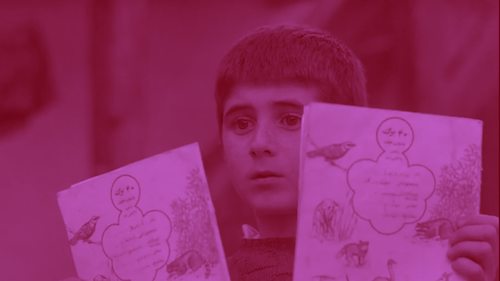
Kiarostami's breakthrough film is Where Is the Friend's House?: a narrative film that takes his early observations of the woes of schoolboys and elevates it to a grandiose examination of Koker and Iran. This gorgeous fable of human decency in an unforgiving world feels like the ultimate test for Kiarostami; what has he learned through his life , and what he wishes to relay to the next generation. He teaches us about compassion via a child whose friend faces expulsion for neglecting his homework. The protagonist goes on a quest to find his classmate's house and return his missing notebook; the way the film goes the extra mile in its final act is truly otherworldly with its lesson on kindness and empathy. Where Is the Friend's House? might be the best Kiarostami film to not try to blend narrative cinema with documentary sensibilities, and yet it still feels as true to life and the world around us (or, at least the kinds of people we hope to come across — ones with pure hearts) than many other films throughout history.

4. Taste of Cherry
Kiarostami won the Palme d'Or for his most depressing film, Taste of Cherry. Essentially, we connect with a man who is insistent on wanting to die, and he needs someone to bury him after he commits suicide. As he drives around and asks for the biggest favour of someone else's life, we learn not just about his passersby but about our man of the hour (or rather — and tragically — his final hour). What feels like a parade of philosophical and ethical discussions and dilemmas, Taste of Cherry places us in a difficult conundrum as well. As to not stew in misery for too long (this was not the Kiarostami way, after all), Taste of Cherry takes one of the biggest leaps in its final shot: one that makes or breaks the film for you. Instead of a resolution or afterlife, Kiarostami takes you behind-the-scenes to show this final sequence being shot. Dispelling the illusion of cinema and to help usher us back into a life Kiarostami wants us to look forward to, Taste of Cherry purposefully breaks the rules; whatever it takes to get us to cherish being alive. This is a powerful move that only a master of the cinematic medium could pull off, let alone dare to try.

3. Through the Olive Trees
I find Through the Olive Trees to be the most rewarding film in the Koker trilogy because of how inventively it unites the previous two films and their natures. Where Is the Friend's House? is an offshoot of neorealist cinema, taking real world issues and channeling them through a narrative film. The docufiction Life, and Nothing More... takes us back to Koker to try and revisit the lives of those who partook in the earlier film. Then, there is Through the Olive Trees, which fictionally recounts the shooting of Life, and Nothing More... with actors who confuse or merge their on-set characters and their real lives in different ways. Kiarostami scrutinizes the relationship people have with art; even the audience with the films that they feel like are a part of their lives while they are watching. Kiarostami pushes us away with his paradoxically-alluring final sequence to remind us of the barrier between life and art, in hopes that we won't be sucked in to the fictitious lives of others like Through the Olive Trees' stars have been. Thus concludes a glorious experiment that obfuscates our relationship with cinema and how it pertains to the rest of our existences, and the splendid Koker trilogy.
2. Certified Copy
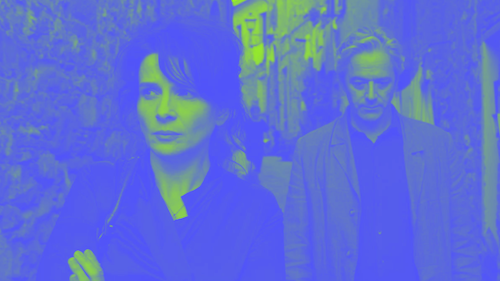
Maybe a taboo film to elevate to such a high place on a list that includes so many exemplary titles, I cannot stress enough how much Certified Copy means to me. If Kiarostami was forever trying to capture life in his films — documentary or not — then a project like Certified Copy both explored reality while shattering it completely. A narrative drama featuring an author (William Shimell) and a woman (Juliette Binoche) over the course of a single day, this metaphysical observation on their relationship feels almost like a Theo Angelopoulos endeavour; as the day progresses, we get a condensed look at the entirety of their connection, as if we are watching their lives on fast forward (from first date, to marriage, to potential divorce). The speed of life is an impossible phenomenon to get accurately in the cinematic medium, but Kiarostami nails this sensation with Certified Copy: a film about the inauthenticity of mirroring the work of another (a huge travesty when all of our lives are intrinsically unique).

1. Close-Up
Kiarostami sought to depict life in his films his entire career. He realized his greatest achievement in 1990 with one of the most inventive — and strongest — documentary films ever made. Close-Up is mainly based on the real incident where a film lover named Hossain tried to pass himself off as Iranian filmmaker Mohsen Makhmalbaf; his ruse continues and begins to go too far once he begins location scouting and receiving funds for a film project that is a complete farce. Hossein gets caught and put on trial; Close-Up was meant to be a documentary about said court case. However, that is far too simple for Kiarostami. Instead, Close-Up is the documenting of the trial while also the re-creation of the events that led up to it, actors and all. Those actors who are performing the past are none other than the actual people in this story, down to Hossein playing himself (and even Makhmalbaf appears as well). Kiarostami gets the participants in this case to revisit the scenes of the crime, allowing them to try to understand the motivations of one another through fresh eyes and strengthened hindsight.
Documentaries are inherently skewed because a filmmaker is trying their best to capture a subject via their means. Something like Close-Up places the truth back in the subjects themselves via two coalescing streams: a true-crime, bare-bones documentary about the then-ongoing testimonies, and a dramatization as a means of encouraging each participant to play out how they each remembered the central incident. Instead of lazily making a film about a real case and having professionals act out a true story, Kiarostami harkens back to the agenda of the neorealist movements: to get the people to convey their stories themselves (typically with the use of non-actors). Close-Up takes us straight to the source via a duality of objectivity versus subjectivity. I cannot think of many films that have challenged the very essence of making motion pictures in the way that Close-Up has: a docudrama in the purest sense of the term. Even for a career as stacked, inspired, and influential as Abbas Kiarostami's is, to me there is no question of what his masterpiece is. It is undoubtedly Close-Up: a film that had me first wondering if directours could even do what he was pulling off here, only for me to then realize that not just anyone could even take on such a project. Only someone fluent in narrative and documentary filmmaking — enough so to make both co-exist time and time again — could make a film as life-altering as Close-Up: a film that feels like an impossibility even by today's standards.


Andreas Babiolakis has a Masters degree in Film and Photography Preservation and Collections Management from Toronto Metropolitan University, as well as a Bachelors degree in Cinema Studies from York University. His favourite times of year are the Criterion Collection flash sales and the annual Toronto International Film Festival.