
Filmography Worship: Ranking Every Jean-Pierre Melville Film
Written by Andreas Babiolakis
Filmography Worship is a series where we review every single feature of filmmakers that have made our Wall of Directors

Film school educates students about the filmmakers who are strongly associated with the starts of movements. However, some of the greats were the bridges in between eras; consider their services essential for the sparked influence of cinematic waves. One of the finest examples is Jean-Pierre Melville who never gave up making films noir. When the original wave was on its way out, Melville was just getting started making feature films; he didn’t exclusively make noir or crime films, but any fan knows that he certainly excelled with them. He never gave up his vision: brooding, minimalist, stylish motion pictures about the sins of humanity. His early works influenced the masters of the French New Wave who admired his complicated characters, other-worldly style, and narrative intellectualism and philosophies (Melville also worked directly with some big names, like mentoring Jean-Luc Godard during the production of Breathless, which actually features Melville in a minor role). Melville’s influence did not stop there; by doubling-down in the sixties with some of his greatest films, Melville also helped usher and inspire the neo-noir movement (Melville saw the death and rebirth of the very style of cinema he refused to give up on). Even then, I would argue that the bulk of Melville’s disciples have popped up in more contemporaneous cinema: directors like Denis Villeneuve, Nicolas Winding Refn, David Fincher, and Jonathan Glazer (amongst many others) are indebted to the open-yet-corrosive spaciousness that Melville had in the majority of his films — not to mention the morally-conflicted, damaged protagonists who were usually the strong and silent type.
Born Jean-Pierre Grumbach, Melville served in the French Resistance during the Second World War; he saw battle, and his life and artistry were forever changed (additionally, his brother died during combat). While serving, he chose the name “Melville” after his favourite author, Herman Melville (of Moby-Dick fame). He would keep this moniker when he started off as an independent filmmaker with his own studio. Herman Melville’s writing was not the only American source of inspiration for this auteur, as he was inspired by more than just films noir; these include pre-Code gangster flicks and harrowing war epics. While most early versions of these genres feel pulpy and highly narrative in nature, Melville was far more concerned with what such environments feel like. Cutting back on the heavy dialogue and instead focusing on the crippling grasp of existential dread, Melville’s films transport you into the mindsets of broken, traumatized individuals. As a result, Melville is one of the great experts of showing and not telling: protagonists may not utter a word, and yet you understand the gist of what they are thinking or feeling.
This was more than just a mood for Melville; seeing as the filmmaker donned the same kinds of trench-coats, fedoras, and sunglasses that his characters would sport, this was clearly a lifestyle. Sadly, his career was rather short, as he died from a heart attack at the age of fifty-five in 1973. His short-but-triumphant career only grows more important and influential as time marches on. Now, I usually make a big stink about how difficult it is to rank the films of a strong filmmaker, but I want to preface this particular article by stating that the top four films here may be the most difficult to rank for me — perhaps ever. I sat and analyzed the top four films again and again until it felt like everything was finally in its right place; even then, I feel wrong not just having a four-way tie. I don’t settle for ties in my Filmography Worship series, so I have to just accept that some directors’ works will cause such a dilemma for me (this proves the silliness of ranking subjective art, I suppose). With all of this in mind, it is safe to call Melville one of the greats, especially when it comes to crime cinema. His stellar filmography has much to appreciate, so let us get started. Here are the films of Jean-Pierre Melville ranked from worst to best.

14. Vingt-quatre Heures de la vie d'un clown
Melville’s worst is kind of a no-brainer; even then, Vingt-quatre Heures de la ve d’un clown is better than you would think it would be (it is decent, as opposed to horrendous). His debut back in 1946, Melville’s twenty-minute short film about, well, the day in the life of a clown (what else). What is meant to be some time spent with a comical figure instead feels a little bit more introspective: despite how uncharacteristically light Melville’s first film is, there is a sadness there. Melville shoots this figure — one who is meant to entertain — with the same shadowy images and narrative emptiness that the majority of his career would succumb to; this clown does not feel the same joys in his life that he provides for others. While this isn’t completely a Pagliacci-esque tale, Melville’s film is moving enough to have a beating pulse; this could have been a kooky misfire if Melville wasn’t seizing this opportunity to hone his skills (and, as a result, there’s at least a smidgen of meaning here).

13. When You Read This Letter
What doesn’t get as frequently discussed as Melville’s crime and war films are the couple of his works that are based on the concept of religion. While not the strongest example of his — considering that I’ve ranked it as his worst feature-length film — When You Read This Letter is a worthwhile look at the hardships of life in what is a more straightforward drama by Melville. A nun-in-training is pulled from her nunnery once her parents die in a tragic car accident; she sees her cruel fate as a test from God, especially her being forced to return to society in order to take care of her suffering, younger sister. Like anything else he ever made, Melville was impressively forward-thinking here with a film that wanted to tackle some major issues (like rampant misogyny in society), but this is a rare time where Melville gets ahead of himself and, thus, When You Read This Letter comes off as a little wobbly and rushed as a result. However, Melville’s weakest feature film would likely be the high point of many filmmaker’s careers in the fifties, and you have to keep in mind that we can only go up from “standard.”
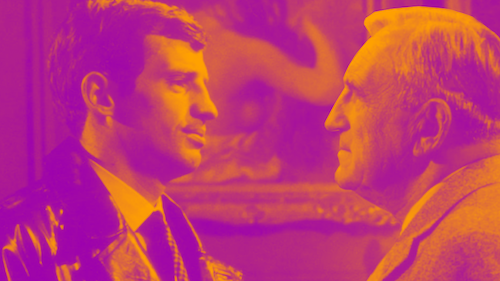
12. Magnet of Doom
While Melville would find ways to excel with colour film, his foray into colour, Magnet of Doom, is a little lost with what it hopes to achieve. What is effectively his version of a road film but with a crime-driven edge, Magnet of Doom is a tale of bad luck within the criminal underworld, following a boxing newcomer who is now trapped within a web of corruption and deceit. Here, Melville’s vision feels a little convoluted: as if he was hoping to explore the many ways evil can prevail or permeate while trying to incorporate all of his narrative findings into one-hundred minutes. While he isn’t as crisp as a storyteller or as a curator of aesthetics here, Magnet of Doom is still somewhat worthwhile for the biggest Melville fans just because he was so strong that even a project to help him gather his bearings is at least minutely interesting.
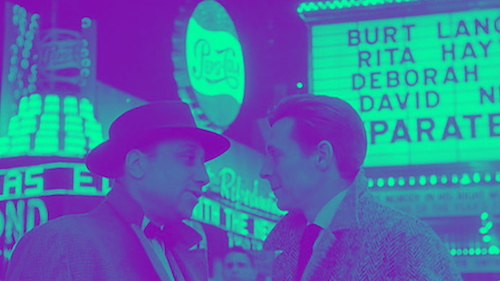
11. Two Men in Manhattan
Melville was so passionate about the noir characters he watched and created; so much so that he would even dress like one in almost every capacity. While he was an actor as well, he rarely directed himself; the biggest exception would be his starring role in Two Men in Manhattan. Here, Melville is submerged in the world of noir as both a storyteller and its lead protagonist. Melville plants himself in New York City as a governmental journalist who learns that his case is larger than both the Big Apple and France; this is a potentially global threat. Melville (the director) was perhaps inspired by Louis Malle’s Elevator to the Gallows, as he sprinkled on the jazz-excursions of Christian Chevallier and Martial Solal all over this vibe piece. While Two Men in Manhattan isn’t quite as successful as his other noir works, Melville is clearly in his own sandbox here, and how much this project means to him elevates this one quite a bit; why one’s dream is to be the tortured lead in a cynical noir film is anyone’s guess, mind you.

10. Les Enfants terribles
Melville’s second film was always likely going to pale in comparison to his feature-length debut, Le Silence de la mer. Even so, Les Enfants terribles is not a bad sophomore attempt. The film is centred around an unhealthy relationship between two psychologically broken siblings; Melville is clearly transfixed by the inner-obsessions that drive us (whether they make sense to anyone else or not is another story). While a bit less focused and successful than his greatest psychological works, Les Enfants terribles is quite bold for its time. Melville was hoping to tap into anti-hero concepts in a way that existed outside of following a gun-toting crime lord or a misunderstood detective. Here, Melville was looking at the things that can happen to everyday people if they are sheltered or shattered enough, and that alone makes Les Enfants terribles quite fascinating. Just be prepared for this one to get a little weird, folks.

9. Un flic
Melville’s swansong is not quite up to par with his greatest efforts, but I can only imagine that this was far from intended to be his final film before he suddenly died from cardiac arrest. Un flic feels a bit like a transition from his sixties works to something else; what that might be, I suppose we will never know. He has flirted with the idea of having romance within gritty criminal underworlds (Le Samouraï) In Un flic, both relationships and heists get messy, and Melville is perhaps trying to catch that breeze of what transpires after cheaters and criminals are caught. A poorly-received film when it first debuted, Un flic has aged a little bit better thanks to the films that are fixated on the electricity of vibes and sensations over narrative concreteness. Maybe it is within these oversights and experiments that Un flic winds up being a contender for Melville’s most human film (and, believe me, he knew a thing or two about the human experience).
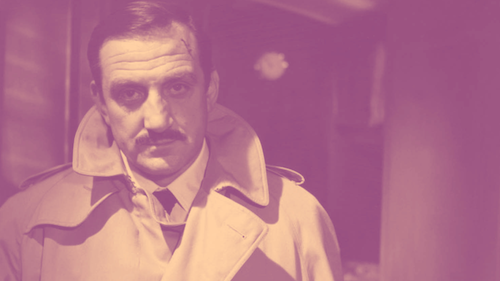
8. Le deuxième souffle
From this point on in this article, we have hit the Melville films that I believe any cinephile should watch. Le deuxième souffle looks at second chances; well, not with new lives, mind you, but rather the attempts to try and commit a crime once again. A fugitive crime lord attempts to strike again while out on the run, but it isn’t so simple; much of Le deuxième souffle is devoted to the pursuit that trails him in the form of a commissaire and his squad. While most of Melville’s films explore the consequences of one’s actions, Le deuxième souffle is a fairly stunning example of destiny (or what feels like the lack thereof). With a focus on technical flair, Melville was channeling the rush of being both two moves forward and behind in this cat-and-mouse thriller. What transpires is an exhilarating affair: one akin to the handling of a grenade that you are trying to transport without accidentally knocking its pin out.

7. Léon Morin, Priest
Yes, Melville has directed some of the greatest crime films of all time. However, Léon Morin, Priest deserves to be as celebrated as the lot of them. It would take a master of finding the worst capabilities of the human psyche to make a film this beautifully spiritual. We have two powerhouse performances of opposite ends of the religious spectrum. We have the titular priest played by Jean-Paul Melmondo with a potential career-best performance. Then, there is the atheist and political Barny (Emmanuelle Riva). Much of Melville’s film is an ongoing discussion between two drastically different minds who are plagued by the same question: what is our purpose here? While Melville doesn’t go fully Robert Bresson here, seeing him get outwardly philosophical is an absolute treat that I wish we had more opportunities to see. Melville’s concept of a forbidden romance in Léon Morin, Priest is one that will stay with you; how can our minds be so opposite, and yet our hearts and souls may overlap?
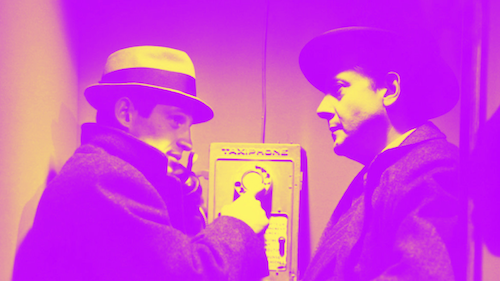
6. Le Doulos
If you are a sucker for films about heists gone wrong, strap in and let Le Doulos obliterate you. While this is not the first excellent film Melville made, there is a shift in confidence and artistry here that feels like the next phase in his career as an auteur; while there have been other transitional films throughout his filmography, this feels like the first step in the territory Melville would be revered for: visually stunning, narratively grim character studies. Here, Melville stages a series of twists and turns with such gusto: that you will not know where you stand for most of the picture (who is telling the truth, and who is the next to die). A major influence on Quentin Tarantino’s Reservoir Dogs in story and in artistry, Le Doulos is riveting cinema whose brilliance has thankfully been understood and championed for years. If Melville often let his sinners fester, Le Doulos feels more like a series of domino effects that keep colliding and creating more chaos.

5. Bob le flambeur
Film noir was on its way out. Melville didn’t want it to die. He directed Bob le flambeur as his answer to the style — this also happened to be Melville’s first true entry in the crime genre (something he would later be seen as a master of). While so many films noir are invested in the countless steps people have taken to get to where they are, Melville creates something a little more kinetic with Bob le flambeur: a film that almost feels perpetually on fire and in dire need of being put out. One of Melville’s most fun films (seeing as he usually got swept away by existentialism and nihilism), Bob le flambeur is what cinema looks like when a strong filmmaker creates a love letter to his favourite genre and/or style. While he didn’t save the classic noir from dying, his passion, experimentation, and technical prowess in Bob le flambeur inadvertently helped spark the French New Wave (a troupe of filmmakers who were also searching backward for ways to move cinema forward).

4. Le Silence de la mer
We have reached the four Melville films I consider perfect, and placing them in any order has been quite excruciating. First, we have Le silence de la mer: one of the great directorial debuts of all time (and it isn’t even close). Melville took his awful experiences from World War II and provides a chilling drama about a German officer who is lodging in the house of a French farmer and his niece during the years of occupied France. A major trait of this film is the family’s refusal to speak with the Nazi despite his countless efforts to see eye-to-eye with them about France’s culture, art, and history. Already, Melville was aware of the weight of silence and was using it to his advantage here; me placing this film fourth below the other Melville masterworks is because of the use of voice-over narration — this is far from a problem, but I find it even more spellbinding when Melville can convey his ideas via minimalism without any assistance at all. Even so, Le silence de la mer is a stirring, eerie, ghostly war-time drama that could only be told via the resentment of a man who has seen the worst of humanity with his own two eyes.
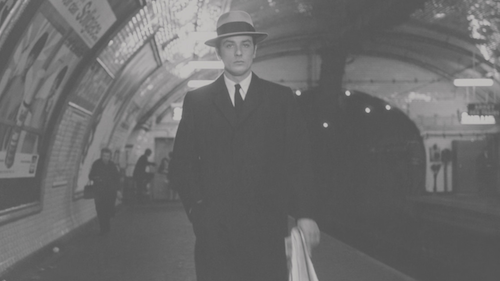
3. Le Samouraï
Le samouraï has become the poster child for all things Melville, and it’s easy to see why. A prototypical neo-noir classic, this staunchly nihilistic experience is a highly impressionable film; placing it third feels awful when a film of Le samouraï’s calibre would easily top most other lists, but I cannot feel too bad knowing that — to me — Melville somehow outdid himself twice more. This inventive look at the cinematic hitman — in the form of a lonely, self-hating killer who is slowly getting to his wit’s end after his latest hit — channels the sterile, frigid, unnerving atmosphere of being a criminal. The alienation is thick enough to cut with a knife as well; Le samouraï does not glamorize the life of a killer by any means. Melville uses the curse of mundane, everyday living to craft a mysterious and brooding look at existentialism in the then-modern day: he uses his protagonist’s life and career to depict an evil world that cares not for our existence (especially with the greatest use of greys in the history of colour cinema). Ironically, Melville’s depiction of the anti-hero and the damage of a life of sin inadvertently helped inspire the New Hollywood movement, with American filmmakers who also wished to explore the paradoxical nature of depicting the worst capabilities of the human species on the big screen.
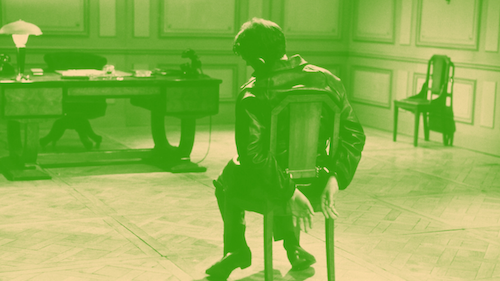
2. Army of Shadows
Le silence de la mer walked so Army of Shadows could run. If Melville was more invested with the power of not talking in his debut film, then Army of Shadows — his triumphant return to the war drama twenty years later — was a similar tactic with a different message: never give in to evil. A powerful look at perseverance, Army of Shadows places us behind a team of French Resistance fighters, particularly Philippe Gerbier who has been betrayed by an informant and is now captured by Nazis. Melville blends the World War II epic with the sleekness and introspection of the American gangster film with such effortlessness. In one way, Army of Shadows is a nerve-wracking experience that you will be pulling your hair out watching because of its intensity, Then, there is the other side of the same coin: the coldness of Army of Shadows, as if Melville will never forget how unforgiving war is, even to those who fight within it. Whether you are acting out of heroics or not, there will be blood on your hands that you can never wash off. It is this unapologetic angle that rendered Army of Shadows a poorly-received film for its time, so much so that it essentially did not legally exist outside of France for decades until its revitalization in 2006; it is now rightfully considered a masterwork by a director who was not going to diminish his experience or trauma with war just to please some people.
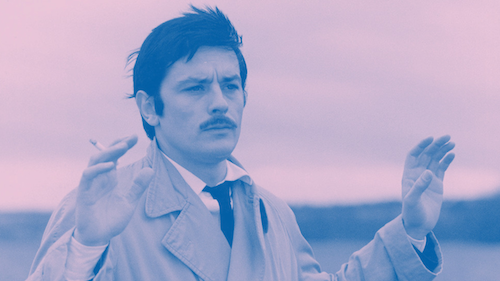
1. Le Cercle Rouge
Picking just one Melville film to top this list has not been easy, but part of me feels like the highest-ranked film could only be Le Cercle Rouge. On one hand, this feels like all of the best things of a Melville film placed into one opus. We have a criminal who is trying to give up their lifestyle but finding it impossible to escape. There is a blend of grit with style in ways that would usher in the neo-noir movement that was soon to come in the seventies. Melville’s affinity for minimalism results in one of the greatest heist sequences in film history: a dialogue-free, half-hour showcase of calculated moves and rising tensions. If films like Le samouraï or Bob le flambeur feel mythical with how Melville conjures up his characters and their demons, then Le Cercle Rouge feels biblical: like a thorough parable of jaded pasts and unforgiving futures in the hands of criminals who are trying to maintain the upper hand of a heist (and, as a result, their lives).
We follow a trio of sinful men, led by a veteran of Melville’s films: Alain Delon (Le samouraï, and, after this film, Un flic). Delon’s Corey is a criminal released from prison who wants to have a new life with a clean slate. That doesn’t last long once he gets wrapped up in a jewelry heist involving a fugitive and an ex-officer. Of course this becomes a cat-and-mouse chase that ups the stakes, making each and every beat in Le Cercle Rouge one that will have you holding your breath. The double-edged sword with crime is that you will forever be marred by your past. You cannot escape what you have done if you give up your life of crime, since your ghosts will haunt you and those you have wronged will pursue you. If you are addicted to crime and simply cannot give it up, however, all that awaits you is one false move that will nail you once and for all. Le Cercle Rouge investigates both realities in a mesmerizing depiction of tempted fates and destroyed lives. Captivating until the bitter end, Jean-Pierre Melville’s Le Cercle Rouge somehow manages to remains suave even when it is at its most frenzied, violent, or anxious. This simply is one of the great crime films in cinematic history: one that entertains, warns, transfixes, and shocks you all at once.


Andreas Babiolakis has a Masters degree in Film and Photography Preservation and Collections Management from Toronto Metropolitan University, as well as a Bachelors degree in Cinema Studies from York University. His favourite times of year are the Criterion Collection flash sales and the annual Toronto International Film Festival.