
Filmography Worship: Ranking Every Mike Leigh Film
Written by Andreas Babiolakis
Filmography Worship is a series where we review every single feature of filmmakers that have made our Wall of Directors

Britain's kitchen sink realism works of the fifties and sixties (the nation's brand of social realist depictions of the working class) have permeated into a number of hard-hitting careers. We have Ken Loach's endless battle to represent struggling communities and citizens on the big screen. Lynne Ramsay has vied for a melodramatic, tragic angle of the movement if you wanted to feel every ounce of agony that her characters are experiencing. Then, there is Mike Leigh: one of the strongest British filmmakers of all time, who has effectively blended the lows of kitchen sink realism with the somewhat-highs of the best kinds of dramedies. While Leigh can sometimes forgo comedy altogether, his works always channel the moments in life that are hard to pinpoint into words; the chaos of a family dinner that has gone wrong; the sliver of joy one may feel if at least something has gone their way while the rest of their world crumbles; the absurdity and electricity that we may feel when someone else is having a breakdown (we don't want to laugh, but we may do so anyway — not because we are mocking the character, but maybe because we know how they feel and can understand the unintentional comedy that stems from calamity).
Leigh has done more than just direct and write feature films. He has been connected to the theatre scene for the majority of his career, debuting with The Box Play in 1965 at the age of 22. He directed one feature film, Bleak Moments, in 1971 before committing to nine television films and plays between 1973 to 1982; while I won't be covering those in this article, I do recommend that you check them out if you have liked what you have seen from Leigh. Even though Leigh would continue to work on the stage until 2011, he slowed down on his television work once he returned to the big screen with Meantime; the rest was history. Having a steady career in film ever since (by releasing a film every couple of years without any noticeable hiatuses), Leigh has delivered over a dozen hard-hitting works. I feel like his releases have blessed multiple generations; no matter when you got into Leigh's films or which one you saw first, chances are you have clung on to whichever era or feature inducted you into the Leigh fandom. There is no wrong answer or affiliation.
Part of Leigh's success comes from how real his works feel, and what you have is a splendid blend between Leigh the writer (who is able to conjure up humanistic experiences in identifiable and connective ways) and Leigh the director. Leigh the director encourages many instances of improvisation — encouraged by his expertise on the stage and the dramatic chemistry actors can have with one another in the heat of a moment. Leigh sets up sessions for his actors to figure out his characters and allow them to improvise; while this isn't too unusual, what makes his method special is that he will drop in major narrative twists into the final take and allow his actors to respond in character with pure authenticity. His results are extraordinary and you can feel the instant responses of his cast like a prickly electricity in the air.
Due to his tremendous connection with actors, Leigh has kickstarted the careers of many members of British acting royalty — from Jim Broadbent, Lesley Manville, Timothy Spall, and David Thewlis, to Sally Hawkins, Marianne Jean-Baptiste, Imelda Staunton, and Eddie Marsan. While Leigh has a distinct style, he has also veered enough into different genres — like tragicomedies, biographical pictures, and even a historical epic or two. Regardless of what kind of project he is wishing to tackle at any given time, he is always invested in the reality of what working class Brits are experiencing — rather than the saccharine, tug-at-your-heartstrings dramas that feel more artificial than plastic fruit. With Leigh, you feel like you are spying on the moments that these people, families, and over-produced films do not want you to see. We are forever grateful for this filmmaker's raw honesty and passion. Here are the feature films of Mike Leigh ranked from worst to best.
15. Peterloo
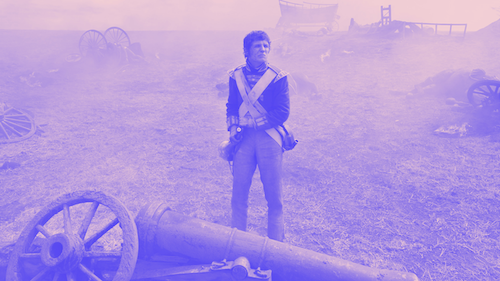
Of his big screen feature films, Leigh's weakest effort would have to be Peterloo, which is still a fairly good film with a strong message that just feels overlong (at two-and-a-half hours) and thinner than I would have liked it to be. If his entire career has been in support of the working class, then every film before it culminates in the form of Peterloo: a historical drama that expresses the filmmaker's frustrations with how governments respond to distress. Based on the 1819 Peterloo Massacre — where British forces stormed a peaceful protest and hundreds of civilians were injured and eighteen were outright killed — Peterloo does a decent job at painting the bigger picture of why this community took a stand and what transpired on that unfortunate day. I think Leigh's style helps elevate the voice of the people here, but it does not mesh too nicely with sequences of actual massacre itself; what should feel like we are in the thick of madness instead feels like a washed-out, flattened depiction of violence and perseverance.
14. Bleak Moments
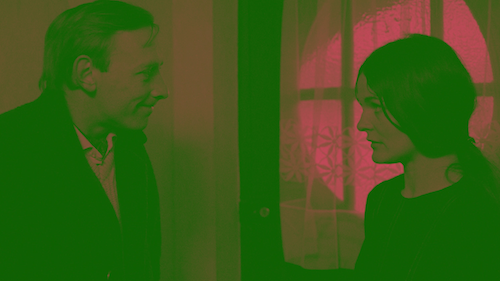
Leigh's debut — made with the near-shoestring budget of eighteen thousand pounds — is Bleak Moments, and it showcased the kinds of pictures he would want to make for the rest of his life. Simply put, we are thrown into the everyday life of a struggling secretary, as well as those who are close to her (from her mentally disabled sister, to her frustrating colleague). You can tell that this is a Leigh film, but it still feels like he is in his infancy stage here with tiny ideas of how to best represent the lonely, broken people of a society who has abandoned them. Bleak Moments just feels a little rudimentary: like a project that shows what Leigh was hoping to achieve without getting him further than the first pieces of evidence. If you have already watched pretty much every other Leigh film, Bleak Moments is a nice memento of how things started off, but he would quickly make stronger pictures than this one.
13. Mr. Turner
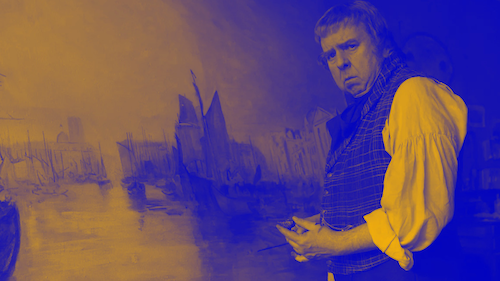
Mr. Turner feels like a rare odd-one-out for Leigh in the sense that it is a traditional biographical picture: one about painter J.M.W. Turner. There are still signs of Leigh's signature tropes in here somewhere, from Turner's relationship with his nation to the family dynamics and tragedies that he experiences. However, this is the second — and last — time on this list that a Leigh film feels just a little too long; the film aims to be ambitious and introspective at the same time, but it comes off as a little passive instead. A committed performance by Timothy Spall as Turner helps save the day here, and cinematographer (the late Dick Pope) helps turn every shot into a source of inspiration for one of Turner's new pieces. These combined forces will keep you going when Mr. Turner slows down to a crawl.

12. Meantime
Leigh's sophomore film is his representation of Margart Thatcher's England: an economically strenuous time where many families were feeling the brunt end of the plaguing recession. Featuring a then-fresh cast that is — in hindsight — full of amazing and beloved players (Gary Oldman, Tim Roth, Alfred Molina, et cetera), this tale of a house and nation divided by poverty and a crippling job market is one that you will feel in the pit of your stomach. I feel like Leigh dealt with ambiguity better than this early attempt at capturing the permanence of societal suffering under the purview of corruption; Meantime feels like a snapshot that doesn't say much more than Leigh's stronger efforts do. However, things were falling into place for Leigh with this second feature film, and it wasn't long before he was releasing one stellar film after another.
11. High Hopes
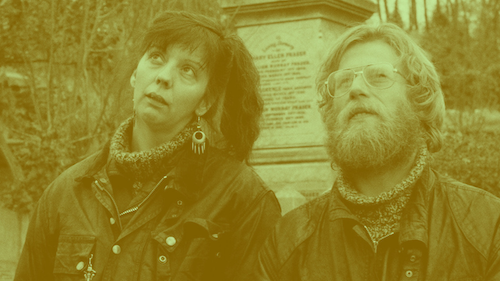
From this point on, you can throw a dart at any of the remaining films, and you can be rest assured that you've got a Leigh classic on your hands. Considering that there is almost a dozen films left, you can see the positives here: that Leigh has mostly made great feature films. However, I am sure I will ruffle some feathers with my placements, and I do apologize if that is the case. High Hopes is placed a little low (sorry for the placement and the pun), but I do think that this is a great early film from Leigh that shows the director taking on his now-standard formula (of entering the lives of conflicted working-class families) and trying to see how far he could take his vision. Here, we are centred around the couple of Cyril and Shirley who are questioning what family means to them; from their loved ones, to the hypothetical scenario of bearing children. This film feels like the first moment where Leigh knew he had something with his gift for storytelling: the capability of channeling inner dilemmas and concerns in ways that feel palatable.
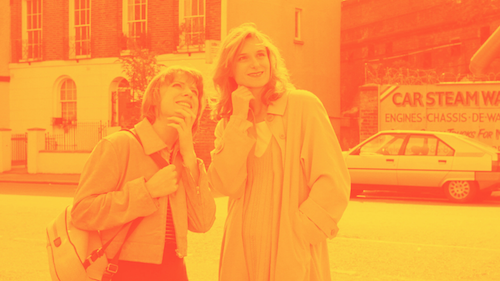
10. Career Girls
We often drift apart from our favourite people as life gets in the way. Do we reunite with those we are no longer in touch with? Sometimes. We could kick things off as if nothing has changed between us, or we could be drastically different people who no longer speak the same language. Career Girls takes on both responsibilities; it is Leigh's observation of how the real world shapes young adults enough that best friends may no longer feel nearly as connected. Our two leads — former university flatmates — are now conjoined by an uncertain present; meanwhile, Leigh sews in flashback sequences to get us more familiar with the bigger picture. While the memories can be the smallest bit distracting (by 1997, Leigh was already proficient at being able to deliver powerful exposition via a well-written conversation over a meal, for instance), Career Girls is the embracing of multitudes and the acknowledgement that life can be cruel to all of us in different ways.

9. Life Is Sweet
Leigh's first film of the nineties is Life is Sweet: a full-house type of scenario where we see a family and their individual lives under one roof. While it might be one of his more simplistic films narratively, Life Is Sweet succeeds by feeling like an off-the-cuff ripple effect of actions — be it a remark in a standard conversation, or an action that has repercussions. We get a standard week with this London family and we get the whole experience of first impressions: the preliminary airs, the slight revelations of true character, and then the points of no return where we see the full soul and spirit of broken people who wanted to appear complete to others. Leigh understands humans as animals with retraceable behaviours, and a film like Life Is Sweet shows both the miraculous nature and high-maintenance of us beings.
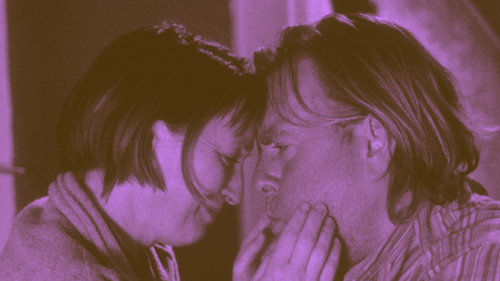
8. All or Nothing
I am not the biggest fan of anthological films as a whole, as I have said many times before. However, like a child being fed vegetables concealed by mashed potatoes, I can be easily misled into watching and actually liking a standard one if the method is clever or seamless enough. Leigh's All or Nothing has you wondering how its multiple storylines will converge — it won't be long until you figure out for yourself that they don't really ever meet and, if anything, Leigh is wanting to capture the larger state of things in London for multiple households and not just one. Each story has something powerful to offer (yes, even the James Corden one; he is at his least annoying perhaps due to Leigh's mastery as a director) and they are mainly driven by the same concept: many of us are left in positions where we keep fighting or we give up on life entirely. We cannot afford to do the latter. Additionally, if we are something to someone else, then we must remain as such; sometimes, we are all that each other has.
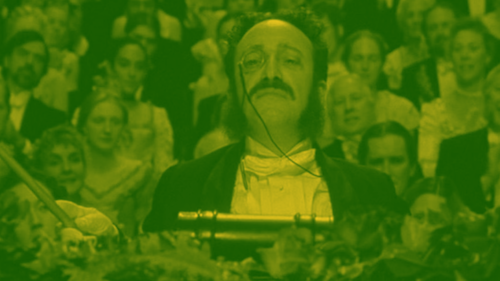
7. Topsy-Turvy
Come one, come all, to Leigh's circus for all walks of life! Topsy-Turvy is such a clever concept. On paper, it details the origins of writing duo Gilbert and Sullivan, leading up to The Mikado. Instead of focusing simply on the frills of the entertainment industry, Topsy-Turvy channels the blue-collared, gritty work of such a profession (yes, even down to the production logistics and creative writing elements). To remind audiences that entertainment was always meant to connect to the masses, Leigh allows his stars to sing not with trained voices or with the aid of production, but with their hearts spilling out, flaws and all. As a result, Topsy-Turvy is a different kind of musical: one that wants you to see the blemishes in the backdrop and the stains on costumes, and to hear the cracks in tired voices. Entertainment is the act of putting it all on the line for others to reciprocate and understand; Topsy-Turvy never hides the process or its potential.

6. Hard Truths
When someone else is broken, they may not make sense to you. When you, too, have been broken, you may speak the same language. Hard Truths is the sign that Leigh is still going strong over fifty years after starting his cinematic career. It feels a bit more dialed down than some of his other domestic dramas; here, we are mainly focused on one grieving and aching woman (played magnificently by Marianne Jean-Baptiste with a performance that the Academy Awards committed a major sin by not even nominating). Jean-Baptiste's Pansy is equal parts hilarious and gut-wrenching. Her rants are highly entertaining, mainly because I, too, have been pushed to my limit (and I am sure you have as well). When you see where all of that pain and anger stems from, her tantrums are no longer entertaining. You know exactly where she is coming from. You have felt this anguish before; I'm sure we all have. This is someone who is in dire need of healing, and she may not have the means to do so fully or right away; Leigh's Hard Truths may help you heal even just a little bit, however.

5. Another Year
What is a year to you? Leigh has provided many snapshots in the lives of ordinary — yet compelling — people, but with Another Year, he devotes his and our time to 365 days in the lives of a loving couple and those who surround them. Tom and Gerri (heh) are verging on retirement, and they see the road ahead of them as they are celebrating that clock winding down. Some others in their lives, like Mary, are fighting inner and outer demons. To some, a year is another set of opportunities: another thing to look forward to without reservation. To others, a year is a capsule stuffed with tribulations and case-by-case scenarios that you will have to miraculously get through by the skin of your teeth. Leigh takes us through a quadrant of vignettes: the four seasons and how much can happen in between them. When you watch Another Year, are you the viewer who is wondering what lies ahead, or are you — like me — questioning where all of those years have gone?
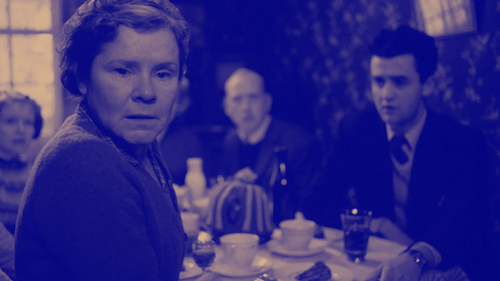
4. Vera Drake
The next three spots on this list coincidentally have my trio of favourite performances in any Leigh film and for different reasons; that is not to infer that these are the primary reasons to watch these films but, rather, a major highlight of these spectacular features. The first of this batch is Vera Drake: a film that is so believable — with its lived-in sets and costumes, rich characters, and organic progressions — that you could swear that this was a biopic (it is shockingly not). Vera Drake is played exceptionally by Imelda Staunton; Drake is a housewife who helps young and abused women undergo abortions without expecting to be paid for her duties. The entire film changes once one of her cases gets discovered and pursued by the London police. Staunton's performance is hyper-realistic: so much so that you wish you could whisk her away from this agony and save her. Sadly, that is not possible. Leigh's approach to the protocols that follow are so detail oriented that you could swear it is you being interrogated; with Staunton at the forefront, it then becomes watching your favourite person being dragged through hell. A terrific film about a tricky subject, Golden Lion-winner Vera Drake is a transcendent tragedy.
3. Naked
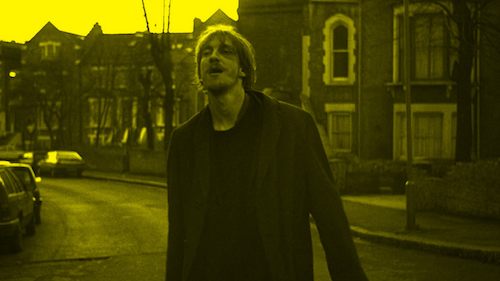
Easily Leigh's strangest film is Naked. While the filmmaker is usually passionate about his sociopolitical talking points without ever appearing uncontrollably enraged, Naked is as close as he got; he resigns behind a wandering, rambling individual named Johnny who is on a strange odyssey throughout various parts of England. He suffers from extreme verbal diarrhea, spewing the most elaborate fluff ever put to the big screen. How could someone's rants sound equally this insane and genius? Johnny is played by David Thewlis with an impossible performance; who else could be this entertaining, annoying, and heartbreaking all at the same time? Who could even remember these complicated, meandering lines? A film like Naked reminds you of the kinds of people you may come across and ignore on a frequent basis in the city — only for the film to provide context and explain how people get this way. When you are this verbose and out there, you are not hiding behind anything; Naked proves that this is the rawest extent of a fragmented psyche and a gutted soul.

2. Happy-Go-Lucky
I will defend this film to the ends of the Earth. One of Leigh's more polarizing efforts (in a sense), Happy-Go-Lucky is a pitch perfect dramedy in my eyes. I also consider it an unusually feel-good film by Leigh's standards (while still depressing by most others'): we are essentially seeing all of the sadness that surrounds Poppy and see her find ways to weather every storm and find joy in the littlest things (if anything, this film shaped me quite a bit during my own tough times). Poppy is Sally Hawkins' breakthrough performance, and I find her so captivating while also understanding why some of her peers would find her whimsy and bubbliness frustrating (I, for one, do not). As great of a film as Happy-Go-Lucky is (and Leigh's ability to balance the seriousness of the human experience and the giddiness of finding small ways to amuse and heal oneself), it is flawless because Hawkins could have been the only actor to play Poppy (in the same way that life makes it very hard to even be a Poppy; and yet we all know that one person in our lives who keep on trucking despite their darkness). This is a heartwarming affair that never forgets how bad things truly are out there; maybe that's why its glee is extra rewarding.
1. Secrets & Lies
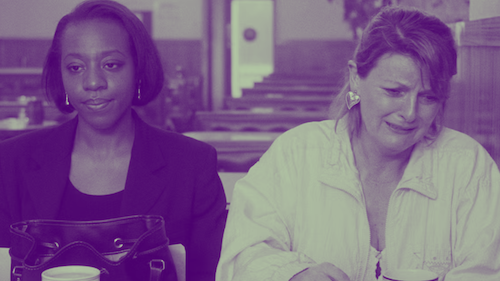
Picking just one Leigh film out of eleven excellent works feels wrong. Maybe it is all of the family-based dynamics or the realistic heartache within each film, but this task honestly felt like I was picking the best children of a family. Nonetheless, I have picked Secrets & Lies as Leigh's crowning achievement amongst a sea of successes. This Palme d'Or winner possesses everything I love in a Leigh film: compelling writing, note-perfect performances, exhilarating improvisation and spontaneity, candid depictions of real sociopolitical and familial concerns, and an understanding of everyday people that so many other films fail to capture. At first, Secrets & Lies feels a little bit like a compilation of separate circumstances, but everything connects at a fateful birthday party. Leigh has always been excellent at writing streamlined-yet-nuanced screenplays, but what he accomplishes here — with rising tensions, bursting revelations, and a kinetic chain reaction of disaster — is on a whole different tier of brilliant.
Essentially, we are made responsible for carrying the secrets of numerous people who feel guilty themselves (in ways). Leigh makes us feel culpable as we proceed through the film, but it is his blindside — of having additional twists we did not see coming — that allow us to feel a part of the hysteria; even we had information withheld from us. Are we still mad at those we have become connected to? Leigh invites us to absolve him and his characters at precisely the moment we expect other people in the film to show that same forgiveness. If Leigh's goal is to get us all to feel seen while understanding the plight and distress of others, a film like Secrets & Lies fully exhibits his mastery and artistry. This is as brutally honest as slice-of-life realism gets: all while Leigh directs with a sympathetic — but not naive — lens. As hearts and souls spill on the floor, we know what it is to be fully vulnerable in a world that seems to condemn truthfulness; Mike Leigh knows that one can only heal when they rip that bandage off. A film like Secrets & Lies is a fully conceived allegory of the human condition in a way that is memorable, exquisite, and exceptional.


Andreas Babiolakis has a Masters degree in Film and Photography Preservation and Collections Management from Toronto Metropolitan University, as well as a Bachelors degree in Cinema Studies from York University. His favourite times of year are the Criterion Collection flash sales and the annual Toronto International Film Festival.